
Education
How to Select the Best Online Trading Platform for Your Investment Goals


Selecting the best online trading platform starts with knowing your investment goals and matching them to the right tools. The best platform fits personal strategy, trading style, and comfort level with risk while keeping fees low and execution simple. A clear goal helps narrow the choices among platforms that support stocks, ETFs, mutual funds, or crypto.
Each investor values different features. Some want research tools and education to make informed decisions, while others care more about speed, order types, or mobile access. By focusing on what matters most, investors can find a platform that supports progress instead of creating obstacles.
The following sections explain how to connect platform features to investment goals and what factors make a platform stand out. With the right knowledge, choosing an online trading platform becomes a straightforward step toward better investment results.
Aligning Platform Features With Your Investment Goals
A trading platform should fit the trader’s goals, experience, and preferred markets. Account types, asset range, and trading tools must align with how the trader manages risk and pursues returns. For example, a top-tier platform for online trading provides flexibility through account choices, broad asset coverage, and a focus on both control and accessibility.
Additionally, such platforms should provide features that allow traders to make informed decisions, such as advanced charting tools and real-time market data. A seamless user experience ensures that traders can navigate the platform with ease, enabling them to focus on their strategies without unnecessary distractions.
Identifying Your Investment Objectives
Every trader benefits from defining clear objectives before using any trading platform. Goals guide decisions about account type, instrument choice, and trade frequency. For example, a short-term trader often values low spreads and fast order execution, while a long-term investor may care more about stability and portfolio tracking tools.
Traders should separate needs like income generation, wealth growth, and capital preservation. This simple step helps decide whether to focus on active trading features or automated portfolio tools. Goals tied to frequent trading need strong charting and order types. Long-term investing benefits from dependable account management and planning features.
Setting realistic time frames and risk limits gives direction. Without such clarity, even the best platform can feel confusing and mismatched to its purpose.
Evaluating Investor Profiles and Experience Levels
Trader experience affects which features matter most. Beginners often need clear interfaces, education materials, and easy mobile access. A platform that simplifies order placement helps them gain confidence and avoid costly errors. Tools that automate some decisions, such as copy-trading or portfolio balancing, can provide structure.
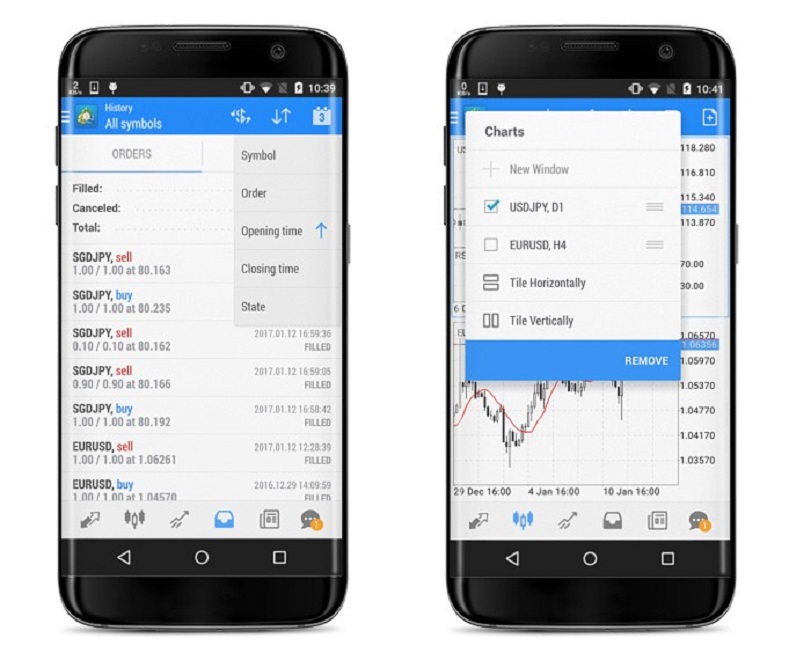
Intermediate and advanced traders often need deeper analytics, customizable charts, and multiple trading platforms like MT4 or MT5. These tools support technical strategies and allow faster market responses. Traders managing larger accounts or complex positions benefit from customizable dashboards and transparent fee structures.
A suitable match balances comfort and control. The more experience a trader has, the more value they place on flexibility, speed, and precision.
Considering Account Types and Asset Availability
The account type shapes cost and accessibility. Some accounts feature zero or raw spreads, while others include fixed commissions that may simplify cost planning. The right choice depends on trading style and trade frequency rather than just headline prices.
Asset variety also matters. A platform offering Forex, indices, commodities, shares, and crypto pairs lets traders adjust portfolios as opportunities change. A broad selection can support diversification and reduce dependence on one market.
Convenient funding options and quick execution complete the picture. Together, these factors decide how well a platform supports different goals, from steady income pursuit to active market participation.
Necessary Factors in Choosing an Online Trading Platform
Each trading platform shapes how efficiently a trader can analyze markets, place orders, and manage accounts. Careful attention to usability, available assets, cost structure, and account protections allows traders to align technology and support with their investment goals.
Platform User Experience and Accessibility
A functional and intuitive interface helps traders act quickly on market opportunities. An online broker should provide a clean dashboard, simple navigation menus, and customizable layouts that suit different trading styles. Clear watchlists, charting tools, and technical indicators allow analysis without confusion or delay.
Mobile and desktop platforms should both maintain a consistent design. Traders often rely on mobile apps for order execution, so stability and low downtime are important. Speed of logins, quick access to order types, and clear trade confirmations affect confidence in daily use.
Accessible educational resources such as video tutorials, basic webinars, and research and data tools can help users improve their skills. The ability to test a platform with a demo account before funding it offers insight into usability and execution quality. For traders who value convenience and clarity, interface design matters as much as cost.
Product Offerings and Supported Financial Instruments
An online trading platform must provide enough asset classes to match a trader’s strategy. Stocks, exchange-traded funds (ETFs), mutual funds, and options are standard choices. Some platforms also include commodities, bonds, or digital assets to support diversification.
Access to different order types, such as limit, stop, and trailing stop orders, allows traders more control over trade execution. Platforms that include margin trading or access to international markets give users broader exposure and strategy flexibility.
A diverse product lineup also helps investors adjust portfolios as goals change. Many stock brokers include research reports and screening tools that guide investors toward suitable securities. Educational content combined with strong product coverage supports both beginners and experienced traders in making informed choices.
Fee Structures and Commissions Analysis
Trading costs directly affect returns. Many online brokers now advertise commission-free trades on stocks and ETFs, though hidden charges can still appear in other areas. Traders should review all account fees, including inactivity fees, transfer fees, and withdrawal charges.
Commissions on options, mutual funds, or futures may differ by platform. Some brokers also generate revenue through payment for order flow, which can influence execution quality. Evaluating how quickly trades execute and whether spreads stay competitive reveals a more complete picture of cost.
A simple fee table can help users compare platforms:
- Trading commissions: Zero or low for common products
- Account minimum: Varies, often no minimum for standard accounts
- Inactivity fees: Charged after long idle periods on some accounts
Choosing low fees is helpful, but not at the expense of slower order execution or poor trading tools. Balance is key to maintaining value.
Account Security, Regulation, and Customer Support
A secure trading environment protects funds and personal information. Platforms should use strong encryption and two-factor authentication for every account. Regulation by agencies such as the Securities and Exchange Commission (SEC) or the Financial Industry Regulatory Authority (FINRA) adds an important layer of oversight and transparency.
Traders should verify the broker’s registration status and review its history of compliance before depositing funds. Platforms that handle transfers through the Automated Customer Account Transfer process also add convenience by simplifying movement between brokers.
Customer service plays an equally important role. Responsive customer support through chat, phone, or email can prevent small issues from turning into major problems. Support teams that provide fast answers, clear explanations, and accessible hours add value beyond fees or features. In a market that moves by the second, reliable service and strong protections help build trust in the trading platform.
Conclusion
Selecting the best online trading platform depends on understanding goals, trading style, and the type of assets a person plans to manage. Each feature, from pricing to account options, directly affects outcomes and ease of use.
Security, speed, and clear fee structures help traders make smarter decisions. Platforms that align with user needs give more control, fewer surprises, and smoother execution during active market hours.
Before opening an account, traders should confirm the regulations, test the platform’s usability, and compare costs. Small differences in order execution or available research tools may influence long-term performance.
By focusing on safety, functionality, and cost transparency, investors improve their chances of consistent progress with fewer obstacles.









By Adedapo Adesanya
The Nigerian Education Loan Fund (NELFUND) has granted another extension for its Student Loan Application Portal to accommodate institutions that requested additional time for the 2025/2026 academic session.
According to the statement signed by NELFUND’s Director of Strategic Communications, Ms Oseyemi Oluwatuyi, on Thursday, the extension applies only to institutions that submitted formal requests, allowing eligible students extra time to complete their applications.
“The Nigerian Education Loan Fund has approved an extension of its Student Loan Application Portal for institutions that have formally requested additional time for the 2025/2026 academic session,” the statement read.
Business Post reports that at the beginning of March, NELFUND announced an extension to the deadline by a week for its student loan application portal following a notable rise in nationwide interest driven by ongoing awareness campaigns.
Speaking on the development, NELFUND Managing Director and Chief Executive Officer, Mr Akintunde Sawyerr, reiterated the Fund’s commitment to ensuring that eligible students at participating institutions can access the student loan programme.
“NELFUND remains committed to ensuring that eligible students across participating institutions have the opportunity to access the student loan programme,” he said.
The Fund urges students in affected institutions to take advantage of the extension and submit their applications through the official portal.
It also emphasised its dedication to transparency, accountability, and providing sustainable financing solutions to remove financial barriers to higher education in Nigeria.
Established to administer the Nigeria Student Loan Scheme, NELFUND was enacted into law by President Bola Tinubu in April 2024.
The initiative provides interest-free loans to students in public tertiary institutions to cover tuition and living expenses.
Beneficiaries are required to repay the loans after completing their education and securing employment, aiming to increase access to higher education for students from low-income backgrounds.

By Adedapo Adesanya
The Nigeria Revenue Service (NRS) has inaugurated a Curriculum Review Committee aimed at strengthening taxation education in Nigerian academic institutions and improving the country’s tax administration system.
According to a statement, the committee was inaugurated on February 24, at the NRS Academy in Durumi as part of the agency’s broader efforts to modernise tax education and align academic training with the evolving demands of contemporary tax administration.
Speaking during the inauguration, the Director of the NRS Academy, Mr Adeolu Akinyemi, said the review exercise would involve collaboration with the Chartered Institute of Taxation of Nigeria (CITN) to develop a more structured and relevant curriculum for the academy.
He emphasised that the initiative seeks to ensure that taxation programmes taught in Nigerian institutions reflect current developments in tax policy and practice, while also equipping students with the practical knowledge required in today’s tax administration environment.
The committee has been tasked with examining existing taxation curricula across Nigerian institutions and proposing updates that incorporate modern tax policies, recent legislative changes, and emerging areas such as digital taxation and global tax practices.
Officials say the review is also designed to close the gap between theoretical classroom instruction and the practical realities of tax administration.
By strengthening the link between academic learning and professional practice, the revised curriculum is expected to better prepare graduates for careers in the tax sector.
The effort is further expected to enhance tax awareness among citizens, encourage voluntary tax compliance, and support the development of skilled tax professionals who can contribute to national revenue generation and economic growth.
The committee is chaired by Mrs Aisha Hamman Mahmoud, Special Adviser to the Executive Chairman of the NRS on Research and Statistics. Its membership includes representatives from the service as well as academic experts in taxation and fiscal policy, alongside professionals with experience in tax administration, policy formulation, and tax education.
The committee will work with relevant educational regulatory agencies and professional bodies to ensure that the proposed curriculum aligns with national academic standards while addressing the practical needs of Nigeria’s tax system.
The NRS stated that the initiative forms part of its ongoing commitment to expanding tax knowledge, strengthening professional capacity, and promoting responsible tax practices across the country.
The curriculum review exercise is expected to be completed within 60 days, after which the Service plans to provide further updates on the implementation of the revised programme.

By Modupe Gbadeyanka
The first batch of Nigerian undergraduates to enjoy fully paid scholarships for studying science, technology, engineering and mathematics (STEM) courses across the continent has been chosen by Airtel Africa Foundation.
Business Post gathered that 70 students from universities across Nigeria were selected from thousands of applicants through an independently managed process, which took nearly six months.
It was learned that most of the undergraduates were from the University of Lagos (UNILAG), Obafemi Awolowo University (OAU) Ile-Ife, the University of Benin (UNIBEN), Tai Solarin University of Education (TASUED), the University of Ilorin, Ahmadu Bello University (ABU Zaria), and the University of Nigeria (UNN).
The scholarship covers tuition, laptop computers, living expenses, and essential learning resources, a statement from Airtel Africa Foundation disclosed.
The chairman of the foundation, Mr Segun Ogunsanya, speaking at the presentation of the scholarships to the beneficiaries at the Lagos headquarters of Airtel Nigeria, emphasised the need for initiatives such as the Airtel Africa Foundation’s undergraduate tech scholarship for the future of the continent.
“True legacy is not measured by the awards we win or the volume of SIM cards we sell; it is measured by the lives we save, the people we feed, and the students we support when the line between success and failure is at its thinnest.
“At the Airtel Africa Foundation, we believe that lifting people out of poverty is the ultimate benchmark of a great company. Today, we are writing that legacy by tilting the balance in favour of the brilliant but underserved, ensuring that the fourth industrial revolution, driven by AI and Data Science, is built by African talent for the African continent,” he stated.
Mr Ogunsanya further revealed that this fellowship, executed through Airtel Nigeria, is designed to bridge the gap where funding, skills, and opportunity often fail to meet.
In addition to the N500,000 yearly budget for the fellows’ four-year or five-year courses, each fellow would be integrated into a structured support system for academic guidance and career mentorship, intended to ultimately transition students from the classroom to the global tech workforce.
Addressing the students, the chief executive of Airtel Nigeria, Mr Dinesh Balsingh, stressed that youth development is a strategic imperative for Airtel.
“At Airtel Nigeria, we view youth development as essential nation-building. When young people succeed, innovation accelerates, and social stability improves.
“By connecting these brilliant scholars to knowledge, skills, and confidence, we are fulfilling our core mission to connect people to opportunity. To our recipients: you earned your place here through merit and discipline. You are now ambassadors of excellence, and we expect your leadership to be defined by your conduct as you help shape a more inclusive digital future for Nigeria,” the Airtel Nigeria chief said.
The Nigerian cohort joins a prestigious network of Airtel Africa Foundation fellows currently studying in Tanzania, the Democratic Republic of Congo (DRC), Uganda, and India.
The initiative underscores a broader commitment to technology education, youth development, and Nigeria’s digital economy.













-
 Feature/OPED6 years ago
Davos was Different this year
-
Travel/Tourism10 years ago
Lagos Seals Western Lodge Hotel In Ikorodu
-

 Showbiz3 years ago
Estranged Lover Releases Videos of Empress Njamah Bathing
-
 Banking8 years ago
Sort Codes of GTBank Branches in Nigeria
-

 Economy3 years ago
Subsidy Removal: CNG at N130 Per Litre Cheaper Than Petrol—IPMAN
-

 Banking3 years ago
Sort Codes of UBA Branches in Nigeria
-

 Banking3 years ago
First Bank Announces Planned Downtime
-

 Sports3 years ago
Highest Paid Nigerian Footballer – How Much Do Nigerian Footballers Earn