Connect with us

Economy

Next-Level Trading: Unveiling the Best Brokers for MetaTrader 5 Platform

Published

on

MetaTrader 5

Are you a trading enthusiast looking to take your skills to the next level? Are you eager to find the best brokers for the all-inclusive MetaTrader 5 (MT5) platform? If so, this article is designed specifically for you. Here, we will discuss what strategies and tools investors should look for when selecting an MT5 broker and why it can be especially advantageous.

With helpful tips and insights from experienced traders, we aim to provide readers with valuable information to help inform their decision-making when choosing an MT5 broker. Let’s dive in.

What Is the MetaTrader 5 Platform and How Does it Work

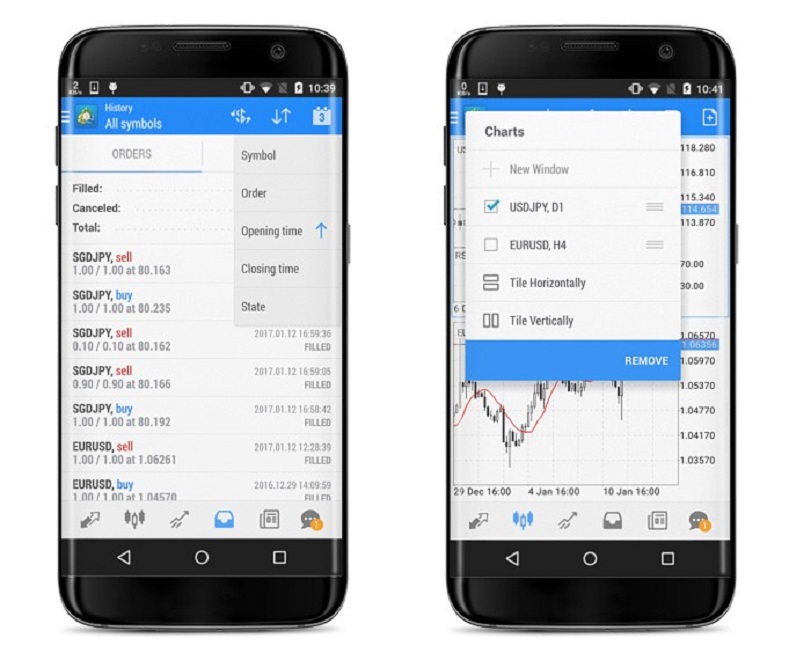
MetaTrader 5 is a powerful trading platform used by traders worldwide. The platform allows users to trade in various financial markets, including Forex, stocks, futures, and options. MetaTrader 5 offers advanced trading tools such as technical analysis, customizable charts, and indicators to help traders make informed trading decisions. Moreover, the platform has a built-in programming language that enables users to create custom indicators and automated trading systems.

MetaTrader 5 allows traders to connect to their preferred broker and trade directly from the platform. It offers real-time data feeds, advanced order types, and various time frames. The MetaTrader 5 platform is constantly updated with new features and improvements to provide traders with an even better trading experience. The best broker for MetaTrader 5 can offer a range of advantages to traders, including competitive spreads, advanced trading tools, and efficient customer service.

What Are the Benefits of Trading with MT5 (Speed, Features, Automation)

The MetaTrader 5 platform offers many advantages for traders. First, it is one of the fastest trading platforms available. It allows users to quickly and easily access real-time data feeds and place trades with minimal effort. MT5 offers advanced features such as customizable charts, indicators, and automated trading systems.

MetaTrader 5 provides traders with a range of order types that can be used to manage risk more effectively. The platform even has built-in automation tools that allow traders to set up rules to automatically execute trades based on predefined criteria. Finally, the platform has robust security measures that protect user accounts from hackers or other malicious activities.

The Top Brokers for the MT5 Platform 

When it comes to finding the best broker for MetaTrader 5, several factors must be considered. First, make sure that the broker is regulated and offers competitive spreads. Additionally, look for brokers that offer advanced trading tools such as technical analysis indicators, customizable charts, and automated trading systems.

Finding a broker with efficient customer service that can provide helpful support when needed is essential. To help get you started on your search for the perfect MT5 broker, here are some of our top recommendations:

HotForex– HotForex is an award-winning online forex and CFD broker offering over 150 instruments, including currencies, commodities, cryptocurrencies, indices and stocks. They offer tight spreads and excellent customer service.

FXCM– FXCM is a leading provider of online trading services with global access to over 2,000 markets, including Forex, indices, commodities, cryptocurrencies and more. They offer competitive spreads and superior customer service.

Avatrade– Avatrade is an established online broker offering traders access to over 250 financial instruments across various asset classes. They also offer tight spreads and excellent customer service.

These are just a few MT5 brokers available to traders today. With so many options, it’s essential to research before selecting an MT5 broker that best meets your needs.

Strategies to Maximize Your Profits on the MT5 Platform

Once you’ve chosen a MetaTrader 5 broker, it’s time to start trading. We recommend developing a comprehensive trading strategy to maximize profits and take full advantage of the platform’s features. Here are some tips to help you get started.

The main tip to success with MT5 is to take the time to understand the platform. Please ensure you know all its features, such as technical analysis tools and automated trading systems. Additionally, research market trends and news events that could affect your trades.

Another key strategy for maximizing profits in MetaTrader 5 is risk management. Utilize stop-loss orders and limit orders to minimize losses when necessary. Finally, staying disciplined is crucial by sticking to your trading plan no matter what the markets are doing. With a comprehensive strategy and the best brokers for MetaTrader 5, there’s no limit to what you can achieve as a trader.

Tips and Tricks to Get Started with MetaTrader 5 Platform Trading

MetaTrader 5 is a powerful trading platform with many features that can be utilized to maximize your profits. Here are some tips and tricks to help traders get started on the MT5 platform.

The first step is to create an account with a MetaTrader 5 broker. Once you’ve done this, please familiarize yourself with the platform’s various features to fully utilize its capabilities. Explore the charting tools, indicators, and other technical analysis tools available in MetaTrader 5. Additionally, set up automated trading systems if you plan on taking a hands-off approach to trading.

Finally, always practice risk management when trading on MT5 by setting stop-loss and limit orders. By following these tips and tricks, you can take full advantage of the MetaTrader 5 platform and maximize your profits.

Conclusion

MetaTrader 5 is a powerful and versatile trading platform that provides traders with the tools they need to succeed in the markets. Its advanced features, such as customizable charts, automated trading systems, and efficient customer service, make it an ideal platform for all traders. To get started, find the best broker for MetaTrader 5 and create an account.


Economy

Wale Edun’s Claims of 1.8mbpd Crude Output Contrast Official Data

Published

on

wale edun

By Adedapo Adesanya

The Minister of Finance, Mr Wale Edun, says Nigeria’s crude oil production has risen to 1.8 million barrels ​a day, contrasting with available production data.

Speaking in an interview with Reuters on Wednesday on ⁠the sidelines of the International Monetary ​Fund and World Bank Group spring ​meetings in Washington D.C., the Minister said the current oil output would generate fiscal breathing space that will allow the government to support vulnerable ​households as it ploughs ahead with ​reforms.

Nigeria, which is a member of the Organisation of the Petroleum Exporting Countries (OPEC), is Africa’s largest oil producer.

Mr Edun said rising crude production was positive for Nigeria’s revenue, foreign exchange ​and the country’s fiscal situation.

“It gives us that extra fiscal space ‌within ⁠which to look at … helping the vulnerable households at this time,” he told the publication, noting that support would be targeted, adding “there is ​no thought ​of any ⁠return or retardation to broad untargeted subsidies.”

Mr Edun also said the Bola Tinubu-led administration was also ​committed to continuing its reform ​programme.

“Nigeria is in a position where the resilience that has been built in ⁠the ​economy is actually very ​obvious for all to see,” he said.

Despite the 1.8 million barrels per day figure claim, Business Post reports that production data for March 2026 from the Nigerian Upstream Petroleum Regulatory Commission (NUPRC) shows that Nigeria attained 1.546 million barrels per day, made up of 1.382 million barrels per day of crude, 42,809 barrels per day of blended condensate and 120,442 barrels per day of unblended condensate.

The average crude production represents 92 per cent of the OPEC quota, which is fixed at 1.5 million barrels per day.

NUPRC Nigeria crude output March 2026

Continue Reading

Economy

SEC Opens Capital Market to Free Trade Zone Companies

Published

on

SEC Nigeria

By Adedapo Adesanya

The Securities and Exchange Commission Nigeria (SEC) has unveiled a new regulatory framework that would allow companies operating within free trade zones to raise capital from the Nigerian public, subject to strict eligibility and disclosure requirements.

The proposal, titled New Rules for Public Offering of Securities by a Free Trade Zone Entity, is anchored on provisions of the Investments and Securities Act (ISA) 2025 and is designed to integrate free trade zone enterprises into the domestic capital market while strengthening investor protection.

Under the proposed rules, only entities duly licensed by recognised free zone authorities, such as the Nigeria Export Processing Zones Authority and the Oil and Gas Free Zones Authority, will be eligible to issue shares to the public.

The commission clarified that the rules will apply strictly to free trade zone entities (FTZEs), excluding companies operating outside designated zones, even if licensed by zone authorities. It also emphasised that no FTZE will be permitted to offer securities to the public without prior approval from the Commission.

To qualify, an FTZE must demonstrate a minimum of three years’ operating track record immediately preceding its application, with at least two years of independent business activity within a free trade zone. Additionally, such entities are required to have competent senior management and a minimum paid-up share capital of not less than N7.5 billion.

The SEC said FTZEs seeking to access the capital market must subject themselves to Nigeria’s tax laws and comply fully with ongoing disclosure and reporting obligations applicable to publicly listed companies.

The proposed framework also outlines extensive registration requirements. Issuers will be required to submit evidence of licensing by a free zone authority, constitutional documents, and verified details of shareholding structure and board composition.

A “No Objection” letter from the relevant free zone authority will also be mandatory, alongside a commitment to list the offered shares on a registered securities exchange.

The SEC noted that the rules are intended to provide clarity on eligibility criteria and operational conditions for FTZEs seeking to conduct public offerings, thereby deepening the capital market and aligning free zone operations with national financial system standards.

Continue Reading

Economy

Guinness Nigeria Shareholders to Pocket N4.38bn Interim Dividend for Q1’26

Published

on

Guinness Nigeria

By Aduragbemi Omiyale

Shareholders of Guinness Nigeria Plc will share about N4.38 billion as an interim dividend for the first quarter of 2026, the board has disclosed.

This cash reward amounts to N2.00 per share, as the company has shares outstanding of 2,190,382,819 on the floor of the Nigerian Exchange (NGX) Limited.

The brewer stated that the interim dividend would be paid to investors whose names appear on the register of members as of the close of business on April 20, 2026.

The dividend payout is being proposed following the sustained profitability reflected in the unaudited financial results of the company in the first three months of this year and its “strong performance in FY 2025.”

It would be “paid from distributable profits in accordance with Sections 426–428 of the Companies and Allied Matters Act (CAMA) 2020.”

Analysis of the performance of the brewery giant between January and March 2026 showed that revenue grew by 4 per cent on a year-on-year basis to N122.77 billion from N118.34 billion in the same period of last year, while the gross profit contracted to N43.48 billion from N44.52 billion due to prevailing cost pressures within the operating environment.

The company’s operating profit also shrank to N17.18 billion from N18.00 billion in the first quarter of 2025 due to elevated marketing & distribution costs and administrative expenses.

However, the reduction in net finance costs to N1.43 billion from N7.72 billion in Q1 of 2025 helped the organisation to grow its post-tax profit to N10.39 billion in the period under review versus the N7.03 billion recorded in the corresponding period of last year.

Continue Reading

Trending