Education
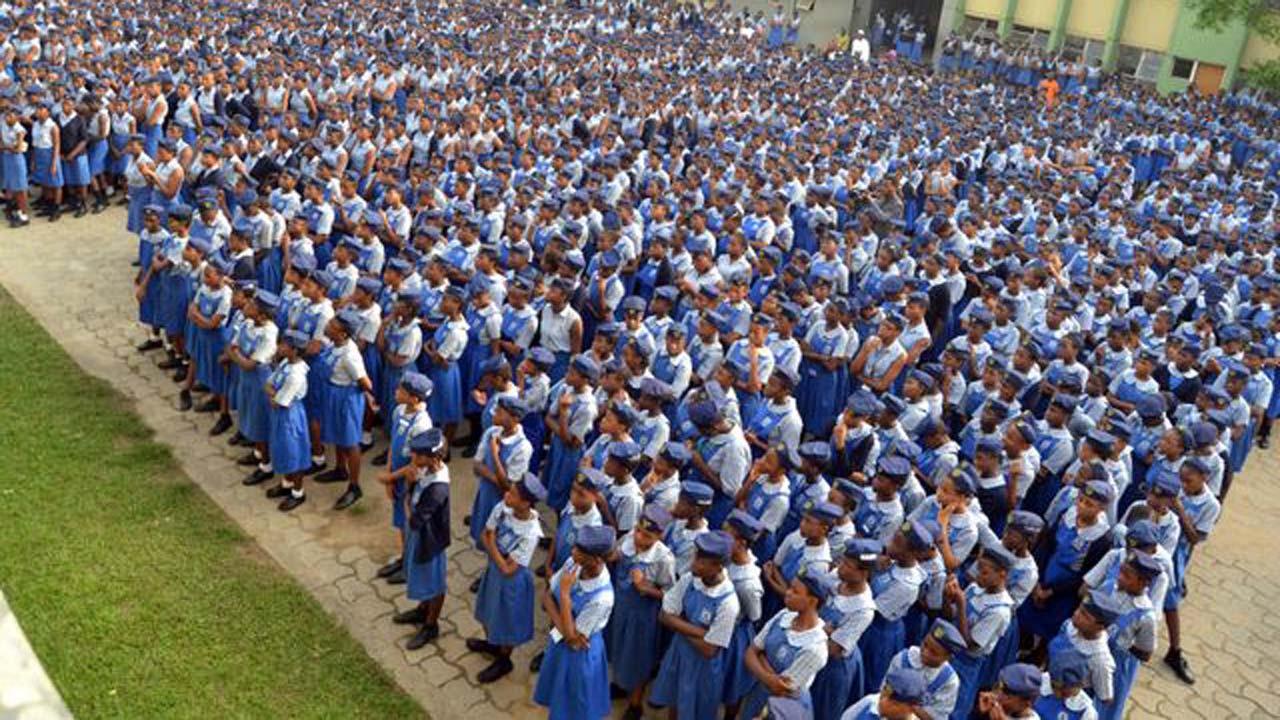
Kidnappings: FG Reopens 47 Unity Schools
By Adedapo Adesanya
The federal government has announced the reopening of the 47 unity schools earlier shut down due to security concerns on November 21.
This was disclosed in a statement by the Federal Ministry of Education on Thursday.
It said that the decision to reopen the affected colleges across the country reaffirmed its unwavering commitment to safeguarding students and ensuring the continuity of education.
On November 18, 2025, over 20 schoolgirls were kidnapped by unidentified armed men from the Government Girls Comprehensive Secondary School in Maga, Kebbi state.
Just three days later, on November 21, about 303 students and 12 teachers were kidnapped at St. Mary’s Catholic Primary and Secondary School in Papiri, Niger state.
In response, the federal government shut down 47 Federal Unity Colleges, and some states including Katsina, Taraba, and Niger also closed schools or restricted school activities, particularly boarding institutions.
Rights group including Human Rights Watch lamented that while these measures were aimed at protecting students, they disrupted learning for thousands of children, denied them access to education, and the social and psychological support schools provide.
FULL LIST OF AFFECTED UNITY COLLEGES
North-West:
FGGC Minjibir, FTC Ganduje, FGGC Zaria, FTC Kafanchan, FGGC Bakori, FTC Dayi, FGC Daura, FGGC Tambuwal, FSC Sokoto, FTC Wurno, FGC Gusau, FGC Anka, FGGC Gwandu, FGC Birnin Yauri, FTC Zuru, FGGC Kazaure, FGC Kiyawa, FTC Hadejia.
North-East:
FGGC Potiskum, FGC Buni Yadi, FTC Gashua, FTC Michika, FGC Ganye, FGC Azare, FTC Misau, FGGC Bajoga, FGC Billiri, FTC Zambuk.
North-Central:
FGGC Bida, FGC New-Bussa, FTC Kuta-Shiroro, FGA Suleja, FGC Ilorin, FGGC Omu-Aran, FTC Gwanara, FGC Ugwolawo, FGGC Kabba, FGGC Bwari, FGC Rubochi, FGGC Abaji.
South-West:
FTC Ikare Akoko, FTC Ijebu-Imusin, FTC Ushi-Ekiti, FTC Ogugu.
Education
Groups Tutor Female Students About Risks Associated With Shisha, Vaping
By Aduragbemi Omiyale
Over 200 senior students of Cleggs Girls High School, Surulere, Lagos, were on July 23, 2026, engaged in practical knowledge about the risks associated with smoking, vaping, and shisha.
This engagement was made possible through a collaboration between Breathe Life Foundation and Teach Nigeria Fellow.
Participants were students aged 15–19 years. They were also informed about the misconception that shisha is a safer alternative to cigarettes or other substances.
Through an engaging and interactive discussion, students explored the influence of peer pressure and learned practical strategies for making healthier, more informed lifestyle choices.
They also gained a better understanding of common environmental triggers of asthma and other respiratory conditions, including cigarette smoke, generator fumes, bush burning, mosquito coil smoke, candles, charcoal, and firewood.
The session highlighted an important reality: young people may not always recognise how seemingly routine lifestyle choices and environmental exposures can gradually affect their respiratory health, quality of life, and long-term wellbeing.
For Breathe Life Foundation, this reinforces the importance of shifting the conversation from treatment to prevention through awareness and education.
By equipping young people with the knowledge to identify risks and make healthier choices early, the foundation is helping to build a generation that is more conscious of – and better prepared to protect – its respiratory health.
The organisation said it is dedicated to advancing respiratory health, an often-neglected public health priority. Healthy lungs are essential to life, yet respiratory diseases remain among the world’s leading causes of death and disability, even though many are preventable and treatable.
Education
Dangote Cement Distributes Essential Learning Aids to Kogi Pupils
By Aduragbemi Omiyale
As part of its Corporate Social Responsibility (CSR) schemes, the Obajana Plant of Dangote Cement Plc has distributed some educational materials to some pupils in Kogi State.
The items shared to the beneficiaries included school bags, exercise books, writing materials, water bottles, and other essential learning aids aimed at enhancing the learning experience of the pupils and preparing them for the next academic session.
The General Manager for the Social Performance Department of Dangote Cement at Obajana Plant, Mr Ademola Adeyemi, said the materials were donated days after Dangote Cement distributed similar education materials to pupils in public schools in its catchment communities of Oyo, Iwaa, Obajana and Apata; and commissioned a multi-million-naira hospital in Obajana, which added to the growing list of social investments that includes an earlier hospital project in Iwaa and Oyo Communities.
He noted that, over the years, the company has invested billions of naira in a wide range of social programmes for host communities, including empowerment programmes, road construction, and potable water projects, and it remains resolute in its commitment to sustaining and expanding its interventions.
He noted that the company’s corporate social responsibility programmes are aligned with government development priorities and are implemented through sustained, mutually beneficial partnerships.
“The intervention was informed by findings from a needs assessment conducted by Dangote Cement. During the assessment, it was observed that several pupils attended school without school bags, while others carried their books by hand. It was also discovered that many students lacked essential learning materials such as exercise books, pens, pencils, and other basic learning materials,” the cement firm said.
The Head Teacher of UBE LGEA School, St. Luke Model II, Adankolo, Lokoja Local Government Area, Mr Abubakar Sanni, expressed profound appreciation to the management of Dangote Cement for the gesture.
The Head Teacher expressed gratitude to the Group President of the conglomerate, Aliko Dangote, for extending the company’s educational support programme beyond its host and impacted communities to schools located at the state headquarters.
The beneficiaries, school management, parents, and community stakeholders expressed gratitude to Dangote Cement for the timely intervention and prayed for the continued growth and success of the company in its efforts to improve lives and support sustainable community development.
Education
11 Poetry Collections Vie for 2026 Nigeria Prize for Literature
By Adedapo Adesanya
The Nigeria Prize for Literature has unveiled an 11-title longlist for its 2026 edition, selecting the outstanding poetry collections from a record 223 submissions received for the competition.
This was contained in a press statement signed by General Manager, External Relations & Sustainable Development, Mrs Sophia Horsfall.
The announcement, by the chairman of the Advisory Board for the Prize, Professor Akachi Adimora-Ezeigbo, marks a significant milestone in this year’s competition and reflects the exceptional quality, creativity and diversity of contemporary poetry.
The longlisted titles, arranged alphabetically, are:
1. Adult Love by Tanure Ojaide
2. Bakandimiya by Saddiq Dzukogi
3. Black Passport by Paul Akpomuje
4. 2000 Blacks by Ajibola Tolase
5. Ceremony for The Nameless by Theresa Lola
6. Corpus: Animistic Verses by Ayo Oyeku
1. Floral’s Love Colony by Tares Oburumu
2. The Origin of Wounds by Malik Gbolahan
3. The Years of Blood by Adebayo Agarau
4. Unbind Me Now by James Ugwu Eze
5. Why Does God Need a Gun by Ogaga Ifowodo
Professor Adimora-Ezeigbo described the announcement as an important stage in the 2026 edition of arguably Africa’s biggest and most prestigious literary Prize.
She noted that the collections demonstrate the remarkable capacity of poetry to illuminate human experience through thoughtful reflection, cultural memory and artistic expression.
The academic added that the works revisit history while interrogating dominant historical narratives and exposing the forces that shape collective identities and social relations.
She stated that despite their varied emphases, the books share a commitment to exploring the endurance of individuals and communities in the face of violence, oppression, and social fragmentation.
Commenting on style and language, she said the books display an impressive diversity of poetic techniques marked by lyrical intensity, symbolic depth, and artistic innovation.
“Many employ densely poetic, allegorical, and elegiac modes that invite multiple layers of interpretation, while others draw extensively on folklore, oral traditions, and contemporary realities to create a compelling fusion of past and present. Their language is generally fluid, evocative, and aesthetically refined, relying on vivid imagery, emotional resonance, and intellectual sophistication to communicate complex ideas. These works demonstrate how poetic language can illuminate social realities, challenge established perspectives, and give voice to both individual and collective experiences.
“The next stage will demand a closer reading of each work, with attention to language, form, originality and lasting literary value,” she stated.
She also commended the judges for their work and reaffirmed the Advisory Board’s commitment to a credible process, literary excellence and the promotion of a strong reading culture.
The announcement of the 11-title longlist formally opens the next phase of the shortlist of three in August and the possible announcement of the winner in October.
The Nigeria Prize for Literature, sponsored by NLNG, carries a cash award of $100,000 for the author of the winning book. In its 22nd year, the prize rotates annually across four genres – prose fiction, poetry, drama and children’s literature – with the 2026 edition devoted to poetry.