

Education
Mokyr, Aghion, Howitt Clinch 2025 Economics Nobel Prize

By Adedapo Adesanya
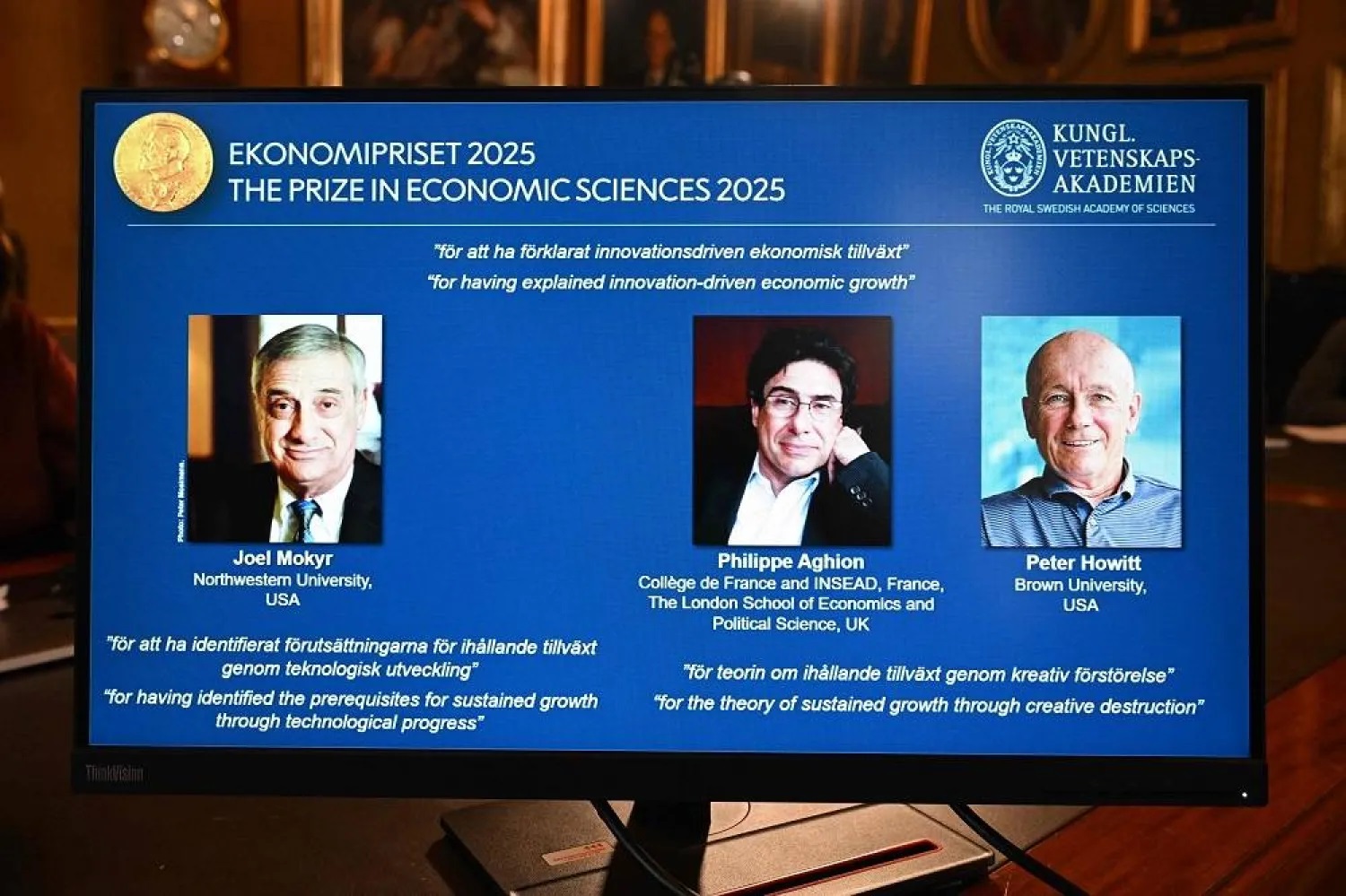
The Royal Swedish Academy of Sciences has decided to award the 2025 Sveriges Riksbank Prize in Economic Sciences in Memory of Alfred Nobel to the trio of Joel Mokyr, Philippe Aghion and Peter Howitt.
Announcing the winners on Monday, the Royal Swedish Academy of Sciences, which decides recipients of the award, said this year’s laureates were awarded “for having explained innovation-driven economic growth” with one half to Mokyr “for having identified the prerequisites for sustained growth through technological progress” and the other half jointly to Aghion and Howitt “for the theory of sustained growth through creative destruction.”
It noted for the first time over the last two centuries, the world has seen sustained economic growth.
“This has lifted vast numbers of people out of poverty and laid the foundation of our prosperity,” a statement said, adding that “technology advances rapidly and affects us all, with new products and production methods replacing old ones in a never-ending cycle. This is the basis for sustained economic growth, which results in a better standard of living, health and quality of life for people around the globe.”
Joel Mokyr used historical sources as one means to uncover the causes of sustained growth becoming the new normal, while Philippe Aghion and Peter Howitt also studied the mechanisms behind sustained growth. In an article from 1992, they constructed a mathematical model for what is called creative destruction: when a new and better product enters the market, the companies selling the older products lose out. The innovation represents something new and is thus creative. However, it is also destructive, as the company whose technology becomes passé is outcompeted.
The Nobel committee noted that in different ways, the laureates showed how creative destruction creates conflicts that must be managed in a constructive manner.
“Otherwise, innovation will be blocked by established companies and interest groups that risk being put at a disadvantage,” it added.
“The laureates’ work shows that economic growth cannot be taken for granted. We must uphold the mechanisms that underly creative destruction, so that we do not fall back into stagnation,” said Mr John Hassler, Chair of the Committee for the prize in economic sciences.
The economics prize marks the end of the 2025 event, which started last week with medicine and physiology (Monday), physics (Tuesday), chemistry (Wednesday), literature (Thursday), and peace (Friday).
The laureates will be officially celebrated at an event in December. Their awards are worth 11 million crowns ($1.2 million).


