Connect with us

Education

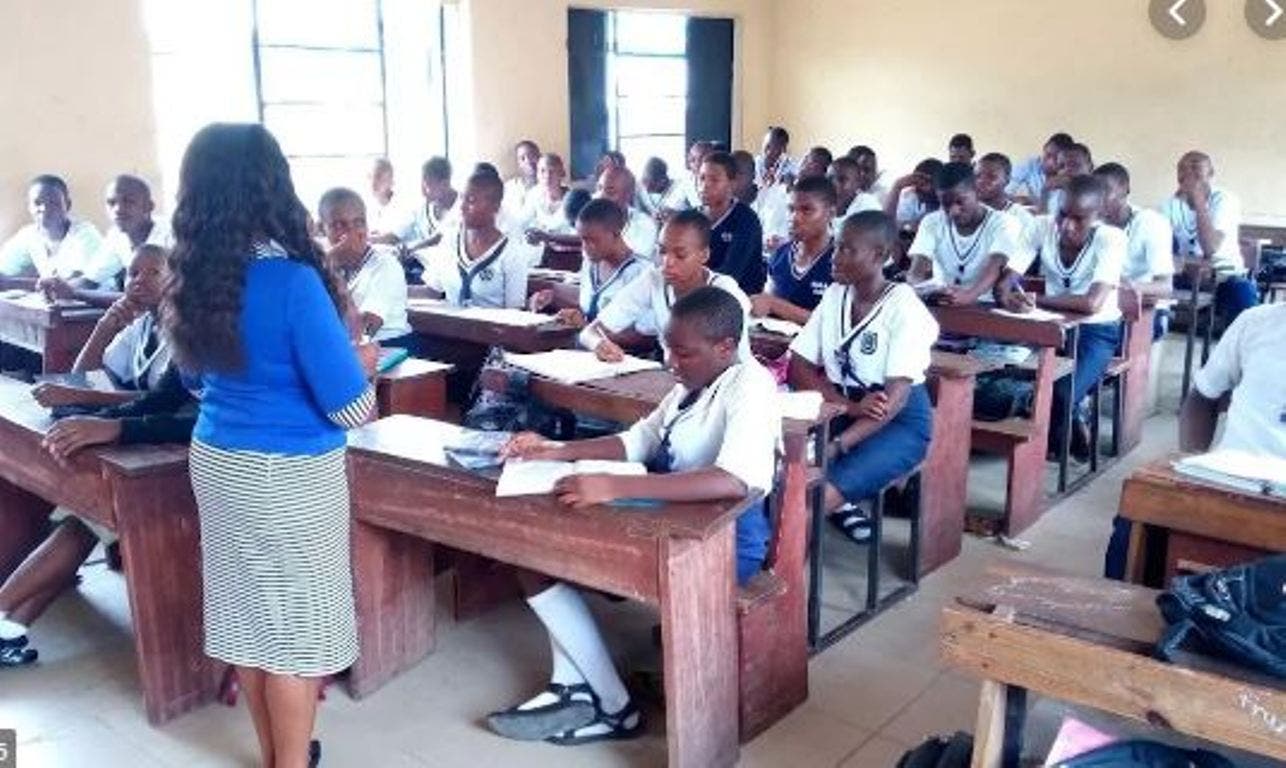
School Resumption Time Table in Enugu Harsh—Group

Published

on

School Resumption

By Okechukwu Keshi Ukegbu

A group known as the International Solidarity for Peace and Human Rights Initiative has strongly condemned the time table surrounding the resumption of schools in Enugu.

The group described the time table as harsh because it did not capture the interest of parents who are receiving the backlash of inconsistencies in the time table.

In a letter to Governor Ifeanyi Ugwuanyi, endorsed Osmond Ugwu and Jerry Chukwuokolo, President and Secretary of the group respectively, the organisation alleged that part of the stakeholders that had influential involvement in the resumption of schools process were representatives from the private school sector.

“We appreciate the concern of the government that the children do not lose the entire session to COVID-19 pandemic. We wish to, however, point out some shortcomings of this programme and timetable,” a part of the letter read.

It was also noted that the shortness of the resumption notice to parents smacks of laxity or insensitivity on the part of the government actors in that regard.

However, the group recommended the phased process of classes in all the primary and secondary schools in the state pending the construction of new classroom blocks for effective and permanent maintenance of physical distancing.

It also recommended that the government provides face masks and hand sanitizers for six months to contain the spread of the disease.


Click to comment

Leave a Reply

Your email address will not be published. Required fields are marked *

Education

2025 Agreement: ASUU Gives 21 State Universities 14-Day Ultimatum

Published

on

ASUU

By Adedapo Adesanya

The Academic Staff Union of Universities (ASUU) has issued a 14-day ultimatum to 21 state-owned universities over alleged failure to implement key provisions of the 2025 agreement reached with the federal government.

The union warned that the affected universities could be heading for industrial action if their respective authorities fail to resolve the outstanding issues within the two-week window.

The ultimatum was one of the major resolutions reached at ASUU’s National Executive Council (NEC) meeting held at the University of Abuja recently.

In a statement signed by ASUU President, Professor Christopher Piwuna, the union expressed concern over what it described as the “haphazard implementation” of the 2025 Federal Government-ASUU agreement, accusing relevant authorities of displaying a lackadaisical attitude towards its implementation.

ASUU said the problem was particularly pronounced in several state universities, where university visitors had allegedly failed to implement the agreement, leaving affected branches with little option but to seek NEC’s approval to commence the process for industrial action.

Consequently, NEC authorised the affected branches to issue 14-day ultimatums to their university authorities, after which strike procedures would commence if the issues remained unresolved.

The universities affected include Nasarawa State University, Keffi; Ibrahim Badamasi Babangida University, Lapai; University of Medical Sciences, Ondo; Gombe State University; Plateau State University, Bokkos; Adekunle Ajasin University, Akungba; Ambrose Alli University, Ekpoma; Olusegun Agagu University of Science and Technology, Okitipupa; Abia State University, Uturu; and University of Education and Entrepreneurship, Akamkpa.

Others are Emmanuel Alayande University of Education, Oyo; Kaduna State University; Aliko Dangote University of Science and Technology, Wudil; Northwest University, Kano; Enugu State University of Science and Technology; Imo State University, Owerri; Niger Delta University, Wilberforce Island; University of Africa, Toru-Orua; Bayelsa Medical University, Yenagoa; and Taraba State University, Jalingo.

According to the union, the 14-day ultimatum is a precondition for the affected branches to begin formal procedures for industrial action.

ASUU said branches in the Sokoto Zone had already issued a similar two-week ultimatum, while NEC would reconvene in an emergency session at the end of August or early September to assess developments and determine the union’s next line of action.

The union also revived its “No-pay-No-work” position, directing branches in federal universities where salaries had been withheld or underpaid to take appropriate action.

It specifically cited affected universities, including universities of agriculture, where members had allegedly received incomplete salaries.

Beyond the salary and agreement implementation disputes, ASUU maintained its opposition to the National Education Repository Databank (NERD), insisting that unresolved questions surrounding its hosting arrangements and intellectual property rights must first be addressed.

The union also waded into the country’s political process, urging its members to participate actively in politics and approving the establishment of an ASUU Independent Monitoring Group.

The group, according to the union, will monitor and observe elections across the country.
Meanwhile, growing insecurity within university campuses also featured prominently in the NEC deliberations.

ASUU expressed concern over attacks and other security incidents that had claimed the lives of members, directing affected branches to engage the police and other relevant security agencies in pursuing justice for victims.

Branches were also mandated to document cases of insecurity and present comprehensive records to the union’s NEC for further action.

Continue Reading

Education

WAEC Releases 2026 WASSCE Results, 61.54% Candidates Pass

Published

on

WAEC

By Adedapo Adesanya

The West African Examinations Council (WAEC) has released the results of the 2026 West African Senior School Certificate Examination (WASSCE) for school candidates, with 61.54 per cent of candidates obtaining credits in at least five subjects, including English Language and Mathematics.

The Head of WAEC’s Nigeria National Office, Mr Amos Dangut, announced the results at a press briefing in Lagos on Wednesday.

Mr Dangut said 1,200,514 candidates met the benchmark for admission to higher institutions, out of the 1,950,726 candidates who sat the examination nationwide, held between April 24 and June 19.

He said 102,708 examiners were engaged in the marking exercise held at 88 marking venues across the country between 2 July and 20 July.

“Today, I am happy to inform you that all the processes leading to the release of results have been completed. It is now my pleasure to announce the release of the results of candidates who sat the WASSCE for School Candidates, 2026 in Nigeria,” he said, directing candidates to the agency’s portal to access their results.

“UPDATE: 2026 WASSCE (SC) results have been released. Generate your PIN at waec.org and check your results now on waecdirect.org,” the examination body said, noting that candidates must obtain their Serial Number and PIN before they can check their results.

To generate the required credentials, candidates are expected to visit WAEC’s official website and select the “Serial Number and PIN” option at the top of the page.

They are then required to select the appropriate examination year and diet, enter their examination number and National Identification Number (NIN), and ensure that the NIN provided is the same one used during registration for the examination.

Candidates must also provide their email address and phone number to receive a One-Time Password (OTP).

After entering the OTP, candidates can recover their Serial Number and PIN, which they can subsequently use to check their results through WAEC Direct.

Continue Reading

Education

Groups Tutor Female Students About Risks Associated With Shisha, Vaping

Published

on

Breathe of Life Cleggs Girls High School students

By Aduragbemi Omiyale

Over 200 senior students of Cleggs Girls High School, Surulere, Lagos, were on July 23, 2026, engaged in practical knowledge about the risks associated with smoking, vaping, and shisha.

This engagement was made possible through a collaboration between Breathe Life Foundation and Teach Nigeria Fellow.

Participants were students aged 15–19 years. They were also informed about the misconception that shisha is a safer alternative to cigarettes or other substances.

Through an engaging and interactive discussion, students explored the influence of peer pressure and learned practical strategies for making healthier, more informed lifestyle choices.

They also gained a better understanding of common environmental triggers of asthma and other respiratory conditions, including cigarette smoke, generator fumes, bush burning, mosquito coil smoke, candles, charcoal, and firewood.

The session highlighted an important reality: young people may not always recognise how seemingly routine lifestyle choices and environmental exposures can gradually affect their respiratory health, quality of life, and long-term wellbeing.

For Breathe Life Foundation, this reinforces the importance of shifting the conversation from treatment to prevention through awareness and education.

By equipping young people with the knowledge to identify risks and make healthier choices early, the foundation is helping to build a generation that is more conscious of – and better prepared to protect – its respiratory health.

The organisation said it is dedicated to advancing respiratory health, an often-neglected public health priority. Healthy lungs are essential to life, yet respiratory diseases remain among the world’s leading causes of death and disability, even though many are preventable and treatable.

Continue Reading