Connect with us

Feature/OPED

5 Wealth-Building Strategies for Nigerian Women-led Businesses

Published

on

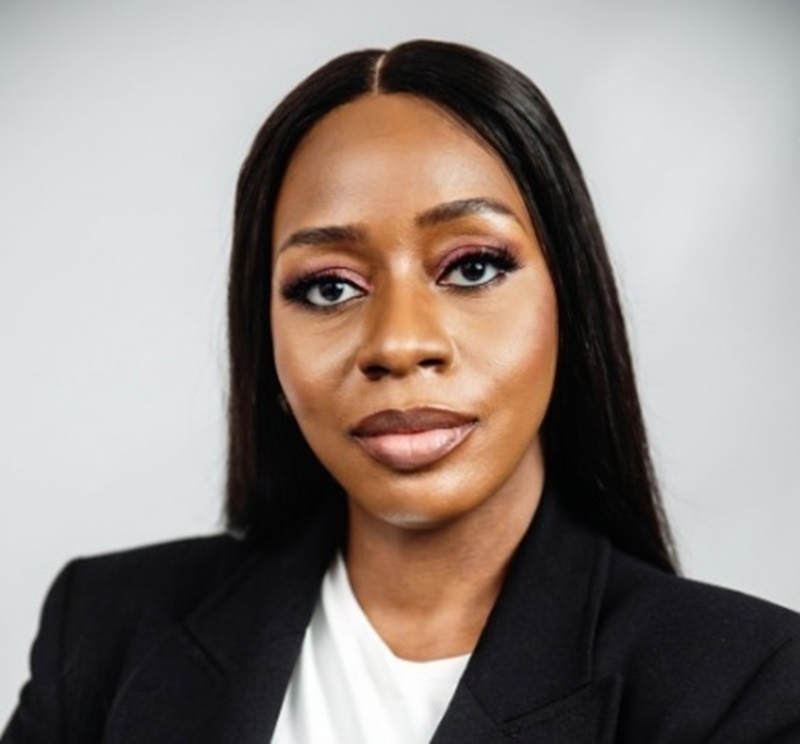
Chinwe Iwobi Wealth-Building Strategies

By Chinwe Iwobi

In Nigeria, women are the backbone of our economy. Data from the National Bureau of Statistics shows that women own approximately 40% of small and medium-sized enterprises across the country (NBS Country Data Overview 2023). Yet despite their outsized contribution to GDP, women-led businesses continue to face systemic barriers to the capital and financial infrastructure needed to scale.

The cost of that gap is not abstract. When these entrepreneurs are held back, the ripple effect runs deep, from household stability to the education of the next generation. But the narrative is shifting. Nigerian women are proving, consistently, that they are not just resilient; they are sophisticated, high-earning innovators building businesses that deserve serious financial strategy.

Here are five foundational strategies every women-led business should be deploying to build lasting, generational wealth.

  1. Separate Business and Personal Finances Without Exception

Mixing personal funds with business cash is one of the most common and most damaging financial habits I see among growing entrepreneurs. It obscures your true profit margins, makes tax planning nearly impossible and, critically, disqualifies you from accessing formal credit when you need it most.

The discipline of separation is not just administrative. It is the first signal you send to the financial system that your business is serious. Open a dedicated business account, maintain clean transaction records, and treat your business finances with the same rigour you would expect from any enterprise operating at scale. Clarity on your numbers is the foundation on which every other strategy here depends.

  1. Build Both an Emergency Fund and an Opportunity Fund

Most financial advice stops at the emergency fund, which is three to six months of operating expenses set aside for lean periods. That is necessary, but insufficient. The entrepreneurs I have watched grow most aggressively also maintain what I call an opportunity fund: accessible liquidity specifically reserved to move fast when a prime supplier deal, an expansion location, or a bulk inventory discount appears.

In an unpredictable market like Nigeria’s, the businesses that scale are rarely the ones with the best products alone. They are the ones with the financial readiness to act decisively. Products like FairMoney’s FairSave are designed precisely for this, keeping your funds accessible while earning competitive daily interest so your idle cash is working even when you are not. Build both buffers, and build them before you think you need them.

  1. Invest Profits Back into Revenue-Generating Assets

Surplus cash sitting in a current account is a slow leak. Inflation erodes it, and opportunity costs compound quietly. The discipline here is to consistently channel profits back into assets that grow your revenue capacity, whether that is new equipment, improved technology, better inventory systems, or staff training.

For capital you do not need immediately, consider locking it into a fixed-term savings product that offers higher interest returns. The psychological benefit is as important as the financial one: ring-fencing that capital removes it from day-to-day spending temptation and ensures it is preserved and grown for a defined purpose. Discipline in capital allocation separates businesses that plateau from those that compound.

  1. Diversify Your Revenue Streams Intentionally

Single-stream businesses are inherently fragile. If your sole revenue source is disrupted by market shifts, a supply chain breakdown, or a change in consumer behaviour, your entire operation is exposed. Resilience is built by design, not by accident.

If you are in retail, consider adding a service-based arm. If you are service-led, explore whether digital products or training offerings could create passive income alongside your core work. Beyond product diversification, consider how you accept payments. Building a verified, diverse transaction history through formal payment channels also quietly strengthens your credit profile, an asset that pays dividends when you approach lenders for growth financing. FairMoney’s Business POS infrastructure, for instance, allows entrepreneurs to expand their payment reach while simultaneously building that financial track record.

  1. Invest Beyond the Business

This is the strategy most women entrepreneurs delay for too long, and it is the one I feel most strongly about. Relying entirely on your business for your net worth is a high-risk position, no matter how well that business is performing. Businesses face cycles; personal wealth should not.

As your business stabilises, begin systematically moving a portion of your profits into personal investment vehicles such as long-term savings accounts, money market funds, or other instruments that sit entirely outside the business cycle. Automate it if you can, so the decision is made once and executed consistently. The goal is to build a personal financial foundation that remains intact regardless of what your business goes through in any given quarter. True wealth is not what your business is worth on paper. It is what you own independently of it.

The Bigger Picture

For female entrepreneurs in Nigeria, wealth-building is not simply a personal ambition; it is an economic argument. When women-led businesses scale, communities stabilise, households invest in education, and local economies deepen. The strategies above are not complicated, but they require consistency and the right financial infrastructure to execute well.

The tools exist. The opportunity is real. What remains is the decision to treat your business, and your personal wealth, with the long-term seriousness both deserve.

Chinwe Iwobi is the Head of Wealth Management at FairMoney Microfinance Bank

Click to comment

Leave a Reply

Your email address will not be published. Required fields are marked *

Feature/OPED

When Leaders THRIVE: Yetunde B. Oni’s Candid Counsel to Lateef Jakande Leadership Academy

Published

on

When Leaders THRIVE Yetunde B. Oni

Union Bank’s Managing Director and Chief Executive Officer sat with 30 of Nigeria’s most promising young leaders for a frank conversation on character, relationships and the discipline of growth.

Out of 25,000 applicants, only 30 earned a place. That single figure tells you how rare the room was when Yetunde B. Oni, Managing Director and Chief Executive Officer of Union Bank of Nigeria, recently sat down with a cohort of the Lateef Jakande Leadership Academy.

The Academy, a Lagos State Government initiative established in honour of Alhaji Lateef Kayode Jakande, the state’s first civilian governor, exists to raise a generation of ethical and capable young leaders. Its fellows are drawn from across professions, sectors and ethnicities, and shaped through a fellowship facilitated by the Africa Leadership Initiative, West Africa (ALI WA), whose work on values and principled leadership has become a quiet engine behind some of the country’s most thoughtful emerging talent.

It was into this gathering that Mrs Oni brought not a corporate address, but a conversation. Honest, personal and at times disarming, she spoke about the philosophies that have carried her through a career spanning more than three decades, the setbacks she has had to surmount, and the values that opened doors she never expected to walk through.

She gave them a framework to hold on to. She called it THRIVE.

The six principles

T — Take ownership of your relationships. Leadership, she argued, begins with the deliberate stewardship of the people around you. Relationships are not incidental to a career. They are infrastructure.

H — Honour God. She spoke openly about faith as a steadying force, an anchor that keeps ambition tethered to something larger than the self.

R — Recharge and refresh. Mental and physical health, she insisted, are not luxuries to be deferred until the work is done. Leaders who neglect their well-being eventually have less to give.

I — Invest in your growth. Continuous and heavy investment in personal development is, in her telling, the price of staying relevant. The learning never ends.

V — Value your work. She pressed the fellows on identity and brand. What do you stand for? Do you create value? Who, in truth, are you? The questions were not rhetorical.

E — Embrace setbacks. Failure, she said, is not the opposite of progress but a part of it. The leaders who endure are the ones who learn to metabolise disappointment rather than be defeated by it.

The people behind the leader

If one theme threaded the entire conversation, it was relationships. Mrs Oni was candid that she did not arrive at the top of Nigerian banking alone. She credited the steady support of family, her parents and her husband, alongside the mentors, friends, coaches and sponsors who shaped her at different stages.

She drew a sharp and useful distinction between a mentor and a coach, two roles often conflated and rarely understood, and she traced much of her progress back to a foundation of Nigerian cultural values: hard work, honesty and integrity, courtesy and respect. These, she told the fellows, are not relics. They are the very qualities that have earned her trust and opened doors throughout her journey.

“You need people,” was the message, delivered without sentiment. Relationships, she explained, must be managed and nurtured with the same seriousness one brings to any other discipline. Time must be managed with equal care.

On believing, and risking

Perhaps the most resonant moment came when Mrs Oni spoke about self-belief. She admitted that becoming the MD/CEO of Standard Chartered Bank, Sierra Leone, did not cross her mind – not because she was unqualified, but because she didn’t think she would get it. Encouraged by her husband, she applied anyway, and she got it!

That appointment would later see her make history as the first woman to lead a Standard Chartered Bank operation in her market.

The Union Bank of Nigeria appointment told a similar story. She had not even known the position existed after the CBN’s intervention. It came to her through relationships; through the quiet networks of people who knew her work and recommended her name while she was unaware in faraway Sierra Leone.

The lesson she left with the fellows was unambiguous. Believe in yourself. Take the risk. Put in for the thing you are not yet certain you deserve, because the opportunity you are waiting for may be one you cannot see, reaching you through someone you have not yet met.

Why this matters

Engagements of this kind are easy to underestimate. They produce no headlines about balance sheets and no immediate line on a financial statement. Yet they speak to something Union Bank has long understood: that institutions endure when they invest in people, and that leadership is built one honest conversation at a time.

Credit is due to the Africa Leadership Initiative, West Africa, whose facilitation of the Lateef Jakande Leadership Academy continues to shape young Nigerians of real promise, and to the Academy itself for the rigour of a process that turned 25,000 hopefuls into 30 fellows ready to lead.

For Yetunde B. Oni, the afternoon was less about what she had achieved than about what she was willing to give: her time, her story and her counsel, offered freely to those coming after her. It is, in the end, what the best leaders do. They light the path for the next generation, and they THRIVE.

Continue Reading

Feature/OPED

Destination Ekiti: Two Elections, One Lesson in Vision

Published

on

welcome to Ekiti

By Oludayo Oludee Olorunfemi

A couple of months ago, my principal, Mrs Oyinkansola Badejo-Okusanya (SAN), was scheduled to travel from Lagos to Akure for an interactive meeting as part of her consultation process before contesting for the office of President of the Nigerian Bar Association (NBA). Today, she stands cleared to contest the election; the ban on campaigning has been lifted, with elections scheduled for 20 July 2026. However, this is not the central story. What stays with me from that trip is an unexpected lesson in leadership, vision, and the power of deliberate planning. It is a lesson that has become even more relevant as Ekiti State prepares for its governorship election on 20 June 2026, exactly one month before the NBA election. Two elections. Two different constituencies. Two different ballots. Yet remarkably similar questions before the voters.

Who has the vision? Who has done the work? Who has demonstrated the capacity to build for the future rather than merely campaign for the present? The journey began with a logistical challenge. The available flight from Lagos to Akure was scheduled for later in the day and would not get the team to Ondo State in time for a series of engagements planned across Akure, Owo, and Ondo Town.

During discussions on the best alternative, I suggested that we fly into Ekiti through the newly commissioned Ekiti Agro-Allied International Airport. The plan was simple: arrive early in Ado-Ekiti, make strategic visits to leaders of the Bar within the State, and then proceed by road to Akure for the scheduled meetings. What none of us anticipated was that Ekiti itself would become the story. Our first stop was a courtesy visit to Aare Afe Babalola, SAN, founder of Afe Babalola University, Ado-Ekiti. The purpose was straightforward: seek Baba’s blessings for the journey ahead. As always, a visit to Aare Afe Babalola became a masterclass. Drawing from over ninety years of experience, he spoke about governance, leadership, the legal profession, and nation-building. Listening to him, one could not help but reflect on the legacy. Across the South-West, the Aare Afe Babalola Bar Centres stand as visible reminders that impactful leadership is measured not by promises made but by institutions built.

As we continued our visits across Ekiti, someone suggested we stop by the Ekiti State Bureau of Tourism, headed by the energetic lawyer and tourism advocate, Mr Wale Ojo-Lanre. That unplanned detour became the highlight of the trip. The welcome was unmistakably Ekiti, warm, thoughtful, and rich in culture. Before we entered, we observed the symbolic knocking on the traditional drum suspended at the entrance. Then came the recitation of Mrs Badejo-Okusanya’s oriki as an Egba woman, evidence that our hosts had taken time to learn about their distinguished guest before our arrival. It was a small gesture, but one that reflected a larger truth about Ekiti, a people deeply connected to their culture, history, and identity. What followed was even more enlightening.

Officials of the Bureau took us through the various tourism assets of the state and presented the Ekiti State Tourism Development Master Plan (2025–2035). As a proud daughter of Ekiti, I listened with a sense of pride and optimism. The vision was clear. Tourism was no longer being treated as an afterthought but as a strategic economic pillar. Through public-private partnerships, destination governance, infrastructure development, cultural and eco-tourism innovation, enhanced security, asset development, and community empowerment, the state is seeking to position itself as a destination of choice. What impressed me most was the coherence of the plan. Too often, governments commission projects without building ecosystems. What we saw in Ekiti was different. It was a deliberate attempt to connect infrastructure, policy, investment, culture, and people into a sustainable tourism economy. It was the kind of long-term thinking that separates administration from leadership.

The next day, after completing our engagements in Ondo State, on our way back to catch our return flight, we stopped at Ikogosi Warm Springs Resort. Some places are beautiful. Others are transformative. Ikogosi belongs firmly in the second category. Listening to Madam Ruth, our tour guide, narrate the history of the springs, watching warm and cold waters continuously flow side by side, placing one foot in each stream, and observing the famous intertwined trees thriving together despite their differences, one could not help but marvel at nature’s wisdom. Different streams. One destination. Different identities. Shared purpose. The carefully curated pathways, the serenity of the environment, the chorus of birdsong, and the pristine landscape created a profound sense of peace. By the time we left, the verdict from everyone on the team was unanimous: we will be back. GO SEE IKOGOSI.

Ekiti is sitting on immense tourism potential. Not potential that exists only in policy documents or political speeches, but real, tangible, marketable potential. From Ikogosi to Arinta Waterfalls, to Mount of Clouds, to Olosunta Hills; from cultural festivals to ecotourism sites, from its rich history to its emerging infrastructure, Ekiti possesses many of the ingredients required to become one of Nigeria’s premier tourism destinations. What remains essential is sustained leadership and the courage to pursue a vision beyond electoral cycles. Perhaps that is why the coincidence of the election dates feels significant. On 20 June, the people of Ekiti will evaluate the leadership before them and determine the future direction of their state. One month later, on 20 July, lawyers across Nigeria will make a similar decision about the future of their association. The parallels are difficult to ignore.

In Ekiti, Governor Biodun Oyebanji has built a reputation for quiet but purposeful governance. Rather than chasing headlines, his administration appears focused on laying foundations in infrastructure, agriculture, education, and tourism that will yield benefits long after the politics of the moment have passed. In the NBA, Oyinkansola Badejo-Okusanya (SAN) presents a similar proposition. Her aspiration has been defined by consultation, engagement, bridge-building, and a vision of a bar that is inclusive, progressive, and institution-focused. Both represent a leadership philosophy that values preparation over performance. Both understand that sustainable progress requires patience. Both appear committed to building structures and a legacy of service that will outlive them.

As we departed Ekiti that evening, we left with more than memories of a successful consultation trip. We left with a renewed appreciation for what thoughtful leadership can accomplish. We left with fresh ideas. We left inspired by the possibilities that exist when vision is matched with execution. Most importantly, we left convinced that Ekiti’s tourism story is only beginning to be told. Destination Ekiti is more than a slogan. In the month that separates 20 June from 20 July, voters in Ekiti and lawyers across Nigeria will be asked essentially the same question: Do we reward those who merely speak about the future, or those who are deliberately building it? For Ekiti, for the NBA, and for all who believe in the power of institutions, the answer should be a BOLD Yes!

Oludayo Oludee Olorunfemi, a lawyer, writes from Ward 10, Idemo Quarters of Oke Aiyedun Ekiti, Ajoni LCDA.

Continue Reading

Feature/OPED

Why Most Nigerians Are Losing Money by “Saving” It

Published

on

Saving Your Money

By Izekeo Adegoke

Somewhere in Nigeria right now, a diligent, financially responsible person is watching their savings grow, and losing money at the same time. They do not know it. Their bank balance is rising. Their statement looks healthy. But in real terms, their wealth is quietly and consistently shrinking.

This is not a fringe scenario. It describes the financial situation of millions of Nigerians who are doing everything they were taught.

The gap nobody talks about

Here is the arithmetic that changes the conversation.

The average Nigerian savings account yields between 2% and 4% per annum. Nigeria’s inflation rate, as of recent Central Bank data, sits at approximately 15.69%. That means if you have ₦1 million in a savings account today, it will nominally become ₦1,030,000 in a year, but the real purchasing power of that money will have fallen to the equivalent of roughly ₦790,000 in today’s terms. You saved diligently. You lost ₦210,000 in purchasing power.

This is what economists call negative real returns, and it is the financial reality for the majority of Nigerian savers right now. The distinction between keeping money safe and making money grow has never mattered more than it does in this macroeconomic environment.

Why the savings instinct made sense and no longer does

The preference for savings accounts is not irrational. It is inherited. A generation of Nigerians was raised during periods of significant economic volatility, bank failures, currency devaluations, and frozen accounts. Saving in a regulated institution felt like the responsible, conservative choice. The alternative, markets, stocks, and funds, felt speculative and risky.

That instinct made sense in its context. But the financial landscape has changed materially, and the definition of “safe” needs to catch up.

A savings account today is not a low-risk option. It is a guaranteed negative return dressed in conservative language. The risk is not that you will lose your capital in nominal terms. The risk is that your capital will progressively lose its ability to buy things, fund a retirement, educate children, or build the future you are working toward. That is a real loss, even if your statement does not show it.

The behaviour-change that changes everything

The shift from saving to investing is not about abandoning caution. It is about directing caution more effectively. A diversified investment portfolio spread across fixed income instruments, equities, dollar-denominated assets, and alternative holdings does not eliminate risk. It manages it intelligently, and in doing so, gives your money a fighting chance against inflation.

Consider a ₦1 million portfolio invested across a balanced mix of Nigerian equities and fixed income instruments targeting a 15–18% annual return. Over three years, compounding and market participation could bring that to approximately ₦1.5–1.6 million in nominal terms and, depending on portfolio construction, meaningfully above the inflation rate in real terms. The savings account brings you to ₦1.09 million, having lost ground every single year.

The numbers are not subtle. They are decisive.

Coronation Wealth’s answer to the problem

This is precisely the problem Coronation Wealth was built to solve. Our platforms give individuals access to professionally managed, diversified portfolios across multiple asset classes, including dollar-denominated instruments that provide a structural hedge against naira depreciation. These are not products previously available only to institutional clients or high-net-worth individuals. They are accessible, clearly structured, and designed for people who want their money working as hard as they do. Wealth creation, as we understand it, is not about spectacular bets. It is about making consistent, informed decisions over time with the right tools, the right structure, and a partner who understands the environment in which you operate.

The reframe you need

Safety is not a function of where your money sits. It is a function of what your money does.

A savings account feels safe because the number never goes down. But if that number cannot keep pace with the cost of living, the cost of education, the cost of the future, it is not protecting you. It gives you the illusion of security while inflation quietly does its work.

The most dangerous financial decision most Nigerians are making right now is not taking too much risk. It is the decision to play it safe, and that is precisely why it needs to change.

Izekeo Adegoke is the Chief Digital Officer at Coronation Wealth, the digital investment and wealth management subsidiary of the Coronation Group in Nigeria. 

Continue Reading

Trending