Connect with us

Feature/OPED

A Journey Through Policy: My Personal Experience

Published

on

policymaking

By Saifullahi Attahir

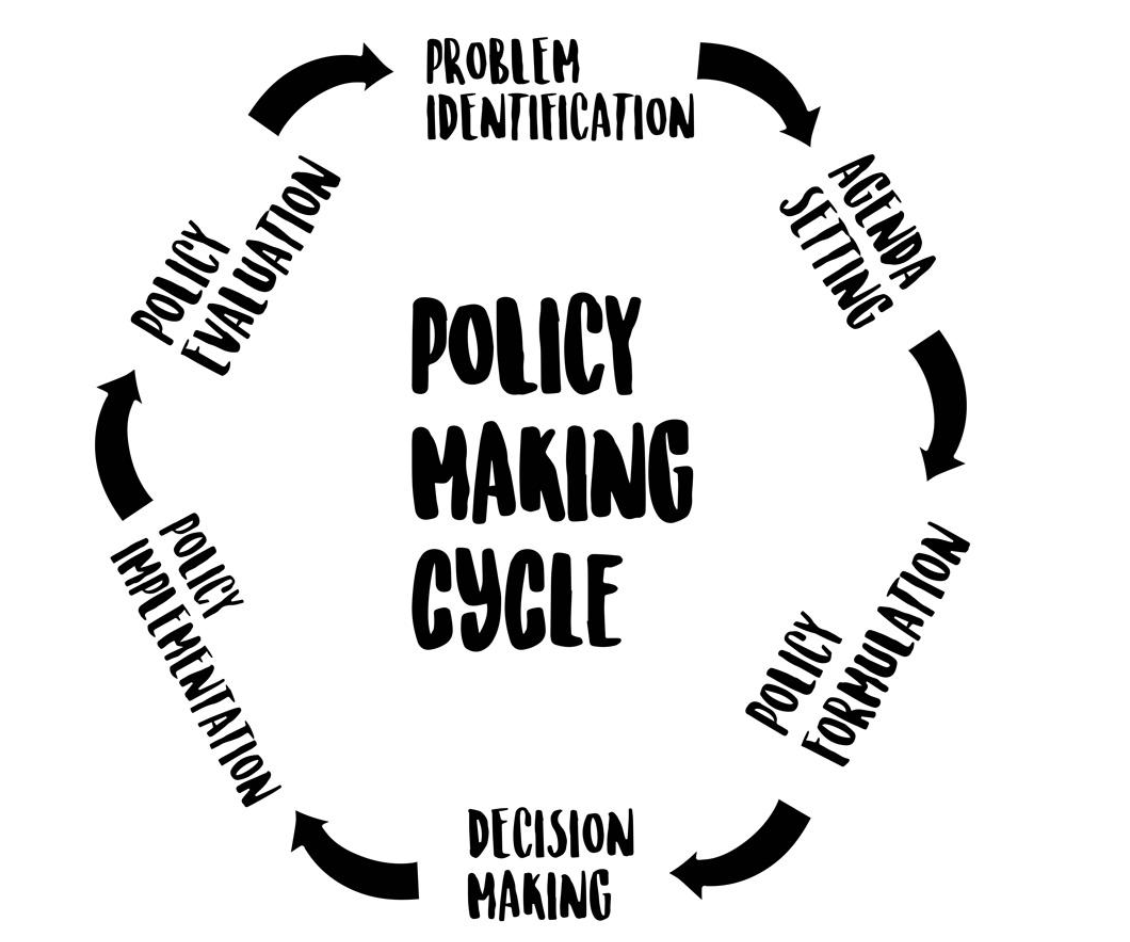
If there was ever anything that gave me goosebumps and immense pleasure, it was being surrounded by intellectuals and mature minds absorbing facts and figures about governance, economics, public health, policymaking, national security, and international relations. In such situations I easily lose myself, forgetting almost all other things.

Even at medical school, my best lectures were those with frequent digressions, whereby the lecturer would discuss the pathogenesis of diseases for 30 minutes and later sidetrack into discussing politics, governance, or other life issues. I always enjoyed classes led by Prof. Sagir Gumel, Dr. Murtala Abubakar, Dr. Rasheed Wemimo, Dr. Aliyu Mai Goro, and co.

During such lectures, I often observed some of my colleagues disappointment for such deviation. I rather casually show indifference, for I was eternally grateful for such discussions due to the stimulatory effect they had on my mind.

After such classes, I sometimes followed up with the lecturer, not to ask about a medical concept I did not grasp, but to ask for further explanation on policy making, project execution, budgetary expenditures, why African countries are left behind, and similar pressing issues.

In situations where I can’t catch up with the lecturer, I jotted down the questions for further deliberation.

One of the manifest feature I know about my greediness was at reading books. I can open five different books in a day. I lack such discipline to finish up one before another. I can start reading ‘Mein Kampf’ by Adolf Hitler, and halfway through 300 pages, I would pick up ‘My Life’ by Sir Ahmadu Bello, and would have to concurrently read both until the end.

I often scolded myself for such an attitude, but I can’t help myself. The only way to practice such discipline was to at least read two different books in a day. Such was a triumph in my practice of self-discipline. This was apart from my conventional medical textbooks.

To some of my friends, I was called an accidental medical doctor, but actually it was a perfect fate guided by the merciful Lord that I’m studying medicine.

 For it was only medicine that makes reading books easier for you. Although time is precious in this profession, but  one finds it easier to do anything you are passionate about. The daily  interaction we have  with people at their most vulnerable state was another psychostimulant. Seeing humans suffering from disease conditions is heartache. Some of the causes are mere ignorance, poverty, superstitions, and limited resources.

The contribution one can give couldn’t be limited to just prescribing drugs or surgical procedures that end up affecting one person. It’s much better to involve one self in to position that may bring possible change to the whole society even in form of orientation.

What also motivated me more was how I wasn’t the first to traverse this similar path. Bibliophiles were common among medical students and medical professionals.

At  international level, the former Prime Minister of Malaysia, Dr. Mahathir Muhammad, was a physician.

Most of the current economic development of Malaysia was attributed to him. The South American revolutionary figure Che Guevara was a physician. Atul Gawande was an endocrinologist, health policy analyst, adviser to former President Obama, campaign volunteer to former President Bill Clinton, and adviser to USAID/WHO on health policies.

Frantz Fanon was another physician, psychiatrist, racial discrimination activist, and political writer. Dr. Zakir Naik was a renowned Islamic scholar, comparative religion expert, and physician.

At the national level, Prof. Usman Yusuf is a haematologist, former NHIS DG, and currently a political activist. Dr. Aminu Abdullahi Taura was a psychiatrist and former SSG to the Jigawa state government. Dr. Nuraddeen Muhammad was a psychiatrist and former cabinet minister to President Goodluck Jonathan.

During ward rounds and clinics, my mind often wanders to enquire not just  about the diagnosis but the actual cause of the disease condition; why would a 17-year-old multiparous young lady develop peripartum cardiomyopathy (PPCM)? Why would a 5-year-old child develop severe anaemia from a mosquito bite? Why would a 25-year-old friend of mine develop chronic kidney disease, and his family would have to sell all their belongings for his treatment? Why are our Accident and Emergency units filled with road traffic accident cases? Was it bad road conditions or lack of adherence to traffic laws and orders?

Why are African countries still battling with 19th century diseases like Tuberculosis, filariasis, and malarial infections? Why issues of fighting cervical cancer and vaccination campaigns are treated with contempt in our societies? Why access to basic primary healthcare in Nigeria was still a luxury 50 years after Alma Ata declaration?

The questions are never-ending…

Answers to these questions could be found not in the conventional medical textbooks like Robbins/Cotrand, Davidson, or Sabiston. Answers to these questions are there on our faces. Answers to these questions are tied to the very fabric of our social life, our public institutions, our culture, and our life perspectives.

In order to make any significant contribution towards the betterment of this kind of society, it would be quite easier as an insider rather than an outsider. You can’t bring any positive outcome by just talking or commenting. It was rightly stated that a cat in gloves catches no mice.

The real players in a game are always better than the spectators. A player deserves accolades despite his shortcomings, frequent falls, and inability to deliver as planned theoretically. For the player has seen it all, because so many things in public life are not as they appear. It’s only when you are there that the reality becomes visible. This is the reason why many leaders who have goodwill and enjoy public support appear to have lost track or contributed insignificantly when elected or appointed into office.

But despite all these challenges, one can’t decline to do something good just because something bad might happen. The risk is worth it….

Attahir wrote from Federal University Dutse

Click to comment

Leave a Reply

Your email address will not be published. Required fields are marked *

Feature/OPED

AI and Cybercrime in Nigeria: Can Weak Laws Support Strong Technology?

Published

on

AI Cybercrime in Nigeria

By Nafisat Damisa

Introduction

The proliferation of generative AI has transformed Nigeria’s cybercrime landscape, enabling deepfake fraud, automated social engineering, and AI-enhanced phishing at scale. In early 2024, scammers using AI-generated deepfake videos impersonating a company’s CFO defrauded a Hong Kong finance worker of $25.6 million. As similar threats emerge in Nigeria’s fintech sector, this article examines whether the Cybercrimes (Prohibition, Prevention, etc.) Act 2015 (as amended 2024) is legally adequate, or whether Nigeria’s evidentiary and accountability frameworks are too weak to support effective prosecution of AI-driven cybercrime

Current Legal Landscape
Nigeria’s primary legal framework on preventing cybercrime is the Cybercrimes (Prohibition, Prevention, etc.) Act 2015, amended in 2024 to address cryptocurrency transactions, cyberbullying and various forms of digital misconduct. Complementary frameworks include the National Information Technology Development Agency Act 2007, the Nigerian Data Protection Act 2023, and sectoral regulations such as the CBN’s Risk-Based Cybersecurity Framework. However, the majority of these frameworks were issued far before now, and emerging risks like AI-driven threats are not really being addressed. The Act nowhere mentions “artificial intelligence,” “algorithm,” or “autonomous system.” Notably, the National Artificial Intelligence Commission (Establishment) Bill, 2025, is currently pending before the Senate. If passed, it would establish a dedicated commission to coordinate AI strategy, research, and ethical deployment. However, the Bill in its present form focuses primarily on development and innovation promotion, with limited provisions on criminal liability, evidence handling, or enforcement against AI-facilitated cybercrime, leaving the core accountability and evidentiary gaps largely unaddressed.

AI as a Double-Edged Sword
AI paradoxically enables both defence and attack. Nigerian financial institutions deploy AI for real-time fraud detection and pattern recognition. Conversely, cybercriminals exploit generative AI for deepfake creation, automated credential stuffing, and convincing phishing tailored to Nigerian English and Pidgin. The same technology that powers fraud detection systems can be weaponised to evade them. Take justice delivery as an example, the Evidence Act 2011 (as amended 2023) admits computer-generated evidence under Section 84, but remains silent on AI’s capacity to seamlessly generate or alter electronic records, creating “doctored AI-generated evidence”.  These and many more issues await Nigeria’s digital space in the coming years.

The Legal Gaps

There are multiple critical gaps that undermine AI governance.  For this article, three are considered.  First, no framework attributes criminal liability when an autonomous AI commits an offence. The question of whether the developer, user, or owner should bear criminal responsibility for the acts of an autonomous system remains entirely unanswered under Nigerian law, leaving prosecutors without a clear legal theory of culpability.

Second, Section 84 of the Evidence Act 2011 governs computer-generated evidence but does not address AI-generated outputs. The Act’s definition of “computer” excludes AI’s cognitive processing capabilities, creating a statutory blind spot where evidence produced by generative or autonomous systems falls outside the existing admissibility framework.

Third, Nigeria lacks any framework for mandatory AI-generated content labelling, impeding deepfake traceability. Computer-generated evidence under Section 84 of the Evidence Act 2011 remains admissible if unchallenged at trial, a dangerous precedent for AI evidence, as opposing parties may lack the technical capacity to mount any challenge at all.

Comparative Jurisdictions: Rich Laws, Tangible Results

Jurisdictions with advanced AI laws demonstrate clear outcomes. The EU AI Act (Regulation 2024/1689) mandates transparency obligations, requiring synthetic content labelling and informing individuals when interacting with AI systems; non-compliance triggers significant penalties. The US Algorithmic Accountability Act of 2023 is a proposed Act that will require impact assessments for high-risk AI systems in housing, credit, and employment, with FTC enforcement and a public repository.  China implemented mandatory measures for the Identification of AI-generated (Synthetic) content. These rules, mandated by the Cyberspace Administration of China (CAC) and others, require explicit (visible labels) and implicit (watermarks/metadata) identification for all AI-generated text, images, audio, video, and virtual scenes to ensure transparency, traceability, and combat disinformation. These laws contribute to measurable results: forensic traceability, expedited prosecution of deepfake fraud, and clear liability chains. Nigeria has none of these.

Hope or Illusion?

Without legislative intervention, AI’s promise against cybercrime remains an illusion. Nigeria requires the following to boost its hope:

  1. Amendment of the Cybercrimes Act to include AI-specific offences and mandatory content provenance standards;
  2. Revision of Section 84 of the Evidence Act 2011 to address AI-generated evidence credibility, not merely admissibility;
  3. Investment in digital forensic capabilities is currently hampered by inadequate enforcement, weak forensic capabilities, and a lack of specialised personnel; and
  4. A risk-based framework drawing from EU and US models.
  5. Review of both secondary and tertiary education curricula to address the knowledge gap in AI and prepare the next generation for the AI-driven future.

Conclusion

AI can help curb cybercrime in Nigeria, but only if legal capacity catches up with technical capability. The Cybercrimes Act 2024 amendments were a step forward, but they did not address AI accountability, algorithmic transparency, or evidentiary credibility. The pending National Artificial Intelligence Commission Bill, 2025, signals legislative awareness, but without substantive provisions on liability, evidence, and enforcement, it cannot fill the existing gaps. The effectiveness of existing frameworks remains a question. An optimistic but cautious path exists, but until Nigeria enacts AI-specific legislation, whether through amending the Cybercrimes Act, revising the Evidence Act, or strengthening the pending Bill, weak laws will remain unable to support strong technology.

Nafisat Damisa is a Legal Research Associate in Olives and Candles – Legal Practitioners. For further information, enquiries, or clarification, please contact Nafisat via: [email protected] or [email protected]

Continue Reading

Feature/OPED

Before Oil Hits $150: A Warning Nigeria Cannot Ignore

Published

on

OPEC Global Oil Demand

By Isah Kamisu Madachi

As of April 30, 2026, the crude price is said to have reached $125 in the global market. The all-time high price per barrel was recorded in 2008, when it surged to $147. It is obvious that the price is heading in that direction or even towards what experts have predicted — crude reaching a new all-time high of $150 in the near future if crude passages remain closed in the Middle East, which would ultimately come with several disproportionate challenges for businesses and households.

In Nigeria, what began as a mild adjustment in the price of gasoline and other refined crude products has not stopped anywhere until it reached N1,400 per litre of petrol at filling stations. When the price was surging, experts in energy, economics, marketing, business and other relevant fields tried to come up with explanations for how Nigeria, despite housing the largest petrochemicals refinery in Africa and being one of the largest oil-exporting countries on the continent, would continue to absorb this shock.

Despite our advantages, Nigeria recorded the world’s second-highest surge in petrol prices following the escalating geopolitical tension in the Middle East. In Africa, Nigeria has the highest spike, with many sources citing it at 39.5% and above. Even non-oil-producing countries in Africa, and countries that do not refine a drop of oil, did not experience this surge. Also, African countries like South Africa at 1%, Morocco at 2.1%, and Tanzania at 2.7% experienced far smaller increases that are nowhere near Nigeria’s.

To put it in context, South Korea, Japan, and China are among the foremost dependents on the Strait of Hormuz, whose closure escalated the crude price, but none of these countries has recorded even a 20% increase in their petrol prices. Nigeria does not import its crude through the Strait of Hormuz. Yet, as an oil-exporting nation, we have suffered some of the sharpest petrol price increases in Africa.

What went wrong in Nigeria to warrant this surge is not the primary focus of this piece. What lies ahead is. As a result of the increase in petrol prices, Nigerians have been disproportionately affected. Life has become unbearably difficult, with sharp increases in transportation costs, rising food prices, and higher costs of goods and services. Even charging points that used to collect N150 for charging a phone or battery now charge N300 or more.

As it stands, the gap between the current crude price and the predicted new all-time high is about $25. This means that if the passages continue to remain closed, we are not far from another historic price peak. It is even said that reopening the passages may not immediately stabilise prices, as crude tankers would still take time to reach their destinations.

What this means for Nigeria is another sharp increase in refined petroleum product prices, which could trigger another wave of stagflation. Already struggling, Nigerians do not deserve this. They are only just adapting to the post-subsidy era, yet are being hit again by another round of global geopolitical tensions. Many are already in deep energy poverty, with businesses struggling due to unstable electricity supply.

Therefore, as crude oil prices hover above $125 per barrel and threaten to reach the predicted $150 if disruptions in the Strait of Hormuz persist, Nigeria must act decisively to shield its citizens. The Dangote Refinery exists. Nigeria refines oil. What the federal government owes Nigerians at this point is a deliberate policy decision to make that the refinery serve domestic needs first, with pricing that does not mirror whatever is happening in the global market. That is not complicated; other oil-producing countries do exactly this.

The NMDPRA has the authority to act on this. The question is whether there is a political will to act before another price wave hits and Nigerians are once again left to absorb what their counterparts elsewhere never have to.

Sub-national governments also have something to do. Commercial motorcyclists and small business owners are the people who feel every petrol price increase the hardest and the fastest. Pushing CNG and LPG adoption among this group beyond the FCT and Lagos, with genuine support, would cushion a significant part of the next shock. Expanding solar access in underserved communities would do the same. A shop owner running on solar is not at the mercy of the next diesel price spike.

These solutions are quite feasible. Nigeria has attempted versions of them before. Where we often seem to get it wrong is in execution, and Nigeria has to treat this with the same urgency and seriousness as given to elections, for the well-being of its citizens. The only thing that has never matched the problem is the seriousness of the response.

Isah Kamisu Madachi is a policy analyst and development practitioner. He writes via [email protected]

Continue Reading

Feature/OPED

A Simple Guide to Obtaining Pension Clearance Certificate in Nigeria

Published

on

Pension Clearance Certificate

By Gbolahan Oluyemi

In 2025, the National Pension Commission (PenCom) directed all Licensed Pension Fund Operators (LPFOs) to demand a Pension Clearance Certificate (PCC) from service providers before engaging their services. This new policy typically affects various types of entities, including small and medium-scale enterprises, most of which are not usually compliance-driven. Following this directive, the PCC has become an essential compliance document for both large, medium and small-scale firms. This article provides a guide on what a PCC is, why it matters, and how it can be obtained.

What is a Pension Clearance Certificate (PCC)?

A Pension Clearance Certificate (PCC) is an official document issued by PenCom confirming that an organisation has complied with the provisions of the Pension Reform Act. It is an annual document that must be renewed every year at no cost.  The yearly renewal is intended to ensure that organisations treat compliance as a continuous activity rather than a one-off act.

Why is a PCC Important?

The PCC is important because it demonstrates that an organisation is compliant with the provisions of the Pension Reform Act, especially as it relates to employee pension contributions under Section 4 (1) of the Pension Reform Act and subscription to group life insurance under Section 4 (5) of the Pension Reform Act. It is also required for certain transactions, such as government contracts and engagements with compliance-sensitive partners. In essence, a PCC assures investors, partners, and clients that your business is properly structured and compliant with regulatory requirements.

Who Needs a Pension Clearance Certificate?

Under Nigerian law, companies with three or more employees are required to participate in the Contributory Pension Scheme (CPS). If your organisation employs at least three staff members and provides or intends to provide services to Licensed Pension Fund Operators (LPFOs) or other regulated entities, you are expected to obtain a PCC annually.

How Do I Obtain a PCC?

PenCom issues the PCC electronically and at no cost through its web portal: https://pcc.pencom.gov.ng/.  Please note that Applicants who are just beginning compliance and remitting employees’ pensions are required to first obtain an employer code from a Pension Fund Administrator (PFA). This code is necessary to initiate the PCC application on the PenCom portal.

Upon logging into the portal, you will be required to complete your company profile by providing your date of incorporation, contact details, and website (if applicable), as well as uploading your CAC documents.

Next, you will upload an Excel schedule (using the template provided on the website) containing your employee list. After this, you will be required to upload Excel sheets detailing pension contributions. You will also need to upload your organisation’s group life insurance documentation and payment instrument.

Finally, you will review your application and submit it for further processing by PenCom. Before commencing an application, ensure you have the following:

  1. Certificate of Incorporation (CAC documents)
  2. Group Life Insurance Policy for employees
  3. Evidence of Pension Fund Administrator (PFA) registration for employees
  4. Three years’ proof of monthly pension remittances, including penalties for any defaults (where applicable). For companies less than three years old, provide proof of remittances from the date of incorporation
  5. A valid Tax Identification Number (TIN)
  6. An employee schedule showing staff details and contributions (usually in Excel format) Templates are available on the PenCom portal

Also note that for the portal to accept employee details and remittance records, employees must have completed their data capture with their respective Pension Fund Administrator and updated their records to reflect their current employer.

Conclusion

Obtaining a Pension Clearance Certificate in Nigeria may seem technical at first, but once proper processes are established, it becomes routine. The key is consistency in remittance, maintenance of accurate records and prioritisation of compliance in overall operations.

For many Nigerian businesses, the PCC is more than a regulatory requirement; it is a mark of credibility. In a competitive environment, that credibility can make all the difference.

Gbolahan Oluyemi is a Legal Practitioner and currently leads Olives and Candles – Legal Practitioners. For further information, enquiries, or clarification, please contact Gbolahan via: [email protected] or [email protected]

Continue Reading

Trending