Feature/OPED
Agriculture and its Potential for Nigeria’s Economic Diversification
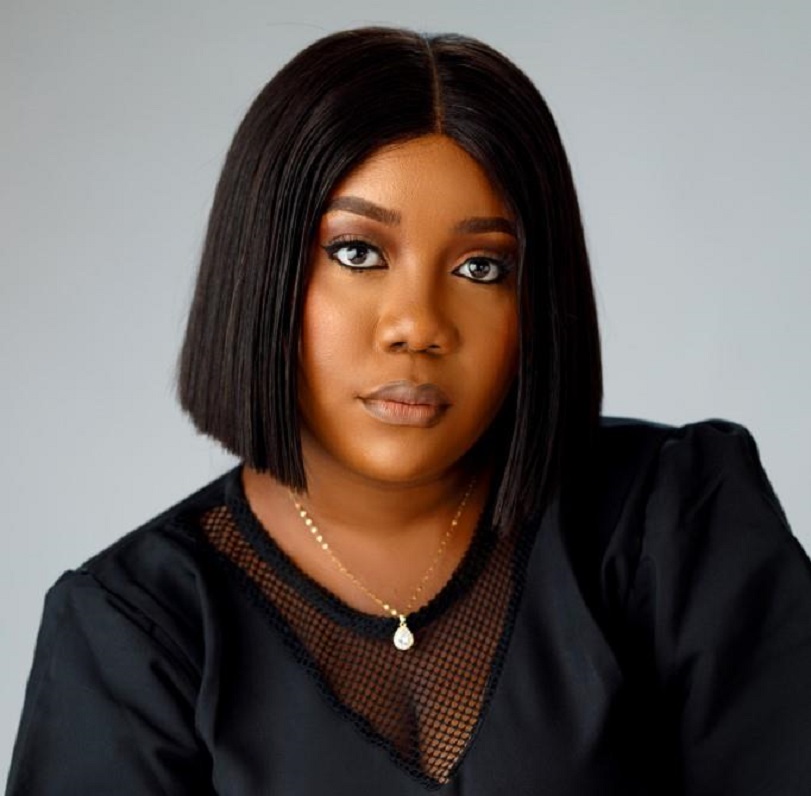
By Diana Tenebe
Nigeria is a nation that is blessed with arable land and a teeming youthful population. For so long the nation has been tied to the fortunes of crude oil. Oil revenues have dominated the sustenance of economic development. The overall annual GDP growth for Nigeria in 2024 is reported at 3.40%. The oil sector’s contribution to real GDP in Q4 2024 was 4.60%, with an annual growth rate of 5.54%. The agriculture sector contributed 24.64% to real GDP in Q4 2024, and 20.97% to aggregate nominal GDP for the full year, though its growth was more modest at 1.2% to 1.76% across different quarters. The non-oil sector, which includes agriculture, contributed a substantial 95.40% to real GDP in Q4 2024, indicating a decreasing reliance on oil as the main economic driver.
Nigeria’s economy is primarily driven by its non-oil sectors, with agriculture serving as a significant foundation, even with its ongoing productivity and security hurdles. There’s optimism that agriculture could spearhead the nation’s economic diversification in the future, especially if it’s strategically developed to generate foreign exchange and government revenue.
Agriculture was the bedrock of the Nigerian economy before the oil boom. Agriculture was the undisputed mainstay of Nigeria’s economy, contributing over 60% to the Gross Domestic Product (GDP) and employing more than 70% of the population. Regions specialised in cashcrops like cocoa, palm oil, groundnuts, and rubber making Nigeria a significant global exporter. The revenue generated from these agricultural activities fueled infrastructural development, education and social amenities across the country. The oil boom in the 1970s led to a neglect of the agricultural sector and fostered an over-reliance on petrodollars and invariably led to the stifling of the development of a diversified economy.
Just weeks into office in July 2023, President Bola Ahmed Tinubu declared a national emergency on food security, signaling a commitment to transforming agriculture into a modern, productive, and resilient engine of growth. Key initiatives include the immediate release of fertilizers and grains from national strategic reserves, a harmonisation of efforts between the Ministry of Agriculture and the Ministry of Water Resources to enable all-season farming through expanded irrigation, and the proposed establishment of a National Commodity Board to stabilize food prices and strengthen reserves. The administration of President Bola Tinubu has embarked on significant reforms to position agriculture as an economic tool to drive diversification. The efforts are constantly challenged by the pervasive violence of bandits on Nigeria farmers.
One of the flagship programs is the Agro-Pocket Initiative under the National Agricultural Growth Scheme, targeting the cultivation of 750,000 hectares for staple crops like rice, maize, wheat, and cassava, providing targeted support and input vouchers to farmers. To cushion the effects of inflation, the administration also announced a 150-day suspension of duties and tariffs on essential food imports and facilitated the import of significant quantities of maize and wheat for small-scale processors. Furthermore, a new National Agricultural Extension Policy aims to deliver demand-driven, ICT-enabled, and market-oriented extension services, moving away from outdated methods.
The ambitious agricultural agenda faces a formidable adversary: widespread banditry and insecurity. Across various regions, particularly in the food-producing states, farmers are increasingly subjected to violent attacks, kidnappings, and extortion. These acts of violence have devastating consequences, forcing many farmers to abandon their farmlands, reducing cultivated areas, and disrupting the entire agricultural value chain. The fear of attack not only deters new investments but also jeopardizes the livelihoods of existing farmers, leading to reduced agricultural output and escalating food prices. The Centre for Journalism Innovation and Development (CJID) recently highlighted that “No Farmer, No Food: Attacks on Farmers Fuel Nigeria’s Hunger Crisis,” underscoring the direct link between insecurity and food insecurity.
The Tinubu administration acknowledges this critical challenge. The National Security Adviser (NSA), Mallam Nuhu Ribadu, has reiterated the government’s commitment to returning displaced farmers to their communities and farms, emphasizing that sustainable peace cannot be achieved through kinetic responses alone. There’s a recognition that addressing the root causes of violent extremism, such as poverty and lack of opportunity, through inclusive, whole-of-government, and whole-of-society solutions, including integrated agricultural approaches, is crucial. The approval of Forest Guards is also seen as a transformative measure to enhance security for farmers.
Beyond the immediate crisis of insecurity, Nigeria’s agricultural sector still grapples with a myriad of systemic challenges. These include poor access to finance, with many farmers relying on informal lenders at exorbitant rates; high production costs, exacerbated by fuel subsidy removal; inadequate infrastructure, leading to significant post-harvest losses; and the impacts of climate change, such as erratic rainfall patterns and floods. Experts advocate for sustained investment in agricultural infrastructure, including irrigation systems, storage facilities, and rural road networks, to reduce post-harvest losses and improve market access.
Despite these hurdles, the potential for agriculture to drive Nigeria’s economic diversification remains immense. By focusing on value addition through agro-processing, leveraging modern agricultural technology (precision farming, irrigation, biotechnology, satellite imagery for yield prediction), diversifying crop production beyond traditional cash crops to include high-demand items, and investing in livestock and aquaculture, Nigeria can unlock significant economic growth. Public-private partnerships and accessible financial solutions, coupled with robust policy reforms, are vital to support smallholder farmers and attract necessary investments.
The journey beyond oil will be long and arduous, but agriculture offers Nigeria a tangible and sustainable path to economic resilience. President Tinubu’s reforms demonstrate a clear intent, but their success hinges on the government’s ability to effectively tackle the escalating violence against farmers. Without a secure environment, the seeds of diversification will struggle to take root, and the promise of a thriving agricultural sector will remain elusive. Only when farmers can work their lands in peace will agriculture truly become the robust engine Nigeria needs to diversify its economy and secure a prosperous future for its citizens.
Diana Tenebe is the Chief Operating Officer of Foodstuff Store
Feature/OPED
Nigeria’s Olodo Uprising: An Assault on Critical Thinking
By Prince Charles Dickson, PhD
A sheep was passing and saw a lion crying inside a cage, trapped and helpless. The lion begged the sheep to rescue him, promising not to kill or eat it. The sheep refused at first, knowing fully well that a lion does not become a vegetarian because of captivity. But after much persuasion, emotional blackmail, and the sheep’s own gullibility, it opened the cage.
Now the lion was very hungry, having stayed in the cage for days without food. It quickly pounced on the sheep and was about to kill and eat it, but the sheep reminded him of his promise.
They were still arguing when other animals came passing. They sought to know what had happened. Both the lion and the sheep narrated their sides of the story, but because of fear, convenience, and a desperate need to gain favour in the lion’s eyes, all the animals took sides with the lion, except the tortoise, who claimed not to understand the whole scenario.
The tortoise asked the lion to show them where exactly he was before the sheep rescued him. The lion pointed at the cage.
The tortoise asked again, “Were you inside or outside when the sheep arrived?”
The lion replied, “I was inside.”
The tortoise then said, “Okay, enter and let us see how difficult it could be inside, because I am not getting the whole scenario.”
The lion entered, and immediately, the tortoise locked the cage. The lion was trapped again.
That story is not just folklore. It is a national diagnosis.
Nigeria today is full of trapped lions, gullible sheep, frightened animals, and very few tortoises. We have many people with opinions, but few with discernment. Many with certificates, but few with comprehension. Many with titles, but few with thought. Many who can quote policy, scripture, law, and ideology, but cannot ask the simple question that prevents disaster: “Wait first, how did we get here?”
That question is the beginning of critical thinking. Sadly, it is becoming an endangered species.
The easiest and most attractive national pastime remains buck-passing, especially with the bunch of leaders we have, some of whom can hardly peel a banana or wash an already white handkerchief. Not many of us want to take responsibility for anything, from personal life to family life, from community life to national life. The blame is always on the system, as if the system descended from the sky and imposed itself on innocent citizens.
We do not need to create demons out of our leaders because, in too many instances, they have behaved like ready-made specimens of public demons. So, we hang our sins on them, sometimes appropriately, sometimes lazily. Unfortunately, their behaviour has made it easy for the critics to descend on them. They shout loudly, lie casually, perform empathy only when cameras are present, and govern as though the people are background noise in their private banquet.
But there is a deeper tragedy. The lion is not our only problem. The sheep, too, must be examined. The other animals must be questioned. Even the silence of the forest must stand trial.
This is where the Olodo Syndrome enters.
In Nigerian street language, “Olodo” is often used to describe a dull person, someone slow to understand, someone who fails where basic reasoning should have saved them. But in this essay, Olodo is not merely the person who did not go to school. No. Nigeria has produced a more sophisticated creature: the educated olodo. The certificated illiterate. The graduate who cannot reason beyond slogans. The public officer who mistakes grammar for intelligence. The citizen who forwards nonsense with confidence. The analyst who mistakes noise for insight. The leader who confuses movement with progress. The voter who sells tomorrow for rice today, then spends four years complaining that the pot is empty.
Olodo, therefore, is not the absence of schooling. It is the failure of judgment.
It is what happens when a nation rewards mediocrity and punishes thought. It is what happens when people who ask serious questions are labelled troublesome, while those who clap for madness are called loyal. It is what happens when dumb, crazy things move the needle, while wisdom is treated like an old man coughing in the corner. It is what happens when unintelligent people do not merely exist, but are celebrated, promoted, defended, and installed as gatekeepers over those who still dare to think.
This is Nigeria’s Olodo Uprising.
It is an uprising not of the poor against the rich, nor of the uneducated against the educated. It is an uprising of shallow thinking against depth. An assault on memory, logic, accountability, and consequence. It is the national habit of refusing to connect action to outcome. We open the cage, release the lion, and then begin a prayer meeting when the lion remembers its appetite.
We talk, write, and discuss the Nigerian myth with a sense of fatalism. “This is Nigeria,” we say, as if that phrase is both an explanation and an excuse. If everyone thought as much about justice and fairness, life would be better. I am a critic, yes, but I am also a critic’s critic. I remain an unrepentant believer that one of the ways to keep the government on its toes is to keep harping on its flaws so that it can improve. But criticism without self-examination becomes entertainment. It becomes pepper soup politics, the kind we enjoy at drinking joints, suya spots, WhatsApp groups, and television studios where every table has a parliament and every loud voice is mistaken for a constitution.
Often, I say I believe the things I write are important for our nation, as they are for other nations. But when it appears to me that Nigerians, especially those in authority, do not react to these issues as people in other lands do, I repeat them in new essays to remind old readers and recruit new ones to participate in the continuing dialogue.
Because repetition, sometimes, is not a lack of creativity. It is the burden of memory in a country addicted to forgetting.
Sadly, this is Nigeria, where nothing works, and no one cares. When it works, it is often because someone’s interest is about to be served or is already being served, not because the people’s interest has suddenly become sacred. We talk about our institutions despairingly. Our leaders do not watch network news except when their faces will appear at their sons’ or daughters’ weddings, birthdays, burials, thanksgiving services, or self-sponsored ceremonies of public praise. They do not need newspapers anymore because too many pages are already full of their lies, paid adverts, and noisy banters dressed as governance.
A country that destroys thinking will eventually be governed by instinct.
That is why the Olodo Syndrome is dangerous. It not only makes people ignorant. It makes them confidently ignorant. It gives stupidity a microphone and asks wisdom to apply for permission to speak. It converts public debate into shouting contests. It turns leadership recruitment into ethnic arithmetic, religious panic, stomach infrastructure, and emotional blackmail. It makes citizens defend their oppressors because the oppressor speaks their language, attends their church, worships in their mosque, comes from their zone, or once gave them transport money.
This is how the other animals sided with the lion.
Not because the lion was right. They knew he was wrong. But fear is a powerful editor of truth. Hunger is a wicked lawyer. Proximity to power is a dangerous intoxicant. In Nigeria, many people do not support injustice because they are confused. They support it because they are calculating. They are asking themselves, “What if the lion remembers me tomorrow? What if I need a favour? What if I condemn him now and he becomes minister, governor, chairman, commissioner, vice chancellor, senator, president?”
So, they betray the sheep.
Government bashing remains a national pastime, and every drinking joint and suya spot has a sitting parliament with an expert on every issue. But we forget that no matter the input, if the politicians and actors on our national scene have questionable lives both at personal and domestic levels, nothing will change. The best government policy cannot change the individual when the policies themselves are formulated on a bad foundation by people with warped thinking.
A corrupt mind cannot midwife a clean system.
When a witch proclaims her presence, and an invalid does not make away, he must have money for sacrifices at home. Nigeria has been warned too many times. We have seen the witch. We have heard the announcement. Yet we remain seated, arguing about who invited her, who offended her, which village she came from, and whether her witchcraft is constitutionally recognised.
This is not merely a leadership failure. It is civic laziness. It is moral cowardice. It is intellectual surrender.
The tortoise in the story represents the rare citizen who does not join the chorus. The one who pauses the noise. The one who asks for sequence, evidence, context, motive, and consequence. The tortoise is not the loudest animal. It is not the strongest. It does not roar. It does not bleat. It thinks.
That is what Nigeria needs now: more tortoises.
Not slow people, but thoughtful people. Not cowards hiding under shells, but citizens who understand that speed without thought is national self-harm. We need people who can ask leaders: Where were you before power? What did you promise? What have you done? Who benefits? Who pays? What happens tomorrow? We need teachers who teach children to question, not merely to cram. We need voters who examine character before currency. We need religious leaders who produce conscience, not crowds. We need journalists who investigate, not decorate. We need institutions that reward competence over loyalty, substance over noise, and courage over convenience.
Because the lion will always be hungry again.
That is the part Nigeria refuses to learn. Appeasing bad leadership does not end its appetite. Excusing mediocrity does not transform it into excellence. Rewarding foolishness does not make it wise. If we allow the lion to eat the sheep today because we are afraid, hungry, tribal, religiously sentimental, or politically invested, we have not solved the hunger problem. We have only postponed our own turn.
In amazement, the other animals asked the tortoise, “why” and the tortoise replied. “If we allow him to eat the sheep today, he will still go hungry tomorrow, and we don’t know what will be eaten tomorrow—May Nigeria win.
Feature/OPED
Stocks vs Forex: Which is Better for Beginners in 2026?
By Onah Ishioma Adaeze
As a beginner, choosing between stocks and forex for your investment goals in 2026 can feel overwhelming. Before investing your hard-earned money, it is important to understand how both markets work.
While both markets present investors with opportunities to grow their wealth, they also differ in terms of volatility, liquidity, market hours, and leverage. Stocks involve owning portions of a company, while forex has to do with trading a base currency against a quote currency.
In this article, we will be going through the basics of stocks and forex, pointing out their differences, and helping you decide which asset better suits your investment journey in 2026.
What is Stock Trading?
When it comes to stock trading, you are buying shares of a company, which makes you a shareholder of that company. As a shareholder, you may be entitled to receive dividends whenever the company decides to pay dividends.
As for those companies that do not pay dividends, there are other benefits a shareholder may enjoy, like being called upon to attend shareholder meetings and having voting rights on certain company matters.
On a global scale, over $100 trillion worth of shares are traded annually. Also, the rising popularity of AI companies and technological innovations continues to drive investor participation and market growth.
If you’re an investor looking to buy and hold capital assets, then stock trading is definitely for you, as it allows for short-term, medium-term and long-term investment goals.
When you buy shares of a company and the company performs well, your shares increase in value. Another benefit of stock trading is access to index funds and ETFs.
These funds consist of companies that are grouped under an index. They are carefully selected and monitored under the fund, sparing the investor the stress of actively tracking the fund.
They can be a way of building a long-term, diversified portfolio, and some of these funds may pay dividends.
What is Forex Trading?
Forex trading has to do with buying one currency and selling another. With a pair like USD/JPY, USD is the base currency being bought against JPY, which is the quote currency.
In order to execute a trade in the forex market, you have to analyse and make predictions based on price movement, as well as pay attention to what’s going on in the global news scene.
The forex market runs twenty-four hours every weekday, with over $9 trillion traded in the market every day. Being the largest financial market in the world, there is very high liquidity.
Forex trading involves buying one currency against another, making predictions based on price movements on the forex charts. Price moves based on the activities of large institutions like hedge funds, big banks, the government, etc.
The forex market runs 24 hours a day, every weekday, with global forex turnover reaching $9 trillion per day in the BIS 2025 survey. Being the largest financial market in the world, there is very high volatility and price fluctuations.
At the same time, there is high liquidity in the market, which means that currency pairs can easily be bought and sold without hassle. Highly liquid instruments that are traded regularly include: EUR/USD, USD/JPY, GBP/USD, and gold (XAU/USD).
As a retail trader, knowing when to enter and exit the market is important. As easy as it is to make profits from price fluctuations, it is also very easy to lose money if the market moves against you. This is why it is important to set stop losses and take profits. This helps manage your trading capital.
Major Differences Between Stocks and Forex
While investing in stocks and forex can yield great capital gains, there are lots of ways in which they differ.
As a beginner, stock trading provides opportunities for long-term investments, ensuring slow but consistent returns for wealth building. But if you are looking for an active, short-term style of investment, then forex trading is for you, as it allows you to enter and exit the market within a shorter time frame.
Which is Better in 2026?
Choosing an asset to invest in all boils down to personal preference. At the same time, if you are not averse to risk, nor opposed to asset diversification, then it’s okay to invest in both.
For beginner investors in 2026, stock trading is easier to understand and get into, especially because of mutual funds, index funds and ETFs. With those funds, you don’t have to be an expert to start investing. You can just buy a fund that suits your needs and hold it over a long period of time.
If you are an investor who enjoys technical analysis, highly volatile and liquid markets, as well as trading under short time frames, then forex trading is the right pick for you.
Conclusion
You do not need to put all your eggs in one basket. There are investors who invest in both stocks and forex simultaneously. When starting out, you can start investing in stocks while learning forex. Take calculated risks and do not invest above your means. Diversify your investments and remember, when starting out, you should prioritise acquiring knowledge over profits.
Onah Ishioma Adaeze is a finance writer who is passionate about simplifying complex concepts into easily digestible pieces. Her hobbies are reading and watching anime
Feature/OPED
Building 234 Solutions: A Response to Everyday Workforce Challenges
By Owoloye Emmanuel
Every business starts with a problem. For us, that problem was hiding in plain sight.
Across organisations, we kept seeing HR professionals, payroll teams, and business leaders spend significant time navigating processes that should be simpler. Employee records sat across multiple systems, payroll processes required manual intervention, and routine workforce tasks often became more complicated than they needed to be.
As businesses grow, workforce operations naturally become more complex. Yet many organisations still rely on disconnected tools and workflows that create unnecessary friction for both employers and employees.
The consequence is more than operational inefficiency. HR teams spend valuable time managing systems instead of supporting people. Business leaders struggle to access timely workforce insights, while employees experience delays in processes that should be seamless.
These weren’t isolated challenges. They were recurring realities across workplaces, regardless of industry or size.
That observation led us to a simple question: what if workforce management could be easier?
What if HR, payroll, and workforce operations could work together within a single, connected experience?
That question became the foundation for 234 Solutions.
We are building 234 Solutions with a clear belief that workplace technology should reduce complexity, not add to it. Our goal is to help organisations spend less time navigating processes and more time focusing on productivity, growth, and people.
As we prepare for launch, our focus remains simple: building practical solutions for real workplace challenges and helping organisations create better experiences for the people who power them every day.
Owoloye Emmanuel is the founder of 234 Solutions
-
Feature/OPED6 years agoDavos was Different this year
-
Travel/Tourism10 years ago
Lagos Seals Western Lodge Hotel In Ikorodu
-
Showbiz3 years agoEstranged Lover Releases Videos of Empress Njamah Bathing
-
Banking8 years agoSort Codes of GTBank Branches in Nigeria
-
Economy3 years agoSubsidy Removal: CNG at N130 Per Litre Cheaper Than Petrol—IPMAN
-
Banking3 years agoSort Codes of UBA Branches in Nigeria
-
Banking3 years agoFirst Bank Announces Planned Downtime
-
Sports3 years agoHighest Paid Nigerian Footballer – How Much Do Nigerian Footballers Earn