Feature/OPED
Destination Ekiti: Two Elections, One Lesson in Vision
By Oludayo Oludee Olorunfemi
A couple of months ago, my principal, Mrs Oyinkansola Badejo-Okusanya (SAN), was scheduled to travel from Lagos to Akure for an interactive meeting as part of her consultation process before contesting for the office of President of the Nigerian Bar Association (NBA). Today, she stands cleared to contest the election; the ban on campaigning has been lifted, with elections scheduled for 20 July 2026. However, this is not the central story. What stays with me from that trip is an unexpected lesson in leadership, vision, and the power of deliberate planning. It is a lesson that has become even more relevant as Ekiti State prepares for its governorship election on 20 June 2026, exactly one month before the NBA election. Two elections. Two different constituencies. Two different ballots. Yet remarkably similar questions before the voters.
Who has the vision? Who has done the work? Who has demonstrated the capacity to build for the future rather than merely campaign for the present? The journey began with a logistical challenge. The available flight from Lagos to Akure was scheduled for later in the day and would not get the team to Ondo State in time for a series of engagements planned across Akure, Owo, and Ondo Town.
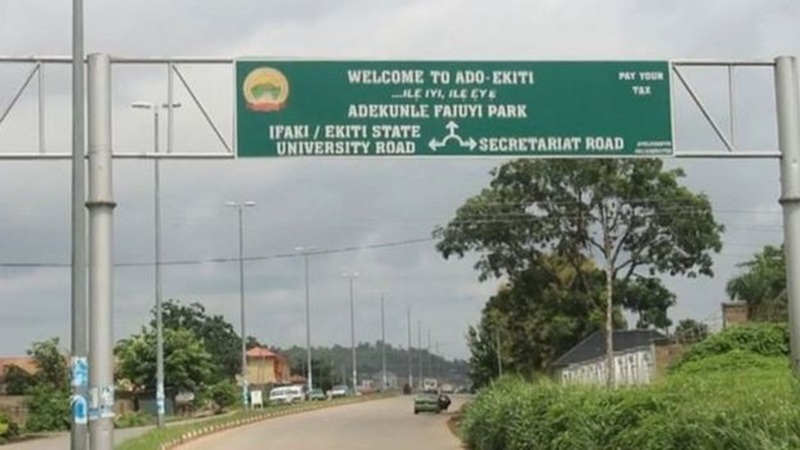
During discussions on the best alternative, I suggested that we fly into Ekiti through the newly commissioned Ekiti Agro-Allied International Airport. The plan was simple: arrive early in Ado-Ekiti, make strategic visits to leaders of the Bar within the State, and then proceed by road to Akure for the scheduled meetings. What none of us anticipated was that Ekiti itself would become the story. Our first stop was a courtesy visit to Aare Afe Babalola, SAN, founder of Afe Babalola University, Ado-Ekiti. The purpose was straightforward: seek Baba’s blessings for the journey ahead. As always, a visit to Aare Afe Babalola became a masterclass. Drawing from over ninety years of experience, he spoke about governance, leadership, the legal profession, and nation-building. Listening to him, one could not help but reflect on the legacy. Across the South-West, the Aare Afe Babalola Bar Centres stand as visible reminders that impactful leadership is measured not by promises made but by institutions built.
As we continued our visits across Ekiti, someone suggested we stop by the Ekiti State Bureau of Tourism, headed by the energetic lawyer and tourism advocate, Mr Wale Ojo-Lanre. That unplanned detour became the highlight of the trip. The welcome was unmistakably Ekiti, warm, thoughtful, and rich in culture. Before we entered, we observed the symbolic knocking on the traditional drum suspended at the entrance. Then came the recitation of Mrs Badejo-Okusanya’s oriki as an Egba woman, evidence that our hosts had taken time to learn about their distinguished guest before our arrival. It was a small gesture, but one that reflected a larger truth about Ekiti, a people deeply connected to their culture, history, and identity. What followed was even more enlightening.
Officials of the Bureau took us through the various tourism assets of the state and presented the Ekiti State Tourism Development Master Plan (2025–2035). As a proud daughter of Ekiti, I listened with a sense of pride and optimism. The vision was clear. Tourism was no longer being treated as an afterthought but as a strategic economic pillar. Through public-private partnerships, destination governance, infrastructure development, cultural and eco-tourism innovation, enhanced security, asset development, and community empowerment, the state is seeking to position itself as a destination of choice. What impressed me most was the coherence of the plan. Too often, governments commission projects without building ecosystems. What we saw in Ekiti was different. It was a deliberate attempt to connect infrastructure, policy, investment, culture, and people into a sustainable tourism economy. It was the kind of long-term thinking that separates administration from leadership.
The next day, after completing our engagements in Ondo State, on our way back to catch our return flight, we stopped at Ikogosi Warm Springs Resort. Some places are beautiful. Others are transformative. Ikogosi belongs firmly in the second category. Listening to Madam Ruth, our tour guide, narrate the history of the springs, watching warm and cold waters continuously flow side by side, placing one foot in each stream, and observing the famous intertwined trees thriving together despite their differences, one could not help but marvel at nature’s wisdom. Different streams. One destination. Different identities. Shared purpose. The carefully curated pathways, the serenity of the environment, the chorus of birdsong, and the pristine landscape created a profound sense of peace. By the time we left, the verdict from everyone on the team was unanimous: we will be back. GO SEE IKOGOSI.
Ekiti is sitting on immense tourism potential. Not potential that exists only in policy documents or political speeches, but real, tangible, marketable potential. From Ikogosi to Arinta Waterfalls, to Mount of Clouds, to Olosunta Hills; from cultural festivals to ecotourism sites, from its rich history to its emerging infrastructure, Ekiti possesses many of the ingredients required to become one of Nigeria’s premier tourism destinations. What remains essential is sustained leadership and the courage to pursue a vision beyond electoral cycles. Perhaps that is why the coincidence of the election dates feels significant. On 20 June, the people of Ekiti will evaluate the leadership before them and determine the future direction of their state. One month later, on 20 July, lawyers across Nigeria will make a similar decision about the future of their association. The parallels are difficult to ignore.
In Ekiti, Governor Biodun Oyebanji has built a reputation for quiet but purposeful governance. Rather than chasing headlines, his administration appears focused on laying foundations in infrastructure, agriculture, education, and tourism that will yield benefits long after the politics of the moment have passed. In the NBA, Oyinkansola Badejo-Okusanya (SAN) presents a similar proposition. Her aspiration has been defined by consultation, engagement, bridge-building, and a vision of a bar that is inclusive, progressive, and institution-focused. Both represent a leadership philosophy that values preparation over performance. Both understand that sustainable progress requires patience. Both appear committed to building structures and a legacy of service that will outlive them.
As we departed Ekiti that evening, we left with more than memories of a successful consultation trip. We left with a renewed appreciation for what thoughtful leadership can accomplish. We left with fresh ideas. We left inspired by the possibilities that exist when vision is matched with execution. Most importantly, we left convinced that Ekiti’s tourism story is only beginning to be told. Destination Ekiti is more than a slogan. In the month that separates 20 June from 20 July, voters in Ekiti and lawyers across Nigeria will be asked essentially the same question: Do we reward those who merely speak about the future, or those who are deliberately building it? For Ekiti, for the NBA, and for all who believe in the power of institutions, the answer should be a BOLD Yes!
Oludayo Oludee Olorunfemi, a lawyer, writes from Ward 10, Idemo Quarters of Oke Aiyedun Ekiti, Ajoni LCDA.
Feature/OPED
From Force to Partnership: How IGP Disu is Changing the Police Narrative
By Jerome-Mario Utomi
There are moments in the life of a nation when leadership is measured not merely by the ability to command institutions but by the courage to transform them. Such moments demand more than administrative competence; they require vision, strategic communication, and an unwavering commitment to rebuilding public confidence. The keynote address delivered on behalf of the Inspector-General of Police (IGP), Mr Olatunji Rilwan Disu, at the Lagos PR Fest 2026 grand finale was one of such defining moments.
Held at the iconic MUSON Centre, Onikan, Lagos, the event transcended the boundaries of a conventional police engagement. It became a national conversation on security, governance, public trust, and the indispensable role of strategic communication in nation-building.
More importantly, the IGP, who was represented at the event by AIG Simeon Udofia Akpanudom, Head of the Force Criminal Investigation Department (FCID) Annex, Alagbon Close, Ikoyi, revealed a policing philosophy that is quietly but deliberately redefining the image and operational culture of the Nigeria Police Force.
For decades, public perception of policing in Nigeria has largely been shaped by mistrust, misunderstanding, and an unfortunate history of strained relations between citizens and law enforcement agencies. While successive administrations have introduced reforms, many struggled to address the most fundamental ingredient of effective policing-public trust.
IGP Disu appears determined to confront that challenge from an entirely different perspective.
His declaration that “security is everyone’s business” was not a rhetorical flourish. It was a profound statement of intent. It reflected an understanding that sustainable security cannot be achieved through coercion alone but through partnership, inclusion, transparency, and continuous engagement with the people. Indeed, what the IGP has introduced is more than institutional reform. It is a comprehensive rebranding of policing itself.
Unlike cosmetic rebranding that focuses on uniforms, slogans, or public ceremonies, this initiative is rooted in changing institutional culture and public perception simultaneously. It seeks to replace fear with confidence, suspicion with collaboration, and silence with meaningful dialogue.
The brilliance of this approach lies in its recognition that trust is not demanded; it is earned.
Throughout the keynote, the IGP consistently emphasised evidence-based communication, accountability, and transparency as pillars upon which public confidence must be rebuilt. At a time when misinformation travels faster than facts, and public institutions are constantly subjected to intense scrutiny, his insistence that policing should be supported by credible information rather than propaganda reflects both wisdom and contemporary relevance.
Perhaps nowhere is this transformation more visible than in the establishment and expansion of the Violent Crimes Response Unit (VCRU). Rather than allowing achievements to remain hidden within internal reports, the Nigeria Police Force is increasingly communicating measurable outcomes, demonstrable operational effectiveness, and encouraging independent public assessment.
This deliberate openness and transparency represent a significant departure from the communication style traditionally associated with many security institutions.
Equally commendable is the renewed emphasis on accessible channels for complaints, feedback and citizen engagement. Every modern democratic institution understands that accountability strengthens authority rather than weakening it. By inviting public scrutiny instead of avoiding it, the Nigeria Police under IGP Disu is gradually redefining what institutional confidence should look like. The Inspector-General deserves particular commendation for recognising that public relations is not an appendage to policing but an operational necessity.
Far too often, public relations is misunderstood as image laundering or crisis management. In reality, effective public relations is about building relationships, creating understanding, managing expectations, and sustaining credibility. It is this broader and more professional understanding that permeated the Inspector-General’s address.
His decision to engage public relations professionals at Lagos PR Fest was therefore highly symbolic. It demonstrated that security communication must evolve beyond press statements announcing arrests or crime statistics. It must become a continuous conversation with citizens, communities, opinion leaders, professional bodies, and the media.
Equally remarkable is the renewed focus on community policing and the revitalisation of the Police Community Relations Committee (PCRC). These initiatives acknowledge an enduring truth: communities understand their security challenges better than distant bureaucracies.
By encouraging local participation, youth engagement, religious leaders, traditional institutions, and civil society organisations to become active stakeholders, the Nigeria Police is moving policing closer to the people it serves.
This approach is consistent with successful policing models across the world where intelligence flows more freely because communities trust law enforcement agencies enough to share information.
The emphasis on participatory campaigns such as “Security is Everyone’s Business” and “If you see something, say something” further reinforces this philosophy. These messages wisely redefine every citizen from being a passive observer into an active contributor to national security.
That represents strategic public relations at its finest. Perhaps the most compelling dimension of the Inspector General’s address is his deliberate connection between policing and nation-building.
Security does not exist in isolation. It supports economic growth, encourages investment, protects democratic institutions, and creates the stability necessary for social development. Safe highways promote commerce. Secure schools guarantee educational continuity. Protected communities attract investment. Professional law enforcement strengthens constitutional governance.
Viewed through this broader lens, policing becomes an essential instrument of national development rather than merely an agency of law enforcement. The Inspector-General’s appeal for “Nigeria First” narratives equally deserves commendation. In an era characterised by misinformation, polarisation, and divisive narratives, institutions must intentionally promote messages that unite rather than divide.
Strategic communication has become an important national asset. This is where professional public relations practitioners have an enormous responsibility. Their expertise extends beyond media visibility to fostering social cohesion, encouraging responsible public discourse, and strengthening confidence in democratic institutions.
The Nigerian Institute of Public Relations (NIPR), therefore, occupies a strategic position in supporting this national assignment.
Naturally, scepticism remains understandable. Public confidence, once diminished, cannot be restored overnight. Institutional reforms require consistency, measurable outcomes, and sustained leadership commitment.
Fortunately, the Inspector-General himself demonstrated refreshing realism by acknowledging that rebuilding trust remains an ongoing process. That honesty itself strengthens credibility.
His clearly articulated roadmap-rebuilding institutional credibility through transparency, strengthening community intelligence through grassroots participation, and promoting national cohesion through coordinated communication-provides a practical framework for long-term institutional renewal.
Importantly, these objectives align with internationally recognised principles of democratic policing. What distinguishes the current leadership is the willingness to place communication at the very centre of institutional transformation rather than treating it as an afterthought.
Leadership is often remembered less for the challenges inherited than for the direction established. Judging from the philosophy articulated at Lagos PR Fest 2026, IGP Disu is laying the foundation for a policing model that recognises that legitimacy derives not only from constitutional authority but from public confidence.
That distinction is profound. A police force may possess legal powers, but without public trust those powers become increasingly difficult to exercise effectively. Conversely, when citizens willingly cooperate, volunteer intelligence, respect lawful authority, and see themselves as partners, security becomes collective rather than confrontational.
That appears to be the future envisioned by the Inspector-General. His concluding appeal that all stakeholders must work together in transparency, accountability, and shared responsibility captures the essence of democratic policing in the twenty-first century.
Ultimately, the significance of the Lagos PR Fest address extends far beyond one conference or one keynote presentation. It represents a declaration that the Nigeria Police Force is prepared to measure success not only by arrests made or crimes prevented but also by relationships built, confidence restored, and communities united.
For me, the recent elevation by the IGP and express approval by the Nigerian Police Service Commission of some senior officers to the rank of Assistant Inspectors-General of Police (AIGs). Commissioners of Police (CPs) and others truly proves beyond reasonable doubt that the IGP is a man who understands that professionalism, strategic thinking and operational excellence are the defining features of global policing. In fact, analysts in particular and Nigerians of goodwill in general are beginning to view the recent appointment of IGP Disu as a very huge blessing to the nation.
If sustained with consistency, integrity, and measurable performance, this strategic shift may well become one of the most consequential institutional reforms in contemporary Nigeria. For at the heart of every peaceful nation lies a simple but enduring truth: security thrives where trust flourishes.
By placing strategic public relations at the centre of policing, IGP Disu has demonstrated an appreciation of that timeless principle. In doing so, he has presented Nigerians with something far more valuable than a communication strategy. He has presented a vision.
A vision in which the police badge symbolises not fear but reassurance; not distance but partnership; not mere authority but earned legitimacy. That is a vision worthy of national support, thoughtful reflection, and sustained implementation.
Utomi, a media specialist, writes from Lagos, Nigeria. He can be reached via Je*********@***oo.com/08032725374
Feature/OPED
How Responsible Borrowing Can Help You Reach Your Financial Goals
By Gloria Onosode
For generations, conventional financial advice has treated debt like a trap — a final, desperate resort for emergency cash or a slippery slope toward financial instability. But as Nigeria’s economic terrain evolves, this defensive mindset is changing. Progressive business leaders, entrepreneurs, and forward-thinking individuals are realising that it can be an important financial tool for achieving personal or business objectives when used responsibly and within one’s repayment capacity.
To build a sustainable financial future, we must change our relationship with credit. Borrowing shouldn’t be a cycle of survival; it should form part of a broader financial plan designed to support sustainable growth. The secret lies in masterfully understanding borrowing for productive purposes and learning how to leverage purposeful borrowing to hit your most ambitious milestones.
At its core, the difference between constructive and destructive borrowing comes down to one fundamental principle: what does the cash do once it lands in your account?
Bad debt funds depreciating lifestyle assets or temporary consumption. Borrowing to buy luxury clothing, fund a lavish party, or upgrade to a consumer gadget that does not increase your income simply pulls future earnings forward to pay for a fleeting present moment. It drains cash flow without offering a return.
Conversely, good debt acts as an investment in your future self or your company. It is capital deployed to acquire assets, increase productivity, or generate recurring revenue that far outpaces the cost of the interest. When you borrow to buy a delivery truck for your logistics company, stock up on inventory ahead of a peak retail season, or fund a specialised certification, you aren’t spending money — you are investing in assets that may contribute to increased productivity and income generation.
When integrated into a clear, long-term plan, purposeful loans may enable eligible borrowers to respond more quickly to business opportunities that would otherwise take years to save for. For small and medium enterprises (SMEs), cash-flow timing mismatches are the silent killers of momentum. You might get a massive corporate purchase order but lack the immediate working capital to fulfil it. Waiting weeks to organically pool cash from existing revenue means losing the contract. Appropriately structured commercial financing can help businesses address temporary working-capital gaps, ensuring that viable opportunities turn into realised revenue.
In inflation-heavy environments, waiting to save up the full purchase price for vital business assets like manufacturing machinery, solar power installations, or commercial vehicles can backfire, as equipment costs often outpace savings rates. By using asset-backed financing, you can acquire the equipment today, put it to work immediately, and allow the asset to generate revenue that may contribute towards financing costs over time.
Investment in skills and capacity development can generate significant long-term benefits. Utilising credit to fund high-value education, technical upskilling, or operational training directly expands your earning capacity. The resultant career advancement or business efficiency multiplies your income potential for decades to come.
Shifting from a defensive borrowing stance to a wealth-creation strategy requires strict financial discipline. Truly responsible borrowing is anchored in three non-negotiable practices.
First, borrow only for a productive purpose. It can be tempting to redirect a portion of a business loan toward personal expenses. Resist the urge; borrowed funds should be applied primarily to the purpose for which the financing was obtained.
Second, know your repayment runway before you sign. Borrowing decisions should be supported by realistic cash-flow planning and repayment capacity assessments. Review your cash-flow data, factor in market fluctuations, and map out exactly how the investment will generate the funds needed to clear the balance.
Finally, prioritise speed and transparency. In today’s fast-moving market, opportunity doesn’t wait for weeks of manual paperwork. Borrowing decisions should be supported by realistic cash-flow planning and repayment capacity assessments that offer transparent pricing with no hidden fees, giving you the clarity needed to compute your precise cost of capital.
When you strip away the historical stigma surrounding credit, you find that borrowing is simply a neutral financial tool. In the hands of an undisciplined spender, it creates friction, but in the hands of a strategic planner, it can support business growth and financial planning when used responsibly.
As you look toward your next major milestone — whether that is expanding your storefront, digitising your corporate supply chain, or acquiring productive assets — Before taking on any borrowing commitment, carefully assess your financing needs, repayment capacity, and long-term financial objectives. Instead, ask yourself if your business can afford the cost of standing still. When used responsibly, purpose-driven credit can support individuals and businesses in achieving sustainable financial goals.
Responsible borrowing also means understanding that credit creates a legal repayment obligation. Borrowers should carefully assess affordability, understand all applicable charges, and avoid taking on debt beyond their repayment capacity.
Gloria Onosode is the Director of Enterprise Sales at FairMoney Business
Feature/OPED
Three Interdependent Pillars Reshaping African Financial Infrastructure
By Winston Osuchukwu
Africa’s financial infrastructure is entering a defining phase. Digital adoption continues to accelerate, financial inclusion is deepening, and institutions across the ecosystem are investing in connected, data-driven services. According to the World Bank’s Global Findex Database, account ownership across Sub-Saharan Africa has expanded significantly over the past decade, while mobile money continues to process hundreds of billions of dollars annually. Sustained investment in Africa’s fintech ecosystem reflects the same growing confidence in the continent’s financial future.
As the ecosystem matures, success will depend less on isolated innovation and more on how institutions connect their capabilities. The next phase of financial infrastructure is being shaped by three interdependent pillars: connected ecosystems that widen the data available on each customer, data intelligence that turns that scattered data into a single coherent picture, and intelligent decision-making that turns insight into measurable outcomes.
Connected Ecosystems Create the Foundation for Intelligence
No single institution has a complete view of the financial ecosystem. Banks, fintechs, payment providers, telecommunications companies, regulators, and other participants each contribute different pieces of the picture. As these organisations become more connected through interoperable payment systems, shared infrastructure, and collaborative partnerships, financial services become more accessible and seamless for individuals and businesses alike.
Connectivity alone, however, is not enough. A more connected ecosystem also creates exponentially more data, and unless that information can be integrated and interpreted consistently, greater connectivity simply produces greater complexity. The value of collaboration therefore depends on the ability to transform fragmented information into a coherent picture.
Data Intelligence Creates Shared Understanding
Once data flows across connected ecosystems, the next challenge is making sense of it. Financial institutions need more than access to information; they need the ability to unify diverse data sources, identify meaningful patterns, and generate insights that accurately reflect customer behaviour, operational performance, and emerging risks.
Data intelligence provides this common understanding. It enables institutions to move beyond isolated datasets and develop a trusted, enterprise-wide view that supports regulatory compliance, operational efficiency, and customer-centric innovation. Yet even the clearest insight has limited value if it remains descriptive. Understanding what is happening is only useful when institutions can confidently decide what to do next.
Intelligent Decisions Drive Real Outcomes
This is where artificial intelligence, predictive analytics, and machine learning become transformative. Built on a foundation of connected ecosystems and high-quality data intelligence, these technologies enable organisations to make faster, more consistent decisions across lending, fraud detection, compliance, customer engagement, and strategic planning.
Rather than replacing human expertise, intelligent decision-making augments it by helping institutions anticipate change, respond proactively, and allocate resources more effectively. When decisions are powered by reliable data and supported by a connected financial ecosystem, organisations become more resilient, customers enjoy better experiences, and the entire financial value chain operates more efficiently.
Africa’s financial future will not be shaped by technology or data in isolation. Progress requires that these capabilities work together. Connected ecosystems generate the information. Data intelligence transforms that information into “features” – the meaningful attributes of a customer’s behaviour that a model can learn from. Intelligent decision-making algorithms then convert those “features” into action. Together, they form the foundation of a financial infrastructure that is more inclusive, resilient, and capable of supporting sustainable economic growth.
At Mathesis Analytics, we turn information into action – helping financial institutions transform complex and frequently unstructured data into meaningful insights they can act on – helping financial institutions make sense of complex, fragmented data and lend confidently to the people and businesses driving Africa’s economy.
Winston Osuchukwu is the Founder and CEO of Mathesis Analytics Inc.