Connect with us

Feature/OPED

Nigerian Businesses Must Embrace AI in the Future of Work

Published

on

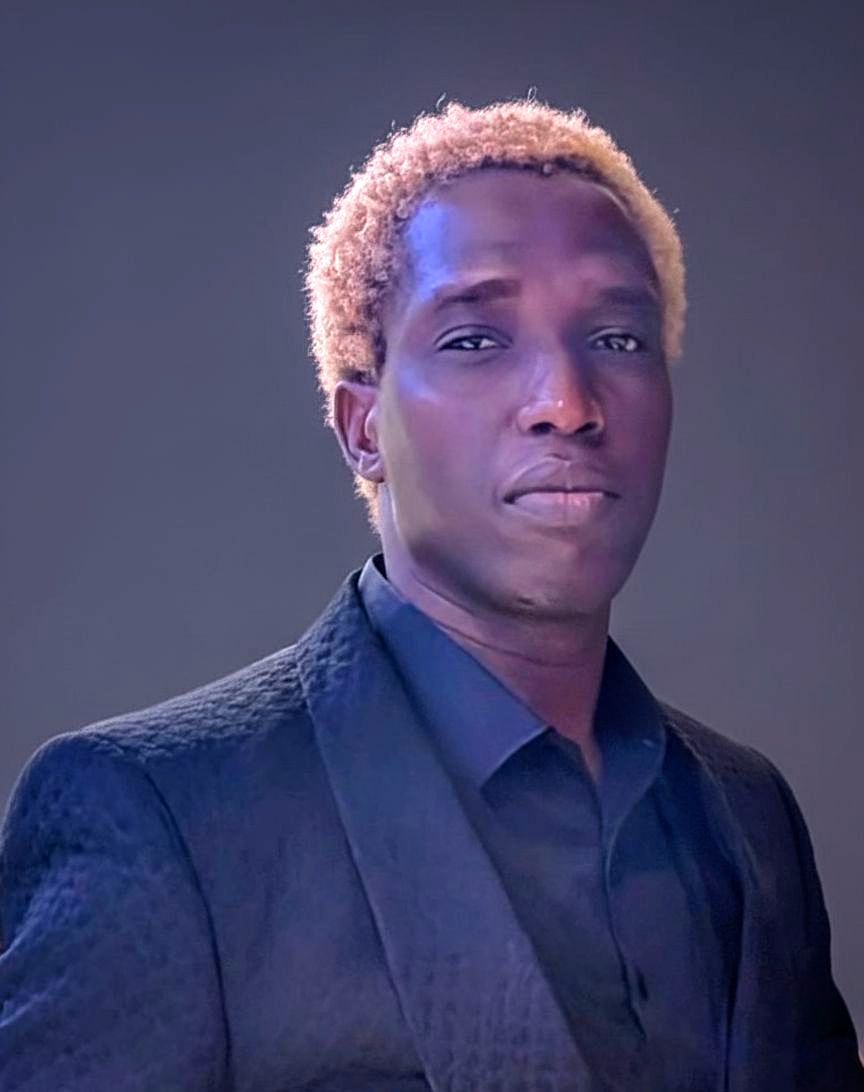
Nosa Iyamu IVI PR

By Nosa Iyamu

The COVID-19 pandemic forever changed how we work. It accelerated a digital transformation that was already underway, forcing businesses to embrace new technologies and rethink traditional structures. In this new era, Artificial Intelligence (AI), once a concept from science fiction, is no longer a luxury but a necessity for growth and survival.

AI is poised to redefine the very nature of work, much like email revolutionised communication. It’s not about replacing human ingenuity but augmenting it, making work more agile, efficient, and ultimately, more rewarding. A PwC report, “Sizing the Prize,” predicts AI could contribute up to $15.7 trillion to the global economy by 2030. For Africa, the potential is immense, with a 2023 African Development Bank report suggesting AI could boost the continent’s GDP by up to $1.2 trillion by 2030.

Nigeria, with its rapidly growing tech sector, stands to benefit immensely. The government’s commitment to developing a national AI strategy signals a clear understanding of this technology’s importance for the nation’s economic future. For Nigerian businesses to compete on a global stage, they must strategically commit to AI adoption, moving beyond mere interest to a multi-pronged approach that includes deployment, training, and a fundamental shift in mindset.

AI is not a replacement for talent; it’s a powerful coworker. Companies must communicate that AI is an enabler, freeing employees from repetitive tasks to focus on higher-value, creative, and strategic work. This mindset shift is crucial for successful integration.

AI can automate routine tasks, freeing up employees to dedicate their energy to more impactful work. One key way it transforms the workplace is through the automation of repetitive tasks. AI-powered Robotic Process Automation (RPA) can handle routine jobs like data entry, invoice processing, and report generation, significantly boosting efficiency and accuracy. This allows staff to focus on more strategic and creative responsibilities.

Beyond automation, AI also offers enhanced data analytics. Its algorithms can quickly sift through massive datasets, providing businesses with actionable insights for informed decision-making. This capability helps companies uncover trends and predict outcomes much faster than traditional methods. Furthermore, AI improves the customer experience through tools like AI-powered chatbots and virtual assistants, which provide 24/7 customer support, handle routine queries, and free up human agents for more complex issues.

AI also facilitates smarter collaboration. It can transcribe meetings, translate languages in real-time, and summarize lengthy documents, making communication smoother, especially for remote or global teams. In addition, it enhances efficient talent management by streamlining the recruitment process, sifting through resumes to identify the best-fit candidates. In an increasingly digital world, AI is also crucial for stronger cybersecurity, playing a key role in detecting and responding to cyber threats to protect sensitive company data.

AI offers a unique advantage in creative marketing, a field where originality and strategic thinking are paramount. It doesn’t stifle creativity; it amplifies it. AI-powered tools can analyse market trends, consumer behavior, and campaign performance with incredible speed and accuracy. This data allows creative teams to move beyond guesswork and create highly targeted, personalised content that resonates deeply with their audience.

For example, an AI tool can analyse thousands of social media posts to identify emerging trends and emotional sentiment around a brand. This insight allows marketers to craft campaigns that are not only relevant but also culturally timely. Additionally, AI can automate the creation of marketing materials like social media captions, email subject lines, and ad copy, freeing up creative professionals to focus on big-picture strategy and innovative campaign concepts. In essence, AI handles the data and the drudgery, while the human mind is left to do what it does best – create.

Nigeria and the broader African continent, with a young, tech-savvy population, are perfectly positioned to lead this AI revolution. Businesses in Lagos, Nairobi, and beyond are already leveraging AI in various sectors, from fintech to agriculture. The post-COVID workplace is not just about remote work; it’s about smart work. It’s about empowering employees with tools that enhance their capabilities, fostering a culture of innovation, and strategically leveraging AI to build resilient, globally competitive businesses.

The future of work is here, and it is intelligent, collaborative, and boundless. Nigerian companies have a critical window to position themselves at the forefront of this wave, understanding that AI is not a futuristic concept but a present-day imperative for growth and global relevance.

Nosa Iyamu is the Chief Executive Officer of IVI PR

Click to comment

Leave a Reply

Your email address will not be published. Required fields are marked *

Feature/OPED

The Quiet Strength of Kaduna’s Fiscal Discipline and Public Finance

Published

on

Kaduna's Fiscal Discipline

By Sani Abdulrazak, PhD

The irony in governance is that the projects that capture public imagination are often the least difficult to appreciate. A newly commissioned road, a modern school, a renovated hospital or a flyover bridge speaks for itself. Fiscal discipline does not. Yet, behind every lasting development lies an often-overlooked virtue: the prudent management of public resources. Governments are judged ultimately not by the abundance of their income but by the wisdom of their choices in spending that income. Though prosperity is desirable as we all know, we have to admit that stewardship is equally indispensable. When public finance is guided by discipline rather than expediency, governments create not only projects but also the confidence that today’s development will not become tomorrow’s burden.

It is against this backdrop that Kaduna State’s fiscal journey deserves careful reflection.

Governor Uba Sani assumed office in May 2023 at a time when the state, and by extension the country’s economic landscape, was anything but forgiving. The removal of fuel subsidy, exchange-rate volatility, persistent inflation, and rising debt-service obligations placed unprecedented pressure on governments at every level. States were confronted with a difficult reality: revenues were uncertain, the demands of citizens were increasing, and the cost of delivering public services was rising sharply. In such circumstances, leadership is tested less by ambition than by restraint. The challenge is not merely to spend, but to spend wisely.

One of the defining features of Kaduna’s public finance strategy has been its emphasis on fiscal prudence. The evolution of Kaduna’s budgets illustrates this approach. The approved 2023 budget stood at approximately ₦376 billion, with about 64 per cent allocated to capital expenditure. By 2026, the state’s budget had expanded to approximately ₦985.9 billion, with nearly 71 per cent earmarked for capital projects. While a larger budget does not automatically translate into better governance, the increasing share devoted to capital expenditure suggests an intention to invest more heavily in assets capable of generating long-term social and economic value.

It is important to note that Kaduna’s fiscal philosophy appears to rest on the belief that sustainable development cannot be separated from responsible financial management. Whether this approach ultimately delivers all the expected outcomes will be judged by history. But the effort to align expenditure with development priorities represents a significant dimension of governance, one that often receives less public attention than it deserves.

Like most Nigerian states, Kaduna relies on a combination of statutory allocations from the Federation Account and internally generated revenue (IGR).  Available fiscal reports indicate that Kaduna has continued efforts to strengthen its internally generated revenue through reforms in tax administration and improved collection mechanisms. While revenue generation alone is not evidence of economic prosperity, it provides government with greater fiscal flexibility and resilience, particularly during periods of national economic uncertainty. Equally important is the principle that expanding the revenue base should not be confused with imposing heavier burdens on taxpayers. The more sustainable path lies in improving efficiency, reducing leakages, and encouraging economic activity that naturally broadens the tax net.

Another pertinently salient aspect of Kaduna’s fiscal approach that deserves attention is the administration’s stated commitment to avoiding new borrowing while continuing to service inherited debt obligations. In a federation where public borrowing has become a common instrument for financing development, such a position reflects a cautious philosophy of public finance. According to official statements, the government has prioritised meeting existing debt commitments while financing new projects through budgetary allocations, statutory revenues, and other available funding sources rather than contracting fresh loans. The most overlooked measure of fiscal discipline is not the size of a budget or even the amount of revenue collected. It is the willingness of a government to treat public funds as a trust rather than an entitlement. Financial prudence is rarely dramatic, but it is often decisive. It is the quiet habit of making difficult choices today so that tomorrow’s opportunities are not compromised by yesterday’s excesses.

There is, pertinently, external evidence to suggest that Kaduna’s emphasis on fiscal discipline is not merely a government narrative. In the 2025 Transparency and Integrity Index of the Centre for Fiscal Transparency and Public Integrity (CeFTPI), Kaduna ranked first among Nigeria’s 36 states for the second consecutive year, scoring 49.08 per cent and recording the country’s highest score; 80 per cent, in the Control of Corruption variable. The assessment covered fiscal transparency, open procurement, human resources, control of corruption and citizen engagement.  This was not an isolated recognition. In the 2024 edition, Kaduna again ranked first among the states, ahead of Kano and Kogi, while in the 2023 Transparency and Integrity Index it placed second nationally with 59.7 per cent.

More recently, the 2025 Phillips Consulting State Performance Index placed Kaduna third among the 36 states and awarded it an Excellent Four-Star rating, with fiscal management among the areas assessed.  These assessments do not, by themselves, prove that every naira has been optimally spent, nor do they erase the challenges confronting the state. They do, however, provide an important independent corroboration that Kaduna’s efforts in transparency, accountability and public-sector financial management have been noticed beyond the corridors of government. In public finance, therefore, such external assessments are worth considering.

Yet, no appraisal of public finance can be complete without acknowledging its limits. Fiscal discipline, however commendable, is not a panacea for every economic challenge. Kaduna, like every other state in Nigeria, operates within a national macroeconomic environment over which it has limited control. Inflation continues to erode purchasing power, businesses contend with high operating costs, exchange-rate volatility affects production and investment, and many households still struggle with the rising cost of living. These realities remind us that sound state finances cannot, by themselves, insulate citizens from broader economic shocks.

This distinction is important because it separates governance from circumstance. A prudent administration may not be able to determine the value of the naira or the global price of commodities, but it can determine how efficiently public resources are managed, how transparently budgets are implemented, and how wisely limited revenues are allocated. In that sense, fiscal discipline should not be judged by whether every economic hardship disappears, but by whether government responds to those hardships with responsibility and not recklessness.

Kaduna’s experience suggests an appreciation of this responsibility. The emphasis on capital investment, efforts to strengthen internally generated revenue, and the administration’s declared preference for avoiding new borrowing while servicing inherited obligations point to a philosophy that values sustainability over expediency. These choices contribute to a financial culture that seeks to preserve the state’s capacity to invest, grow, and respond to future challenges.

That is not to suggest that the work is complete. Public finance is never a finished project; it is a continuous exercise in adaptation. As Kaduna’s economy evolves, expectations will also rightly rise; citizens will demand greater efficiency in service delivery, stronger budget implementation, improved transparency, broader private-sector participation, and measurable improvements in living standards. Fiscal discipline must therefore remain dynamic, ensuring that every naira spent delivers the greatest possible public value.

Prudent financial management remains the quiet strength of Kaduna’s fiscal discipline and public finance. It is a strength that is rarely seen or acknowledged by the majority; the strength to prioritise sustainability over excess and fiscal adventurism. It is important to note that the loudest achievements may command today’s headlines, but it is often the quiet virtues- prudence, discipline, accountability, and foresight- that shape tomorrow’s verdict. In public finance, as in life, the strongest foundations are rarely the most visible, yet they are almost always the most enduring.

Sani Abdulrazak, PhD, is a writer, researcher and public affairs analyst based in Zaria, Kaduna State.

Continue Reading

Feature/OPED

On Onaiyekan—When Heaven Becomes Corruption’s Laundromat

Published

on

corruption in nigeria

By Prince Charles Dickson Ph.D

Nigeria is perhaps the only country where a politician may steal enough money to build three universities, donate twenty bags of rice to a prayer house, and immediately be introduced as “a great philanthropist and pillar of the faith.” The congregation applauds. The cleric smiles. Cameras flash. Heaven receives a bank alert it never requested.

“Sai Baba! Sai Malami!” the praise singers thunder, while the distinguished guest adjusts his cap, grips his prayer beads and looks humbly into the middle distance. By evening, another politician is occupying the front pew of a cathedral, lifting two hands in worship, although one suspects the third invisible hand is still inside the public treasury.

This is the Nigerian religious-political circus: spectacular costumes, sacred vocabulary, endless pilgrimages and remarkably little evidence of moral transformation.

We must begin with an important correction. It is neither fair nor provable to claim that 99.99 per cent of corrupt politicians are practising Muslims and Christians. What can be said is that Nigeria is overwhelmingly populated by people who identify as Muslim or Christian. Pew Research Centre estimates that Muslims and Christians together constitute virtually the entire population. Consequently, most politicians, honest or dishonest, will publicly identify with one of those religions.

The real scandal, therefore, is not that corrupt politicians belong to religions. It is that corruption appears perfectly comfortable living beside loud professions of faith. It eats breakfast with Christianity, attends afternoon prayers with Islam, and sleeps peacefully beneath framed quotations from scripture.

Nigeria has produced a curious creature: the devout kleptocrat.

He fasts, but the treasury must break the fast. He pays tithe, but not tax. He performs ablution, but refuses institutional cleansing. He kneels before God and places the country beneath his shoe.

He asks forgiveness every week without returning what he took.

He sponsors pilgrimages with money that could have equipped hospitals, then asks the pilgrims to pray for Nigeria’s development. This is like stealing somebody’s generator and requesting prayers for the darkness in his house.

Christianity does not teach this. Islam does not teach it. African traditional morality does not teach it. Even ordinary home training does not teach it.

Both Islam and Christianity treat public trust, justice, compassion, honesty and care for the vulnerable as serious moral obligations. Neither faith provides a theological washing machine into which stolen funds can be inserted and brought out smelling of incense. A pilgrimage is not a corruption amnesty. A church donation is not a plea bargain. Sponsoring religious programmes does not convert public theft into charity.

You cannot steal a community’s borehole and donate bottled water during Ramadan. You cannot divert teachers’ salaries and build a church auditorium. You cannot inflate a road contract, abandon the road, then organise a thanksgiving service after surviving an accident on that same road.

At some point, even hypocrisy deserves professional embarrassment.

The economic context makes the performance more offensive. Claims that “over 79 per cent” of Nigerians are poor depend on the definition and dataset being used, so that figure should not be repeated as a settled fact. However, the verified picture is already grim enough. The World Bank estimated that more than half of Nigerians were living in poverty in 2025, while its Nigeria country assessment says poverty remains widespread and that poorer households may spend up to 70 per cent of their income on food.

Meanwhile, nearly 35 million Nigerians were projected to face acute or severe food insecurity during the 2026 lean season, the highest level recorded for the country in the relevant analysis.

These are not decorative statistics. They represent children arriving at school too hungry to learn, parents dividing one meal into three diplomatic portions, pensioners choosing between medication and food, and graduates discovering that their certificates have become expensive bookmarks.

Against this background, unexplained political wealth is not merely vulgar. It is morally violent.

The statement that any present or former officeholder possessing ₦5 billion must automatically be a thief may satisfy public anger, but law and fairness require greater care. Some politicians had legitimate businesses, inheritances or investments before entering office. Wealth alone is not proof of theft.

However, unexplained wealth is a legitimate basis for scrutiny. Where a public officer’s assets are wildly inconsistent with lawful earnings, the burden of public explanation becomes unavoidable. Nigeria’s Code of Conduct system requires public officers to declare their assets and liabilities, while the Code of Conduct Bureau is responsible for receiving, examining and monitoring those declarations.

The correct democratic question is therefore not simply, “Are you rich?”

It is: What lawful activity produced this wealth, when was it earned, was it properly declared, were taxes paid, and can the explanation survive independent investigation?

A senator cannot tell citizens that wealth is a “mystery of God” when his declared salary is public knowledge. Divine favour is not an accounting category. “Grace” cannot explain twenty-seven properties, twelve companies and a warehouse full of dollars. Even manna came with distribution rules.

The deeper problem is that parts of Nigeria’s religious establishment have become involved in an unhealthy exchange with political power. Politicians provide money, access, vehicles, land and proximity to government. Religious leaders provide legitimacy, titles, photographs, prayers and a moral raincoat.

The politician arrives as “His Excellency, the divinely chosen servant-leader.” Nobody asks how the servant acquired a private jet while the people he serves cannot afford transport. Nobody wants to upset the offering basket. Prophecy suddenly develops selective eyesight.

To be balanced, many Nigerian clerics, Muslim and Christian, speak courageously against corruption, defend vulnerable communities and refuse political capture. Many politicians also practise their faith sincerely and serve without stealing. The disease is not universal.

But the silence of influential religious institutions is often too expensive to ignore.

A cleric who constantly condemns young people for indecent dressing but cannot condemn officials who undress the national treasury has misplaced his moral measuring tape. A preacher who sees spiritual danger in hairstyles but none in budget padding needs more than revelation. An imam who lectures poor traders about honesty while celebrating officials with inexplicable fortunes has reduced religion to ceremonial wallpaper.

Religious leaders must recover the courage to ask unpopular questions. Before accepting a massive donation from a public official, they should ask whether the donor’s known income can reasonably support it. Institutions should publish major political donations and establish ethical rules governing gifts from politically exposed persons. Stolen money does not become holy because it enters a religious account.

The state must also stop outsourcing accountability to divine judgement. Nigerians frequently say, “God will judge them,” which is true within religious belief, but God also gave the country auditors, investigators, courts, journalists, voters and laws. Waiting exclusively for celestial prosecution is institutional laziness wearing a prayer shawl.

Asset declarations should be effectively verified, and greater public access would strengthen accountability. The ICPC has itself previously advocated publication of public servants’ declared assets as an anti-corruption measure.  Investigative institutions must follow money without consulting party membership, regional origin, denomination or prayer vocabulary. A thief speaking in tongues and a thief reciting Arabic remain thieves requiring evidence-based investigation and lawful prosecution.

Citizens also have work to do. We cannot condemn corruption in Abuja while celebrating it when “our son” returns home with unexplained wealth. Communities organise receptions. Traditional titles multiply. Clerics pronounce blessings. Relatives announce that God has finally remembered the family. Nobody asks what job produced the convoy.

Our outrage is often tribal, partisan and denominational. We investigate opponents and interpret allies. When their politician steals, it is corruption. When ours steals, it is strategic empowerment of the constituency.

Nigeria will not defeat corruption until stolen wealth becomes socially shameful rather than socially impressive.

The politician who cannot explain his fortune should not receive a chieftaincy title, front-row seat, honorary doctorate or harvest-launch chairmanship. He should receive questions. Many questions. Questions with documents attached.

Religion must become more than pilgrimage photographs, prayer caps, rosaries, flowing gowns and amplified declarations of righteousness. True faith must disturb injustice. It must make theft uncomfortable, generosity accountable and leadership answerable.

Otherwise, the mosque becomes a photo studio, the church becomes a reputation-repair workshop, and religion becomes perfume sprayed over the odour of public theft.

The final question is not whether Nigerian politicians pray. Many clearly do.

The question is whether their prayers have ever met their consciences. Because a nation cannot shout “Amen” loudly enough to convert corruption into governance. Either way—May Nigeria win.

Continue Reading

Feature/OPED

Bashir Ahmad, Stop Manipulating the Facts

Published

on

kano state map

By Abba Dukawa

Self-accountability is very important in politics because it encourages political leaders to take responsibility for their actions, decisions, and promises rather than blaming others for their failures. In fact, it is essential for effective and trustworthy political leadership. It promotes transparency and responsibility while ensuring that political leaders remain focused on serving the interests of the people rather than pursuing personal interests.

During the 2022 All Progressives Congress (APC) primary election for the Gaya, Ajingi and Albasu Federal Constituency, the then-incumbent member, Abdullahi Mahmud Gaya, decisively defeated Bashir Ahmad, then an aide to President Muhammadu Buhari, by 109 votes to 16.

Following his defeat, Ahmad took to Facebook to explain his absence from the venue, claiming that he had left to protect his supporters, whom he alleged were being intimidated by thugs.

He wrote: “As an aspirant, I left the venue of the primary election for Gaya, Ajingi and Albasu Federal Constituency, because of the security of our majority delegates. If you want to compete with the best, thugs shouldn’t be part of any election.”

For those who witnessed the process, however, the account presented on social media bears little resemblance to what transpired on the ground. Perhaps the most curious part of Ahmad’s statement was his reference to “majority delegates.” The question is simple: who were these majority delegates?

Even before and after Ahmad had not established a substantial grassroots political base, either in his own local government or across the three local governments that make up the federal constituency. His emergence from Abuja, aided by his position as a presidential appointee, did not automatically translate into political acceptance among the delegates. The delegates ultimately demonstrated this at the primary. They overwhelmingly backed Hon. Abdullahi Mahmud Gaya, whose 109 votes against Ahmad’s 16 left little ambiguity about their preference.

It is also important not to rewrite the events surrounding the primary. Who brought security escorts from Abuja to the venue? Was it not Ahmad and members of his camp? And what was the purpose of their presence at the Islamic Centre in Gaya, where the primary was conducted?

When the political contest failed to produce the desired outcome, the matter subsequently moved to the courts. The legal challenge, however, did not overturn the primary result. The Federal High Court and the Court of Appeal in Kano affirmed Hon. Abdullahi Mahmud Gaya’s victory.

That raises a legitimate question: why continue to resurrect an issue whose political and legal outcomes have already been established?

If the delegates rejected you, the primary result rejected you, and the court affirmed that result, what exactly remains to be contested?

Politics is not a permanent entitlement. Holding a government appointment does not confer ownership of the grassroots, just as proximity to Abuja does not replace the democratic choice of party delegates.

The delegates spoke. The result was recorded. The court affirmed it.

Rather than repeatedly reopening a chapter that ended in a decisive political defeat, perhaps the more responsible course is to accept the verdict of the delegates and move forward. Political narratives may be contested, but established records cannot simply be rewritten.

There is, however, another issue that Bashir Ahmad should address.

The question of whether he was eligible to contest the 2022 primary while still holding a government appointment deserves clarification. Under the electoral framework applicable at the time, public officers seeking elective office were subject to resignation requirements.

According to records available to me, Ahmad did not resign before participating in the electoral process and continued to receive his government salary during the relevant period. I personally have copies of payslips covering that period.

If Ahmad is prepared to make claims about political events on social media, he should equally be prepared to address questions about his own record.

The same principle applies to the 2026 APC stakeholders’ consensus process.

At the stakeholders’ consensus meeting held at the Kano State Government House for the Ajingi, Gaya and Albasu Federal Constituency, Hon. Abdullahi Mahmud Gaya reportedly secured 33 of the 55 recorded stakeholder votes across the three local government areas.

The incumbent member, Hon. Ghali Panda, received the remaining 22 votes, while Bashir Ahmad, despite being one of the aspirants, reportedly received zero votes.

The figures become even more revealing when broken down by local government area. Based on the information available to me, Hon. Abdullahi Mahmud Gaya secured 19 votes in Gaya, 10 in Ajingi and 4 in Albasu.

These are matters that should not be reduced to social-media propaganda or political storytelling. They are claims capable of being tested against the relevant records.

Ahmad therefore owes the public straightforward answers to straightforward questions. Why you did nit resign from your government appointment before contesting in 2022? Why Did you continue receiving your government salary during the period in question?

How many votes did you receive at the 2026 stakeholders’ consensus meeting? And, perhaps most importantly, why did you receive no vote at that meeting?

These questions are not intended to diminish anyone’s political ambition. They are questions of accountability and public credibility.

Politics should be about facts, accountability, integrity and the confidence of the people, not selective storytelling. Political disagreements are legitimate, but they should not become an excuse to distort established records or mislead the public.

The people from far-away Kano deserve to know what happened in 2022 and what happened in 2026.

The records exist.

Let the records speak for themselves.

Dukawa can be reached at [email protected]

Continue Reading