Feature/OPED
Perennial War in DRC is a Scorn at Africa’s Sovereignty
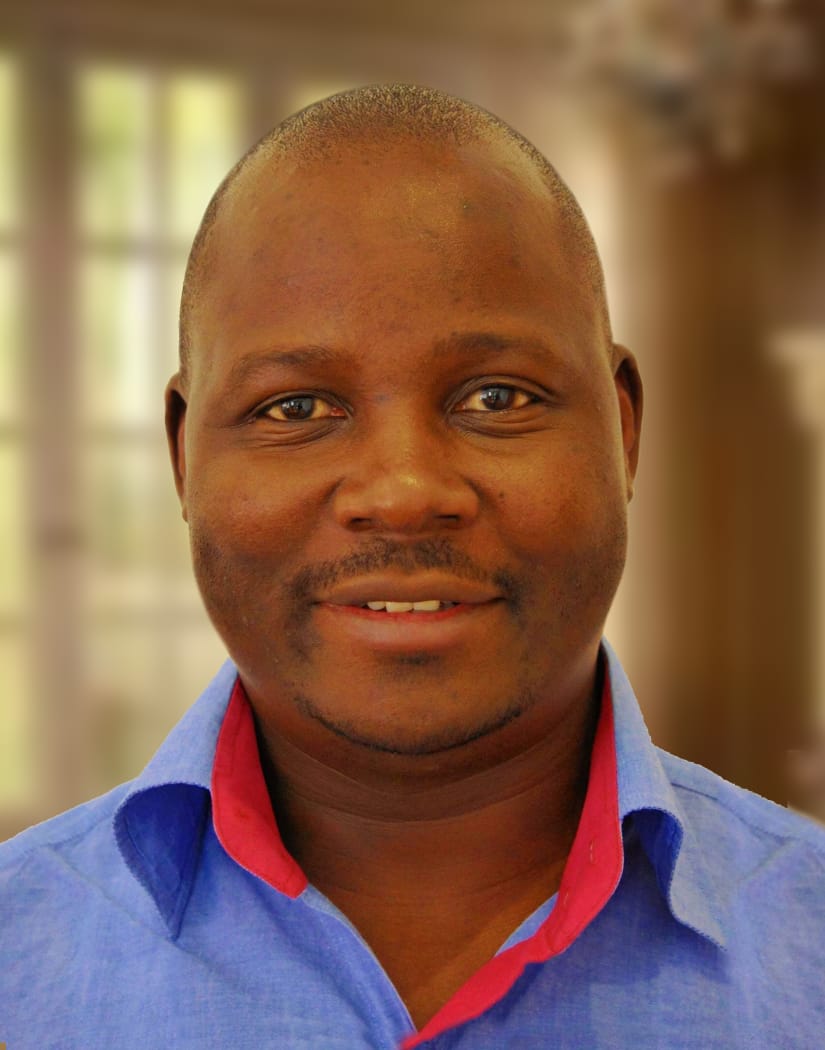
By Mike Omuodo
A phone vibration drew my attention to an incoming message – a friend had sent a message with an attachment and a note reading, “This is so sad and needs to stop! The message was followed by some crying emojis.
Curious, I opened the attachment. It was a photo of some of the carnage in the Democratic Republic of Congo (DRC) – to be precise, the photo of corpses of those killed in the DRC’s never ending war, piled like some wastes from a city garbage truck. My heart bled for the children and women of DRC, the main victims of this horrendous war!
The war in the Democratic Republic of Congo, which has killed over 6 million people over decades, stands as a stark reminder of the continent’s internal and external challenges. Despite Africa’s rich history, cultural diversity, and growing potential, the persistent violence in the DRC represents a failure of both African leadership and the international community to address a crisis that undermines the very notion of African unity, independence, and self-determination.
The DRC, endowed with an abundance of natural resources—diamonds, gold, copper, coltan—should be one of Africa’s most prosperous countries. Instead, it has become a battlefield where local militias, foreign corporations, and regional powers exploit its riches, leaving its people in poverty and suffering. This is a direct affront to the vision of African sovereignty, which seeks to ensure that African resources benefit Africans and not external actors or corrupt elites.
The inability of African nations to decisively intervene and resolve the conflict in the DRC highlights a painful reality: while African leaders have championed unity and cooperation through platforms like the African Union (AU), they have largely failed to protect one of their own from decades of exploitation and war. The silence and inaction of many African governments on the DRC crisis is a scorn to the idea of Pan-Africanism, which promises solidarity and collective action in the face of injustice.
The war in the DRC is also a reflection of how foreign interests continue to meddle in African affairs, undermining Africa’s sovereignty. Since colonial times, external powers have exploited the DRC for its natural resources, leaving the country in a state of perpetual conflict. Today, multinational corporations and foreign governments continue to benefit from the illegal extraction of the DRC’s minerals, funding armed groups and prolonging instability.
African leaders have a moral and political obligation to assert Africa’s control over its own resources and territory. Allowing foreign actors to dictate the fate of one of the continent’s richest nations not only diminishes the sovereignty of the DRC but also weakens the entire continent’s ability to defend its economic and political interests.
Failed Governance
At the heart of the DRC crisis is the failure of governance. While external actors have played a significant role in the conflict, internal divisions, corruption, and weak leadership within the DRC have exacerbated the situation. Successive governments have struggled to maintain control over vast portions of the country, allowing warlords and militias to fill the power vacuum.
However, the broader failure lies in the inability of African leaders to come together and address these internal issues through diplomatic pressure, peace-building, and robust intervention. Instead, some regional powers have been accused of further destabilizing the country by supporting rebel groups and exploiting the chaos for their own gains. This lack of leadership not only prolongs the suffering of millions of Congolese but also erodes trust in Africa’s ability to solve its own problems.
Strategic Imperative
This war shouldn’t be seen merely as Congo’s problem but as a moral and strategic imperative for the entire African continent. The ongoing conflict undermines Africa’s collective goals of peace, security, and economic development. It destabilizes a region that is critical to the future of Africa, limits economic growth, and diverts attention from pressing continental issues such as poverty alleviation, infrastructure development, and healthcare.
Allowing the DRC to remain in a state of war or even degenerate further into the abyss reflects poorly on the African Union and regional organizations like the East African Community and Southern African Development Community (SADC), which have the capacity to mediate and intervene. If African leaders do not act now to stop the violence and build sustainable peace, it will signal a failure to live up to the founding principles of these organizations and African independence itself.
Reclaiming sovereignty
This war is not just a humanitarian catastrophe; it is a direct challenge to Africa’s ability to assert control over its own destiny. The conflict has exposed the fragility of African sovereignty and the vulnerability of the continent’s vast resources to external exploitation. To truly live up to the promise of a united, independent, and prosperous Africa, African leaders must rise to the occasion, reclaim the DRC’s sovereignty, and bring an end to this senseless war.
Inaction or passive diplomacy will only deepen the wounds and prolong the suffering. It’s time for Africa to lead by example, assert its political will, and save the DRC from becoming a permanent scar on the continent’s legacy. The war in the DRC cannot be allowed to continue as a scorn upon Africa’s sovereignty.
The writer is a pan-African Public Relations and Communications expert based in Nairobi, Kenya
Feature/OPED
Rethinking How Nigeria Supports SME Growth
By Olajumoke Bello
Across Nigeria, small and medium enterprises remain the backbone of economic activity. They drive trade, create jobs, and sustain millions of livelihoods. Yet, despite their importance, many SMEs continue to operate below their full potential due to persistent structural challenges.
Access to finance remains one of the most cited constraints. However, the issue today goes beyond the availability of capital. Many businesses struggle with financial readiness, weak documentation, and limited understanding of what lenders require. This often leads to missed opportunities, even when funding options exist.
At the same time, SMEs face gaps in market access and visibility. Business owners operate in highly localised environments, with limited exposure to broader networks that can unlock partnerships, new markets, and growth opportunities. This isolation can constrain scalability and reduce long-term competitiveness.
Equally important is the capability gap. Many entrepreneurs grow through resilience and experience but lack structured knowledge on critical areas such as financial management, export readiness, and digital adoption. Without this, even well-capitalised businesses can struggle to sustain growth.
These challenges point to a clear need for a more practical and integrated approach to SME support. It is no longer sufficient to offer standalone solutions. SMEs require ecosystems that combine knowledge, access, and direct engagement in ways that reflect how they actually operate.
A key shift is the move from centralised interventions to localised engagement. SMEs are deeply influenced by their immediate environments, whether markets, industrial clusters, or trade corridors. Solutions must therefore be brought closer to where these businesses function, allowing for more relevant support and stronger relationships.
Another important shift is from awareness to action. Business owners do not only need information; they need insights that they can apply immediately. This includes understanding how to structure their finances, how to access trade opportunities, and how to connect with the right partners to scale their operations.
There is also a growing need for continuity. Many SME-focused initiatives deliver strong initial impact but lack follow-through. For support to be effective, it must extend beyond one-off engagements into sustained relationships, with clear pathways for onboarding, advisory, and growth.
For financial institutions, this presents both responsibility and an opportunity. Supporting SMEs now requires moving beyond transactional banking to deeper partnership models. It requires understanding businesses at a granular level and co-creating solutions that evolve with their needs.
At Stanbic IBTC, this perspective continues to shape our approach to SME development. Our focus is on delivering practical support that translates into real business outcomes, helping enterprises grow, compete, and contribute more meaningfully to the economy.
As part of this commitment, we are extending our SME engagement to the regions through the Nigeria Business Summit Regional Tour. The tour will take structured, on-ground activations into key commercial hubs, where SMEs can access funding guidance, trade insights, advisory support, and direct engagement with financial experts.
The regional tour will take place across five strategic locations, bringing these solutions closer to business owners in Aba, Onitsha, Ibadan and Kano.
This approach reflects an important principle. When support moves closer to businesses and when solutions are delivered in ways that are practical and continuous, SMEs are better positioned to grow sustainably. In turn, this strengthens not only individual enterprises but the broader economy.
Olajumoke Bello is the Head of Enterprise Banking at Stanbic IBTC Bank
Feature/OPED
How Data Deconstructs the Myth of the ‘High-Risk’ Nigerian Borrower
By Winston Osuchukwu
The average Nigerian borrower is widely considered high-risk – a claim repeated in credit committees, priced into retail loans, and largely treated as settled fact. Every credit market accepts that an individual loan may not be repaid; this is ordinary, priced risk. The high-risk claim, however, is applied to whole segments – the informal trader, the gig economy earner whose income is steady but split across several accounts, the remote worker paid by an overseas client into a fintech FX wallet. What the assessment establishes is not whether they are likely to repay, but how they fit into an arbitrary segment. Having spent years building decisioning systems for this market, my thesis is a specific one: “high-risk” does not mean “no credit” – it simply requires that the lender embrace alternative datasets to price the risk appropriately.
This is not a criticism of the institutions that built their frameworks around collateral and documentation; those were rational responses to the tools available at the time. When data is scarce, prudence means defaulting to the status quo. The limitation is not that this approach is wrong, but that it leaves a blind spot – excluding fundamentally sound borrowers whose economic lives simply are not captured on the bank’s ledger. A market trader who has moved consistent, growing volumes of cash through mobile money for three years is not, in any meaningful sense, unknowable. Their financial behaviour is observable and patterned; it simply occurs outside the traditional banking system, rendering it invisible to conventional underwriting.
This is the gap technology is now positioned to close – not by replacing institutional judgment, but by augmenting it. When AI-driven analysis is applied rigorously to the financial behaviour these borrowers generate, a far more complete picture of their repayment ability emerges – and a meaningful share presents a risk profile that compares favourably with segments the traditional system has long considered safe. The “high-risk” label, applied broadly to an entire category of borrower, was never a risk pricing tool so much as the limit of what the available tools could see.
For banks, this is the opportunity to extend capital with confidence beyond the borrowers who fit their stringent criteria. Nigerian banks are highly liquid; the constraint on credit growth has rarely been capital, but the ability to assess and price the borrowers who sit outside the traditional file. Close that gap, and the whole ecosystem strengthens: banks grow their loan books into segments they have long wanted to serve, and the real economy gets the capital it needs to expand.
This is precisely what we focus on at Mathesis Analytics: building AI-powered credit decisioning that gives lenders a fuller, more defensible picture of the individuals long excluded as high-risk when they were simply misjudged. The Nigerian credit gap has never been a non-lendable population problem, but one of incomplete visibility. By unifying varied data sources and partnering with the institutions that hold the capital and scale to move the market, we translate out-of-ecosystem behaviour into reliable, bank-grade risk scores. Closing this gap is one of the clearest, highest-leverage opportunities in Nigerian financial services today.
Winston Osuchukwu is the founder & CEO of Mathesis Analytics
Feature/OPED
Second Home, Second Mother: Life Inside an Early Years Classroom
By Ohore Emmanuel Ufuoma
The Early Years classrooms have effectively become surrogate homes where educators now tie shoelaces, calm separation anxiety, supervise naps, enforce discipline, and provide comfort after minor injuries, which ought to be duties that should be performed by parents.
The extended work hours from 8 a.m. to 6 p.m. for six days a week, economic realities, and the proliferation of all-day, weekend-inclusive early learning programs have repositioned schools as the primary environment for early childhood development.
For a typical four-year-old, 9.5 hours in school account for about 75% of waking weekday time. With Saturday sessions added, the home is reduced to a space for meals, sleep, and brief routines.
The mandate of Early Years teachers has expanded far beyond academics. Current practice requires them to handle physical care, emotional regulation, and behavioural guidance concurrently.
Daily responsibilities include toileting assistance, feeding, conflict mediation, fatigue monitoring, and maintaining individual routines for 15–20 pupils.
The parent-child dynamic shifts when parents deliberately delegate care of the child, and even punishment, to educators. While parents set apart evenings and weekends for practical tasks, like food, homework, and bathing.
Psychologists term it “contact without connection.” Although parents are physically present, time is divided and focused on tasks.
Children are more obedient and organised in class than they are at home, according to teachers. Parents describe the contrary. The pattern shows an expected result: the parent becomes the outlet for exhaustion, while the educator becomes the authority figure.
The labour market triggered the transfer of responsibilities between parents and educators.
Dual-income households are now the norm in major cities, and flexible work remains limited outside tech and finance.
Child caregiver costs compound the issue. Full-time caregiver care often costs almost half of a salary. Parents opt for schools with extended hours in order to kill two birds with one stone.
For educational centres, extended-day programs create parent-like responsibilities, and staffing, training, and compensation should reflect that. In leading centres, professional development in attachment theory and stress management is becoming standard.
For parents, the emphasis should be on quality rather than quantity.
Policymakers are beginning to prioritise employment rules that permit parental presence during early childhood and accessible, flexible daycare. Strong early attachment is associated with higher scholastic success and fewer behavioural problems in later life.
The Early Years teacher and the parents have not replaced each other. Both parties are only responding to a system that demands more hours in the workplace with fewer hours at home.
There has been a paradigm shift in the upbringing of children. The teachers now perform functions once meant for the family unit.
Intentional parenting inside the small windows has been left in the hands of caregivers.
Instead of the classroom remaining a place of learning, it has become the only home children know.
Ohore Emmanuel Ufuoma is an MBA student at Tokat Gaziosmanpaşa University, Turkey