Feature/OPED
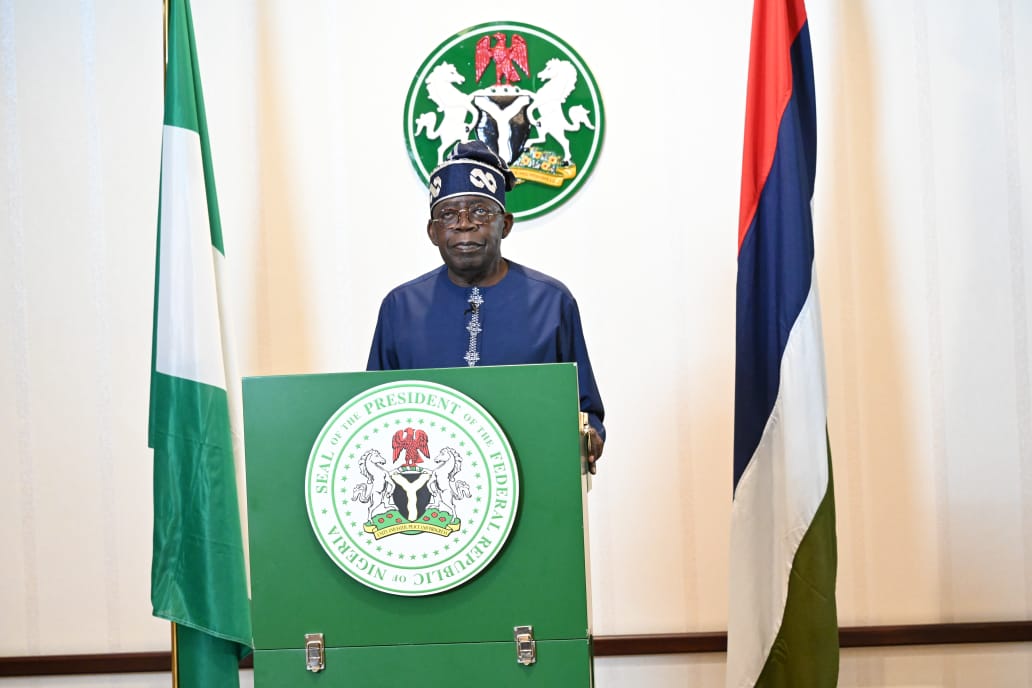
President Tinubu is Patriotic Leader- Nigerians will Thank Him Later
By By Kenechukwu Aguolu
Nigeria should be an economic powerhouse not only in Africa but globally because of its enormous human and natural resources but ironically it is fighting for economic survival. This contrast has been linked by many to inappropriate leadership over the years.
However, President Bola Ahmed Tinubu has demonstrated exemplary leadership marked by patriotism, boldness, action, foresight, and commitment. since he came into power on May 29, 2023.
Fuel subsidies and the constant defence of the naira have historically done more harm than good, consuming trillions of naira that could have been invested in nation-building resulting in infrastructure decay and mounting national debt.
Over the years, the Federal Government has had little left for capital expenditure and investment in critical sectors of the economy after covering salaries and other recurrent costs which, has significantly contributed to the poor state of roads, hospitals, schools, power supply, and the inability to adequately fund security agencies etc.
Therefore, president Tinubu should be commended for removing fuel subsidy and floating the naira despite being unpopular decisions.
President Tinubu’s policies have started to positively impact the lives of Nigerians. For example, It is worth noting that when he came into power, some state governments struggled to pay minimum wage and pensions. Currently, no state is reported to be behind on salary payments.
The Federal Government has begun implementing the new national minimum wage of N70,000, and state governments have also announced and started paying new minimum wages at varying rates, with none below N70,000, much to the relief of Nigerian workers. Insecurity is on the decline, with areas like the Abuja-Kaduna road no longer plagued by incidents that once made it a nightmare. Also, students have already started benefiting from the student loan scheme introduced by this administration; just to mention a few.
Despite mixed reactions to President Tinubu’s recent cabinet reshuffle, it signals his commitment to fixing the country. This reshuffle was timely and it strengthened the cabinet sending a clear message that Mr President will not tolerate mediocrity. Nigerians hope this will lead to a more responsive government and better policy implementation, fostering stronger synergy among ministries. The long time lag between policy announcement and implementation previously experienced should become a thing of the past.
With inflation slowing, debt service to revenue ratio reducing from 97% to under 70%, gross foreign reserves hitting $40 billion, and the outcome of GDP rebasing awaited, there is optimism about the country’s economic future. Additionally, the removal of the fuel subsidy has freed up funds that the government plans to invest in education, healthcare, infrastructure (power, transport, etc.), security agencies, and other key sectors.
For these efforts to succeed, the government must also adopt zero tolerance for corruption and waste. The World Bank has commended President Tinubu’s bold policies and emphasized the need to sustain them to achieve the desired economic reforms. Nigeria has a hopeful path ahead, and in time, Nigerians will look back and appreciate President Tinubu’s leadership.
Feature/OPED
Beyond the Screen: How Sports and Entertainment Keep Nigeria’s Economy Moving
When we talk about Nigeria’s economy, the conversation usually centres on oil and gas, banking, agriculture, manufacturing and technology. But there is another industry quietly creating jobs and driving economic activity: entertainment and sports. Most times, we only see the finished product. We watch the show, cheer during the match and move on to the […]
When we talk about Nigeria’s economy, the conversation usually centres on oil and gas, banking, agriculture, manufacturing and technology. But there is another industry quietly creating jobs and driving economic activity: entertainment and sports. Most times, we only see the finished product. We watch the show, cheer during the match and move on to the next thing. What we do not always see is the amount of work that happens before those moments reach our screens.
Take Big Brother Naija
When viewers tune in and see the housemates moving around the Big Brother house, it is easy to forget that the house itself is a product of many people’s work. From the interior designers and set builders who create the spaces to the electricians, carpenters, painters and technicians who bring them to life, an entire team works behind the scenes before the first episode even begins.
Once the cameras start rolling, the list gets even longer. Producers, directors, camera operators, sound engineers, editors, stylists, makeup artists, caterers, production assistants and security personnel all have a role to play. Then there is everything that happens outside the house. Publicists, photographers, videographers, digital teams, content creators and media platforms all contribute to keeping the conversation going. The housemates may be the faces audiences remember, but they are only one part of a much bigger entertainment ecosystem.
Sports have a similar impact
When the Super Falcons play a major game, the focus is naturally on the players and what happens on the pitch. But outside the stadium, the game can mean business for viewing centres, food vendors, restaurants and bars. Sports analysts and commentators have more to cover, content creators have something new to create around and businesses selling jerseys and football merchandise get an opportunity to make sales.
A major sporting event can turn an ordinary evening into a busy one for businesses that have little to do with what happens on the pitch. That is the part of sports and entertainment that is easy to overlook. The value is not only in the stars we see or the content we consume. It is also in the network of people whose skills and businesses keep these industries moving.
And this is where DStv and GOtv become an important part of the picture. They do more than give audiences access to the shows, matches and moments they care about. They connect the people producing this content with millions of viewers who keep the industry going.
Every time someone tunes in to Big Brother Naija, follows the Super Falcons or settles in for a major sporting event, they are engaging with an industry that supports producers, creatives, technicians, businesses and other professionals.
The impact of sports and entertainment, therefore, goes beyond what happens on the screen. By bringing some of the biggest entertainment and sporting moments to Nigerian audiences, DStv and GOtv help keep this ecosystem active, visible and working. Because sometimes, when we sit down to watch, we are not just consuming entertainment. We are also supporting an industry that provides jobs.
Feature/OPED
Nigeria May Have Escaped Fiscal Cliff; Now Build an Economy Worth the Sacrifice
By Blaise Udunze
Three years after the removal of the fuel subsidy and the adjustment of the foreign-exchange regime, Nigeria’s revenue and external positions have improved significantly. After escaping the fiscal cliff as touted, but with the United States questioning the country’s fiscal transparency, the harder question is whether these gains can be translated into an economy worthy of the sacrifice Nigerians have endured.
There is an uncomfortable concern and interrogation Nigeria must confront as it evaluates the economic reforms that began in 2023, which has to do with understanding the consequences Nigeria would have faced without reform.
What if the petrol subsidy had remained? What if the foreign-exchange market had continued under its old distortions? What if government had not intensified revenue mobilisation through taxation, VAT, customs collections, statutory revenues and electronic money transfer levies? What if the loopholes that allowed significant economic activity to escape the tax net had remained largely untouched?
The question matters because the pain associated with the reforms has become so visible that it is easy to forget the economic crisis they were designed to prevent.
Three years later, Nigeria’s economic story is more complicated. On one hand, the numbers indicate a significant expansion in the government’s revenue-generating capacity and external buffers. On the other, the lived experiences of households continue to face severe pressure from food prices, transportation costs, inflation and declining purchasing power.
Significantly, the tax collection figures have risen from N12.3 trillion in 2023 to N27.1 trillion by July 2026, a 113 per cent increase in less than three years, according to figures furnished by the Nigeria Revenue Service. The agency has linked the increase to tax reforms, digitalisation, new tax laws and efforts to close revenue leakages.
Nigeria’s gross external reserves have also risen to $52.52 billion as of July 17, 2026, from $50.47 billion at the end of May, according to the Central Bank of Nigeria. The reserve level is reported to provide roughly 11 months of import cover, well above the conventional three-month benchmark.
These are significant developments. But they do not, by themselves, prove that Nigeria has completed its fiscal recovery.
The United States Government’s 2026 Fiscal Transparency Report reportedly found that Nigeria had made insufficient progress in fiscal transparency. It said government budget documents did not provide a comprehensive picture of revenues and expenditures, raised concerns about discrepancies between approved budgets and actual implementation, and criticised weaknesses in the independence and reporting of Nigeria’s supreme audit institution.
That criticism strikes at the heart of the reform narrative. More revenue is not necessarily the same thing as more fiscal credibility.
A government can collect more money without demonstrating clearly how all of it is spent. A country can accumulate foreign reserves while still leaving questions about the completeness and transparency of its public accounts.
This does not erase Nigeria’s fiscal gains. It does, however, mean the gains must be subjected to greater scrutiny.
The removal of the petrol subsidy was arguably the most consequential reform, as this remains visible to the people. More confusing is that for many years, Nigeria devoted enormous public resources to keeping petrol prices artificially low. Deceitfully, as it were, the policy created an illusion of cheap energy and at the same time, fraudulently consumed resources that could otherwise have supported infrastructure, healthcare, education, social protection and productive investment.
The World Bank, at the outset, estimated that subsidy removal would save approximately N2 trillion in 2023, with cumulative savings projected to exceed N11 trillion between 2023 and 2025, and this was compared with a scenario in which the subsidy continued.
In reality, and as a response to one of the queries, if Nigeria had refused to remove the subsidy, the implication is that the government would have had to find more than N11 trillion to sustain it over that period or absorb the cost through additional borrowing, expenditure cuts or arrears.
In such a situation, it would be said that the reform therefore did not eliminate the economic cost. It changed where the cost appeared.
Before reform, much of the cost was hidden in government finances. After reform, it became visible in petrol prices, transportation costs, food prices and household expenditure.
The social cost was immediate. The World Bank reported that retail gasoline prices rose by an average of 163 per cent following subsidy removal.
Yet the alternative was not cost-free. It was a system in which government continued subsidising consumption while struggling to finance development.
Nigeria was therefore not choosing between pain and no pain. It was choosing between immediate adjustment and potentially greater fiscal pressure later.
Honestly, one of the strongest pieces of evidence that Nigeria’s fiscal architecture today has changed is found in the revenue numbers, especially where it is said that tax collections increased from N12.3 trillion in 2023 to N27.1 trillion by July 2026, an additional N14.8 trillion.
Nigeria had therefore collected by July 2026 more than twice the 2023 tax take, even though the 2026 figure covers only seven months. That signals a potentially important shift from chronic revenue weakness toward stronger tax mobilisation.
Nigeria’s revenue problem has never been solely about tax rates. It has also involved a narrow tax base, informality, weak enforcement, leakages and the government’s limited ability to capture economic activity.
Digitalisation, improved enforcement and new tax laws can change that. But the N27.1 trillion figure must be interpreted carefully. It represents tax revenue, not total government revenue, and is a nominal figure. Inflation, exchange-rate movements and higher nominal transaction values can contribute to the increase.
For proper verification of the development, the real test is whether the growth represents a sustained improvement in the tax-to-GDP ratio, fiscal capacity and public accountability.
The broader revenue picture reinforces the transformation. Reviewing the figures, World Bank data showed VAT rising from N3.6 trillion in 2023 to N6.7 trillion in 2024, an increase of about N3.1 trillion or 86 per cent. Also, Customs revenue rose from N2.0 trillion to N3.4 trillion, adding N1.4 trillion, or roughly 69 per cent.
Further data from the Bank showed that oil and gas royalties increased from N2.4 trillion to N6.3 trillion, while oil and gas taxes rose from N2.9 trillion to N5.9 trillion. Federal independent revenues also increased from approximately N2.0 trillion to N4.4 trillion.
These increases cannot all be interpreted as pure productivity gains. Inflation and exchange-rate movements matter. Nevertheless, they show that the government has expanded its capacity to mobilise revenue.
The latest FAAC figures reinforce the point. In June 2026 alone, gross revenue available to the Federation was N4.501 trillion, comprising N3.701 trillion in statutory revenue and N799.746 billion in VAT. That monthly figure would amount to roughly N54 trillion annually if sustained, although such annualisation should not be interpreted as a forecast.
The more important question is now changing. It is no longer simply: “Where will government find money?” It is: “What is government doing with the money and can Nigerians independently verify it?”
That question becomes even more important when viewed against the foreign-exchange reforms.
Nigeria’s old FX structure produced distortions, shortages and opportunities for arbitrage. The subsequent adjustment was painful, as the naira lost substantial value and imported goods, machinery, raw materials and other inputs became more expensive.
But the same adjustment increased the naira value of foreign-currency-linked government revenues.
That creates another reform inconsistency: The exchange-rate adjustment that strengthened government’s nominal revenue position also weakened household purchasing power.
Customs collections illustrate this. As the naira value of dollar-denominated imports rises, customs revenue can increase in naira terms. But importers pay more, manufacturers face higher input costs, and consumers ultimately bear much of the cost.
A reform can therefore strengthen government finances while worsening the immediate economics of households and businesses.
The much-touted fiscal cliff is the reserve story; nevertheless, it represents an important macroeconomic gain. Nigeria’s gross external reserves reached $52.52 billion by July 17, 2026, up from $50.47 billion at the end of May. Compared with roughly $40 billion at the end of 2024, reserves have increased by more than $12 billion. The CBN says the current reserve position provides approximately 11 months of import cover.
For a country that spent years battling FX shortages, reserve depletion and pressure on the naira, a stronger external buffer is important. It improves resilience against external shocks and strengthens the credibility of the country’s external position.
But stronger reserves do not automatically mean Nigeria has completely “escaped the fiscal cliff.” Foreign reserves are primarily an external-sector buffer. Fiscal sustainability concerns government revenue, expenditure, deficits, debt, debt servicing and the credibility of public financial management.
Conflating the two would weaken rather than strengthen Nigeria’s reform argument. The counterfactual, however, remains compelling. Suppose the subsidy had remained. Suppose the old FX regime had continued. Suppose tax administration had not been digitised. Suppose VAT and customs collections had not improved.
Also, suppose tax revenue had remained around N12.3 trillion, rather than reaching N27.1 trillion by July 2026. The fact is that the government would have had fewer resources while continuing to carry the subsidy burden. Foreign-exchange distortions would have remained. Reserve accumulation would have been harder. Borrowing requirements would likely have increased, while debt service would continue competing with development spending.
The arithmetic would have been brutal when adding together: high subsidy expenditure, weak revenue, FX distortions and persistent deficits would amount to greater borrowing pressure.
Then, adding together: greater borrowing and high interest rates are equal to heavier debt service. And finally: heavier debt service plus weak revenue results in less money for development.
Come to think of the trend in the past, Nigeria might have enjoyed cheaper petrol and avoided some of the immediate inflationary shock, but it would likely have been postponing rather than eliminating the adjustment.
That is why the reforms were necessary. But necessary reform is not the same as successful reform. This is where the U.S. fiscal-transparency assessment becomes significant.
For investors, lenders, development institutions and citizens, transparency is an economic asset. If approved budgets cannot easily be reconciled with actual implementation, if revenue and expenditure information is incomplete, or if independent auditing is considered inadequate, confidence suffers.
Obscurity has an economic cost. It can increase the perceived risk of investing in the country, raise the cost of capital, weaken public trust and make genuine economic improvements harder to believe. Nigeria therefore needs to move beyond revenue mobilisation toward revenue integrity.
This aspect calls for clarity because if tax collections have risen from N12.3 trillion to N27.1 trillion, citizens deserve to know where the additional N14.8 trillion is going.
One critical truth is that if June 2026 generated N4.501 trillion in gross Federation revenue, citizens deserve to know how that money was allocated and what public value it produced. The same applies: if reserves have risen above $52.5 billion, policymakers must clearly explain the sources and sustainability of the accumulation. Also, if the removal of subsidies generated billions of naira in savings, Nigerians deserve a transparent accounting of those savings.
Transparency is therefore not an administrative luxury. It is part of the economic reform itself. More revenue does not automatically mean a healthier economy. A doubling of tax collections sounds spectacular. A $52.5 billion reserve position sounds impressive.
But nominal revenue can rise while real incomes fall. Customs revenue can increase because the naira value of imports has risen. VAT can increase because prices have risen even while households consume less in real terms. Foreign reserves can improve while citizens struggle with food prices.
The fiscal deficit also remains. This is as the IMF’s 2026 assessment projects government revenue and grants at around 10.8 per cent of GDP against expenditure and net lending of about 14.2 per cent. This left a deficit of approximately 4.4 per cent of GDP.
It would be recalled that Nigeria’s 2026 federal budget provides for N34.33 trillion in expected revenue against N58.18 trillion in expenditure, as this includes N15.52 trillion for debt servicing, producing a projected deficit of N23.85 trillion, or 4.28 per cent of GDP.
These figures demonstrate that Nigeria’s fiscal adjustment is unfinished. A country can collect more revenue and still run a large deficit. It can increase tax revenue and still borrow. It can accumulate reserves and still have millions of citizens struggling.
And it can improve macroeconomic indicators while facing legitimate questions about whether its fiscal accounts provide the complete picture.
The next phase must therefore focus on expenditure quality, transparency, independent auditing and productivity.
Nigeria’s first stage was stabilisation: remove the unsustainable subsidy, correct FX distortions, improve revenue mobilisation, digitalise tax administration, close leakages, rebuild reserves and restore fiscal credibility. But stabilisation is not prosperity. The next stage must be transformation.
The additional N14.8 trillion represented by the increase in tax collections must translate into productive economic capacity. Stronger revenue must support electricity, transport infrastructure, healthcare, education, agriculture, industrial development, security and social protection.
And Nigerians must be able to see and verify what their money is producing. This is where the reform story becomes a test of governance.
No doubt, the following, such as tax collections, have risen from N12.3 trillion in 2023 to N27.1 trillion by July 2026. Foreign reserves have climbed beyond $52.5 billion. June 2026 generated N4.501 trillion in gross Federation revenue.
The subsidy burden has been substantially reduced. The FX market has undergone fundamental restructuring. These are significant achievements. But they are inputs, not the final outcome.
The final outcome must be a stronger, more productive and more transparent economy. How many Nigerians have moved into productive employment? How much has real household income recovered? How much has electricity reliability improved? How much has agricultural productivity increased? How much has the cost of doing business fallen? How much private capital has been attracted? How much has poverty declined? How much of the approved budget was actually implemented? And can an independent auditor verify the answers?
These questions will determine whether the reforms become transformative. There are two equally flawed positions in the reform debate. The first is to say the reforms were unnecessary because Nigerians are suffering.
The second is to say that because the reforms were necessary, every consequence should simply be accepted. Both are inadequate. Nigeria needed reform. But reform was never the destination.
The subsidy could not remain indefinitely. The distorted FX system could not remain indefinitely. The weak tax base could not remain indefinitely. Government’s ability to borrow indefinitely was also limited.
But Nigerians did not endure the resulting hardship merely to produce better fiscal statistics. They endured it because the promise was that the adjustment would ultimately produce a more stable, productive and prosperous economy. That promise must now be fulfilled and transparently demonstrated.
Nigeria may have moved significantly away from the economic cliff that confronted it in 2023. But stronger revenue and reserves should not be confused with complete fiscal recovery.
The numbers are encouraging. The U.S. transparency concerns are a warning. Both can be true. Nigeria has built greater fiscal space. It has rebuilt part of its external buffer. It has expanded its revenue capacity. Now it must build the bridge from those gains to the Nigerian household.
The country must move from higher revenue to higher productivity; stronger reserves to stronger investment; fiscal consolidation to better public services; GDP growth to better jobs; tax mobilisation to greater opportunity; budget announcements to measurable implementation; and macroeconomic stability to household prosperity.
The central question is no longer whether Nigeria should have reformed. It should have. The more important question is whether the government can now prove that the sacrifice was worth it.
Nigerians did not endure the removal of the fuel subsidy merely to make government finances healthier. They did not endure the naira adjustment merely to improve reserve statistics. They did not accept higher prices merely so that tax collections could rise from N12.3 trillion to N27.1 trillion.
They endured the adjustment because the old economic model had become unsustainable and because reform was supposed to lead somewhere better.
Now comes the harder part. Nigeria must prove that the money is there, that the money is properly accounted for, that it is being spent as authorised and that it is producing results. That is the real meaning of fiscal reform.
Nigeria may have strengthened its fiscal position. It may have rebuilt its external buffer. It may have expanded its revenue capacity. But the journey is not complete until it rebuilds something equally important, which is the public trust in the numbers and prosperity in the lives of its people.
The fiscal cliff may be behind Nigeria. The real challenge now is to build an economy and a fiscal system worthy of the sacrifice.
Blaise, a journalist and PR professional, writes from Lagos and can be reached via: [email protected]
Feature/OPED
Why Cloud Migration is Becoming Strategic Priority for Nigerian Banks
The new CBN directive mandates that local transaction data, payment records, customer financial information, and core banking operations must reside within Nigeria’s borders. Institutions that fail to comply face regulatory enforcement, penalties, and licence risk. The question is no longer whether to move, but how and how fast.
The challenge is that most Nigerian financial institutions are deeply embedded in foreign cloud infrastructure. Their applications, data pipelines, security frameworks, and disaster recovery protocols were all designed and optimised for these large global cloud environments.
Migrating critical workloads to domestic infrastructure is not a simple copy-and-paste exercise; rather, it requires re-architecting for a new environment, testing performance parity, and ensuring security equivalence. Doing all of this in six months while running a live banking operation is a feat of engineering and project management that few institutions are fully prepared for.
Infrastructure providers like MTN are investing heavily in domestic capacity, signalling that the gap between local and foreign clouds is narrowing. For compliance-regulated workloads, domestic infrastructure is no longer just a fallback but a rational choice, leaving CIOs to determine which provider can best handle tier-1 workloads. That evaluation is where the real difficulty lies because vendor sales pitches are abundant but inherently biased, and industry conferences are often public and postured.
What decision-makers need is independent, technically rigorous guidance on how to think about the problem. They must understand what the CBN framework requires in architectural terms, how to model the total cost of ownership when comparing providers, and what a phased migration looks like for a live banking environment. These are the questions that must be answered through industry-wide collaboration rather than individual vendor interests.
While significant investments in domestic infrastructure now offer the capacity to meet the demands of Nigeria’s financial sector, the compliance journey remains a systemic challenge that transcends the capabilities of any single provider.
The January 2027 deadline is real. It is enforceable, and the institutions that delay will find themselves in a compliance crisis, not a competitive one. The institutions that act now, starting with beginning their gap assessments, their vendor evaluations, and piloting their migrations, will not only meet the deadline. They will emerge stronger, with infrastructure that is closer to their customers, subject to Nigerian jurisdiction, and aligned with the strategic direction of the economy.