General
20,000 Nigerian Armed Forces Personnel to Receive Consumer Credit
By Adedapo Adesanya
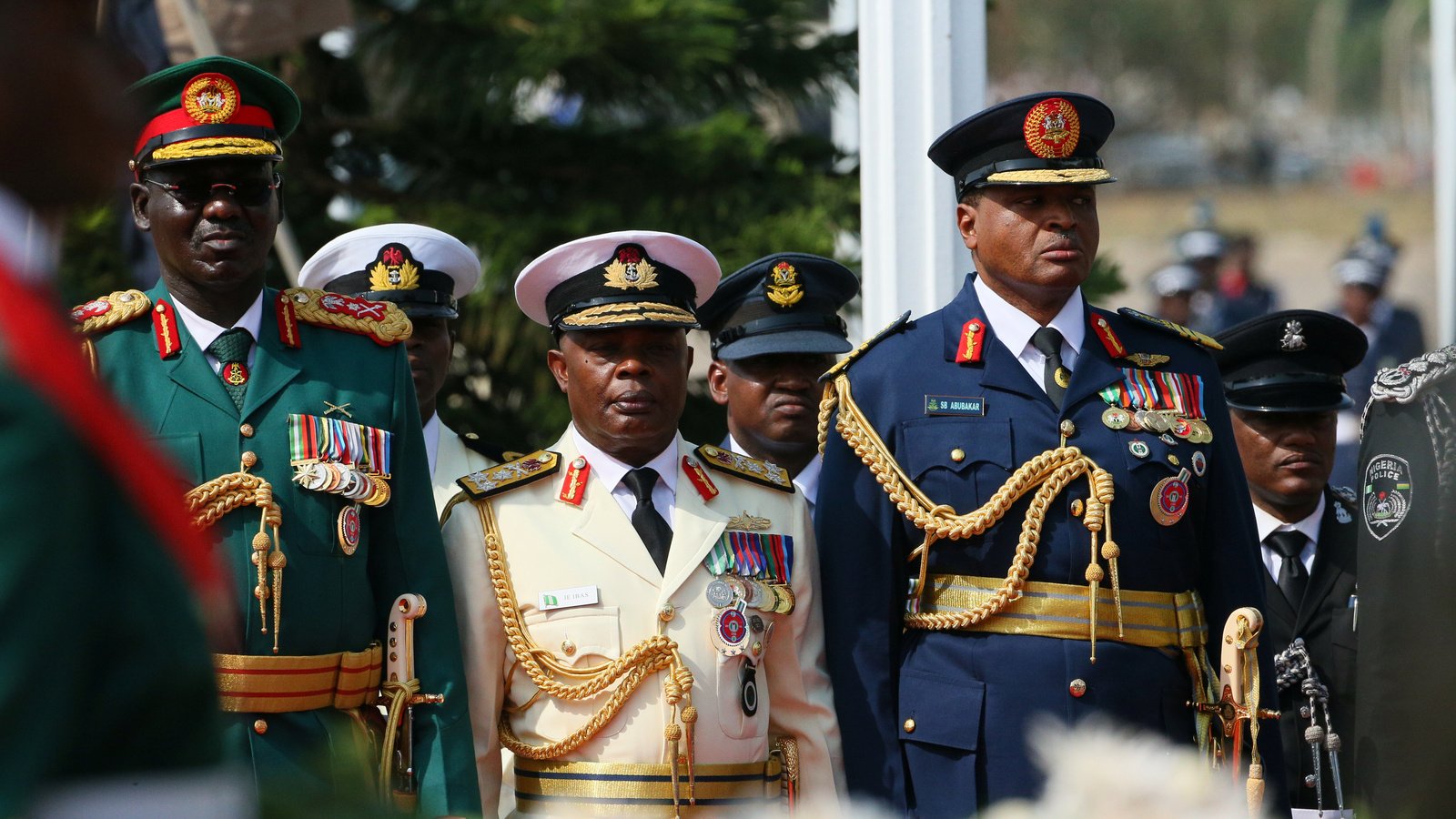
As part of initiatives to celebrate the just concluded Armed Forces Remembrance Day, the Nigerian Consumer Credit Corporation (Credicorp) has kicked off a consumer credit fund for personnel of the armed forces in a partnership with Fewchore Finance.
The scheme aims to benefit 20,000 armed forces personnel in its first phase.
This fund – kicking off with the Armed Forces Remembrance Day – advances President Bola Tinubu’s vision to extend consumer credit access to over 50 per cent of working Nigerians by 2030.
This demonstrates a specific commitment to improving the welfare of Nigerian soldiers who protect and serve the nation.
Via affordable consumer credit, members of the Armed Forces can now acquire life-enhancing household assets and meet immediate financial challenges – and at even better terms for locally manufactured goods.
According to a press release, the programme aims to ease their financial burden, boost morale, and enhance the well-being of their families, most of whom they leave for the battlegrounds.
President Tinubu has long championed the welfare of uniformed personnel, and this initiative reflects his commitment to creating meaningful support systems.
“This programme shows Mr. President’s commitment to supporting those who protect and serve our nation,” said Mr Uzoma Nwagba, Managing Director/CEO of Credicorp. “By making credit accessible to armed forces personnel, we not only honor their service but also advance the President’s goal of using consumer credit for much better lives.”
On his part, the chief executive of Fewchore Finance, Mr Sunkanmi Balogun, added, “We are proud to support the courageous men and women of the armed forces. At Fewchore Finance, we have a long-standing relationship with the Armes Forces and remain committed to creating solutions that address real needs.”
The initiative, starting with a first phase targeting 20,000 beneficiaries, will involve all branches of the armed forces.
Phased implementation will ensure equitable access, coordinated with the respective Accounts and Budget departments of the forces.
The programme launched at the last Armed Forces Remembrance Day carries deep symbolic meaning, showcasing the nation’s gratitude and dedication to the brave men and women who protect its peace and security.
General
EFCC Admits Freezing Osun Bank Account, Alleges N11bn Embezzlement
By Modupe Gbadeyanka
The Economic and Financial Crimes Commission (EFCC) has explained why it initiated a move to freeze the bank account of the Osun State government.
Earlier on Wednesday, the Governor of Osun State, Mr Ademola Adeleke, claimed that the anti-money laundering agency asked one of its bankers, First Bank, not to release funds to the state government.
According to the Governor, this was part of the strategies to frustrate his administration ahead of the August 15, 2026, governorship election in the state.
Reacting to the issue on Wednesday night, the EFCC, in a statement, said it has been investigating the state government since March 2026 over an alleged “fraudulent handling of Ecology Funds, Intervention Funds and Federal Account Allocation Committee (FAAC) account to the tune of N11.0 billion.
The organisation noted that some officials of the state government, especially the Accountant General of the State, have had interview sessions with investigators of the EFCC.
“These ongoing investigations of the state government would not have warranted any placement of Post No Debit order on its account but for the precipitate and unwarranted movement of funds from the accounts to different suspicious accounts since August 2, 2026.
“The commission noticed huge transfers of funds into different corporate entities and had to swiftly halt the trend by freezing the accounts from which such heavy funds are being moved,” parts of the statement said.
In the disclosure, the agency noted that its preventive mandate is a public-inclined framework of safeguarding public funds, assets and resources, stressing that it cannot “watch idly while a state government’s account is being pillaged.”
“While the commission is fully aware of the impending governorship election in Osun State, it has a responsibility to act in defence of the sanctity of the funds of the state. It will be uncharitable for the commission to allow an excuse of an upcoming election to fold its arms to perform its legally-assigned functions,” it pointed out.
The EFCC disclosed that it is “keeping watch over the finances of other states like Osun State. Many of these states are on the investigative radar of the commission to ensure accountability and probity. The commission has always pointed out that it is non-partisan and non-sectarian but always working in the overall interests of Nigerians. The Osun State government account was frozen to save public funds from being looted.”
The organisation urged the public “to ignore false narratives and deliberate demonisation of the works of the EFCC. The interests of all Nigerians are greater and will always be protected by the commission.”
General
NMDPRA Launches App to Track Fuel Consumption Across Filling Stations
By Adedapo Adesanya
The Nigerian Midstream and Downstream Petroleum Regulatory Authority (NMDPRA) has launched a mobile application designed to monitor fuel consumption patterns in real time across retail outlets nationwide.
The NMDPRA, established under the Petroleum Industry Act (PIA) 2021, is responsible for the technical and commercial regulation of Nigeria’s midstream and downstream petroleum operations. The deployment of the mobile application aligns with the authority’s broader efforts to leverage technology to improve regulatory compliance and strengthen accountability.
The pilot phase of the project began on August 1 in Abuja and its six Area Councils, the authority said in a statement published on X.
As part of the rollout, the Executive Director for Distribution Systems, Storage and Retailing Infrastructure (DSSRI), Mr Ogbugo Ukoha, led a team alongside officials from the Abuja Regional Office to assess the readiness and operational performance of the digital platform at participating retail outlets.
According to the NMDPRA, the application captures inventory and compliance data in real time, enabling regulators to monitor fuel distribution more effectively while improving operational efficiency across the sector.
The authority said the platform would generate reliable, data-driven insights to support evidence-based decision-making, strengthen national energy security planning and enhance transparency in the downstream petroleum industry.
It added that the initiative is expected to provide significant value to government, investors, operators and other stakeholders by improving access to accurate fuel consumption and compliance data.
Nigeria’s downstream petroleum sector has undergone significant changes since the deregulation of the petrol market and the removal of fuel subsidies, with regulators placing greater emphasis on data-driven supervision to ensure product availability, prevent supply disruptions and discourage sharp regional disparities in distribution.
General
Onafriq, Privy to Build Regulated Stablecoin Infrastructure for B2Bs
By Modupe Gbadeyanka
No doubt, moving money among African markets remains a slow, fragmented process that relies on multiple intermediaries and prolonged settlement cycles.
To solve this issue and drive the development of stablecoin-enabled payment services for businesses across the continent, Onafriq has joined forces with a leading stablecoin infrastructure provider, Privy.
The collaboration will enable Onafriq to create and manage embedded digital asset solutions for its partners and, in time, institutional clients where regulation allows. The initial phase focuses on cross-chain stablecoin transfers and treasury and settlement workflows, creating the foundation for future cross-border payment and liquidity solutions.
Integrating Privy’s secure infrastructure enables Onafriq to build the capabilities required to support a new generation of efficient digital payment services for banks, fintechs, and mobile money operators.
This partnership is a key component of Onafriq’s broader strategy to modernise pan-African payment infrastructure, enabling secure multi-modal wallets and more efficient movement of value across the continent.
The outcome will support a range of future institutional use cases, including stablecoin-enabled settlement, treasury management and liquidity services, as it reflects Onafriq’s commitment to driving Africa’s digital transformation agenda by investing in technologies that make financial services more efficient, connected and accessible.
It was gathered that Onafriq selected Privy for its enterprise-grade infrastructure to enable the seamless integration of digital asset wallet capabilities into its products, subject to regulatory approval, and deliver a simple user experience while abstracting the complexity of blockchain technology.
“At Onafriq, we keep investing in technology that makes payments faster and more accessible. Privy gives us a building block for faster settlement and better liquidity management. As demand for digital asset services grows, our goal is to ensure Africa’s payment ecosystem benefits securely and in line with regulatory frameworks,” the Group Chief Product and Innovation Officer at Onafriq,” Mr Luke Kyohere, said.
The chief executive of Privy, Mr Henri Stern, said, “Stablecoins will play an increasingly important role in the future of global payments, but real-world adoption depends on infrastructure that is secure, scalable and simple to implement. Working with Onafriq allows us to help build that foundation across Africa and beyond.”