General
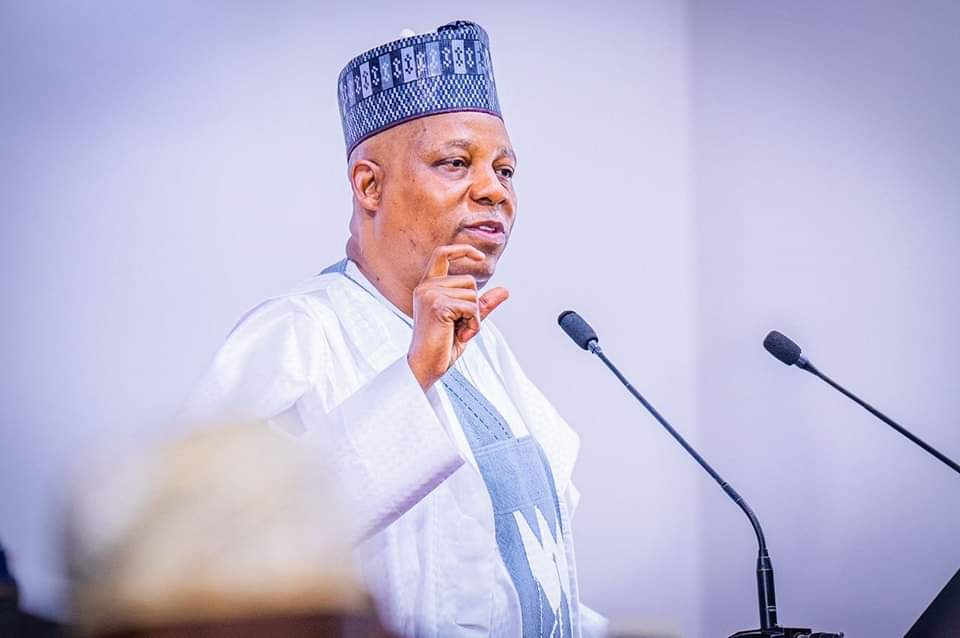
2027 Elections: Vice President Shettima’s Critics and Political Detractors
By Abba Dukawa
President Bola Tinubu and Vice President Kashim Shettima are indeed on the same ticket, representing the All Progressives Congress (APC). They ran together in the 2023 presidential election. However, there’s speculation about whether Shettima will remain Tinubu’s running mate in 2027 general elections.
According to reports, there are discussions about potential changes to the ticket for the 2027 presidential election, with some suggesting other northern minority christian or a politician from north West could replace Shettima. Despite this, there’s no official confirmation on the status of their joint ticket beyond the current term.
Clearly, his role diverges significantly from that of his predecessors, including Atiku Abubakar, Prof. Yemi Osinbajo, and Goodluck Jonathan. Despite being afforded some opportunities since the government’s inception, they haven’t been substantial enough to generate significant support or recognition.
“I struggle to understand why Shettima hasn’t been utilized to his full potential in this administration. For too long, he’s been consigned to ceremonial duties, only being acknowledged during high-profile events. Why isn’t he permitted to function similarly to his predecessors, given his vast experience? Is it due to external factors constrained his role? Furthermore, why does the economic team, led by the Vice President, appear to have a limited impact on shaping national economic policies?”
Shettima is indeed an exceptional politician, renowned for his astute understanding of politics and leadership. His ability to navigate complex political landscapes and build consensus has earned him respect from various quarters.
He has achieved remarkable success, winning elections three times and serving as Governor of Borno State for two terms, spanning eight years. He later became a Senator and eventually, the running mate to President Tinubu.
Notably, Shettima demonstrated exceptional leadership in rebuilding Borno after the devastating impact of terrorism. His experience, political acumen, and administrative expertise are unparalleled, setting him apart from others vying for the Vice Presidency.
As a seasoned politician with a deep understanding of the corridors of power, Shettima has consistently displayed high emotional intelligence, remaining composed amidst attempts to create tension between him and the President. Observations of his daily schedule reveal a demanding workload, yet he navigates it with ease, a testament to his work ethic honed during his time in Borno.
He has represented the President at prestigious forums like the World Economic Forum contributing to the influx of Foreign Direct Investments (FDIs) into the country. Also at the United Nations General Assembly showcasing his intellectual prowess.
Those vying for his position will likely be overshadowed once again by Shettima’s exceptional qualities. Despite their efforts to create tension by spreading rumours of rifts between him and the President, they seem unaware that in the realm of politics, loyalty and close alliances often take precedence when power dynamics are at play.
Amidst the negative narratives, Shettima has demonstrated remarkable emotional intelligence, showcasing his understanding of power dynamics and adapting seamlessly to various situations. His ability to navigate complex political landscapes is a testament to his experience and skill.
His detractors want him to challenge his boss, contest against him, and force him to plead not to run. They’d also have him prioritize cronyism, privatize national assets at throwaway prices, and perpetuate economic policies that benefit a select few at the expense of the many, exacerbating poverty and economic hardship.
Sometimes in early April, there was a publication by some blogs alleging that armed military units have barricaded the vice president from accessing the presidential villa. Nigeria’s VP has denied reports and said the claim is far-fetched and detached from reality.
His team attributed such misinformation to a lack of understanding of the Nigerian government’s inner workings, urging the public to disregard the malicious publication and advised the media to rely on credible sources, approaching sensational claims with caution.
With his exceptional ability to navigate complex situations and build strong relationships, Shettima has consistently demonstrated a high emotional intelligence quotient. His calm demeanor and thoughtful approach have earned him respect and admiration, setting him apart as a leader who truly understands the intricacies of power dynamics.
In another surprising twist in the political landscape, President Tinubu’s posters and billboards are currently displayed in various parts of Abuja, including Airport Road and the Central Business District. Campaign posters featuring his image have been circulating widely in Abuja, noticeably without Shettima’s picture. The President emphasized that until the Independent National Electoral Commission (INEC) sets the 2027 election timetable, he has not endorsed or authorized any campaign activities through any media channel.
However, the Presidency has dismissed rumors of a rift between the two leaders, attributing the false narratives to individuals seeking to create unnecessary tension. President asked his supporters to halt their re-election campaign efforts to avoid breaching INEC’s rules.
Naturally, the corridors of power often harbor mischief-makers. The relationship between Presidents and Vice Presidents in Nigerian politics has always been delicate, partly because the constitution doesn’t outline any independent responsibilities for the office of Vice President or Deputy Governor.
Under the 1999 Constitution, the Nigerian President wields significant power, akin to a constitutional monarch. As the Head of State, Chief Executive of the Federation, and Commander-in-Chief (Section 130(2)), the President serves as the country’s chief economic manager. Notably, while the Constitution vests legislative powers in institutions (Section 4) and judicial powers in institutions (Section 6), executive powers are vested directly in the President (Section 5).
In my humble opinion, attempts by certain political interests to reignite religious tensions ahead of the 2027 general elections are likely to fail. The opposition to Muslim-Muslim tickets was more intense in 2023 than it is now. Those who seek to vilify such tickets or imply that they’re an attempt to Islamize the country will be disappointed, as neither the President nor the Vice President has ever called on Christians to convert to Islam.
I’m confident that these tactics will backfire again in 2027, as the election will pit pragmatic, inclusive politics against the narrow, divisive agendas of some politicians. I hold Shettima in high esteem; he’s an exceptional politician with a deep understanding of politics and leadership.
Despite detractors’ efforts to drive a wedge between the President and the Vice President, he remains steadfast in promoting the administration’s agenda on every platform. Through his local and international engagements, he has successfully positioned Nigeria as a proactive contributor to global development and security initiatives, attracting foreign investment and fostering economic cooperation. His insights are truly transformative and a valuable asset to the administration.
General
Nigeria Needs Cheap, Reliable Energy—Seplat
By Faridat Yusuf
Seplat Energy says Nigeria needs cheap, reliable, and easy-to-get energy for everyone as the population is estimated to reach 237 million by 2025 and 400 million by 2050.
The Chief Operating Officer of the energy firm, Mr Samson Ezugworie, speaking at the 43rd NAPE Conference in Lagos, said, “The imperative before us is clear. We must build a prosperous Nigeria, and we can only do that with affordable and reliable energy that is accessible to all.”
The COO, in a statement issued by company’s Manager for Corporate Communications, Mr Stanley Opara, said over 70 million Nigerians still have no electricity and 170 million people use wood or other biomass for cooking, which is bad for homes and the environment.
“Today, more than 70 million Nigerians still lack access to electricity. More than 170 million people rely on biomass for cooking, and that’s terrible for the environment and for our households. And with Nigeria’s population projected to reach 237 million by 2025 and 400 million by 2050, the urgency to act is undeniable, because today’s problems will become far worse if we don’t take action now to solve them.”
“We will have 160 million more people to feed and house, and we need to create 100 million new jobs. But imagine what Nigeria can achieve if we do?” he queried.
He noted that Seplat Energy was working to produce more oil and gas. They are fixing wells, delivering gas from the ANOH Plant, and sending LPG from Sapele Plant.
“Our progress on gas initiatives like anoh, sapele, and lpg shipments is a testament to our commitment to nigeria’s prosperity. these projects are not just about energy; they are about transforming lives and powering nigeria’s development,” Mr Ezugworie said, adding that Nigerians should manage Nigeria’s resources and work with communities to build a stronger energy industry.
“We must also harness our huge reserves of gas and scale up gas and NGL production to expand domestic energy access, displace polluting imported generators, provide clean cooking for our people, and power our basic industries to support our national growth,” he said.
General
NDLEA Teams Up With US, UK to Probe $235m Cocaine Shipment in Lagos
By Adedapo Adesanya
The National Drug Law Enforcement Agency (NDLEA) is working with its US and British counterparts to investigate the origins of a $235 million cocaine shipment seized at Tincan Port in Lagos, in one of the country’s largest drug seizures.
NDLEA said in a statement signed by its spokesman, Mr Femi Babafemi, on Tuesday that it was working with the US Drug Enforcement Administration (DEA) and the UK’s National Crime Agency (NCA) to investigate after 1,000 kg of cocaine was discovered in an empty container at a terminal in Tin Can over the past weekend.
PTML operators, who noticed the consignment in an empty container, invited port stakeholders, including the NDLEA, Customs, and other security agencies, for a joint examination.
The drugs were formally handed over to the NDLEA on Tuesday after tests confirmed the substance was cocaine.
“After field tests confirmed the shipment to be cocaine, the consignment was formally transferred to NDLEA custody for further investigation on Tuesday, 11 November 2025,” Mr Babafemi said.
The operation followed collaborative engagements between NDLEA Chairman/CEO Mr Mohamed Buba Marwa and the Comptroller General of Customs, Mr Adewale Adeniyi.
“Due to the large quantity of the recovered Class A drug, valued at over $235 million (approximately N338 billion) on the international market, and the global dimension of the cocaine cartel, I directed that our leading international partners be involved in the investigation,” Mr Marwa said.
He revealed that officers from the US-DEA and UK-NCA have already joined the probe, focusing on ensuring all aspects of the operation are covered and that the masterminds behind the consignment are brought to justice worldwide.
“The essence of collaborating with our international partners on this case is to ensure no stone is left unturned, so that every perpetrator of this massive consignment is held accountable, wherever they are located,” Mr Marwa added.
General
Social Protection Only Gulps 0.14% of Nigeria’s GDP—World Bank
By Adedapo Adesanya
The World Bank has lamented that Nigeria spends barely 0.14 per cent of its Gross Domestic Product (GDP) on social protection.
This is contained in a new report titled The State of Social Safety Nets in Nigeria, where the bank revealed that the 0.14 per cent estimate is far below the global average of 1.5 per cent and the Sub-Saharan African average of 1.1 per cent.
The report warns that the miniscule allocation has had “almost no impact” on poverty.
The combined effect of all existing social protection programmes in the country has reduced the national poverty headcount by just 0.4 percentage points, it noted.
The November 2025 report examines Nigeria’s spending on social safety nets, assessing their coverage and efficiency, and reveals how poor targeting, weak funding, and fragmented implementation have left millions of vulnerable citizens without meaningful relief despite the government’s lofty poverty-reduction promises.
Business Post reports that the federal government has spent billions over the years to cushion hardship with initiatives like cash transfer programme which it claims has reached 15 million households. Other schemes, like the school feeding programme only cover a limited number of schools.
The World Bank report says these Nigeria’s social safety-net programmes are failing to reach those who need them the most.
According to the bank, while about 56 per cent of the recipients of safety-net programmes are poor, they receive only 44 per cent of the total benefits. It explained that this imbalance stems from the way most programmes, including the National Social Safety Nets Programme (NASSNP), allocate a fixed amount per household rather than per person.
As a result, poor families, often larger in size, end up sharing limited benefits among more members. The report noted that initiatives such as the National Home-Grown School Feeding Programme (NHGSFP), which focus on individuals rather than households, are less affected by this problem.
However, it added that the school feeding scheme currently targets only pupils in grades one to three and lacks full national coverage, restricting the number of children who can benefit.
The World Bank also expressed concern over Nigeria’s heavy dependence on foreign donors to finance its social safety nets. It examined that between 2015 and 2021, official development assistance accounted for about 60 per cent of federal spending on safety-net programmes, with the World Bank providing over 90 per cent of that support.
The report cautioned that this dependence puts Nigeria at risk of funding gaps whenever donor support declines.
“There is an urgent need for Nigeria to find fiscal space for sustainable social safety-net programming,” the bank warned.
-
Feature/OPED6 years agoDavos was Different this year
-
Travel/Tourism9 years ago
Lagos Seals Western Lodge Hotel In Ikorodu
-
Showbiz3 years agoEstranged Lover Releases Videos of Empress Njamah Bathing
-
Banking7 years agoSort Codes of GTBank Branches in Nigeria
-
Economy2 years agoSubsidy Removal: CNG at N130 Per Litre Cheaper Than Petrol—IPMAN
-
Banking3 years agoFirst Bank Announces Planned Downtime
-
Sports3 years agoHighest Paid Nigerian Footballer – How Much Do Nigerian Footballers Earn
-
Banking3 years agoSort Codes of UBA Branches in Nigeria