General
8 Ways Facebook is Preparing for Elections Across Africa
By Akua Gyekye
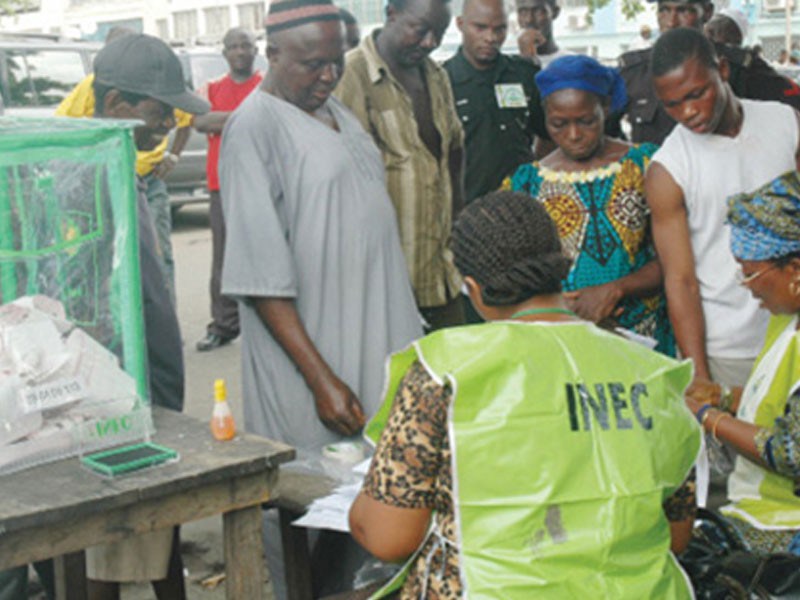
With a number of upcoming elections across Africa, we want to share an update on our work to reduce the spread of misinformation, protect election integrity and support civic engagement across the continent. We’ve dedicated unprecedented resources to these efforts globally — and our work across Africa is focused in eight key areas.
Fighting False News
We want to stop the spread of false news on our platforms. That’s why we’ve teamed up with local third-party fact-checkers across South Africa, Nigeria, Kenya, Cameroon and Senegal — including Africa Check (Africa’s first independent fact-checking organization), AFP (Agence France-Presse – an international news agency), Pesa Check (a local Kenyan fact-checking organization) and Dubawa (a local Nigerian fact-checking organization). These independent groups help us assess the accuracy of news shared on Facebook, and when they determine content is false, we reduce its distribution in News Feed so fewer people see it. We also show related articles from fact-checkers for more context and notify users if a story they have shared is rated as false. Additionally, in Nigeria, WhatsApp has worked with Africa Check and CrossCheck Nigeria to let users send questions about potential rumors they have received through the platform. These fact-checking expansions are part of a broader strategy to fight fake news that includes extensive work to remove fake accounts; cut off incentives to the financially-motivated actors that spread misinformation; promote news literacy; and give more context so people can decide for themselves what to read, trust, and share.
Boosting Digital Literacy and Helping People Spot False News
We want to make sure people can spot false news and know how to flag it. That’s why we’ve rolled out educational tips on national and regional radio and in print media across Nigeria, South Africa, Zambia, Kenya and Zimbabwe. In Nigeria, WhatsApp has launched its “Share Facts, Not Rumours” campaign to help increase awareness about hoaxes. Additionally, at the end of last year Facebook began a new Online Safety Programme for students in Nigerian secondary schools. The 12-week workshop is designed to help teenagers understand the fundamentals of online safety and digital literacy, covering topics such as managing an online presence; social media and sharing; public Wi-Fi safety; building healthy relationships online; understanding password security and privacy settings; and identifying misinformation online.
Promoting Civic Engagement
Helping to build informed and civically engaged communities is central to our work around elections. In Nigeria, we’ve rolled out new options in English & Hausa so people can report posts that contain incorrect election information, encourage violence or otherwise violate our Community Standards (https://www.Facebook.com/communitystandards/). On Election Day, we’ll show a voting day reminder in English and Hausa at the top of Facebook’s News Feed.
Making Political Ads More Transparent
Earlier this month, we began temporarily expanding enforcement and not accepting foreign election ads on Facebook in Nigeria to help prevent foreign interference. Already today you can see any ad that a Page is running on Facebook (http://bit.ly/2N5tIBH), regardless if it’s shown to you.
Journalist Trainings
We continue to educate media groups and journalists across the country on best practices for sharing content on our platforms and online safety. We also provide trainings on our Community Standards, which govern what is and is not allowed on our platform.
Proactive Removal of Impersonation Accounts
We’ve always had policies against impersonation. Thanks to recent advancements in our detection technology, we’ve become much more effective at identifying these accounts.
Partnerships with NGOs and Civil Society
In order to better understand local issues and how we can tackle them more effectively, we work with a number of NGO and civil society partners across many African countries. These local partners have been instrumental in giving us feedback that we’ve incorporated into our policies and programs, including the aforementioned trainings with teens and journalists.
Connecting with Political Parties About Security
We’ve trained parties, campaigns and candidates on security best practices, including how to turn on two-factor authentication and how to avoid common threats online. For the Nigerian elections, we’ve trained vice presidential candidates, senatorial candidates and top advisors from over 35 major political parties — and the information included in these trainings is all available for anyone to access at politics.FB.com.
We want Facebook and WhatsApp to be places where people feel safe, can access accurate information and make their voices heard. We are making significant investments, both in products and in people, and continue to improve in each of these areas.
Akua Gyekye is the Public Policy Manager, Africa Elections at Facebook
General
Court Orders Seizure of Nine Properties Linked to Wanted Timipre Sylva
By Adedapo Adesanya
A federal high court in Abuja has ordered the interim forfeiture of nine properties linked to Mr Timipre Sylvia, former minister of state for petroleum resources, to the federal government.
Justice Obiora Egwuatu, the presiding judge, made the order on April 24 following an ex parte application filed by the Economic and Financial Crimes Commission (EFCC).
“An interim order of this honourable court is made forfeiting the properties listed in the schedule attached herein, being properties suspected to be proceeds of some unlawful activities pending the publication and hearing of the motion on notice for final forfeiture order of the said properties,” the judge ruled.
“An order of this honourable court is made directing the publication of the interim order under order (1) above for anyone who is interested in the property to appear before this honourable court to show cause within 14 days why the final order of forfeiture should not be made in favour of the Federal Government of Nigeria.”
The judge also granted the anti-graft’s request for the order to be published in two national newspapers within seven days of receiving the certified true copy of the ruling.
The newspapers listed by the court include ThisDay, The Guardian, Punch, Vanguard, Tribune and Independent.
Justice Egwuatu subsequently adjourned the matter to May 25 for a report of compliance.
The EFCC had filed the suit marked FHC/ABJ/CS/607/2026 under the Advance Fee Fraud and Other Related Offences Act, 2006.
While moving the motion, Mr Oluwaleke Atolagbe, counsel to the anti-graft agency, urged the court to grant an interim forfeiture order on the grounds that the properties were suspected to be proceeds of unlawful activities.
The affected properties are located in high-value areas of Abuja.
They include four blocks of terraces in Dakibiyu; a duplex with a penthouse and office complex at No. 3 Niger street, M street; a standalone duplex at Villa 1, Unit 1, Palm Springs estate, Mpape; and a block of 10 flats at No. 8 Sefadu street, Wuse Zone 4.
Others are a six-unit block of flats at No. 1 Mubi Close, Garki; two blocks containing 12 flats at Plot 1181, Thaba Tseka Crescent, Wuse II; and a standalone duplex at No. 18 Nile Lake, Plot 1271, Maitama.
The ninth property is a two-block building located at No. 5 Aguta Street, Garki, Abuja, currently occupied by the National Information Technology Development Agency (NITDA).
Mr Sylva, who is also a former governor of Bayelsa State, is currently at large. He is named in a 13-count charge filed by the federal government over allegations of a plot to oust President Bola Tinubu.
General
Navy Warns of Intense Crackdown on Maritime, Oil Theft
By Adedapo Adesanya
The Nigerian Navy has issued a strong warning to maritime criminals, reaffirming its resolve, capability, and commitment to ending crude oil theft and securing the nation’s maritime domain.
Speaking at the flag-off of Exercise Fleet Sentinel, the Chief of Naval Safety and Standards, Rear Admiral Pakiribo Anabraba, who represented the Chief of Naval Staff, Vice Admiral Idi Abbas, described the exercise as a significant milestone in efforts to strengthen the Navy’s operational capability.
Rear Admiral Anabraba explained that the exercise is aimed at assessing the operational state and combat readiness of the Navy in addressing emerging maritime threats, in line with its constitutional mandate.
“This exercise will significantly enhance the Nigerian Navy’s capacity to effectively conduct fleet operations and other maritime tasks. It provides an invaluable opportunity for practical training, enabling participating units to rehearse procedures, validate operational concepts, and sharpen their tactical responses in realistic environments,” he said.
Also speaking, the Flag Officer Commanding Central Naval Command, Rear Admiral Suleiman Ibrahim, said the joint exercise, conducted in collaboration with the Eastern and Central Naval Commands, is designed to curb crude oil theft, dismantle illegal refining networks in the Niger Delta, and ensure a safe maritime environment for commercial activities.
Rear Admiral Ibrahim noted that in an era of evolving and asymmetric maritime threats, the Navy must remain fully prepared to support national and regional maritime security initiatives of the federal government.
He added that the exercise reflects the Navy’s resolve to maintain constant vigilance, noting that the term “Sentinel” symbolises a steadfast guardian, ever alert and ready to defend.
According to him, the exercise is structured to enhance cooperation and coordination among participating ships and units, while improving proficiency in maritime operations.
He also stated that it builds on lessons learned from Exercise Obangame Express 2026, recently conducted within the Eastern Naval Command’s area of responsibility, ensuring continuity in training and sustained performance improvement.
The two-day exercise featured a series of tactical operations involving naval assets and platforms, designed to test operational readiness, enhance interoperability, and strengthen joint capabilities.
The initiative is part of ongoing efforts to curb crude oil theft and bolster security within Nigeria’s maritime domain.
General
Customs Area 11 Command Drives Generates N77bn in April
By Bon Peters
Over N77 billion was generated as revenue in April 2026 by the Nigeria Customs Service (NCS) Area 11 Command in Onne, Port Harcourt, Rivers State.
This landmark feat in the command’s fiscal operations signals a new era of economic prosperity and administrative efficiency.
The revenue generated last month was 70.2 per cent higher than the amount collected in the same month of last year, according to a statement issued by the command’s acting spokesman, Mr Paul Istifanus Gimba, an Assistant Superintendent of Customs I.
This feat was attributed to the strategic and visionary leadership of the command’s area controller, Comptroller Aliyu Mohammed Alkali.
On innovation, the command has integrated modern technologies and cutting-edge logistics management, consolidating and strengthening existing protocols and building upon previous successes to create a sustainable economic environment.
The statement emphasised that, “By embracing these principles, the Area 11 Command has transformed into a critical hub for national revenue optimisation, ensuring that the federal government’s fiscal goals are not only met but consistently surpassed.”
It added that the core pillars of success under Comptroller Alkali, since assuming leadership, were the implementation of a rigorous operational strategy designed to maximise the command’s potential and commitment centred on core areas of Simplification and Trade Facilitation.
The statement further posited that in an effort to foster a business-friendly environment, the command has focused heavily on the simplification of procedures by identifying and removing bureaucratic bottlenecks, noting that the Command has significantly reduced delays in cargo clearance, insisting that such a streamlined approach has not only benefited importers and exporters but also accelerated the “ease of doing business” within the maritime sector.
On performance and target optimisation, the command has moved beyond mere compliance to a culture of excellence and by building on past successes, the administration has ensured that revenue targets were viewed as minimum benchmarks rather than ultimate goals.
It also stated that behind the record-breaking revenue generation lies a workforce characterised by dedication and professionalism, as Comptroller Alkali lauded the officers and men of the command for their commitment to duty, even as the Onne Customs boss emphasised that the achievement of April 2026 was a collective victory, made possible by the integrity and discipline of the personnel stationed at Onne.
He stated that their ability to balance security concerns with the need for rapid trade facilitation remained the cornerstone of the command’s operational philosophy.
-
Feature/OPED6 years agoDavos was Different this year
-
Travel/Tourism10 years ago
Lagos Seals Western Lodge Hotel In Ikorodu
-
Showbiz3 years agoEstranged Lover Releases Videos of Empress Njamah Bathing
-
Banking8 years agoSort Codes of GTBank Branches in Nigeria
-
Economy3 years agoSubsidy Removal: CNG at N130 Per Litre Cheaper Than Petrol—IPMAN
-
Banking3 years agoSort Codes of UBA Branches in Nigeria
-
Banking3 years agoFirst Bank Announces Planned Downtime
-
Sports3 years agoHighest Paid Nigerian Footballer – How Much Do Nigerian Footballers Earn