General
African Oil Producers Seek Commitment For $5bn Africa Energy Bank
By Adedapo Adesanya
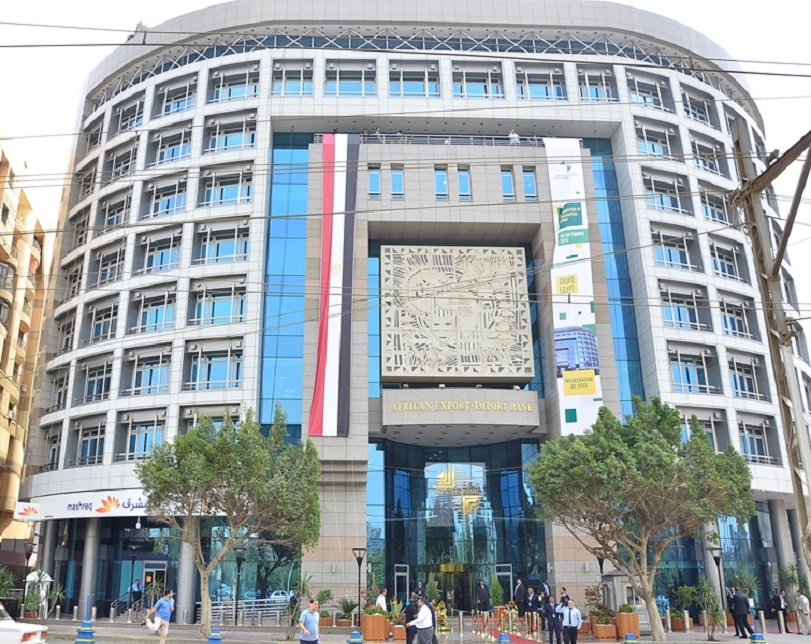
The African Petroleum Producers’ Organisation (APPO) has urged member countries to fulfil their financial obligations towards establishing the Africa Energy Bank (AEB), the first of such financial institutions on the continent.
Recall that Nigeria recently secured the hosting rights for the bank, which will be located in Abuja, the nation’s capital.
To ensure the bank’s operationalisation, APPO Secretary General, Mr Farouk Ibrahim, called on African oil-producing member countries to contribute their subscription fees of $83 million, to aid the bank’s expected launch in September 2024.
Mr Ibrahim appealed during the 18th ordinary meeting of the APPO executive board in Brazzaville, Republic of Congo, where APPO headquarters is situated, a statement signed by the Permanent Secretary, Ministry of Petroleum, Mr Nicholas Ella, said on Wednesday.
“We are aligned with the resolutions of the APPO Council of Ministers from last week. We will double our efforts to ensure we gather the necessary funds to initiate the Africa Energy Bank,” Mr Ibrahim said.
He further disclosed that the oil-producing member countries had formally written to the Nigerian government to discuss expedited steps to establish the bank.
“On Friday, July 5, we formally wrote to the Federal Republic of Nigeria. We will discuss how quickly the bank building will be ready and the host country agreement prepared for signature. We already have one member country that has signed the establishment agreement. We need one more signature to proceed,” Ibrahim added.
Expressing President Bola Tinubu’s gratitude to member states for their unwavering support and confidence in Nigeria’s bid to host the bank, Mr Ella, who led Nigeria’s delegation, reiterated commitment to the continental bloc’s ideals to enhance energy security in Africa.
“The gathering of the 18 member countries of APPO in Brazzaville demonstrates our collective dedication to fostering unity, cooperation, and sustainable development within the African energy sector,” noted Mr Ella.
He pledged Nigeria’s determination to collaborate with other members to address the financial needs of Africa’s energy sector through funding oil and gas projects.
Mr Ella urged member countries to harness the collective strength of the continent’s nations to build a brighter, more prosperous future for Africa.
“Together, we will create an institution that addresses the financial needs of our energy projects and champions sustainable development, environmental stewardship, and economic inclusivity across Africa,” he added.
During a brainstorming session on the continent’s energy future, Algerian executive board member, Mr Remini Amine, emphasised that local content, manpower, and infrastructure development remain key to unlocking Africa’s energy opportunities.
APPO member state representatives agreed that the energy bank would bridge funding gaps in the sector, with Mr Ibe Kachikwu, a former Nigerian Minister of State, Petroleum Resources, suggesting a 10-year plan for the energy industry to encourage an “open era” for investment. Kachikwu advised APPO to grow the energy bank’s capital base before investing.
Speakers at the week-long event emphasised the need for National Oil Companies (NOCs) to lead in crude oil production and refine oil to meet local consumption needs. The energy bank is an initiative of the APPO and Afreximbank.
General
London Jury Clears Diezani Alison-Madueke of Bribery Charges
By Adedapo Adesanya
Former Nigerian Minister of Petroleum Resources, Mrs Diezani Alison-Madueke, was on Wednesday found not guilty by a London jury of six bribery charges, after five months of trial.
Mrs Alison-Madueke, an oil minister between 2010 and 2015 under then-president Goodluck Jonathan, stood trial charged with five counts of accepting bribes and a charge of conspiracy to commit bribery, which she denied.
Prosecutors alleged that the 65-year-old Mrs Alison-Madueke was given “a life of luxury” in London from oil and gas industry figures seeking lucrative contracts in Nigeria, which has long grappled with mismanagement and corruption.
The jury deliberated for more than 46 hours before reaching its verdict.
Mrs Alison-Madueke was charged by the UK’s National Crime Agency in 2023 over allegations she took £100,000 in cash as well as accepting flights on private jets, chauffeur-driven cars and luxury goods from Louis Vuitton and Harrods.
Other counts allege she received school fees for her son, products from high-end shops such as London’s Harrods department store and Louis Vuitton, and further private jet flights.
Mrs Alison-Madueke has been involved in numerous legal cases globally, including in the United States.
She has been on bail in Britain since she was arrested in October 2015.
In 2023, she was formally charged with accepting bribes, which she has denied.
Mrs Alison-Madueke stood trial alongside oil industry executive, Mrs Olatimbo Ayinde, 54, who was charged with one count of bribery relating to Alison-Madueke and a separate count of bribery of a foreign public official.
Also, her elder brother, Mr Doye Agama, 69, was charged with conspiracy to commit bribery with his sister relating to payments made to his church.
Both Mrs Ayinde and Mr Agama denied the charges against them and were also acquitted by the jury.
General
Senate Committee Clears Customs of Unremitted N62.2bn Allegations
By Adedapo Adesanya
The Senate Committee on Public Accounts has cleared the Nigeria Customs Service (NCS) of allegations that it failed to remit N62.2 billion into the Federation Account, as contained in the 2019 Audit Report of the Office of the Auditor-General of the Federation.
The committee reached the decision on Tuesday during an investigative session with the Comptroller-General of Customs, Mr Adewale Adeniyi, over 77 audit queries raised against the agency in the 2019 and 2020 audit reports.
The committee, however, resolved to establish an ad hoc reconciliation panel to review the remaining 76 audit queries and report for further consideration.
At the hearing, representatives of the Auditor-General’s office informed lawmakers that while the Customs Service generated more than N691 billion in revenue in 2017, only about N629 billion was remitted to the Federation Account, leaving an outstanding balance of N62.2 billion.
Responding, the Customs CG explained that the amount in question consisted of levies collected on behalf of other government agencies and was therefore not meant for remittance into the Federation Account.
According to him, the figure was wrongly classified as under-remittance in the audit report.
Mr Adeniyi stated that while some levies collected by Customs are paid into the Federation Account, others, including certain levies on local production of wheat, textiles and wines, are designated for separate accounts.
He maintained that the disputed N62.2 billion fell into that category and should not have been recorded as unremitted revenue.
The Customs boss also provided explanations on the second and third audit queries, which members of the committee described as satisfactory.
Some lawmakers questioned why the issues had progressed to a Senate investigation, arguing that they should have been resolved during routine reconciliation between Customs officials and auditors.
In his response, Mr Adeniyi noted that the audit years under review coincided with a period of strained relations between the National Assembly and the Customs Service.
The reconciliation committee is expected to work with Customs officials and auditors to resolve discrepancies in the remaining audit queries before further legislative action is taken.
General
Dangote Cement Ibese Distributes Farming Inputs to Boost Productivity
By Modupe Gbadeyanka
Some farming inputs have been distributed to farmers drawn from 17 host communities of the Ibese Plant of Dangote Cement Plc.
This is part of the organisation’s commitment to food security and sustainable community development, under its annual farmers’ empowerment initiative, which has become a cornerstone of the company’s social investment strategy.
The beneficiaries received modern farming inputs alongside technical training aimed at improving crop yield, productivity, and income across the agricultural value chain.
Business Post gathered that each of the 60 farmers got three bags of 50kg NPK fertiliser, two bags of Urea fertiliser, one Knapsack sprayer and 10 litres of Force-Up herbicide.
Welcoming the guests and beneficiaries, the Plant Director, Mr Ayyagari Subbaraidu, emphasised that the programme was designed not only to support local farmers but to build a sustainable agricultural ecosystem within the company’s host communities.
He noted that the intervention aligns with Dangote Cement’s broader corporate social responsibility priorities, which include empowerment, education, health, and infrastructure development.
Mr Subbaraidu said, “At Dangote Cement, we understand that while we manufacture cement for the construction of homes, schools, hospitals, roads, and other critical infrastructure, true development is ultimately about people. It is about creating opportunities, improving livelihoods, and enabling communities to thrive. This philosophy remains at the heart of our operations and our relationship with our host communities.”
He disclosed that to date, 300 farmers across our host communities have benefited from training, farm inputs, and agricultural tools, noting that they have cultivated more than 800 acres of farmland and produced over 40,000 tons of agricultural output.
“These figures tell an important story, representing families whose livelihoods have improved, children whose educational needs have been supported, businesses that have grown, and communities that have become more resilient. They demonstrate what can be achieved when communities and corporate organisations work together toward a common goal,” he stated.
“We provide modern farm inputs to support our farmers to enhance productivity and achieve better yields. This is not just about distribution; it is about enabling a shift to more efficient and sustainable farming methods that will ultimately boost food production and livelihoods,” he said.
Mr Subbaraidu revealed that the training component of the programme is critical in ensuring that beneficiaries maximise the value of the inputs provided, as participants were taken through practical sessions on good agricultural practices, including crop protection and pest management techniques, equipping them with knowledge to mitigate farming risks and improve output.
Speaking on behalf of the communities, a representative described the programme as a “game changer” that has not only boosted food production but also strengthened the relationship between the company and its host communities.
One of the farmers, Mr Akanbi Moses from Aga-Olowo Community, noted that the provision of free inputs and training has significantly improved their productivity and income levels, enabling them to scale their farming activities. Another beneficiary highlighted how the training sessions have enhanced their understanding of modern farming techniques, resulting in better crop management and reduced post-harvest losses.
-
Feature/OPED6 years agoDavos was Different this year
-
Travel/Tourism10 years ago
Lagos Seals Western Lodge Hotel In Ikorodu
-
Showbiz3 years agoEstranged Lover Releases Videos of Empress Njamah Bathing
-
Banking8 years agoSort Codes of GTBank Branches in Nigeria
-
Economy3 years agoSubsidy Removal: CNG at N130 Per Litre Cheaper Than Petrol—IPMAN
-
Banking3 years agoSort Codes of UBA Branches in Nigeria
-
Banking3 years agoFirst Bank Announces Planned Downtime
-
Sports3 years agoHighest Paid Nigerian Footballer – How Much Do Nigerian Footballers Earn