General
Aig-Imoukhuede Foundation Champions Transformational Leadership
By Adedapo Adesanya
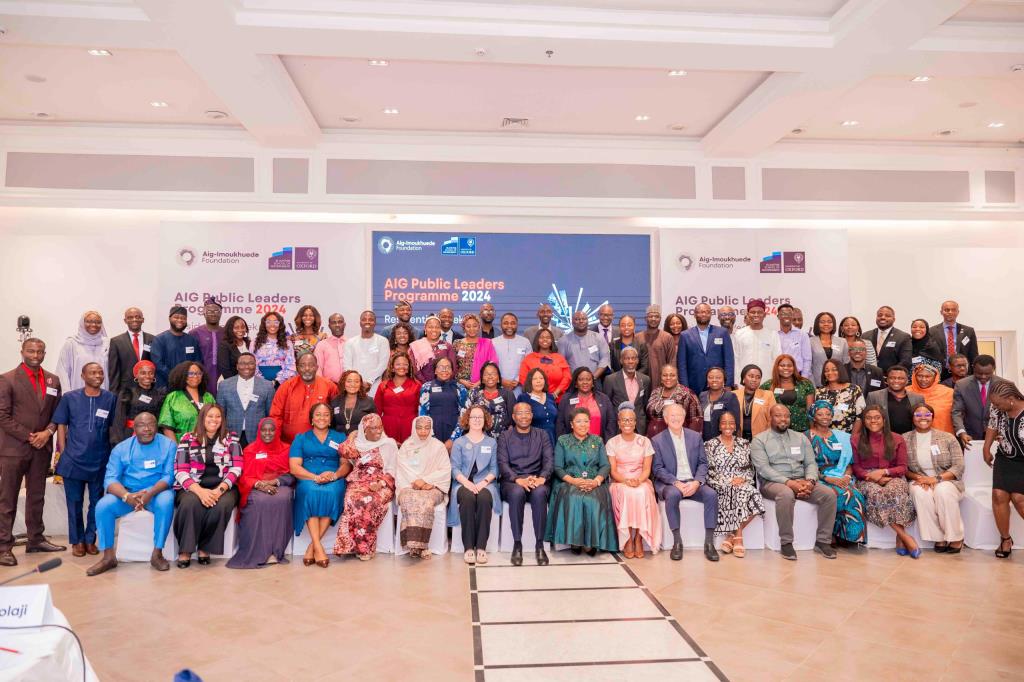
As part of its mission to elevate the effectiveness of public service across Africa, the Aig-Imoukhuede Foundation has launched the fourth cohort of the AIG Public Leaders Programme (PLP).
Delivered in partnership with the Blavatnik School of Government, University of Oxford, this initiative has successfully empowered 169 public sector leaders since 2021, advancing the Foundation’s mission to train 3,000 public sector leaders by 2030, equipping them with the essential skills to drive impactful reforms and strengthen service delivery in their Ministries, Departments, and Agencies (MDAs).
The AIG PLP is an executive training programme that builds the capabilities of African public sector leaders, positioning them to deliver measurable results and foster cultures of integrity, excellence, and innovation.
The Foundation’s vision is to cultivate a new generation of leaders who can address complex challenges, implementing sustainable reforms that resonate across communities.
The programme has already showcased remarkable results as its alumni have implemented transformative reform projects in their various organisations, a core element of the curriculum, creating a ripple effect of positive change across sectors.
One such change project was implemented by Dr Ibiwunmi Olokun, Medical Officer of Health and Primary Health Care Coordinator at the Lagos State Primary Healthcare Board and a member of Cohort 3 of the programme.
Dr Olokun led a project at her Primary Healthcare Centre that reduced patient waiting times from 70 minutes to 30 minutes. This successful model is now being adopted in other units and facilities within her health district in Lagos State.
Additionally, Mr Mohammed Ahmed, Director and Chief of Staff to the CEO of the Nigerian Financial Intelligence Unit and a Cohort 1 AIG PLP alumnus, has made strides in combating financial crimes in Nigeria.
His reform project focused on fostering partnerships between the government and the private sector to enhance financial intelligence aimed at tackling financial crimes.
Today, his efforts are reshaping financial crime prevention strategies in Nigeria through strategic public-private collaborations that empower the nation to address complex financial crimes more effectively.
The current cohort, which includes participants from Ghana and Kenya, has commenced virtual classes and is gearing up for an intensive, one-week residential programme in Abuja from November 18 to November 22.
During this time, participants will engage with the faculty from the Blavatnik School, Oxford, gaining strategic insights and practical tools to excel in their roles and to instil change within their MDAs.
With the launch of this new class, the Aig-Imoukhuede Foundation continues on its quest to reshape public sector leadership in Africa.
By empowering leaders with the tools to champion reform and advance efficient service delivery, the Foundation remains at the forefront of impactful public service transformation.
General
PDP Expels Wike, Fayose, Anyanwu, Others
By Dipo Olowookere
The Peoples Democratic Party (PDP) has expelled the Minister of the Federal Capital Territory (FCT), Mr Nyesom Wike, and others for anti-party activities.
The decision to remove him and others from the country’s main opposition party was taken at the ongoing National Convention in Ibadan, Oyo State.
A statement posted on the party’s verified official page on X, formerly known as Twitter, on Saturday evening said the action was to restore to the party “unity, discipline, and focus ahead of the 2027 general elections.”
Others axed by the PDP were the former Governor of Ekiti State, Mr Ayodele Fayode; and the National Secretary of the PDP, Mr Samuel Anyanwu; as well as Mr Kamaldeen Ajibade, and Mr Austin Nwachukwu.
“The decision which was promptly ratified by an overwhelming majority of delegates, underscores the party’s commitment to eradicating internal divisions and anti-party conduct that have plagued its progress,” a part of the statement read.
General
SEC, FMBN Partner on Non-Interest Mortgage Framework
By Aduragbemi Omiyale
The Securities and Exchange Commission (SEC) and the Federal Mortgage Bank of Nigeria (FMBN) have announced a strategic collaboration to develop a robust Non-Interest Mortgage (NIM) ecosystem.
This significant move is part of efforts to address the nation’s massive housing deficit and deepen financial inclusion.
At a high-level meeting in Abuja of Friday, both parties agreed to create and regulate viable Sharia-compliant financing structures that will enable millions of Nigerians, particularly those excluded from conventional interest-based loans, to access affordable homeownership.
With Nigeria’s housing deficit estimated to be over 28 million units, the initiative is being hailed as a potential game-changer. It directly addresses a key barrier to homeownership: the affordability and religious compliance of mortgage products for a significant segment of the population.
The successful implementation of this framework is expected to not only reduce the housing deficit but also stimulate the construction industry, create jobs, and foster greater financial inclusion, ultimately contributing to national economic growth.
How Non-Interest Mortgage Model Works
Unlike conventional mortgages that charge interest, non-interest financing is based on principles of risk-sharing, asset-backing, and equitable returns. The models under consideration include:
- Musharakah (Diminishing Partnership): The bank and the customer jointly purchase a property. The customer gradually buys out the bank’s share through periodic payments, eventually becoming the sole owner.
- Ijara (Lease-to-Own): The bank buys the property and leases it to the customer for a fixed period. A portion of the rental payments goes towards the eventual ownership transfer.
- Murabaha (Cost-Plus Sale): The bank acquires the property and sells it to the customer at a pre-agreed markup, payable in instalments.
SEC DG Speaks
Commenting on the development, the Director-General of SEC, Mr Emomotimi Agama, said his agency would provide the necessary regulatory guidance and framework to facilitate the issuance of Sukuk (imic bonds) and other non-interest capital market products to fund these mortgages.
“Our collaboration with FMBN is pivotal to unlocking long-term financing for the housing sector. By creating a clear regulatory pathway for non-interest mortgage-backed securities, we can attract ethical investors, both domestic and international, to channel funds into this critical area. This will create a virtuous cycle of funding, construction, and ownership,” he stated.
What FMBN CEO also said
On his part, the chief executive of FMBN, Mr Shehu Osidi, said the partnership marks a critical step in fulfilling the bank’s mandate to provide affordable housing for all Nigerians.
“For a long time, a substantial number of our citizens have been unable to participate in the National Housing Fund (NHF) scheme due to the interest-based nature of conventional mortgages.
“This partnership with SEC is a strategic response to that gap. We are committed to developing non-interest mortgage products that are not only ethical and inclusive but also financially sustainable,” he noted.
An expert opinion
A housing and finance expert, Mr Ebilate McYoroki, welcomed the development he described as “long overdue.”
“This is a masterstroke in financial inclusion. It taps into a vast pool of potential homeowners and investors who have previously been on the sidelines. If implemented transparently, it could significantly accelerate the pace of housing delivery in the country,” he submitted.
General
PENGASSAN Seeks Better Pension Benefits for Oil, Gas Workers
By Adedapo Adesanya
The Petroleum and Natural Gas Senior Staff Association of Nigeria (PENGASSAN) is seeking a change to the poor state of pension in the country’s oil and gas industry.
As a result, the union has expressed deep concern over the poor growth of pensions and widening disparities in retirement benefits for energy workers.
PENGASSAN said many retirees under the Closed Pension Fund Administrations (CPFAs) were trapped in a system that had failed to reflect current economic realities, leaving their pensions stagnant despite rising inflation and devaluation of the Naira.
The president of PENGASSAN, Mr Festus Osifo, while speaking at a one-day summit organised by the union in Abuja this week, said the problem stemmed from policy gaps in Nigeria’s pension system and inconsistent adjustments by oil companies operating CPFAs.
He explained that the 2004 Pension Reform Act introduced the contributory pension scheme while allowing some oil and gas firms to continue running the defined benefits model under CPFAs. However, the 2014 amendment to the law barred new employees from joining the defined benefits system, placing them under the contributory scheme.
According to him, while a few companies have mechanisms for regular pension growth, the majority still depend on management discretion, leaving retirees to face hardship as their fixed benefits lose value over time.
Mr Osifo also criticized the way some companies calculate their pension funds and urged the National Pension Commission (PenCom) to tighten its monitoring of the process, noting that the agency must ensure that pension funds remain adequate to cater for both current retirees and future beneficiaries.
The labour leader further disclosed that PENGASSAN would embark on sustained advocacy across the oil and gas sector to address identified gaps in pension management and improve the welfare of retirees, adding that the union will engage management of CPFAs that fail to meet their obligations to ensure equity and fairness for pensioners.
“Over time, we have realised that there is a serious gap in the system. In many organisations, people who retired several years ago still earn the same amount, even though the cost of living has skyrocketed.
“Only about 10 per cent of CPFAs review their pension benefits yearly, while nearly 90 per cent maintain static payments, depending solely on management discretion.
“PenCom must ensure that pension funds are sufficient to take care of today’s retirees and those that will join them in the future. We have observed gaps in how life expectancy and other variables are calculated, and these affect the overall fund balance.
“One of the institutions that have functioned excellently in Nigeria is PenCom. I pray they continue to maintain that high standard so that Nigeria will not happen to them.
“Those organisations doing what is right, we appreciate them. But for those that are not, we will engage them to make the lives of our pensioners more rewarding. It is our duty to take care of those who laboured before us because tomorrow we will also become pensioners,” he stated.
-
Feature/OPED6 years agoDavos was Different this year
-
Travel/Tourism9 years ago
Lagos Seals Western Lodge Hotel In Ikorodu
-
Showbiz3 years agoEstranged Lover Releases Videos of Empress Njamah Bathing
-
Banking7 years agoSort Codes of GTBank Branches in Nigeria
-
Economy2 years agoSubsidy Removal: CNG at N130 Per Litre Cheaper Than Petrol—IPMAN
-
Banking3 years agoFirst Bank Announces Planned Downtime
-
Sports3 years agoHighest Paid Nigerian Footballer – How Much Do Nigerian Footballers Earn
-
Banking3 years agoSort Codes of UBA Branches in Nigeria