Connect with us

General

Ambode Vows to Ban Yellow Buses ‘Danfos’ in 2017

Published

on

By Dipo Olowookere

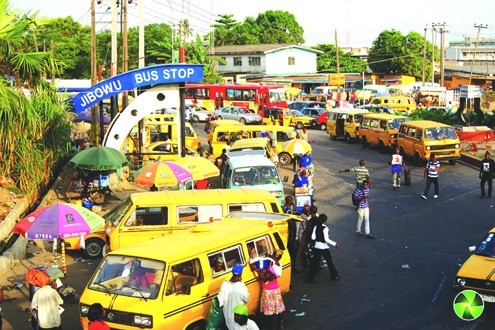
Lagos State Governor, Mr Akinwunmi Ambode, on Monday maintained that plans are going on to remove yellow buses popularly known as Danfo from Lagos roads for a more efficient, well-structured and world class mass transportation system that would facilitate ease of movement within the city.

Mr Ambode also said that his administration would soon roll out a comprehensive environmental sanitation policy that would make the city to be clean without much burden on the people in terms of taxes.

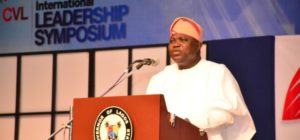
Speaking at the 14th Annual Lecture of the Centre for Values in Leadership (CVL) held at Muson Centre in Onikan with the theme: ‘Living Well Together, Tomorrow: The Challenge Of Africa’s Future Cities,’ Governor Ambode admitted that the present connectivity mode in Lagos was not acceptable and befitting for a mega city, and as such a well-structured transportation mode would soon be put in place to address the challenge.

“When I wake up in the morning and see all these yellow buses and see Okada and all kinds of tricycles and then we claim we are a mega city, that is not true and we must first acknowledge that that is a faulty connectivity that we are running.

“Having accepted that, we have to look for the solution and that is why we want to banish yellow buses this year. We must address the issue of connectivity that makes people to move around with ease and that is where we are going.

“For instance, people going from Ikorodu to CMS have started leaving their cars at home because the buses are very convenient and so why can’t we do that for other places? Yes, we don’t have the money to do that but we can go to the capital market and then improve on the technology of collection of fares and that will encourage investors and then the city will change,” Governor Ambode said.

He said government was also embarking on massive reform in waste management system, expressing optimism that the plan will fully be actualized by July this year.

He said: “We are also embarking on massive reform in the waste and sanitation management system. I don’t like the way the city is and the Private Sector Participants (PSP) collectors are not having enough capacity to do it but again should I tax people to death, the answer is no. I don’t want to tax people and so we need this partnership with the private sector so that they can invest in the sanitation management of the city and in no time maybe by July, the city will change forever.”

The Governor, who recalled the massive infrastructures being put in place in critical sectors of the Lagos economy such as transport sector, road construction and rehabilitation, construction of lay-bys, and flyovers among others, said the main objective of his administration remained the growth of the Lagos economy from 5th to 3rd largest economy in Africa.

On power, Governor Ambode said the major issue had always been with transmission and advocated an embedded power initiative that would allow clusters of Independent Power Projects (IPP) to run the cities.

He said he had remained focused on some issues such as infrastructure, security, job creation, power, adoption of technology as an enabler and driving investment through ease of doing business.

In his opening remarks, CVL founder and renowned development expert, Professor Pat Utomi said the idea behind the formation of the group was to get young people to begin to appreciate early what leadership was all about being service to the people.

Speaking on the theme of the symposium, Mr Utomi said Lagos remained the best governed State in Nigeria in the last 18 years, and a good example of what the country should be beyond and without oil.

He commended Governor Ambode on his leadership style, and particularly congratulated Lagos for being named by the Rockefeller Foundation as one of the 100 most resilient cities in the world.

Chairman of the occasion and former Governor of Cross River State, Mr Liyel Imoke said the theme of the symposium was apt considering that Nigeria’s population by 2050 would have tripled and as such it was important for the country to start planning for liveable cities.

He commended Governor Ambode over his achievements in office so far, saying that it was obvious that the Governor has been performing very well and he is a good example of continuity in governance.

On his part, Director of Centre for African Economies, Oxford University, Professor Paul Collier said from his over 30 years’ experience of coming to Nigeria, Governor Ambode has proven himself to be the third excellent Governor in a row in Lagos.

Mr Collier, who was the keynote speaker, said judging by the population projection of Nigeria by 2050, now is the time for the country to start building its cities to conform with modern trend.

He said Nigeria’s oil had been a course which messed up the economy, and so there was need to start proper planning for development.

As a way out, Collier suggested alliance between the business community and political actors, saying that to build a city that works, attention must be focused on energy and connectivity.
Dipo Olowookere is a journalist based in Nigeria that has passion for reporting business news stories. At his leisure time, he watches football and supports 3SC of Ibadan. Mr Olowookere can be reached via [email protected]

Advertisement
Click to comment

Leave a Reply

Your email address will not be published. Required fields are marked *

General

Electricity Workers Issue 21-Day Strike Notice Over Pay, Working Conditions

Published

on

Electricity Workers Nigeria

By Adedapo Adesanya

Electricity workers, under the aegis of the National Union of Electricity Employees (NUEE), have issued a 21-day nationwide strike notice to the federal government, citing unresolved labour grievances and what they described as worsening conditions across the power sector.

They formally notified the Minister of Power, Mr Adebayo Adelabu, of their intention to embark on industrial action if urgent steps are not taken to address the persistent violations of workers’ rights within the Nigerian Electricity Supply Industry (NESI).

In the letter, the union accused power sector operators of refusing to honour collective agreements, implement the 2025 National Minimum Wage Act and effect its consequential adjustments. It also alleged widespread anti-labour practices across power generation and distribution companies.

“We have written several letters to the ministry on these issues, but there has been little or no response,” the union stated, expressing frustration over what it described as official indifference.

Among the grievances listed are non-remittance of pension deductions and Pay-As-You-Earn (PAYE) taxes, denial of workers’ right to unionise, intimidation of staff, and failure to improve welfare despite repeated tariff increases.

The union said in some distribution companies, pension contributions deducted from workers’ salaries have allegedly remained unpaid for years, leaving employees uncertain about their retirement security.

The electricity workers also criticised what they termed the “militarisation” of workplaces, alleging harassment and threats in certain power firms.

According to the union, labour is increasingly being treated as an adversary rather than a critical stakeholder in a sector already struggling with public confidence.

The notice further questioned the performance of investors who acquired power assets during the 2013 privatisation exercise.

The union argued that promises of improved infrastructure, capital injection, metering expansion and better service delivery have not translated into meaningful gains for workers or consumers.

While electricity tariffs have risen multiple times in recent years, the union said workers have seen no corresponding improvement in salaries, promotions, bonuses or working conditions.

Business Post reports that the ultimatum likely places the federal government under pressure to act as a nationwide strike would significantly disrupt power generation and distribution, affecting homes, hospitals, small businesses and critical infrastructure already grappling with unreliable supply.

Continue Reading

General

Oyetola Warns Budget Shortfall Threatens Operations of NPA, NIMASA, Others

Published

on

Adegboyega Oyetola

By Adedapo Adesanya

The Minister of Marine and Blue Economy, Mr Adegboyega Oyetola, has warned that operations of agencies under his ministry were being severely constrained by excessive deductions at source by the Office of the Accountant-General of the Federation.

He disclosed on Tuesday while presenting a N10.5 billion budget proposal for the Federal Ministry of Marine and Blue Economy for the 2026 fiscal year.

He lamented that the allocation was grossly insufficient to effectively execute the ministry’s wide-ranging mandate, critical to Nigeria’s trade, transport efficiency and food security.

Mr Oyetola while defending the ministry’s budget before a joint sitting of the Senate Committee on Marine Transport and the House of Representatives committees on Ports and Harbours; Maritime Safety, Education and Administration; Shipping Services; Inland Waterways; and Ocean and Fisheries, said the proposed budget, which comprises N8.24 billion for capital expenditure, N453.86 million for overheads and N1.81 billion for personnel costs, would only sustain minimal operational continuity rather than deliver meaningful reforms or sectoral growth.

The minister explained that the ministry oversees interconnected subsectors, including ports, shipping, inland waterways, fisheries and aquaculture, which collectively handle over 90 per cent of Nigeria’s international trade by volume, national food and nutrition security, and economic competitiveness.

He noted that while agencies such as the Nigerian Ports Authority (NPA), Nigerian Maritime Administration and Safety Agency (NIMASA) and Nigerian Shippers’ Council (NSC) were self-funding and made significant remittances to the Consolidated Revenue Fund, their operations were being severely constrained by excessive deductions at source by the Office of the Accountant-General of the Federation.

According to him, these deductions had weakened liquidity and reduced the operational flexibility of key agencies responsible for maritime safety, port efficiency and regulatory oversight, with far-reaching consequences including port congestion, higher logistics costs, delayed cargo movement, revenue losses and inflationary pressures.

He stressed that what appeared to be an accounting issue had become a national economic concern.

Mr Oyetola also said that the 2026 budget of the Council for the Regulation of Freight Forwarding in Nigeria (CRFFN) was wrongly placed by the Budget Office under the Federal Ministry of Transportation, even though it is an agency under the Federal Ministry of Marine and Blue Economy, saying the misalignment undermined clarity in oversight and policy coherence within the maritime logistics value chain.

On inland waterways, the Minister appealed for increased funding to curb accidents and loss of lives. He said water transport is globally recognised as significantly cheaper than road transport.

He noted that Nigeria’s heavy reliance on road haulage for over 80 per cent of freight movement had worsened road deterioration and increased the cost of goods, arguing that safer and more efficient inland waterways would ease pressure on roads and lower logistics costs.

On fisheries and aquaculture, Oyetola said Nigeria’s annual fish demand of over 3.6 million metric tonnes far exceeded domestic production of about 1.4 million metric tonnes, sustaining imports valued at more than one billion dollars annually.

He added that post-harvest losses of up to 30 per cent further reduced supply, despite fish being one of the most affordable sourNiger.

“As long as we hinder official trade, individuals will resort to informal channels. Currently, we estimate that up to 50 per cent of our domestic areas have resorted to illegal trade, while only about 30 per cent is conducted legally, which is detrimental to our security.”

He pointed out that “this situation is beneficial for the economies of both countries. It will positively impact our maritime sector, as we expect an increase in transit cargo passing through our ports to Niger, resulting in economic activities for our investors in the maritime industry.

“Additionally, this development will benefit Nigerians in border communities, many of whom are engaged in farming and other economic activities, providing them with opportunities to export goods to Niger.”

Continue Reading

General

Gaya Rallies APC Support for Governor Abba Yusuf

Published

on

Abdullahi Mahmud Gaya

By Abba Dukawa

The independent non-executive director of the Nigeria Sovereign Investment Authority (NSIA), Mr Abdullahi Mahmud Gaya, has called on members of the All Progressives Congress (APC) and key stakeholders in Ajingi, Gaya, and Albasu Local Government Areas of Kano State to close ranks and give their full support to the state governor, Mr Abba Kabir Yusuf.

Mr Gaya described the governor’s defection to the ruling party as a bold and strategic move that reflects his deep commitment to the development and progress of Kano State, noting that APC members and stakeholders in the areas warmly welcomed the governor into the party, alongside elected and appointed officials, party leaders, and other critical stakeholders.

He made this statement during a meeting with APC leaders and stakeholders from the three local government areas, held at his office in the state capital.

According to him, the governor’s courageous decision will strengthen Kano State’s influence at the national level and open new opportunities for economic growth, improved welfare, and greater prosperity for the people.

He also urged party members to take ownership of the democratic process by ensuring they collect their APC membership cards and Permanent Voter Cards (PVCs).

In a show of solidarity and goodwill, Mr Gaya donated N6 million to party members and stakeholders during the meeting as Ramadan support.

Speaking at the gathering, a former Secretary to the State Government and Wazirin Gaya, Usman Alhaji, called on party members to intensify efforts toward strengthening the APC in the area. He said the party’s growing numerical strength in Ajingi, Gaya, and Albasu Local Government Areas already positions it as the party to beat.

Also addressing the meeting, elder statesman and senior stakeholder, Mr Uba Muhammad Danbayye, noted that the party members now recognizes the difference between a mere candidate and a true politician, saying based on Mr Gaya’s leadership style and strong relationship with the people, stakeholders have unanimously resolved to support him and will not field another candidate for the House of Representatives in the upcoming election.

Continue Reading

Trending