
General
Ataga: Stop Calling Chidinma Criminal—Lawmaker Warns


By Dipo Olowookere
A lawmaker in the House of Representatives, Mrs Tolulope Akande-Sadipe, has warned members of the public against labelling Miss Chidinma Ojukwu as a criminal until the court convicts her of the murder of the CEO of Super TV, Mr Usifo Ataga.
On June 24, 2021, Miss Ojukwu, a 300 Level student of the University of Lagos, Akoka, was paraded in public by the Lagos State Commissioner of Police, Mr Hakeem Odumosu, in connection with the gruesome killing of Mr Ataga in Lagos earlier in the month.
When she was paraded by the police, she admitted sniffing the life out of the victim but a few weeks later, she claimed in an interview that she did not murder the media practitioner.
According to her, someone else must have murdered the married 50-year-old amateur boxer when she went out of the short-let she rented to buy food outside.
Her U-turn spurred reactions from different quarters and days after the interview, the police said more suspects were apprehended after establishing a case of conspiracy in the killing.
For Mrs Akande-Sadipe, who represents Oluyole Federal Constituency of Oyo State at the lower chamber of the National Assembly, allowing the key suspect in the murder case and parading her before the media would likely jeopardise the investigation.
In a motion moved last Tuesday, the lawmaker frowned at this practice of parading suspects in public when investigations are yet to be concluded. She also said the police was merely doing a media trial, which allows members of the public to label Miss Ojukwu as a criminal when she has not been found guilty of the offence.
The House of Reps member, therefore, called on the police to ensure that the accused person “does not die in custody or commit suicide while awaiting trial as in some past cases.”
She also asked the parliament to prevail of the Nigeria Police to stop the ongoing media trial of Ms Ojukwu, emphasising that, “This motion is not about Chidinma, her ethnicity, gender or her background, it’s is about doing things right and following due process of the law, it is about the broader issues of police violation of Human rights.”
The Chairman of the House Committee on Diaspora Affairs stressed that if Ms Ojukwu continues to be paraded about for a social media trial, it could affect the determination and outcome of the case, as well as amounts to a breach of her fundamental right to a fair hearing, especially where she is labelled or treated as one guilty of a crime.
“Cognizant that Section 36(5) of the Constitution of the Federal Republic of Nigeria, 1999 (as amended) provides that every person who is charged with a criminal offence shall be presumed to be innocent until he is proved guilty.
“Thus, so long as Ms Ojukwu has not been proven guilty by a court of competent jurisdiction, she is not to be labelled a criminal or paraded about to conduct series of interviews on a case currently under investigation.
“Rather, the police are to conduct a proper investigation and allow the court to consider the matter and make an informed judgment,” a part of her motion read.
She said the police should rather conclude its investigation in her matter and charge her to court for trial rather than the ongoing media trial the suspect is being made to go through.
Mrs Akande-Sadipe, therefore, called on the Inspector-General of Police to call all police personnel to order and ensure that there is no repeat of violation of human rights and media access to arrested persons in the future to avoid compromising the case in a court of law.



By Abba Dukawa
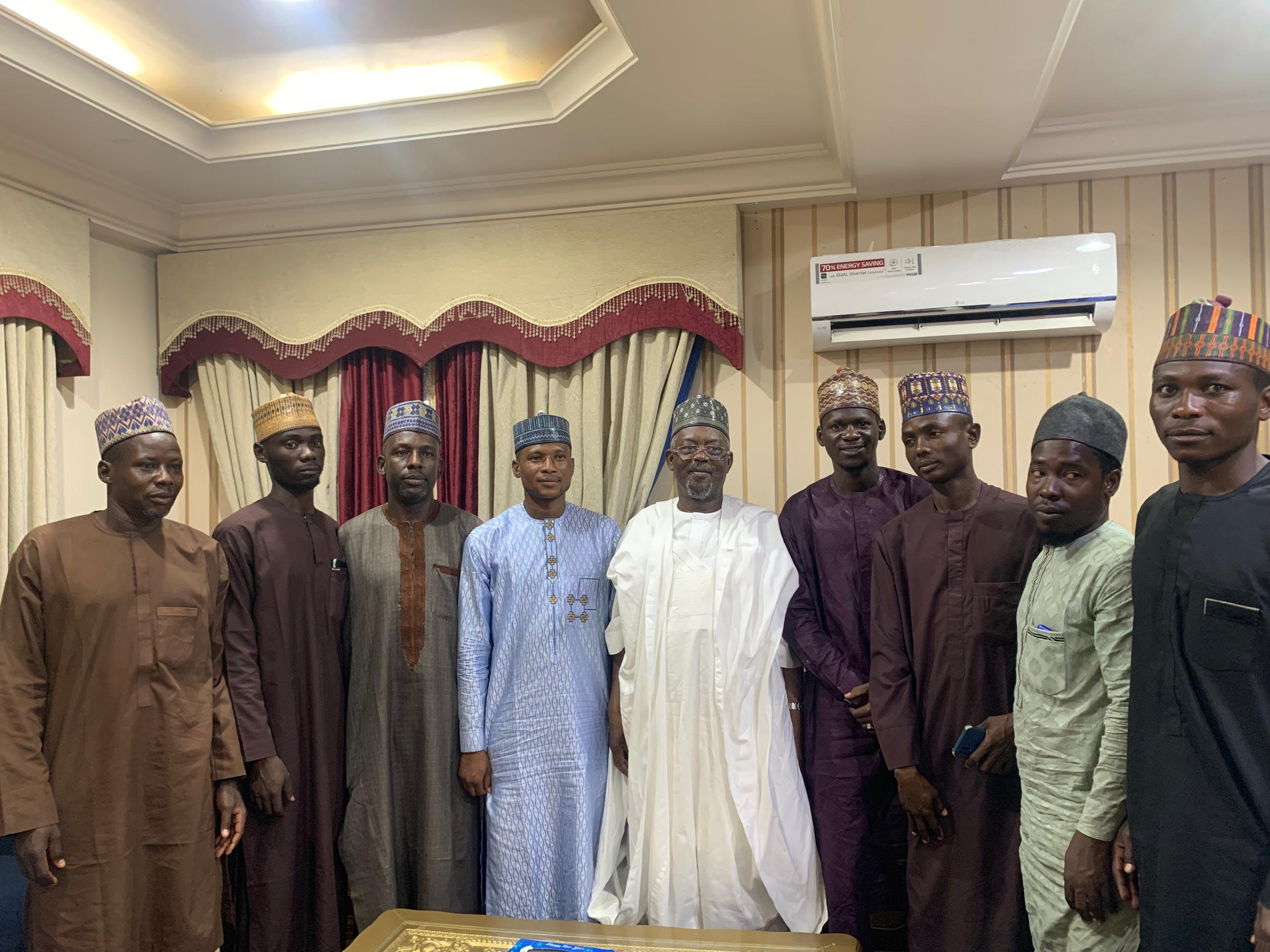
A chieftain of the ruling All Progressives Congress (APC), Mr Abdullahi Mahmud Gaya, reaffirmed his commitment to purposeful leadership, declaring he is not given to making empty promises to the electorate.
The politician, who intends to represent the Ajingi, Gaya, and Albasu Federal Constituency in the National Assembly in the 2027 general elections, stressed that his record of performance over two consecutive terms stands as clear evidence of his capacity and credibility, noting that his tenure has consistently delivered beyond expectations.
According to him, governance should be measured by tangible results rather than rhetoric, and his track record reflects a sustained dedication to the welfare and development of his constituency.
Speaking on Sunday while receiving various support groups at his residence in Kano, Mr Gaya reiterated his resolve to consolidate on past achievements and continue championing policies that will advance the collective interests of his people.
He urged them to return to their respective wards, villages, and towns to enlighten the electorate on the visible developmental strides recorded across the constituency over the past three years under his leadership, emphasising the need for voters to clearly distinguish these achievements from previous representations.
Mr Gaya further stated that there is no retreat in his resolve to contest the seat, stressing that the election is not about personal ambition, but about the collective well-being and continued progress of the people across the three local government areas.
He also urged them to take note that the Electoral Act 2026 outlines two methods through which political parties can nominate candidates, adding that these methods are direct primaries and consensus. Direct primaries involve all registered party members voting to choose their candidates, while the consensus method requires aspirants to voluntarily agree on a single flag bearer.
Speaking on behalf of various support groups, Mr Ismaila Ado, who has benefited from a monthly allowance as a volunteer teacher in one of the schools constructed during his tenure, stated that in addition to the allowance, the politician also facilitated his permanent appointment in the Kano State Ministry of Education.
Also speaking, an elder of the APC in Gaya Local Government Area, Mr Iliyasu Muhammad Gamoji, noted that prior to 2015, the communities of Ajingi, Gaya, and Albasu suffered from years of neglect and slow development.
He explained that when Mr Gaya represented the constituency in the House of Representatives, he did so with a strong commitment and a clear sense of responsibility.
He added that, over time, the lawmaker’s efforts brought tangible progress that positively impacted many lives, noting that roads were constructed, schools were improved, and the communities began to receive renewed attention and meaningful government support during his tenure.


By Aduragbemi Omiyale
The sum of N3.3 trillion has been approved by President Bola Tinubu to finally clear the outstanding debts in the power sector.
A statement issued on Sunday by the Special Adviser to the President on Information and Strategy, Mr Bayo Onanuga, said the “long-standing debts accumulated between February 2015 and March 2025.”
It was stated that the payment plan for the debts under the Presidential Power Sector Financial Reforms Programme should restore reliable electricity to the country.
“Following verification, N3.3 trillion has been agreed as a full and final settlement, ensuring a fair and transparent resolution,” a part of the statement noted.
“Implementation has begun, with 15 power plants signing settlement agreements totalling N2.3 trillion. The federal government has already raised N501 billion to fund these payments. Out of the amount, N223 billion has been disbursed, with further payments underway,” it added.
The statement said, “With payments reaching the power value chain, generation will be more stable. With power plants supported, electricity reliability will improve.”
“This programme is not just about settling legacy debts. It is about restoring confidence across the power sector — ensuring gas suppliers are paid, power plants can keep running, and the system begins to work more reliably,” the Special Adviser to the President on Energy, Ms Olu Arowolo-Verheijen, was quoted as saying in the statement.
“It is part of a broader set of reforms already underway — including better metering and service-based tariffs that link what you pay to the quality of electricity you receive.
“The government is also prioritising power supply to businesses, industries, and small enterprises — because reliable electricity is critical to creating jobs, supporting livelihoods, and growing the economy.
“The goal is simple: more reliable power for homes, stronger support for businesses, and a system that works better for all Nigerians,” she added.
President Tinubu has commended all stakeholders who supported efforts to resolve the legacy issues in the power sector. He has also confirmed that the next phase (Series II) will begin this quarter.

By Adedapo Adesanya
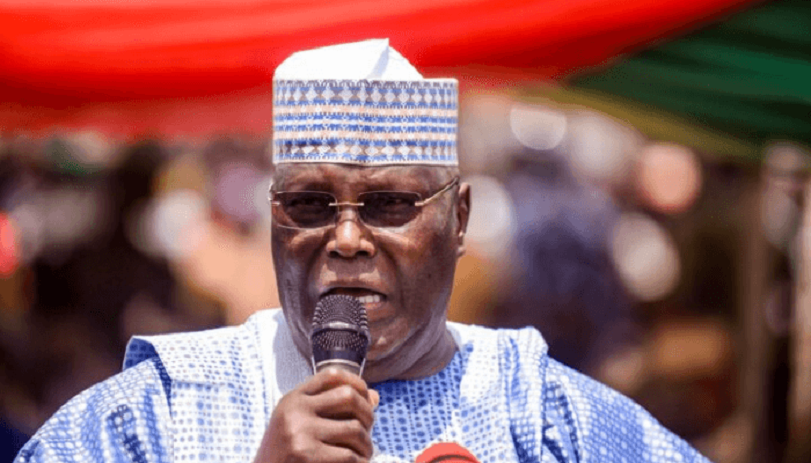
Former Vice-President Atiku Abubakar has hired Von Batten-Montague-York, L.C., a Washington-based lobbying firm, to protect and strengthen his “reputational standing” in the United States for $1.2 million.
According to The Cable, the contract agreement was signed by Mr Karl Von Batten, the managing partner at the firm, and Mr Fabiyi Oladimeji, a Nigerian politician, on March 9 and 10, 2026, respectively.
Based on a document filed with the US Department of Justice, one of the contract’s objectives entails that the firm will “counterbalance” the Nigerian government’s “lobbying narratives” in the US. It comes after the federal government reportedly spent $9 million to strengthen lobbying with the US government earlier this year.
Mr Abubakar, who is eyeing the Nigerian presidency, is currently with the African Democratic Congress (ADC). He will use the firm to “advance understanding” within US policymaking institutions of his “leadership posture and policy vision”.
Based on the contract details, the firm will facilitate and arrange meetings for the former vice-president to engage with US government officials and members of Congress.
Von Batten-Montague-York will also provide the politician with “guidance on policy positioning, reputational considerations, and engagement strategy”.
“These activities include lobbying and government affairs engagement with Members of Congress, congressional staff, and executive branch officials concerning issues related to democratic governance, regional stability, economic development, and U.S. engagement with Nigeria and the broader West African region,” part of the contract details reads.
“The Registrant (lobbying firm) may advocate for policies and perspectives aligned with the foreign principal’s stated positions, including matters relating to governance, economic policy, and bilateral relations with the United States.
“The Registrant also engages in promotion, perception management, and public relations activities designed to enhance understanding among U.S. policymakers and relevant stakeholders of the foreign principal’s policy positions, leadership posture, and strategic priorities.
“This includes the development of messaging strategies, narrative positioning, and reputational advisory services.
“In furtherance of these activities, the Registrant prepares, distributes, and may assist in the dissemination of informational materials, including briefing memoranda, policy papers, talking points, and related communications, intended to inform U.S. government officials and stakeholders.”
The former vice-president is expected to pay the $1.2 million for the 12-month contract in six instalments.
-
 Feature/OPED6 years ago
Davos was Different this year
-
Travel/Tourism10 years ago
Lagos Seals Western Lodge Hotel In Ikorodu
-

 Showbiz3 years ago
Estranged Lover Releases Videos of Empress Njamah Bathing
-
 Banking8 years ago
Sort Codes of GTBank Branches in Nigeria
-

 Economy3 years ago
Subsidy Removal: CNG at N130 Per Litre Cheaper Than Petrol—IPMAN
-

 Banking3 years ago
Sort Codes of UBA Branches in Nigeria
-

 Banking3 years ago
First Bank Announces Planned Downtime
-

 Sports3 years ago
Highest Paid Nigerian Footballer – How Much Do Nigerian Footballers Earn