General
AWHE Seeks Improved Prison Conditions for Female Inmates
By Modupe Gbadeyanka
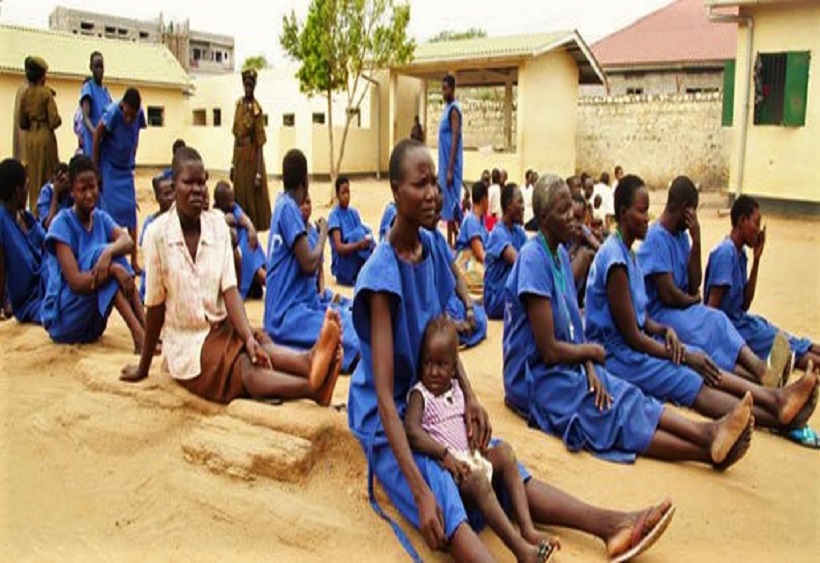
A advocacy group known as African Women Honours and Empowerment (AWHE), a global initiative established to celebrate, unite and empower women through its ‘EmpowerHer Projects’, has called for concerted efforts to improve the conditions of prisons in Nigeria, especially for female inmates, in order to enhance their seamless integration back into the society, after serving out their terms.
Prisons, by their nature, are meant for correction and re-orientation, but with over-crowded cells, poor feeding of inmates and several inhuman conditions, the image of Nigerian prisons has always been that of de-humanization centres.
According to figures by the National Human Rights Commission (NHRC), 90 percent of women awaiting trial across the country, are either nursing mothers or pregnant.
While making the call, the coordinator of the prison outreach for AWHE, Naiyeju-Oloyede, stated that some female prisoners are victims of poverty, sexual abuse, emotional trauma and domestic violence, while some are wrongly incarcerated.
She said, “Some of these prisoners were innocent of the crime they were accused of while some made simple mistakes and had to pay for it. These are truths. This is exactly the reason why all responsible citizens should rally round any programme that will help these women.”
She further explained the need to restore human dignity of female prisoners and ex-convicts, noting that Nigerian prisons lack the needed situations and systems to diligently correct female inmates and effectively reintegrate them back into the civil society.
Corroborating this call, Mrs Aishat Bello-Garuba, AWHE Ikeja Chapter District manager said that the visit will also serve as a platform to draw attention to the state of prisons in Nigeria and what needs to be done to alleviate prison conditions in order to make inmates suitable for reintegration back into the society.
Africa has the lowest ratio of women in prison compared to other continents. But due to perennial underfunding of prisons in Africa, research by Lisa Vetten, a Social and Economic research analyst at the Wits Institute, showed that women are often denied basic sanitary needs.
For instance, access to pads is not provided for female inmates in Malawi and Mozambique. In Zimbabwe, women settle for their blankets or uniforms and newspapers as alternatives, and in Ethiopia they are expected to wash and reuse cloths provided to them.
Horrifically, in Nigeria there are instances where two women shared one pad, while Ugandan inmates didn’t even have underwear.
General
Umahi: Ebonyi Police Reject Bid to Halt Autopsy in Physiotherapist’s Death
By Adedapo Adesanya
The Ebonyi State Police Command has insisted on conducting a post-mortem examination to determine the cause of death of Miss Mary Habila, a physiotherapist who died at the residence of the Minister of Works, Mr David Umahi, in Uburu, Ohaozara Local Government Area of Ebonyi State.
The demise of the deceased, which occurred in late June, recently became public and has sparked calls for a probe from many quarters.
Meanwhile, the family of the deceased has approached the court to stop the autopsy, but experts tell Business Post that the family has no authority to file an affidavit, as this is a case of suspected murder against the state and not the family.
Mr Umahi has also called for a probe.
The Ebonyi Police Command said the autopsy was necessary to establish the cause of death and support its ongoing investigation, despite objections from the deceased’s family.
The Police Public Relations Officer (PPRO), SP Joshua Ukandu, disclosed this in a statement issued on Wednesday, stating that the police had commenced a comprehensive investigation into the circumstances surrounding Ms Habila’s death.
Mr Ukandu said preliminary investigations revealed that the deceased and a colleague were members of the medical team attached to the Minister of Works and had accompanied him to his hometown in Uburu, where she later died in a room within the compound of his residence.
According to him, detectives from the State Criminal Investigation Department (SCID) have visited the scene, documented relevant evidence and obtained statements from persons connected to the incident.
He added that the command had concluded arrangements to engage a qualified pathologist to carry out a post-mortem examination, which it considers crucial to determining the actual cause of death.
Mr Ukandu explained that the police became involved in the matter after receiving a distress call on June 27, 2026, from the Divisional Police Officer (DPO), Ohaozara Division, informing the command of a medical emergency involving Habila and requesting his presence at the David Umahi Federal Teaching Hospital, Uburu.
“On arrival, the DPO was informed by hospital authorities that Miss Mary Habila had been brought in dead.
He immediately briefed the Commissioner of Police, who directed that the matter be transferred to the State Criminal Investigation Department (SCID) for thorough investigation,” the statement read.
The police spokesperson disclosed that while the family of the deceased had opposed the conduct of an autopsy, the command considered the procedure necessary in view of the circumstances surrounding the death.
“The Command therefore awaits the attendance of the family or their duly appointed representative, as their presence is essential to the conduct of the post-mortem examination,” Mr Ukandu said, assuring the public that the investigation would be conducted professionally, transparently and without bias, stressing that every necessary step would be taken to uncover the circumstances surrounding Habila’s death.
Mr Ukandu further assured that the command would continue to provide updates as the investigation progresses.
Family Seeks to Stop Autopsy
The family of the deceased, who is a staff member of the David Umahi Federal University of Medical Sciences and was seconded to the Federal Ministry of Works, formally requested the withdrawal of further investigation into her death and declined an autopsy.
In an affidavit titled Affidavit of Withdrawal of Case filed before the High Court of Justice of Ebonyi State, her father, Tanko Habila Wisdom, said the family was not alleging any foul play in her death and wished to proceed with her burial.
According to the affidavit, Mary Habila died on June 27, 2026, in Uburu, Ohaozara Local Government Area of Ebonyi State.
The deponent stated that before her death, Habila was a staff member of the David Umahi Federal University of Medical Sciences and had been seconded to the Federal Ministry of Works in Mabushi, Abuja, where she served in the Office of the Minister of Works for about three years.
General
Aisha Achimugu: Court Orders Forfeiture of N4.6bn Jewellery, N4.3bn Vehicles, Cash
By Adedapo Adesanya
A Federal High Court in Apo, Abuja, has ordered the final forfeiture of billions of Naira worth of assets linked to businesswoman and socialite, Ms Aisha Achimugu, to the federal government.
Justice Jude Onwugbuzie granted the order following an application by the Economic and Financial Crimes Commission (EFCC), directing the permanent forfeiture of jewellery valued at N4.645 billion, 11 exotic vehicles worth N4.293 billion, $50,000 and N30 million in cash.
The ruling followed the EFCC’s request for the final forfeiture of the assets, which the commission said were linked to Ms Achimugu.
The forfeited assets include: Jewellery valued at N4,645,170,294.90; 11 exotic vehicles worth N4,293,000,000; $50,000 in cash; and N30,000,000 in cash.
The court’s judgment vests ownership of the assets in the federal government, bringing the forfeiture proceedings to a close.
In March, Justice Emeka Nwite of the Federal High Court in Abuja affirmed the final forfeiture of $13 million linked to the Lagos socialite. However, in an interview in April, she denied that $13 million was discovered by the EFCC in her residence, describing the claim as inaccurate and misleading.
Justice Nwite had, on August 22, 2025, granted the anti-graft agency’s motion ex parte for an interim order forfeiting the sum of $13 million linked to Oceangate Ltd to the federal government over allegations that the fund was proceeds of unlawful activity.
The judge had then directed the commission to publish the order in a national daily for interested people to show cause within 14 days why the fund should not be permanently forfeited to the federal government.
In 2024, the businesswoman gained significant media attention for a seven-day birthday celebration in Grenada, which was attended by high-profile guests, reportedly including Lagos State Governor Babajide Sanwo-Olu.
The socialite also defended her widely publicised birthday celebration, noting that it had been “planned for 10 years” and was not funded with any money under investigation.
General
Renaissance, Indorama Seal 16-Year Gas Deal to Boost Fertiliser Production
By Adedapo Adesanya
To boost fertiliser production, strengthen food security and advance Nigeria’s domestic gas utilisation agenda, Renaissance Africa Energy Company Limited has signed a 16-year Gas Sale Agreement (GSA) with Indorama Fertiliser FZE for the supply of up to 60 million standard cubic feet of natural gas per day from the Assa North Ohaji South (ANOH) Gas Processing Facility.
The agreement was signed by the chief executive of Renaissance, Mr Tony Attah, and Indorama’s counterpart, Mr Manish Mundra, with both executives describing the deal as a significant milestone in advancing Nigeria’s domestic gas utilisation agenda, industrial development, and agricultural growth aspirations.
“This agreement reflects our commitment to unlocking the value of Nigeria’s abundant gas resources through partnerships that create real and lasting impact,” Mr Attah said, adding: “By supplying natural gas to a major fertiliser producer such as Indorama, we are supporting a value chain that is critical to food security, agricultural productivity, industrial growth, and economic development.”
The agreement will provide Indorama Fertiliser with a secure and reliable source of natural gas to support uninterrupted production and enable the company to meet growing domestic and regional demand for fertiliser products.
The resulting increase in fertiliser availability is expected to contribute to improved crop yields, enhanced agricultural productivity, and strengthened food security across Nigeria and Africa.
Commenting on the agreement, Mr Mundra said the deal was an important milestone for the company in its ambition of supporting Nigeria’s agricultural transformation agenda.
“Reliable access to natural gas is fundamental to fertiliser production, and this long-term arrangement provides a strong foundation for sustainable operations and future growth,” Mr Mundra said. “We appreciate the partnership with Renaissance and look forward to leveraging this collaboration.”
The transaction aligns closely with Nigeria’s Decade of Gas initiative and further demonstrates the strategic role of natural gas in driving industrialisation, supporting manufacturing, enhancing energy security, and enabling economic diversification.