

General
AXA Employees Take Campaign Against Domestic, Sexual Violence to Schools


By Dipo Olowookere
In commemoration of its annual social responsibility week, AXA Week for Good, hundreds of employees of AXA Mansard recently took the campaign against domestic and sexual violence to some schools in Lagos, Abuja, and Port Harcourt.
More than 900 members of staff of the leading insurance company in Nigeria partook in the awareness, which was designed to combat the scourge of domestic and sexual violence against children across the country.
AXA Week for Good is the flagship volunteering programme of AXA Hearts In Action (AHIA), a programme through which AXA encourages its employees to contribute to positive societal and environmental impacts through volunteering, expertise, related financial support, and in-kind donations.
At this year’s programme, held under the theme, Being a Girl Shouldn’t Be A Risk, teachers and students were educated on the identification, prevention, and reporting of sexual and domestic violence.
AXA Mansard employees participated in awareness walks to sensitize the public about the danger of domestic and sexual violence on children and the nation’s future.
In 2024, over 50 per cent of AXA Mansard workforce, through various volunteering activities under the AHIA, clocked over 23,000 volunteering hours. Their dedication underscores the company’s deep-rooted belief that real impact begins with people.
By empowering its employees to take meaningful action, the company continues to demonstrate that corporate responsibility goes beyond business it is about building a safer, more inclusive future for all.
“Through the AHIA, our employees do not just give time to great causes; we work together for a better future. We share our knowledge and expertise as a people with a shared purpose of acting for human progress by protecting what matters by helping vulnerable communities and people around us,” the Chief Client Officer of AXA Mansard, Ms Rashidat Adebisi, said.
She disclosed that this year’s theme presents the organization with an opportunity to demonstrate the social, economic, and ethical benefits of protecting the girl child.
According to her, Nigeria’s 105 million children and adolescents aged 0–17 years represent about half of the country’s population.
“For a country betting its economic growth on the strength and human capital of its young population, the alarming rate and spate of Violence Against Children (VAC) threatens the future not just of our country, but of the African continent,” she stated.
Ms Adebisi noted that the staggering reality that 60 per cent of Nigerian children experience one or more forms of violence before age 18 is a call to action for everyone, and “our employees are responding to this clarion call so that the thousand of Nigerian girls who go through physical, emotional, sexual and psychological violence can find safe places to get help; but most important, we can rid our society of perpetrators.”












By Adedapo Adesanya
The federal government has declared Thursday, December 25, and Friday, December 26, 2025, as public holidays to mark Christmas and Boxing Day respectively.
The government also declared Thursday, January 1, 2026, for the New Year celebration.
The declaration was contained in a statement issued on Monday by the Permanent Secretary of the Ministry of Interior, Mrs Magdalene Ajani, on behalf of the Minister of Interior, Mr Olubunmi Tunji-Ojo.
According to the statement, the Minister urged Nigerians to reflect on the values of love, peace, humility and sacrifice associated with the birth of Jesus Christ.
Mr Tunji-Ojo also called on citizens, irrespective of faith or ethnicity, to use the festive season to pray for peace, improved security and national progress.
He further advised Nigerians to remain law-abiding and security-conscious during the celebrations, while wishing them a Merry Christmas and a prosperous New Year.
Business Post reports that on these public holidays – the foreign exchange market, the Nigerian Exchange (NGX), as well as the NASD Over-the-Counter (OTC) Securities Exchange will not open to trade.

By Modupe Gbadeyanka
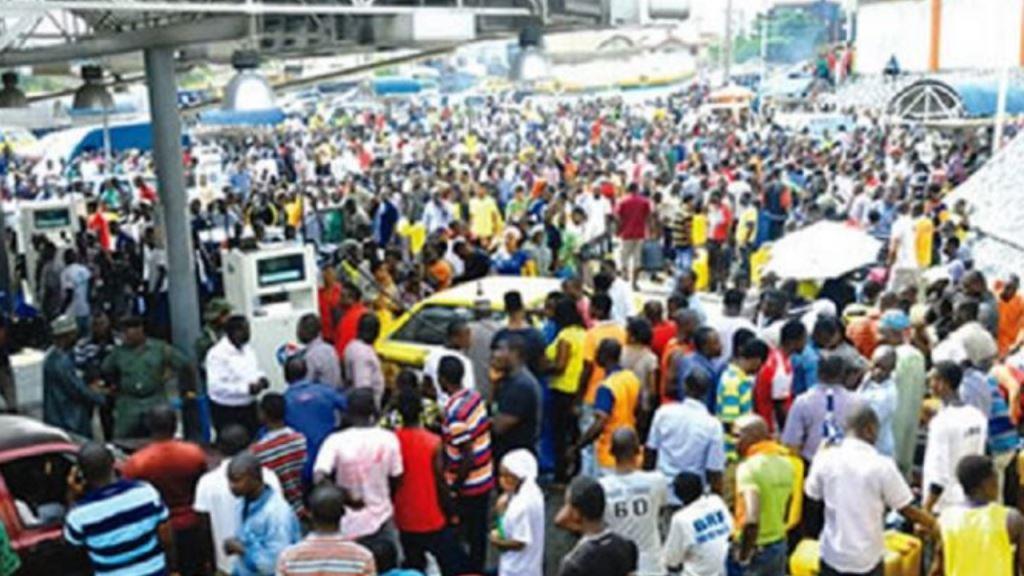
Local crude oil refiner, Dangote Petroleum Refinery, has kicked against attempts to put consumers of premium motor spirit (PMS), otherwise known as petrol, under untold hardship in the country.
The company, which commenced nationwide sales of the product at a pump price of N739 per litre across all MRS Oil Nigeria Plc filling stations, appealed to Nigerians to report any of its marketers who sell above this price.
“Any attempt to create artificial scarcity or manipulate supply to frustrate recent price reductions is unpatriotic and unacceptable.
“We urge regulatory authorities to remain vigilant and take firm action against such practices, especially during this critical festive period,” the Lagos-based refinery said in a statement.
It noted that the significant price reduction was part of its mission to deliver affordable fuel to consumers and stabilize the downstream petroleum market.
With over 2,000 MRS stations nationwide, the new pricing is expected to be implemented across all outlets, ensuring that the benefits of this reduction reach consumers nationwide.
Dangote Refinery applauded marketers who have embraced the new pricing regime and urged others to follow suit in the interest of national economic recovery.
“We commend MRS and other marketers who have demonstrated patriotism by reflecting the reduced price at the pump. We call on others to join this effort as a show of support for Nigeria’s economic recovery,” the refinery stated.
Historically, the festive season has been associated with fuel scarcity and sharp price hikes. However, Dangote Refinery has delivered a decisive market intervention—crashing pump prices at a time when Nigerians typically brace for hardship. Backed by a guaranteed daily supply of 50 million litres, this initiative fundamentally alters the supply dynamics during the holiday period.
By refining locally at scale, the refinery is reducing Nigeria’s exposure to volatile global markets, conserving foreign exchange, stabilizing the Naira, and strengthening energy security. This sustained price cut and steady supply are providing relief to households, businesses, and transport operators nationwide.
Consumers were advised to resist purchasing fuel at inflated prices when cheaper, high-quality alternatives are readily available.
“We encourage Nigerians to avoid buying PMS at excessively high prices when they can access locally refined fuel at N739 per litre from over 2,000 MRS stations nationwide. Report any MRS station selling above N739 per litre by calling 0800 123 5264,” the refinery said.
“We also call on other petrol station operators to patronize our products so that the benefits of this price reduction can be passed on to Nigerians across all outlets, ensuring broad-based relief and a more stable downstream market,” it added, reaffirming its commitment to steady supply, price moderation, and energy security, emphasizing that its operations are anchored on long-term national interest rather than short-term market pressures.
“Our objective remains clear: to ensure consistent supply of high-quality petroleum products at affordable prices for Nigerians, while supporting economic stability and reducing dependence on imports,” the refinery concluded.

By Adedapo Adesanya
The federal government’s approval of N185 billion as the settlement for long standing debts owed to gas producers in the country has been described as a major boost for Nigeria’s gas industry and power generation value chain.
The decision, endorsed by the National Economic Council (NEC) chaired by Vice President Kashim Shettima, followed the authorisation by President Bola Tinubu and represents one of the most significant fiscal interventions in the energy sector in recent years.
The legacy debts, accumulated over years for gas supplied to power plants, have constrained cash flow for producers, discouraged new investments and reduced gas supply to electricity generation, worsening Nigeria’s chronic power shortages.
Under the approved framework, the debts will be settled through a royalty-offset arrangement, a mechanism expected to ease government liabilities while restoring confidence among domestic and international gas suppliers.
The Minister of State for Petroleum Resources (Gas), Mr Ekperikpe Ekpo, described the approval as a turning point for the sector.
“This is a decisive step towards revitalising Nigeria’s gas sector and strengthening its power-generation capacity in a sustainable manner,” Mr Ekpo said, adding that the move aligns with President Tinubu’s commitment to resolving structural bottlenecks in the energy industry.
He noted that clearing the arrears would help rebuild trust between government and gas producers, many of whom had slowed investments due to persistent payment uncertainties.
“Settling these debts is critical to restoring investor confidence, reviving upstream activities and accelerating exploration and production,” Mr Ekpo stated.
According to him, increased gas output would directly translate into improved power generation, helping to address electricity shortages that have long constrained industrial productivity and economic growth.
The gas minister further explained that the intervention supports the Federal Government’s Decade of Gas initiative, which targets unlocking more than 12 billion cubic feet per day of gas supply by 2030.
On his part, the Coordinating Director of the Decade of Gas Secretariat, Mr Ed Ubong, said the decision sends a strong signal to investors across the gas-to-power value chain.
“This approval underlines the Federal Government’s determination to clear legacy liabilities and assure gas producers that supplies to power generation will be honoured,” Mr Ubong said.
He added that the move could unlock stalled projects, revive investor interest and rebuild momentum toward Nigeria’s transition to a gas-driven economy.
The settlement could mark a critical step in stabilising gas supply to power plants, improving electricity reliability and positioning gas as a catalyst for industrialisation and long-term economic growth.











-
 Feature/OPED6 years ago
Davos was Different this year
-
Travel/Tourism9 years ago
Lagos Seals Western Lodge Hotel In Ikorodu
-

 Showbiz3 years ago
Estranged Lover Releases Videos of Empress Njamah Bathing
-
 Banking7 years ago
Sort Codes of GTBank Branches in Nigeria
-

 Economy3 years ago
Subsidy Removal: CNG at N130 Per Litre Cheaper Than Petrol—IPMAN
-

 Banking3 years ago
First Bank Announces Planned Downtime
-

 Banking3 years ago
Sort Codes of UBA Branches in Nigeria
-

 Sports3 years ago
Highest Paid Nigerian Footballer – How Much Do Nigerian Footballers Earn