Connect with us

General

Bara, Old Oyo Empire Town, Under Threat—Archaeologist

Published

on

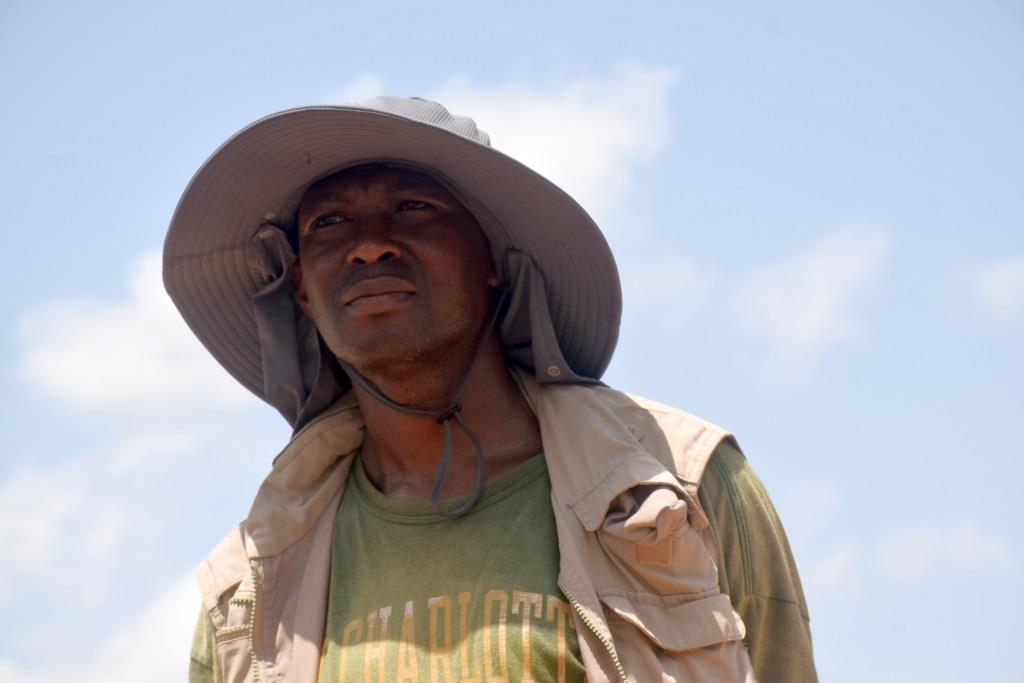
Prof Ogundiran Archaeologist Bara Town

An archaeologist and author of a major new book on Yoruba history, Mr Akinwumi Ogundiran, has called on the Alaafin of Oyo, Oba Lamidi Adeyemi, and other key personalities of Yorubaland to intervene urgently to prevent Bara, a historically significant town of the ancient Oyo Empire, from being destroyed.

Bara, the burial site of several past Alaafins, who are major figures in Yoruba history, is undergoing rapid deforestation due to arable farming and cattle grazing on an unsustainable scale.

Thousands of trees are being cut down illegally, precipitating a looming environmental crisis and destruction of historical artefacts including an ancient wall in the old town, which scholars believe should be a protected heritage site, due to its special significance in Yoruba history.

There are fears that if something is not done urgently, there will be little or nothing to salvage in an ongoing 10-year archaeological project that holds the key to a better understanding of the Oyo Empire in particular and Yoruba history in general.

Mr Ogundiran, Chancellor’s Professor and Professor of Africana Studies, Anthropology and History at the University of North Carolina at Charlotte, USA, has been leading the Old Oyo Archaeological Project in Bara since 2017.

He disclosed that it had been the plan that based on the project’s findings over the last five years, he will collaborate with the Nigerian National Park Service to recommend Bara to the federal government for protection as a historical site.

However, hopes are fast fading as the town’s historical integrity is being compromised on a massive scale.

“This is one of the well-preserved sites that should be maintained. We are recovering some evidence to tell generations that this is what happened at this place,” Mr Ogundiran said of Bara, which is located in the Kaiama Local Government Area of Kwara State, and is not currently within the jurisdiction of the National Park Service.

According to Mr Ogundiran, “Archaeology work is a prolonged process; it takes time to accumulate data. You can only be here for a month at a time or a maximum of two months.

“We collect the data and go back, but it takes a lot more time to process the data than even excavate it. This thing takes time, but unfortunately, we are running against time and also the priorities of other people who are here.”

The professor noted that it is only the Alaafin that can stop Bara’s destruction as things stand.

“He is the only one who has the moral authority to intervene. Intervention would take many levels. First is for the Alaafin to send delegates to take possession of the site. That is easy to do because all he has to do is consult with the Emir of Bani. This place is now under the jurisdiction of the Emir of Bani. And Emir of Bani, I believe, understands the importance of this place.

“The next thing is for the Alaafin to send delegates here; at least maintain a presence at the site. The Alaafin as well should initiate the process of how this site can become a historical site. We have all the pieces of evidence that we can use. Some places in Nigeria do not have this level of importance and are enlisted as historical sites.

“Immediately Alaafin can come in, and say: ‘Listen, this is where Ajagbo, Obalokun, Onisile and many other Alaafins were buried; I want to take possession of my ancestral land.’ That does not mean kicking people out, but just saying there are rules of engagement.

“You can graze in limited areas to allow archaeological work to continue because it would take 20 years of archaeological work before we can amass all the data we need.”

Mr Ogundiran, author of The Yoruba – A New History, said of the ongoing archaeological project in Bara: “What we have done so far is important. We have made some great discoveries, but if we can preserve this site, there’s more to learn about the history of the Oyo Empire.”


Click to comment

Leave a Reply

Your email address will not be published. Required fields are marked *

General

Petrol Prices in Nigeria Rise 22.55% in March 2026 on Hormuz Closure

Published

on

petrol consumption nigeria

By Adedapo Adesanya

The National Bureau of Statistics (NBS) has said that the average retail price of a litre of Premium Motor Spirit (PMS), otherwise known as petrol, rose by 22.55 per cent or N237.07 per litre to N1,288.54 in March 2026 from N1,051.47 in February.

In the Premium Motor Spirit (Petrol) Price Watch for March released on Tuesday, the NBS said on a year-on-year basis, the average retail price of fuel also increased by 2.13 per cent from N1,261.65 recorded in March 2025.

This surge in fuel prices could be linked to global disruptions brought on by the US-Israel war on Iran, which triggered the closure of the Strait of Hormuz and sent prices of crude oil above $100 per barrel.

While the country was not heavily hit by the impact, it felt the ripple effect of crude prices increasing, particularly as Dangote Refinery imported crude from other markets to cover for local feedstock shortfalls.

The data noted that by state, Anambra recorded the highest average retail price of N1,441.22 per litre, followed by Sokoto at N1,377.55 and Borno at N1,375.16.

However, the price was cheapest in Lagos at N1,162.71, followed by Ogun at N1,169.78 and Kaduna state at N1,193.40.

By zone, it was most expensive in the North East at N1,336.50 last month, while the South-West recorded the lowest at N1,232.46.

A look at the Diesel Price Watch Report for March showed that the average retail price paid by users rose by 16.05 per cent on a month-on-month basis to N1,648.08 per litre from N1,420.17 per litre a month earlier.

“On state profiles analysis, the highest average price of diesel in March was recorded in Ebonyi at N2,262.29 per litre, followed by Akwa Ibom at N1,895.72 and Osun at N1,872.15.

“On the other hand, the lowest price was recorded in Kogi at N1,383.40 per litre, followed by Katsina State at N1,438.25 and Enugu at N1,480.06,” parts of the report said.

Continue Reading

General

Datti Baba-Ahmed Dumps Labour Party, Joins PRP

Published

on

datti baba-ahmed

By Modupe Gbadeyanka

The vice-presidential candidate of the Labour Party (LP) in the 2023 general elections, Mr Datti Baba-Ahmed, has left the party to join the Peoples Redemption Party (PRP).

Speaking on Channels Television’s Politics Today, the politician said he’s no longer interested in the way the Labour Party was being run.

He disclosed that there is no more peace in the political party he flew its flag in the last general elections because of greed.

He accused the ruling All Progressives Congress (APC) of destabilising opposition political parties to ensure President Bola Tinubu does not have a credible opponent in the 2027 presidential poll.

“What the Labour Party stood for is not the same now. We have a government of today which is interested in destroying other political parties,” he said.

“I am leaving the Labour Party tomorrow (today) by 12 midnight,” Mr Baba-Ahmed said when asked about his plans for next year.

I am leaving the Labour Party [at] midnight, and I am joining PRP. PRP is the new destination. PRP is the one with a history. It’s about 75 years old,” he further stated.

He further said, “When there was real peace in the Labour Party, someone was redeployed to the Labour Party and because of the antecedents of the person, [I don’t see things getting better].

PRP, a progressive Nigerian political party, was established in 1978 by Mallam Aminu Kano. It is rooted in social democratic principles and populist ideology, often focusing on the empowerment of the talakawa (common people).

Its current National Chairman, according to data obtained from the website of the Independent National Electoral Commission (INEC), is Mr Falalu Bello, while the National Secretary is Mr Babatunde F. Alli.

PRP Data INEC

Continue Reading

General

We Prioritised Personal Pension Plan, Others for Robust Pension System— PenCom

Published

on

Personal Pension Plan PenCom DG

By Modupe Gbadeyanka

The Director General of the National Pension Commission (PenCom), Ms Omolola Oloworaran, has highlighted strategies deployed by her organisation to ensure pension coverage is deepened in Nigeria.

Speaking at the ISSA Technical Seminar in Abuja recently, she said the steps taken were to build a more inclusive, transparent, and responsive pension system, where communication serves not just as information, but as a bridge to trust, accessibility, and sustained industry growth.

According to her, the Contributory Pension Scheme (CPS) has, over more than two decades, built a strong institutional foundation, but true inclusion goes beyond coverage to require trust and clear communication.

For this reason, PenCom has prioritised the Personal Pension Plan, strengthened stakeholder engagement, and invested in digital channels that reach contributors in accessible and relatable ways, she stated.

Ms Oloworaran further stressed that, “Effective communication is not a soft complement to regulation; it is a core instrument of coverage expansion, compliance, and public confidence.

“Every circular we issue, every benefit we pay, and every reform we introduce ultimately succeeds or fails on whether our members can understand it and act on it.”

The ISSA Technical Seminar, themed Improving Inclusivity and Accessibility of Social Security Services Through Effective Communication, was organised in collaboration with the International Social Security Association (ISSA).

It brought together key stakeholders across West Africa to advance dialogue on strengthening social security systems through clearer, more inclusive engagement.

Continue Reading

Trending