
General
Bishop Kukah Lambasts Buhari Over Insecurity

By Adedapo Adesanya
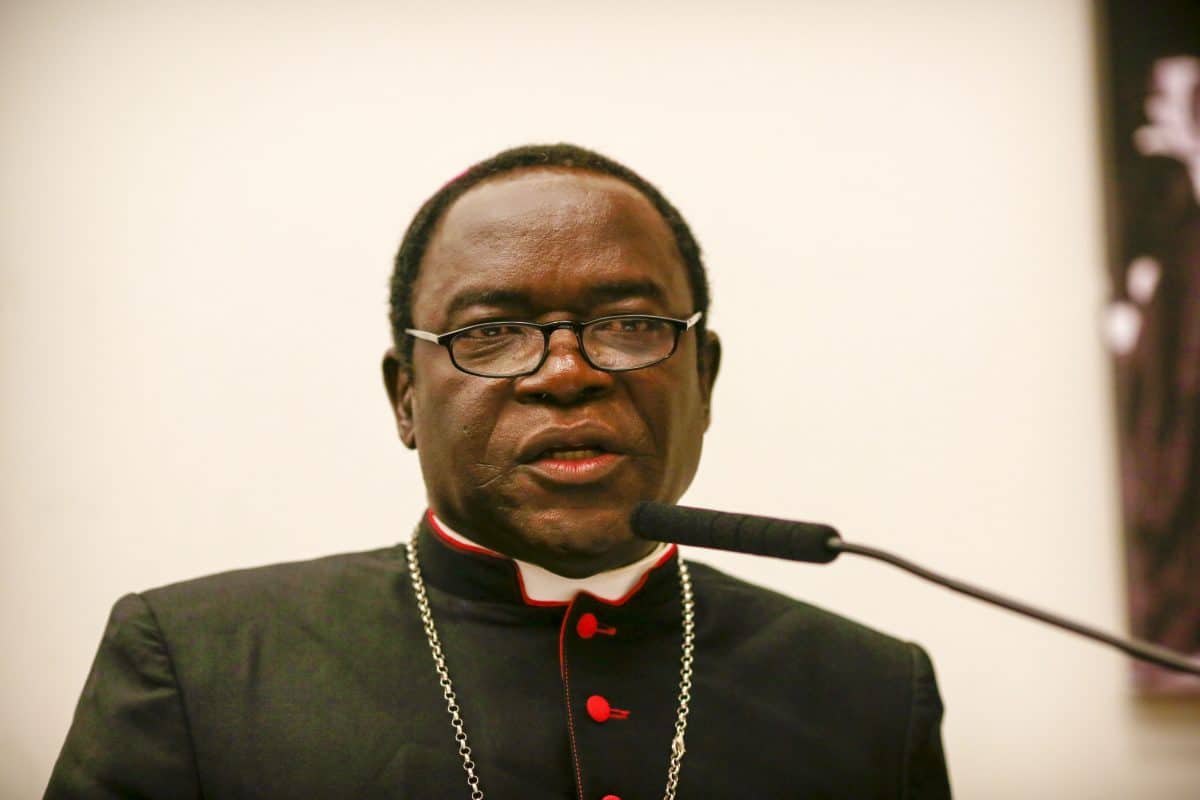
The Catholic Bishop of Sokoto Diocese, Matthew Kukah has admonished President Muhammadu Buhari-led administration for its handling of Nigeria’s security challenges.
The Bishop in his 2021 Easter Message titled Before our glory departs seen by Business Post claimed that, “Boko Haram terrorists are consuming the nation under President Muhammadu Buhari’s watch.”
He recalled that President Buhari had in 2015 described Boko Haram insurgents as a typical case of small fires causing large fires.
The statement reads in part, “On May 29, 2015, President Muhammadu Buhari, at his swearing-in as President of Nigeria, said: Boko Haram is a typical case of small fires causing large fires.
“Now, before his watch, the fires are consuming the nation, and in many instances, they indeed start small.
“In all, Nigeria’s troubles are growing by the day, but our hands must remain stretched out in supplication.”
Bishop Kukah also blamed those in power for the increasing cases of banditry, kidnapping, terrorism and armed robbery in the country, noting that insecurity keeps deteriorating because the ruling class pays more attention to rehabilitating bandits and kidnappers than the victims.
He expressed concerns over the killing of security operatives and the increased fear among citizens, saying: “Taunted by Boko Haram, ravaged by bandits, kidnappers, armed robbers, and other merchants of death across the nation, there is collective fear as to whether Nigeria’s glory is about to depart! Retired military and intelligence officers lament over what has become of their glorious profession as they watch the humiliation of our military personnel.
“Traumatised citizens are tortured daily by bandits. The nation has since become a massive killing field, as both government and the governed look on helplessly.
“A thick and suffocating cloud of desperation, despondency, desolation, gloom, and misery hangs in the hot air. We have no message and have no idea how long this will last.
“Our people seek solace and protection, but frustration and darkness threaten to drown them. Is their government on AWOL?,” he questioned.
Bishop Kukah full statement:
NIGERIA: BEFORE OUR GLORY DEPARTS
EASTER MESSAGE, April 4th 2021
By Matthew Hassan KUKAH, Catholic Bishop of Sokoto Diocese
If a religious leader is afraid to say what is right, what else can his silence mean but that he has taken flight? Hiding behind a wall of silence is like taking flight at the approach of the wolf.
Pope St. Gregory the Great (540–604 AD).
1: Easter Sunday is here again. But first, let us step back to Friday.
Good Friday was a Kairos moment for the beleaguered followers of Jesus, a defining moment that separated truth from falsehood and light from the darkness. At Golgotha, Jesus remained silent when the first thief taunted Him, and when bystanders scornfully asked him to demonstrate His divine powers by coming down from the cross. Everything about Christ–the prophecies of His birth, His life on earth, the miracles He performed, the sermons He preached, His torture and subsequent death–now hung languidly on a wooden cross on the hill of Golgotha. There were two types of persons at Golgotha: observers and waiters. The observers had two characteristics, derision and curiosity.
The waiters were characterised by hope, fear, and anxiety. Both sides watched and waited with bated breath. After His ignominious death, everything now depended on the third day. After all, He had said He would rise after three days (Mk. 9:31).
2: Let us pause and look back at the earlier events in the life of Jesus. Let us look briefly at the drama of the three temptations of Jesus by the devil as recorded by St. Matthew. First, the devil has a sense of perfect timing when he approached Jesus. He knows that Jesus had fasted for forty days and nights without food and was hungry (Mt. 4:2). Prove that you are the Son of God: turn these stones into bread, he said (Mt. 4:3). In response, Jesus says: Man will not live on bread alone (Mt. 4:4). Here, Jesus insists that there are higher goals for us to live or die for. The devil had hoped that like the dictators of today, Jesus could seduce the people with the bread of temporal power to gain cheap followership. No, Jesus says, you must set a higher moral goal.
Second, the devil asks Jesus to throw himself down the cliff. After all, he tells Jesus, the Angels of God will hold you (Mt. 4:6). Here, Jesus is called to take a shortcut to fame.
Why travel the hard road of suffering, sacrifice, exclusion, and powerlessness? Succumb to the seduction of the dreamer, the charmer, climb the actor’s shoulder. And then what next? Jesus rejects this temptation. Why? Because God demands more than theatrical performances from us.
Third, the devil says he will give Jesus all the kingdoms of the world (money, power, territory) only if He bows and acknowledges him (Mt. 4:8). Wow! No better evidence that the devil is a liar. He knows he has no kingdom and what he has is his kingdom of darkness and lies. It was in this same manner that the devil deceived Eve at the Garden of Eden by mixing a concoction of lies. At the base of this temptation is the seduction of pride and power. God knows that the day you eat it, your eyes will be opened and you will be like God (Gen. 3:5). Think of the many who have sold their souls for ephemeral power, those who have denied Jesus by action so as to ascend the throne of power. By His resistance to the devil, Jesus shows that following His path will require tremendous sacrifice.
3: It’s now Saturday night. The clock is ticking. Will He or will He not rise as He said?
No one knows what to expect. Will Jesus be exposed as a fraud? The Apostles are retired, desolate, forlorn, woebegone, and despondent. Has it all come to nothing? Have they lost everything? Has it all just been an illusion? Was Peter right when he asked what their reward would be, having forgone everything to follow Him? (Mt. 19:27) Has this been one wild goose chase? Where would they turn to now? The sun gradually sets on Saturday. The night has in its womb, a combination of the derision and curiosity binding the observers and waiters. A cloud of trepidation envelopes everywhere. The Roman authorities have built a concrete wall of military security around the grave. They sealed the stone and placed heavy military guard just in case, as they feared, His followers come and steal the body and pretend that He had risen (Mt. 27: 64).
4: Sunday morning would seal the fate of everyone on both sides.
As it turns out, the world forgot that: He who guards Israel neither slumbers nor sleeps (Ps. 121:4). Before daybreak, a woman, Mary Magdalene, visits the grave to perform a simple ritual. To her shock, she finds an empty tomb! (Jn. 20:1). Slowly, painfully, unbelievably, the words go out: They have taken the body of the Lord away and we do not know where they have put Him (Jn. 20:2). They will soon realise that, indeed, His resurrection is only a fulfilment of what He had promised during His lifetime. The devil has been defeated, and the Lord has the final word. Truth has drowned falsehood. Light has overcome darkness. Good has triumphed over evil. Life has defeated death.
5: The Roman soldiers who stood guard over the grave were like dead men (Mt. 28:3).
However, rather than face punishment, the Roman authorities offered to bribe them and asked them to lie that the Lord’s body had been stolen while they were sleeping! (Mt. 28:13). It is too late: The Lord is risen indeed! World history succumbs to the power of the Creator of heaven and earth. Time and space have merged. History’s calendar is split into two. Henceforth, everything will be marked by whether it happened before or after the resurrection of Jesus Christ! This is what Christians celebrate today. But what is the implication of all this for us in Nigeria today?
6: Nigeria’s current predicament reminds me of Israel’s situation that led to the death of Eli, the great High Priest of Israel. Israel’s defeat in the hands of the Philistines led to the death of 30,000 soldiers. The two sons of the 98-year-old priest – Hophni and Phinehas – died in the battle. Eli’s two sons had foolishly carried the Ark of the Lord into the battlefield for protection, only for it to become a trophy for the victorious Philistines.
The high priest, Eli, collapsed and died after hearing this horrible news. Elsewhere, on hearing about the death of her husband, her father- in-law, and the loss of the Ark, Eli’s daughter-in-law went into premature labour. She was delivered of a baby boy–a call for great celebration in Israel! Strangely, she responded by naming her newborn son “Ichabod,” meaning, The glory has departed!
7: Taunted by Boko Haram, ravaged by bandits, kidnappers, armed robbers, and other merchants of death across the nation, there is collective fear as to whether Nigeria’s glory is about to depart! Retired military and intelligence officers lament over what has become of their glorious profession as they watch the humiliation of our military personnel. Traumatised citizens are tortured daily by bandits. The nation has since become a massive killing field, as both government and the governed look on helplessly. A thick and suffocating cloud of desperation, despondency, desolation, gloom, and misery hangs in the hot air. We have no message and have no idea how long this will last. Our people seek solace and protection, but frustration and darkness threaten to drown them. Is their government on AWOL?
8: Two weeks ago, I came across a video in which a very frustrated Muslim cleric, addressing a Muslim audience, lamented: If you killed 200 chickens in the farm of any of the big farmers, you will be dealt with. But today, we are being killed. It is your fault. On the day of elections, you say, it is Jihad! Christians will take over Nigeria! Ok, the Christians did not take Nigeria. It has been left in the hands of those who sit and see us being killed. If we are killed, the head says, God forbid! He was not elected to say God forbid. This imaginary jihad won the elections now where are the jihadists? The lesson here is that politicians will use religion to mobilise for elections, but they cannot use it to govern.
9: The Catholic Bishops’ Conference of Nigeria weighed in with a strong statement on February 23, 2021, titled, We Must Pull Back from the Brink of Collapse. Part of the statement read: The very survival of the nation is at stake. The nation is pulling apart.
Widespread serious insecurity for long unaddressed has left the sad and dangerous impressions that those who have assumed the duty and authority to secure the nation are either unable or worse, unwilling to take up the responsibilities to their office.
Patience is running out. Sadly, all of these warnings are still falling on deaf ears.
10: It may sound strange, but for us Christians, the celebration of the resurrection of Christ is the greatest assurance that all these will pass away. This is not a call for us to simply sit on our hands or believe we can pray our crises away. As pointed out above, the sufferings of Jesus and His Cross provide us with the perfect mirror of our hope. St. Paul reminds us: We are hard-pressed on all sides, but not crushed; perplexed, but not in despair; persecuted but not forsaken, struck down but not destroyed. We always carry around in our body the death of Jesus, so that the life of Jesus may also be revealed in our body (2 Cor. 4:9). These are the hallmarks of our faith. We must remain steadfast.
11: I appeal to Christians to continue in the spirit of the Gospel, the teachings of our Lord and Saviour, Jesus Christ. St. Paul says: Though He was God, he humbled himself, became man and remained obedient up till death (Phil. 2:6ff). Following in His steps, we Christians have lived through the life of martyrdom. Jesus taught us how to pray for our enemies (Mt. 5:44). Although His teachings are hard (Jn. 6:60), it was not the guns of a powerful army that brought down the walls of Jericho. The prayers of the priests did (Jos. 6:20). Jesus defied the temptations of coming down from the Cross. He knew there was a higher truth deferred. It was fulfilled on Easter day. No matter the provocation, we must arm ourselves with the weapons of truth, the Word, the Spirit, and love. At the heart of Christianity is the Truth and Love.
12: Today, many of us erroneously speak about the trial of Jesus by Pilate on Good Friday. In reality, it was Pilate who stood trial, not Jesus. Pilate sat on a throne to judge what he himself was ignorant of–the truth. Chained by ignorance, the powerful often grope around a twilight zone between truth and lies. At the mention of the word “Truth” by Jesus, Pilate was jolted from his chair. In trepidation and apprehension, the mighty man says, Truth, what is that? (Jn. 18:38). Pilate was looking for the Truth but did not recognise it when it stood right before him. In every age, the seduction of raw power tends to blind the Pilates of this world to the truth.
13: When governments face legitimacy crises, they fall back on serving the sour broth of propaganda, half-truths, and outright lies. They manufacture consent by creating imaginary enemies, setting citizens against one another by deploying religion, ethnicity, region, and other platforms while appealing to the base emotions of patriotism. We forget the reality that without truth, the throne of power often turns into a cage, and the occupant is turned into a prisoner. In reality, the truth needs neither a judge nor a witness. The truth is its own judge and witness. Without the truth, as the old song says, all else is sinking sand!
14: Recently, according to the World Happiness Report, we are one of the unhappiest nations in the world. This is unacceptable but understandable. Our clay-footed fight against corruption has not moved the needle of transparency forward. Of course, being the poverty capital of the world comes with its rewards such as banditry, violence, death, sorrow, blood, poverty, misery, and tears. Our cup of sorrow is permanently full; hence the exponential rise in the frustration curve across the country.
15: Sadly, human life is haemorrhaging so badly in Nigeria, but the greatest tragedy is the death of empathy from those in power. Mysteriously, the government is investing billions of naira in rehabilitating so-called Boko Haram repentant members and their other partners in crime in the belief that they want to turn a new leaf. These criminals have waged war against their country, murdered thousands of citizens, destroyed infrastructure and rendered entire families permanently displaced and dislocated. Why should rehabilitating the perpetrator be more important than bringing succour to the victims?
16: When kidnapped or killed, victims and their families are left to their wits. They cry alone, bury their loved ones alone. And our government expects us to be patriotic? The victims of violence need empathy, which the dictionary defines as the ability to understand and share the feelings of the other. A critical deficit of empathy on the side of the government makes healing almost impossible for the victims. We have not heard anything about a rehabilitation programme for the thousands of schoolchildren who have been victims of abduction. We seem to assume that their return to their schools is sufficient. Left unaddressed, the traumatic effect of their horrors will haunt them for a long time. Tomorrow’s parents, military generals, top security men and women, governors, senators, and ministers will come from today’s pool of traumatised children.
The security quandary is the greatest indictment of this government.
17: There is a time for everything under the sun (Eccl. 3:1). Perhaps, we can paraphrase this by saying there is a time for war and a time for peace. There is a time for poverty and a time for wealth. There is a time for stealing and a time for returning what has been stolen. There is a time for politics and a time for governance. There is a time for tethering to the brink of chaos and a time for recovering the soul of a nation.
There is a time for the collapse of morality and a time for moral recovery. There is a time for leadership and a time for statesmanship. There is a time for losing greatness and a time for achieving greatness. Nigeria must now ask itself: What is left of our glory? Where are the values that held us together?
18: On our national Coat of Arms, we profess our motto to be: Unity and Faith, Peace and Progress. But let us ask ourselves: Is Nigeria united today? Do citizens still have faith in the country? Where are the signs of peace or progress? Today, before our very eyes, these words have been emptied of their flavour and have lost their resonance and capacity to summon our citizens to patriotism. St Augustine once said: Remove justice, and what are kingdoms but gangs of criminals on a large scale? He further said that: A gang is a group of men (and women) under the command of a leader, bound by a compact of association, in which the plunder is divided according to an agreed convention. This is the fate of our nation today. Day by day, Nigeria drifts irreversibly into a dark tunnel. Things are falling apart with unnerving rapidity because those who govern have only a pact to protect their interests. Politics is merely its conveyor belt of ambition. Nigeria has a date with destiny. If we do not turn around, The axe is already laid to the roots of the tree (Mt. 3:10).
19: With some chance, we might pull through this, but it is getting tougher each passing day. Does anyone remember where we started and how we got here? On May 29, 2015, President Muhammadu Buhari, at his swearing-in as President of Nigeria, said: Boko Haram is a typical case of small fires causing large fires. Now, before his watch, the fires are consuming the nation, and in many instances, they indeed start small. The rumblings over the wearing of a hijab in Kwara State suggest that we have not seen the end of individuals sacrificing national cohesion to feed their personal ambitions by starting small fires. Most politicians hardly think through the long-term effects of these pyrrhic victories of using religion. What started as a small fire with the adoption of Sharia in Zamfara in 1999, spread across the northern states. Ordinary people broke into ecstatic joy. Today, what has become of the north? What are the lessons?
20: In all, Nigeria’s troubles are growing by the day, but our hands must remain stretched out in supplication. Prophet Isaiah’s words should give us hope and consolation. He said: When you pass through the waters, I will be with you; and when you pass through the rivers, they will not sweep over you. When you walk through the fire, you will not be burned; the flames will not set you ablaze (Isaiah 43:2). We shall lift our eyes to the mountain because we know that our help shall come from the Lord (Ps. 121:1). As Christians, we do not trust in God because we cannot revenge. We do not revenge because we trust in God. The Lord will fight for you; you need only be still (Ex. 14:14). Just as the chains of death could not hold Jesus in the grave, so shall we triumph. Break into shouts of joy together, O ruins of Jerusalem; for the Lord has consoled his people, he has redeemed Jerusalem (Isaiah 52:9). Have hope and be cheerful (Rom. 12:12).




By Adedapo Adesanya
The Nigerian Maritime Administration and Safety Agency (NIMASA) has reaffirmed its commitment to accountability, improved performance, and sustained growth in the maritime sector, as the country recorded zero piracy incidents on its territorial waters for the fourth consecutive year.
This came with the signing of its 2026 Sectoral Performance Bond, overseen by the Minister of Marine and Blue Economy, Mr Adegboyega Oyetola.
According to the Director-General of NIMASA, Mr Dayo Mobereola, the Performance Bond is a key governance instrument for tracking deliverables, strengthening institutional accountability, and aligning the Agency’s operations with national priorities.
He stated that NIMASA’s ongoing reforms are driven by purposeful leadership and strategic ministerial support, adding that the Agency remains committed to delivering on its mandate in line with the Renewed Hope Agenda of President Bola Tinubu’s administration.
On maritime security, Mobereola disclosed that Nigeria has recorded zero piracy incidents in its territorial waters over the past four years, attributing the milestone to enhanced surveillance systems and improved inter-agency collaboration.
He further revealed that the Agency is at an advanced stage of automating its ship registry processes, a move expected to improve efficiency, reduce delays, and boost Nigeria’s competitiveness in global maritime business.
Providing an update on the Cabotage Vessel Financing Fund (CVFF), the NIMASA boss said more than 60 applications have been received since the portal was launched in January 2026, assuring that the disbursement process will be transparent and strictly monitored.
Mr Mobereola also noted that Nigeria has deposited three conventions with the International Maritime Organisation (IMO), while three others are awaiting Federal Executive Council approval, underscoring the country’s commitment to international maritime standards.
Speaking further, he noted that Nigeria’s election into category C at the IMO Council in November 2025 restored its voice in global maritime governance and strengthened its leadership role in Africa.
In his remarks, Minister Oyetola reiterated the federal government’s commitment to using the maritime sector to drive economic diversification, job creation, and foreign exchange earnings.
He stressed that the Performance Bonds are binding commitments that will be closely monitored, declaring that “accountability is not optional.”

By Adedapo Adesanya
The Federal Competition and Consumer Protection Commission (FCCPC) says it has expanded its market surveillance and product testing to electrical and electronic products to ensure strict regulatory compliance.
The organisation also said it was extending market surveillance to cables and other building materials due to significant product safety issues regarding collapsed buildings.
According to the Director of the Surveillance and Investigations Department at FCCPC, Mrs Boladale Adeyinka, there are products that did not meet basic safety and quality standards in circulation.
She noted that where business conduct raises concerns about consumer safety, such matters would be investigated.
Mrs Adeyinka said the commission was coordinating with various sector regulators to address weaknesses that permitted unsafe products to enter or remain in the market.
”When a product presents a risk, the law requires prompt collective action, including product withdrawal, product recall, and proper notice to the consumer.
“If you are producing products in Nigeria and you discover there is a safety concern or likely to be a safety concern with respect to products that you have rolled out in the market, you have an obligation to withdraw and recall them.
“You also give notice to consumers who have purchased those products to be able to make the remedial actions, particularly with products that may significantly affect the lives of consumers of those products.”
“These are not optional expectations but legal requirements under our law. They are statutory duties to ensure product safety and consumer welfare in Nigeria.
“Failure to act responsibly by recalling, withdrawing, and issuing consumer notice will attract strict and stiff regulatory response from the commission,” she added.
The official noted that, “Compliance is not a favour to the regulator,” she stated.
Mrs Adeyinka also said FCCPC, headed by Mr Tunji Bello, remained committed to effectively monitoring and enforcing compliance across the market.

By Aduragbemi Omiyale
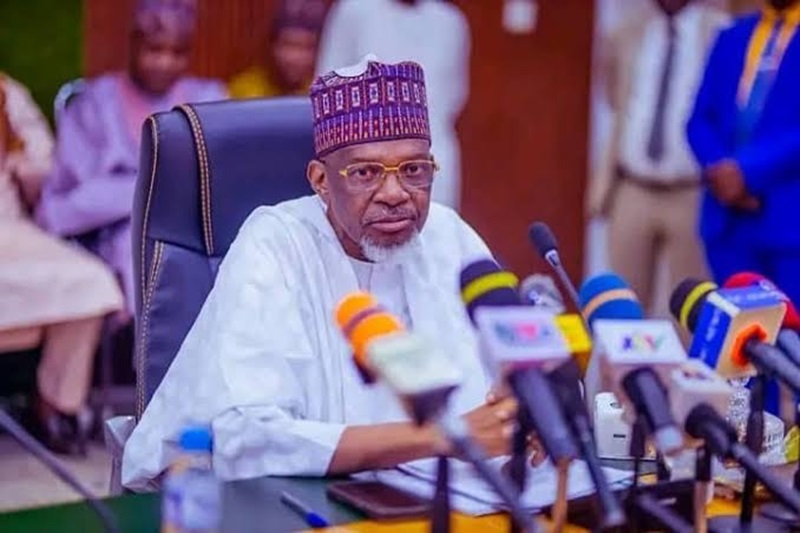
The Speaker of the Kebbi State House of Assembly, Mr Muhammad Usman Zuru, has died in an Egyptian hospital.
He was said to have breathed his last on Monday night at the North African healthcare facility.
Details surrounding his death last night have yet to be made public, but the Special Adviser to Governor Nasir Idris on Communication and Strategy, Mr Idris Zuru, said, “We are still gathering full details surrounding his passing. The government will make an official statement and announce burial arrangements in consultation with the family.”
“The death of the Speaker, Muhammad Usman Zuru, came to us as a rude shock. It is a painful loss not only to Kebbi State but to the entire nation,” the media aide further stated.
It was gathered that the late Speaker travelled to Egypt to receive treatment for an undisclosed illness.
Before his passing, the lawmaker represented Zuru Constituency in the Kebbi State House of Assembly.
-
 Feature/OPED6 years ago
Davos was Different this year
-
Travel/Tourism10 years ago
Lagos Seals Western Lodge Hotel In Ikorodu
-

 Showbiz3 years ago
Estranged Lover Releases Videos of Empress Njamah Bathing
-
 Banking8 years ago
Sort Codes of GTBank Branches in Nigeria
-

 Economy3 years ago
Subsidy Removal: CNG at N130 Per Litre Cheaper Than Petrol—IPMAN
-

 Banking3 years ago
Sort Codes of UBA Branches in Nigeria
-

 Banking3 years ago
First Bank Announces Planned Downtime
-

 Sports3 years ago
Highest Paid Nigerian Footballer – How Much Do Nigerian Footballers Earn