
General
CNPP Alleges Plot to Install Interim Government

By Dipo Olowookere
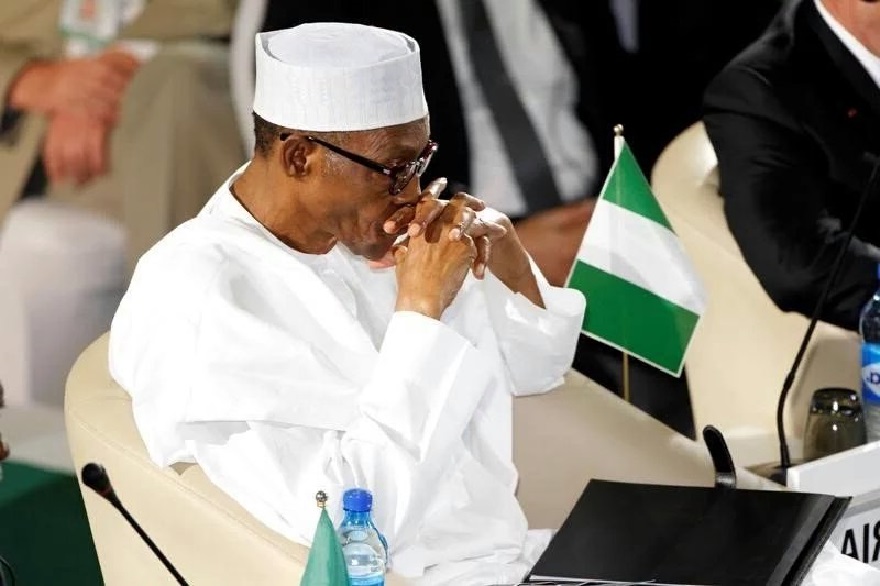
The Conference of Nigeria Political Parties (CNPP) has described inconsistences associated with the preparations for the 2019 generations as supervised by the Independent National Electoral Commission (INEC) as “part of a deliberate plot by anti-democratic forces to derail Nigerian democracy and enthrone an interim government in country.
The group made this allegation in reaction to the postponement of the February 16, 2019 presidential and National Assembly polls by INEC this morning.
In a statement by its Secretary General, Mr Willy Ezugwu, the CNPP wondered why “an election that took the electoral umpire four years to prepare for would be postponed at eleventh hour despite assurances by the commission that it was ready for the elections.
“Before now, there has been subtle mussing about plans by some forces to enthrone an interim government on the country and it is becoming obvious that such forces have thrown their evil spanners into the democratic electoral process to have a reason to carry out their clandestine agenda.
“These forces, we suspect, are the same that have carried out systematic arson that led to the destruction of electoral materials and Permanent Voter’s Cards (PVCs) at different parts of the country few days to the election and the killings in Kaduna State on the eve of the election.
“As an umbrella body of all registered political parties and associations in the country, we compelled to alert the nation and urge well-meaning Nigerians and lovers of democracy around the world that the postponement of the election for February 16, 2019 may not have happened as a mere logistics problems as adduced by INEC,” the CNPP scribe stated.
Mr Ezugwu added that, “Even when the rumour of plans to postpone the polls strongly permeated the air days to the planned election date, the electoral umpire reiterated its readiness to go ahead with the exercise as scheduled, we are shocked that INEC suddenly postponed the election about five hours to time of commencement.
“The ruling party and the INEC should be held accountable should our fears come to materialization as there might be another postponement of the rescheduled February 23 national elections.
“We therefore call on the international communities and all election observers to be on the lookout as discovery of already thump-printed ballot papers and written result summary for an election that was yet to take place are part of efforts to rig and cause confusion and prepare grounds for an interim government to be foisted on the country.
“The CNPP and other democratic watchdogs will continue to painstaking interrogate the electoral process with a view to exposing manipulations and electoral fraud capable of marring our hard-earned democracy.”



By Adedapo Adesanya
The Federal Competition and Consumer Protection Commission (FCCPC) has tasked manufacturers, importers and service providers to prioritise product safety, warning that substandard goods threaten consumer trust and weaken Nigeria’s market system.
The commission issued the warning on Wednesday in Abuja on the back of the 2026 World Consumer Rights Day celebration and the 9th National Consumers Contest Awards, where regulators, industry stakeholders and consumer advocates gathered to review the state of consumer protection in the country.
The chief executive of the FCCPC, Mr Tunji Bello, said this year’s theme, Safe Products, Confident Consumers, highlights the direct connection between product safety and economic stability, adding that, “Where safety is uncertain, confidence declines. And where confidence declines, markets become weaker, less efficient, and less trustworthy.”
He expressed concern over persistent violations across sectors, noting that many products still fail to meet basic safety and quality benchmarks.
According to him, infractions include mislabelled goods, products that do not comply with minimum safety standards and, in some cases, deliberate disregard for regulatory requirements.
Mr Bello warned that such practices expose consumers to avoidable risks while creating unfair competition for businesses that comply with established rules.
Linking consumer protection to the federal government’s ongoing economic reforms under President Bola Ahmed Tinubu, Bello said strengthening regulatory compliance is essential to building transparent, investment-friendly markets.
“Consumer protection is a key part of that effort. Safe, reliable, and transparent markets support sustainable growth,” he said.
He reiterated that the Federal Competition and Consumer Protection Act (2018) guarantees consumers the right to safe, durable and fit-for-purpose products, stressing that businesses must promptly address safety concerns through product recalls, withdrawals and proper consumer notification.
The FCCPC boss warned that failure to comply, he warned, attracts regulatory sanctions.
Mr Bello disclosed that the FCCPC has expanded market surveillance operations, enhanced product testing capacity and intensified enforcement actions in priority sectors. He added that the Commission is strengthening collaboration with regulatory partners, including the Standards Organisation of Nigeria (SON) and the National Agency for Food and Drug Administration and Control (NAFDAC), to close enforcement gaps that allow unsafe products into the market.
Beyond enforcement measures, the FCCPC boss underscored the importance of consumer education, highlighting the role of the National Young Consumers Contest in promoting awareness and responsible purchasing behaviour among young Nigerians.
“Consumer protection is not only about enforcement. It is also about education, awareness, critical thinking, and responsible engagement,” Mr Bello said.
While clarifying that the FCCPC does not fix prices, he noted that transparency, fairness and adherence to safety standards remain fundamental to efficient market operations. He urged consumers to remain vigilant by examining products carefully and reporting unsafe or substandard goods.
The event drew participation from regulatory agencies, trade associations and media organisations, reinforcing calls for coordinated action to strengthen accountability across Nigeria’s marketplace.
“Safe and reliable markets depend on responsible business conduct, effective regulation, and informed consumer participation. That standard must be upheld consistently,” Mr Bello said.

By Modupe Gbadeyanka
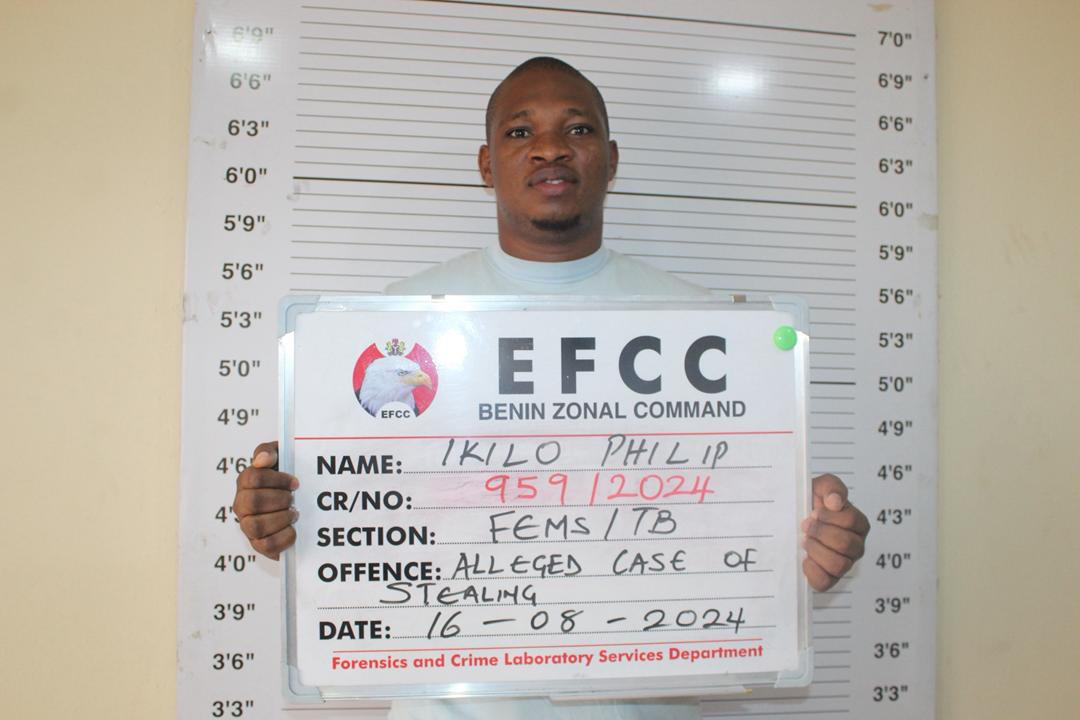
One Mr Osamudiamen Philip Ikilo has been handed a two-year imprisonment for a Bitcoin fraud to the tune of $19,400.
He was found guilty and convicted of the crime by Justice W.I. Aziegbemhin of the Edo State High Court sitting in Benin City, the state capital.
Delivering the judgment on Monday, March 23, 2026, the judge sentenced Mr Ikilo to two years’ imprisonment without an option of fine.
The convict got into trouble when he offered to assist his victim, Ms Cynthia Imade Alile, to convert her 0.52092582 Bitcoin worth $19,400, but failed to remit the money after the conversion.
Ms Alile petitioned the Economic and Financial Crimes Commission (EFCC), which looked into the matter and brought him before the court for prosecution on a one-count charge of stealing.
“That you Osamudiamen Philip Ikilo (m) sometime in March 2024 within the jurisdiction of this court did steal Bitcoin worth the sum of $19,400 belonging to one Cynthia Imade Alile by fraudulently converting the said sum to your use, and thereby committed an offence contrary to Section 287 of the Criminal Law of Edo State Law 2022 and punishable under Section 294 of the same Law,” the charge read.
When the charge was read to him during arraignment by the EFCC, the defendant pleaded not guilty, setting the stage for trial.
In the course of the trial, prosecution counsel, A. S. Bala-Ribah, called two witnesses and also tendered documents which were admitted by the court. On his part, the defendant called two witnesses, including himself.

By Adedapo Adesanya
Justice Emeka Nwite of the Federal High Court in Abuja has affirmed the final forfeiture of $13 million linked to a Lagos socialite, Ms Aisha Achimugu, and her company, Oceangate Engineering Oil & Gas Limited, to the federal government of Nigeria.
Delivering judgment, Justice Nwite held that the Economic and Financial Crimes Commission (EFCC) established that the foreign currency was proceeds of fraud and unlawful activities.
The judge further held that Oceangate Engineering Oil & Gas Limited failed to establish how it came by the money, saying the anti-money laundering agency satisfied all requirements for the funds to be classified as proceeds of fraud and to be forfeited to the appropriate authority.
He dismissed the claims that the $13 million was gifts received into the Oceangate Engineering Company by Ms Achimugu, adding that the woman never came to the court to show cause why the huge amount of money should not be forfeited to the government.
He held that no single person who gave the monetary gift to Aisha Achimugu to the tune of $13 million was called to testify.
The judge further held that the burden to establish genuine ownership of the money was not established by the applicant to counter the claims of the anti- graft agency that the money was the proceeds of fraud based on its investigation.
According to the judge, Oceangate Engineering Company did not show the business it undertook that fetched it the money, nor did it show whether any payment was made to it by any of its customers.
Justice Nwite had, on August 22, 2025, granted the anti-graft agency’s motion ex parte for an interim order forfeiting the sum of $13 million linked to Oceangate Ltd to the Federal Government over allegations that the fund was proceeds of unlawful activity.
The judge had then directed the commission to publish the order in a national daily for interested people to show cause within 14 days why the fund should not be permanently forfeited to the federal government.











-
 Feature/OPED6 years ago
Davos was Different this year
-
Travel/Tourism10 years ago
Lagos Seals Western Lodge Hotel In Ikorodu
-

 Showbiz3 years ago
Estranged Lover Releases Videos of Empress Njamah Bathing
-
 Banking8 years ago
Sort Codes of GTBank Branches in Nigeria
-

 Economy3 years ago
Subsidy Removal: CNG at N130 Per Litre Cheaper Than Petrol—IPMAN
-

 Banking3 years ago
Sort Codes of UBA Branches in Nigeria
-

 Banking3 years ago
First Bank Announces Planned Downtime
-

 Sports3 years ago
Highest Paid Nigerian Footballer – How Much Do Nigerian Footballers Earn