
General
Court to Rule on Continuation of Emefiele’s Case Wednesday

By Adedapo Adesanya
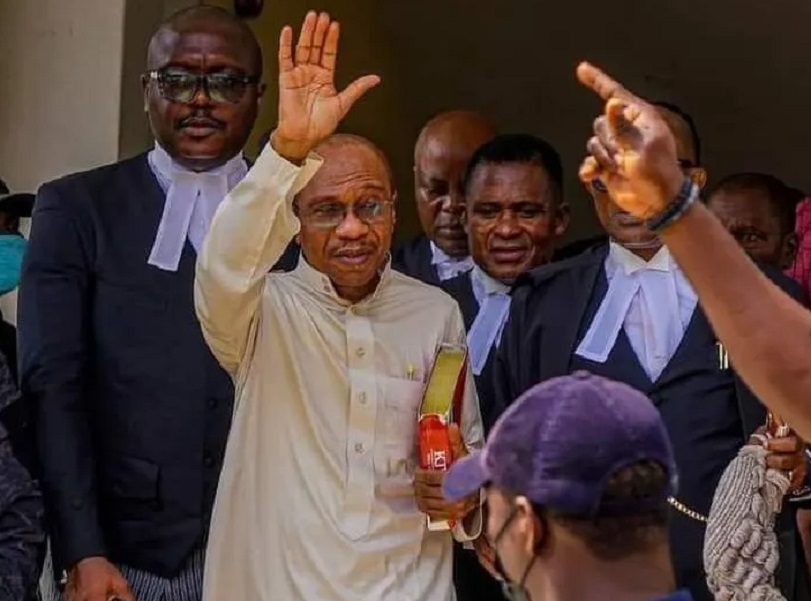
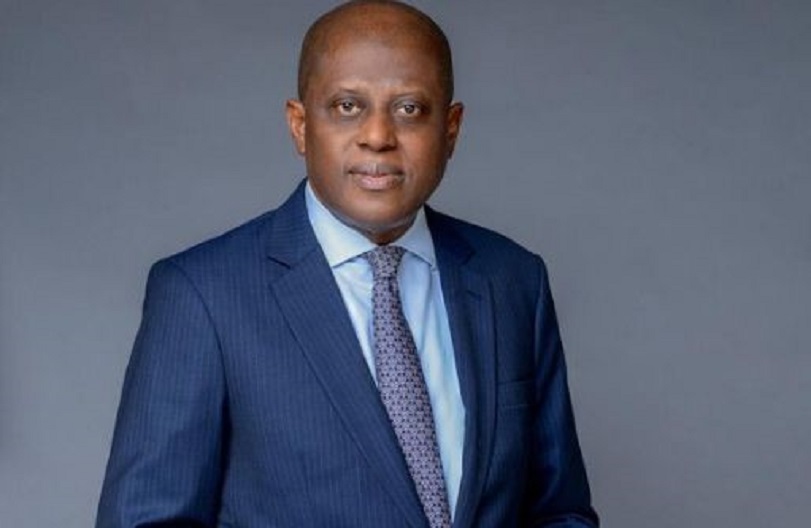
The embattled former Governor of the Central Bank of Nigeria (CBN), Mr Godwin Emefiele, who is standing trial on a 19-count bordering on receiving gratification and corrupt demand, will know whether or not his case will continue on Wednesday, February 26.
A Special Offences Court sitting in Ikeja, Lagos under Justice Rahman Oshodi adjourned for ruling after Mr Emefiele’s counsel, Mr Olalekan Ojo (SAN), asked the judge to recuse himself from the trial, citing bias.
Another Senior Advocate of Nigeria, Mr Kazeem Gbadamosi representing Mr Emefiele’s co-defendant, Mr Henry Omoile, also made a similar request.
Mr Emefiele is being tried by the Economic and Financial Crimes Commission (EFCC) for the charges alongside his co-defendant, Mr Omoile, who is facing a three-count charge bordering on unlawful acceptance of gifts by agents.
At the proceedings on Monday, the EFCC lead counsel, Mr Rotimi Oyedepo (SAN), concluded the evidence-in-chief of a former personal assistant to the CBN governor, Mr Adetola John.
Mr Oyedepo reminded the witness of his earlier testimony in November 2024, where he stated that he received the sum of $400,000 cash from the former director of the ICT Department, Mr John Ayoh, and handed it over to Mr Emefiele in his office.
The witness, Mr Adetola, at the time, had also said that he managed office correspondence and visitors of the former CBN governor in Lagos while one Mr Eric Odoh, the personal assistant to the CBN governor in Abuja did the same in the FCT office of the CBN.
Mr Oyedepo also asked the witness to confirm a WhatsApp message from Mr Odoh which was printed from his phone by the EFCC investigators.
The defence team objected to this line of questioning on the grounds that the document was solely meant for identification and was not an exhibit before the court. They also argued that the witness could not read or speak into the document.
Justice Oshodi overruled the defence team and allowed the witness to read from the document marked for identification.
The judge cited Section 224 of the Evidence Act, which permits leading questions concerning introductory facts or undisputed matters
After this procedure, the lead defence counsel, Mr Ojo, expressed dissatisfaction with the court’s decision. Rather than commence their cross-examination of the witness, through oral applications, they unanimously asked the court to recuse itself on the allegation of bias.
Mr Ojo argued that by the judge’s ruling, the court‘s decision was that the witness had already proven that the $400,000 collected by Mr Adetola was delivered.
He also contended that this premature conclusion made it impossible for the defence to cross-examine the witness fairly.
He, then, requested that Justice Oshodi recuse himself from further hearings.
In his response, the EFCC counsel, Mr Oyedepo opposed their applications, saying it is a form of delay tactics.
Justice Oshodi adjourned till February 26 to rule on the submissions.
Earlier in the proceedings, Emefiele’s counsel had informed the judge of another application seeking permission to allow the former CBN governor to appeal the court’s ruling delivered on January 8, 2025, assuming jurisdiction to hear the case.





By Dipo Olowookere
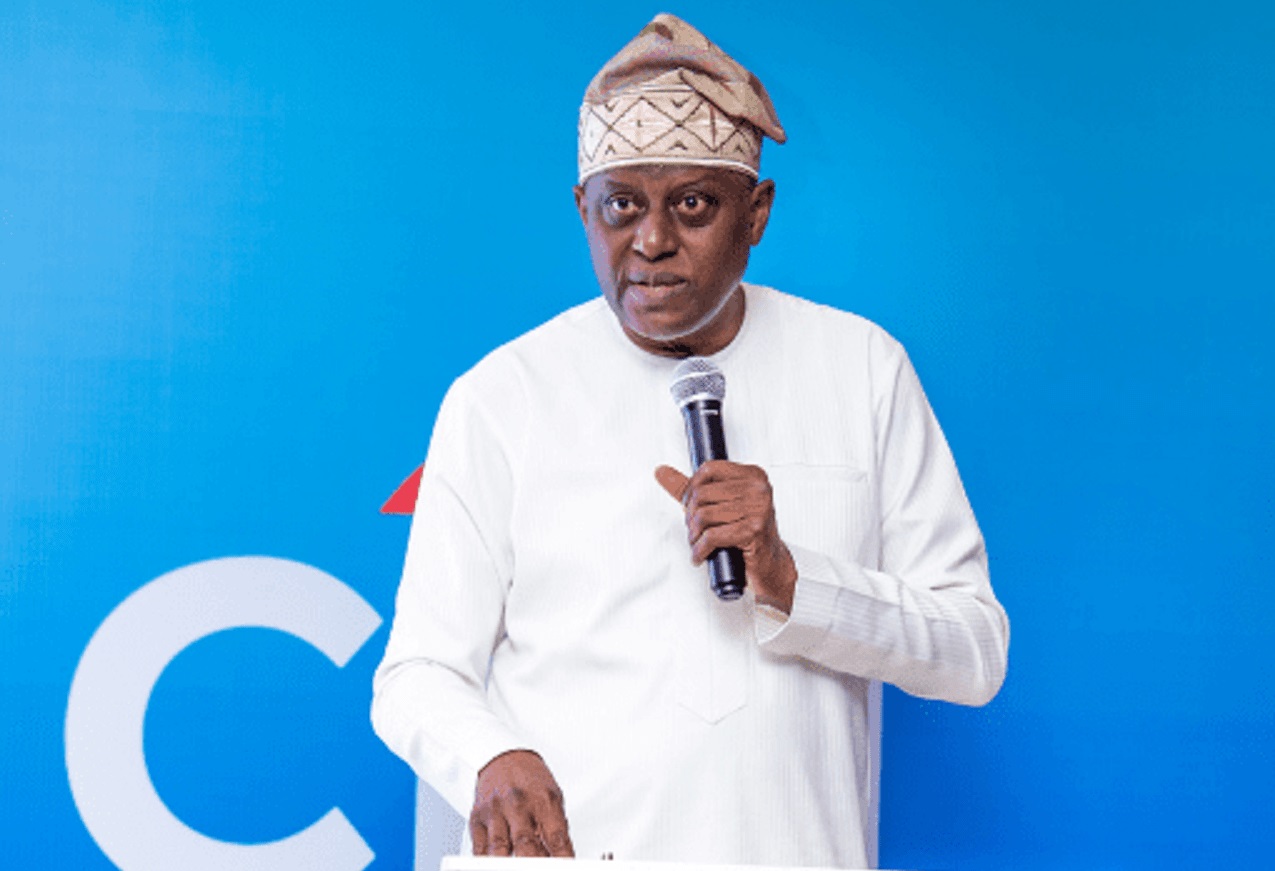
The need for Africa to protect itself from many external shocks not of its making has again been emphasised by the African Development Bank (AfDB), the African Union Commission (AUC), the United Nations Development Programme (UNDP), and the UN Economic Commission for Africa (UNECA).
On the margins of the 58th session of the Economic Commission for Africa in Tangier, Morocco, the continent was tasked to strengthen regional integration, accelerate African-led financial solutions, and invest decisively in energy, food, and trade resilience so as to move from vulnerability to preparedness.
The meeting focused on the spikes in energy, food and fertiliser prices caused by the ongoing conflict in the Middle East.
The United States and Israel launched airstrikes on Iran in February 2026, and since then, global oil prices have surged by more than 50 per cent as of late March. Twenty-nine currencies in Africa have weakened, raising the cost of servicing external debt and importing food, fuel, and fertiliser.
Disruptions linked to Gulf energy supplies limit access to ammonia and urea during the critical March–May planting season. This will affect agricultural production, compounding risks of crisis and emergency levels of food insecurity, especially for low‑income households and import‑dependent economies.
To address these issues, the quartet has asked African leaders to, in the short-term, stabilise fuel, food, and fertiliser supply, and execute medium‑term reforms to strengthen energy security, targeted social protection, and regional trade under the African Continental Free Trade Area (AfCFTA).
They also tasked leaders to come up with long‑term structural reforms towards stronger domestic resource mobilisation and African financial safety nets, including accelerated implementation of the African Financing Stability Mechanism.
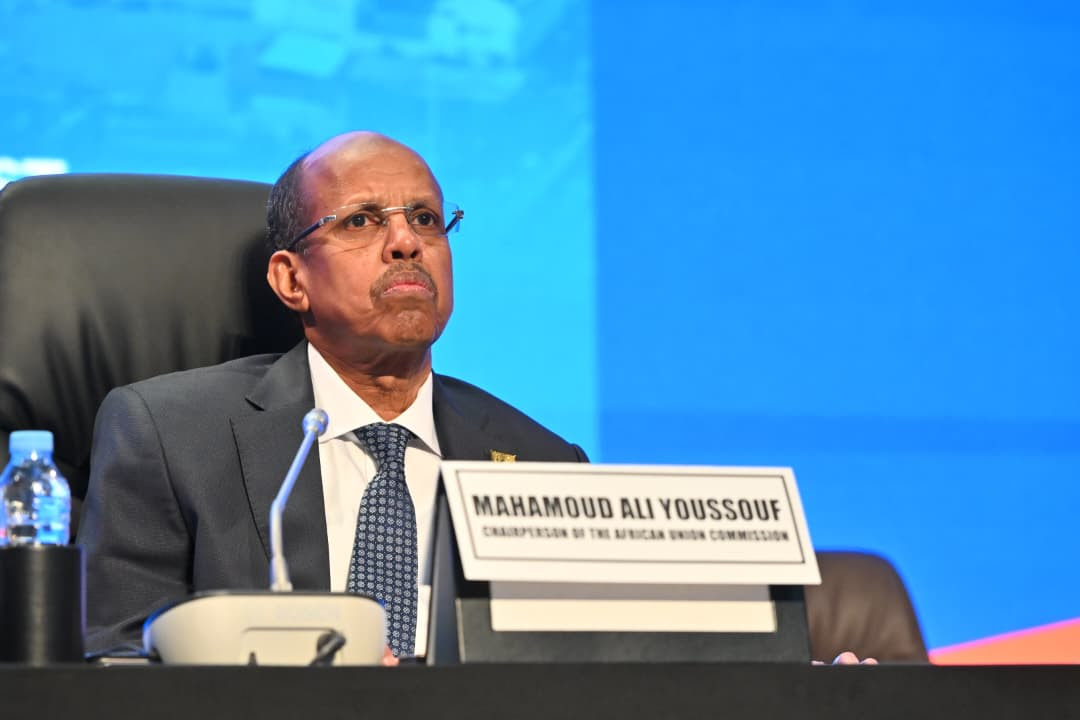
“Continued escalation of the conflict worsens global instability, with serious implications for energy markets, food security, and economic resilience, particularly in Africa, where economic pressures remain acute,” the chairperson of AUC, Mr Mahmoud Ali Youssouf, said.
Also commenting, the UN Under-Secretary-General and Executive Secretary of UNECA, Mr Claver Gatete, said, “Africa has been hit by too many external shocks not of its making. Crises like this reinforce why Africa must finance more of its own future and strengthen regional solutions that build resilience before the next shock hits.”
On her part, the UN Assistant Secretary‑General and Director of UNDP’s Regional Bureau for Africa, Ms Ahunna Eziakonwa, submitted that, “With the right mix of policy choices, financing tools, and political resolve, Africa can weather this shock and emerge more resilient, more self-reliant, and better positioned to shape its own economic future.”
“As global crises multiply, Africa’s response must evolve from managing shocks to fostering resilience. African institutions and development partners need to act swiftly and in concert, leveraging their comparative advantages to cushion short-term shocks while laying the foundations for long-term resilience,” the president of AfDB, Mr Sidi Ould Tah, stated.
By Adedapo Adesanya
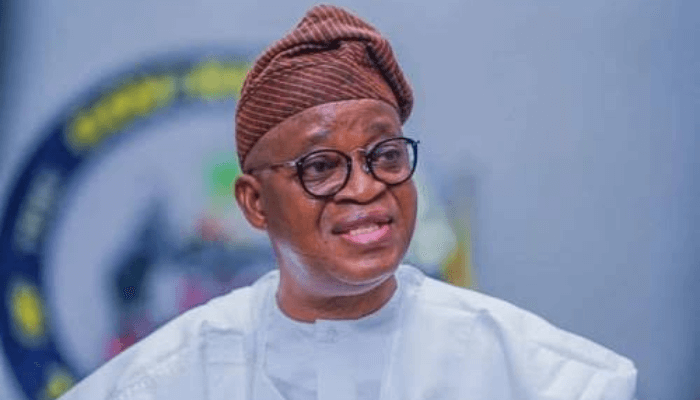
The Minister of Marine and Blue Economy, Mr Adegboyega Oyetola, has issued a strong warning to heads of agencies under the ministry, demanding strict accountability and measurable results.
Mr Oyetola issued the warning during the signing of performance bonds with heads of maritime agencies at the Ministerial Management Retreat, held alongside the 2026 first-quarter stakeholders’ engagement in Lagos on Thursday, where he emphasised the need for performance-driven governance.
“Let me emphasise that all Departments and Agencies under the Ministry must remain firmly focused on delivering tangible results,” he said.
In a statement by Mr Bolaji Akinola, Special Adviser to the Minister, Mr Oyetola noted that performance bonds to be signed during the retreat are binding commitments that will be closely monitored and rigorously evaluated.
“These are not ceremonial documents. They are binding commitments. Accountability will not be optional,” the Minister declared.
Mr Oyetola reiterated the need for data-driven decision-making, robust monitoring and evaluation frameworks, and alignment with the Ministry’s strategic objectives.
“At the institutional level, we must remain disciplined and accountable. Every department and agency must deliver measurable outcomes,” he added.
He explained that the retreat was designed to foster alignment between policy formulation, implementation, and stakeholder expectations.
“The integration of this engagement enables us to listen, reflect, and recalibrate,” he said.
The agencies include the Nigerian Ports Authority (NPA), Nigerian Maritime Administration and Safety Agency (NIMASA), Nigerian Shippers’ Council (NSC), National Inland Waterways Authority (NIWA), Maritime Academy of Nigeria, and the Council for the Regulation of Freight Forwarding in Nigeria.
He also announced a 160 per cent increase in revenue generated by agencies under the ministry, attributing the growth to sweeping reforms and a renewed focus on accountability.
“In 2023, our agencies generated N700.79 billion. By the end of 2025, this figure had risen to approximately N1.83 trillion. This remarkable achievement is the result of deliberate and sustained reforms,” he stated.
The Minister explained that the gains were driven by strengthened regulatory oversight, improved revenue assurance mechanisms, digitalisation of key processes, and a firm commitment to blocking leakages.
“This gathering reflects our commitment to a governance approach that is inclusive, transparent, and results-driven,” he added, noting that the convergence of stakeholders, policymakers, and institutional leaders was designed to align policy with implementation and public expectations.
Mr Oyetola linked the ministry’s improved performance to broader sectoral reforms, including port modernisation, approval for disbursement of the Cabotage Vessel Financing Fund (CVFF), and ongoing efforts to enhance indigenous participation in maritime activities.

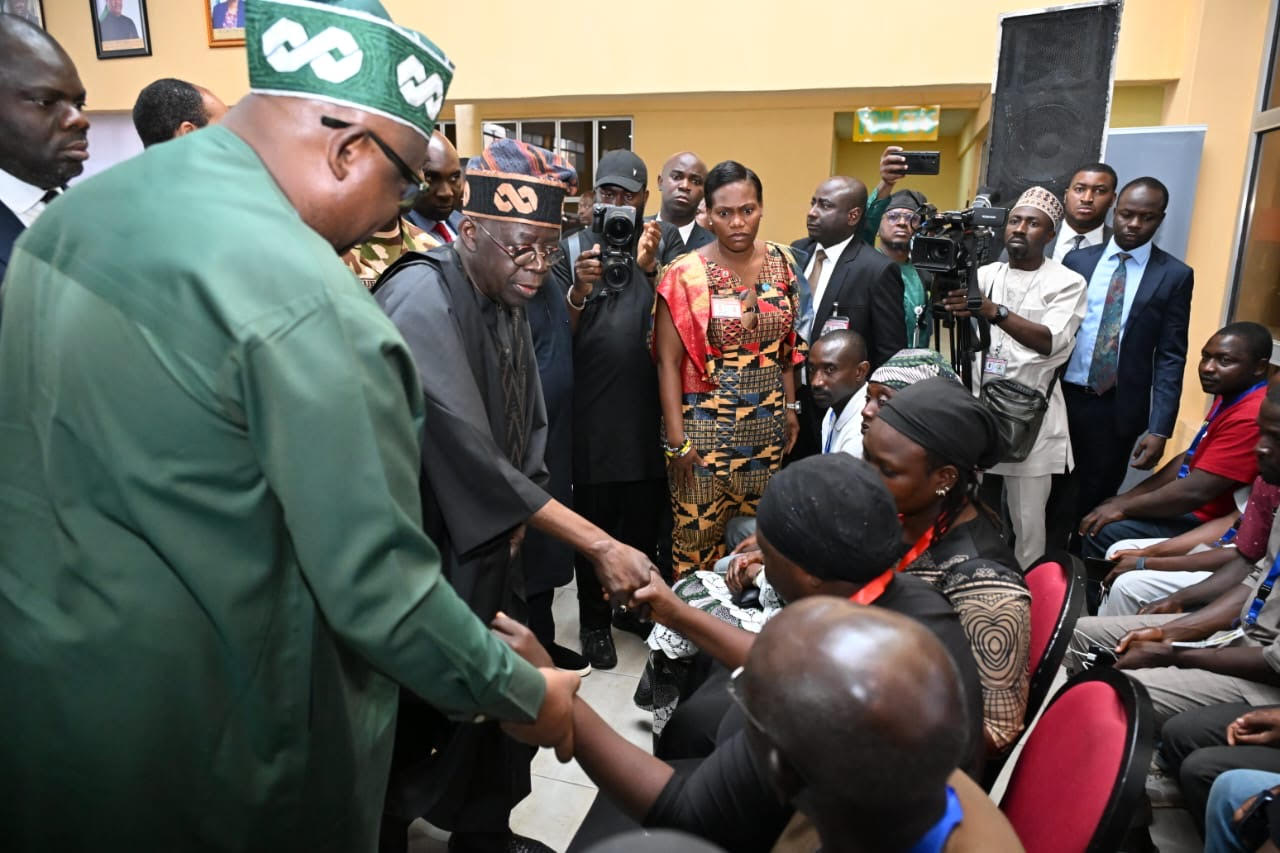
By Modupe Gbadeyanka
The Special Adviser to the President on Information and Strategy, Mr Bayo Onanuga, has explained why Mr Bola Tinubu addressed the victims of the Plateau attacks at the airport on Thursday evening.
The decision of President Tinubu to console victims of the attacks, which left over 20 persons dead, at the Yakubu Gowon Airport in Jos last night has continued to generate reactions.
He was criticised for not visiting the victims at the epicentre, Angwan Rukuba, instead of having them to travel to meet with him at the airport.
In a statement on Friday, Mr Onanuga said his principal’s itinerary for yesterday included two main engagements: receiving the Chadian President, Mahamat Idriss Déby Itno, and proceeding to Iperu, Ogun State.
“After Governor Caleb Mutfwang’s briefing, President Tinubu suspended the trip to Ogun. Overnight, the Presidential Villa made arrangements for the visit to Jos, with presidential assets quickly deployed. However, the President could not postpone the scheduled visit by the Chadian leader.
“The President of Chad was at the Presidential Villa for a very important bilateral meeting focused on strengthening security collaboration between the two countries. The meeting ran longer than expected, affecting President Tinubu’s scheduled departure for Jos.
“Upon arrival in Jos, the visit encountered some logistical challenges. While the road distance from the airport to Jos township is approximately 40 minutes, the runway does not support night flights due to the absence of navigational aids. The constraints made it unfeasible to drive into town, meet victims for on-the-spot assessment and return to the airport before dusk.
“Consequently, state and federal officials decided to bring representatives of the affected community to a hall adjoining the airport so the President could meet with them promptly while adhering to flight restrictions. Among the people in the hall were the Minister of Defence, the Chief of Army Staff and the Inspector General of Police, who had visited Rukuba, the epicentre of the conflict. President Tinubu deployed the high-level team to Rukuba, including the Senior Special Assistant on Community Engagement, to undertake critical groundwork on security and community engagement, with a view to stabilising the area before his arrival.
“Beyond expressing his condolences to the victims, President Tinubu’s objective was to engage with critical stakeholders in Plateau State on ending the recurring, decades-old conflict that has resulted in needless loss of lives and property.
“President Tinubu’s visit to Jos was not merely symbolic. It was a strategic, high-level engagement aimed at bringing all stakeholders together to address the root causes of conflict and insecurity in the state.
“He interacted with the victims, consoled them, and listened to them. He also listened to local leaders and assured them that the federal government would deliver justice and end the cycle of violence. He promised the deployment of 5000 AI-enabled cameras to monitor the city and enhance the identification and arrest of troublemakers.
“Furthermore, the President invited the community leaders to Abuja for further talks on finding a lasting solution to the recurring violence in the state.
“The meeting, televised live, was solemn and reassuring, boosting residents’ confidence. President Tinubu achieved the purpose of his visit, despite the naysayers’ attempts to ridicule it. He dropped an unmistakable message: sustainable peace must be built with the people, not imposed on them,” the presidency explained.
-
 Feature/OPED6 years ago
Davos was Different this year
-
Travel/Tourism10 years ago
Lagos Seals Western Lodge Hotel In Ikorodu
-

 Showbiz3 years ago
Estranged Lover Releases Videos of Empress Njamah Bathing
-
 Banking8 years ago
Sort Codes of GTBank Branches in Nigeria
-

 Economy3 years ago
Subsidy Removal: CNG at N130 Per Litre Cheaper Than Petrol—IPMAN
-

 Banking3 years ago
Sort Codes of UBA Branches in Nigeria
-

 Banking3 years ago
First Bank Announces Planned Downtime
-

 Sports3 years ago
Highest Paid Nigerian Footballer – How Much Do Nigerian Footballers Earn