Connect with us

General

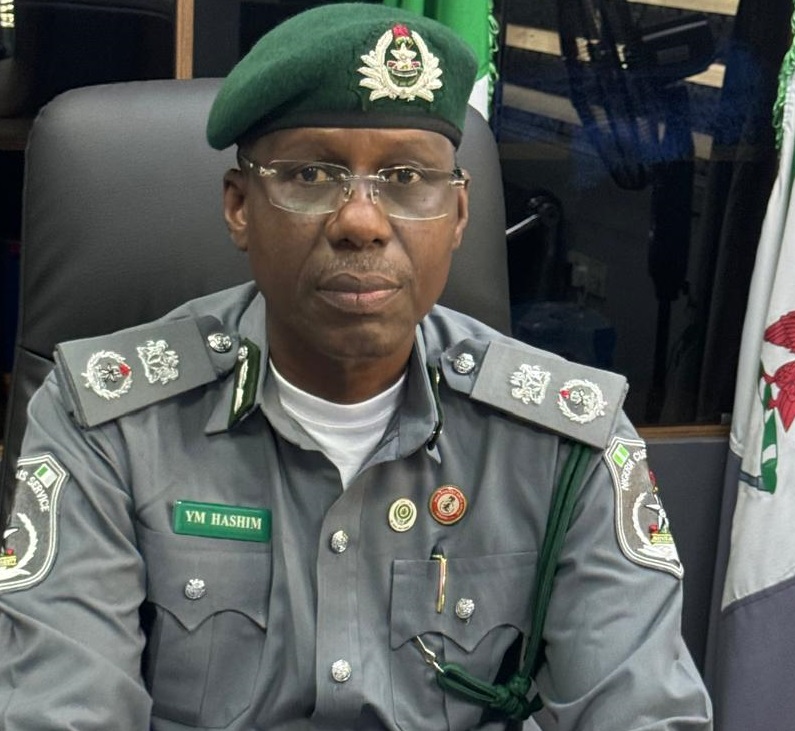
Customs Area 1 Command Eyes Higher Revenue in 2025

Published

on

Mustapha Hashim customs area 1 command

By Bon Peters

The Area 1 Command of the Nigeria Customs Service (NCS) in Port Harcourt, Rivers States, has expressed confidence in raking in higher earnings in 2025 after it generated about N200.6 billion in 2024.

A statement by the command’s Public Relations Officer, Mr Oscar Ivara, a Superintendent of Customs, said last year’s revenue was higher than the N116.3 billion collected in 2023 by 72.41 per cent or N84.3 billion.

He quoted the Comptroller of the command, Mr Mustapha Hashim, as attributing “this impressive surplus” to the hard work, dedication, and operational improvements within the command, which he insisted have helped increase revenue while improving compliance with customs regulations.

He noted that the command’s strategic focus on enforcement operations and ensuring compliance with customs regulations have significantly contributed to the increase in revenue even as he applauded the improved monitoring systems, increased patrols, and enhanced collaboration with other enforcement agencies which he emphasized have played a critical role in curbing smuggling activities and improving revenue.

Continuing, Mr Hashim gave a breakdown of the 2024 revenue figures of the command to include N184.2 billion in the first quarter of 2024, with an estimated monthly collection of N15.4 billion, which he said was later reviewed upwards to N230.3 billion with monthly expected collection of N19.2 billion in the second to fourth quarters of the year.

The agency, however, reported an annual revenue target shortfall collection of about 13.04 per cent, which was largely attributed to the federal government’s food import waiver policy, introduced in July 2024, to mitigate Nigeria’s worsening food crisis.

“The presidential directive, which ended on December 31, 2024, gave waivers to essential food items such as wheat, maize, and grain, which are the major goods imported through the command,” he stated.

In the area of export activities, Mr Hashim posited that the command made notable strides in boosting revenue from agricultural products, which he referred to as a key indicator to Nigeria’s economic diversification.

“This focus has increased export facilitation and boosted the command’s contribution to national revenue,” he said.

He added that the total quantity of cargoes exported in the year 2024 was 17,352,817 metric tons with FOB at $1.5 billion, while the NESS paid was N2.9 billion for both oil and non-oil exports.

The statement also disclosed that a total of 289 ships called at the Area Command in 2024, with import tonnage comprised of bulk cargoes such as wheat, frozen fish, salt, oil well equipment, PMS, AGO, gypsum, bitumen and general cargoes which amounted to 4,080,654.198 metric tons and the duties collected from the bulk cargoes and excise factory   contributed to the huge revenue collected in the command.

He said the feat was achieved by advocating full compliance of all customs regulations by ensuring maximum collection of customs duties, levies and payment of all unpaid assessment.

Mr Hashim said with the command’s focused approach, dedication and continued support from partners and stakeholders, the revenue generation, anti-smuggling and trade facilitation drive for 2025 will be effective, promising that the command would deploy all necessary tools to ensure seamless clearance operations this year.


General

Atiku Abubakar Secures ADC Ticket for Seventh Presidential Bid

Published

on

Atiku Abubakar press conference

By Adedapo Adesanya

Former Vice President, Mr Atiku Abubakar, has won the presidential ticket of the African Democratic Congress (ADC), setting up his seventh presidential run for the 2027 general elections.

He defeated former Minister of Transportation, Mr Rotimi Amaechi, and businessman, Mr Mohammed Hayatu-Deen, in the party’s primary election held on Monday.

The returning officer, Mr Tunde Ogbeha, declared Mr Abubakar as the winner after the final collation of the results from the 36 states and the Federal Capital Territory (FCT).

He said Mr Abubakar emerged after polling 1,846,370 votes to defeat Mr Amaechi, who came second with 504,117 votes, and Mr Hayatu-Deen, who secured 177,120 votes.

The primary election was conducted through direct voting across the country. The collation began on Tuesday and continued on Wednesday at the Transcorp Hilton in Abuja.

Mr Amaechi and Mr Hayatu-Ddeen rejected the process on Tuesday, alleging widespread irregularities before the final collation of results began.

Mr Amaechi described the results as “concocted,” alleging massive voter disenfranchisement and manipulation during the exercise. Mr Hayatu-Deen also accused party officials of rigging and compromising the credibility of the process.

Despite the protests, the ADC proceeded with the collation and declaration of results in Abuja, formally returning Atiku as the party’s presidential candidate for the 2027 general election.

The victory marks another presidential bid for the former vice president, who previously contested under the platform of the Peoples Democratic Party in the 2019 and 2023 elections.

Mr Abubakar dominated the contest across many northern states, recording landslide victories in Adamawa, Kano, Gombe, Bauchi, Kaduna, Borno, Sokoto, Kebbi, and Zamfara.

In Adamawa State, his home state, he polled 177,141 votes against Mr Amaechi’s 1,896 votes and Mr Hayatu-Deen’s 18,949 votes. He also secured 155,595 votes in Kano, 136,933 in Gombe, 115,410 in Bauchi, and 108,784 in Kaduna.

Mr Amaechi, however, performed strongly in parts of the South-south, winning Rivers, Bayelsa, Delta, Akwa Ibom, and Ebonyi states.

In Rivers State, the former Rivers governor recorded one of the biggest margins of the election, polling 115,650 votes against Atiku’s 912 votes. He also defeated the former vice president in Bayelsa with 21,404 votes to 1,470 and in Delta with 35,325 votes to 10,023.

Mr Hayatu-Deen failed to win any state but posted notable numbers in Borno, Benue, Adamawa, Katsina, and Niger states.

With Mr Abubakar’s emergence, this will be his seventh opportunity to win the coveted presidency after running in 1993 under the Social Democratic Party (SDP) presidential primaries, 2007 as the Action Congress (AC) presidential candidate, and 2011 under the Peoples Democratic Party (PDP).

In 2015, he contested the All Progressives Congress (APC) presidential primaries, losing to the late eventual winner Muhammadu Buhari, and then returned as the PDP presidential candidate in 2019 and 2023.

Continue Reading

General

CBN Reveals Loans to FG Surge 65.6% Amid 2026 Budget Financing Needs

Published

on

Nigerian government

By Adedapo Adesanya

The Central Bank of Nigeria (CBN) has revealed that credit extended to the government rose by 65.6 per cent year-on-year to N39.6 trillion in April 2026 from N23.9 trillion in April 2025, driven by increased borrowing to finance the 2026 budget deficit.

In its latest Money and Credit Statistics, the apex bank showed that the federal government increased borrowing from domestic investors by 7.4 per cent to N8.1 trillion in the first quarter of 2026 from N7.5 trillion in the same period of 2025.

The CBN data also showed that credit to the private sector rose by 3.25 per cent to N80.6 trillion in April 2026 from N78.06 trillion in April 2025.

Consequently, net domestic credit rose by 17.8 per cent to N120.2 trillion in April 2026 from N102 trillion in the corresponding period last year.

Following the same trend, Nigeria’s broad money supply (M2) increased by 4.8 per cent YoY to N124.98 trillion in April 2026 from N119.2 trillion recorded in April 2025, reflecting improved liquidity in the financial system.

Further breakdown of the money supply components showed that currency outside banks declined by 12.2 per cent to N5.08 trillion in April 2026 from N5.7 trillion in the corresponding period of 2025, indicating increased use of banking channels and electronic payment systems.

However, demand deposits (current accounts) increased by 6.3 per cent to N38.7 trillion from N36.4 trillion during the review period.

Also, quasi-money increased by 3.8 per cent to N81.2 trillion in April 2026 from N78.2 trillion in April 2025. Quasi money includes money in savings accounts, time deposits, treasury bills and other money market instruments.

Narrow money, which includes currency in circulation and current accounts, also grew by 7.09 per cent to N43.8 trillion from N40.9 trillion.

This comes as the federal government plans to borrow N29.2 trillion to fund the gap between the revenue of N68.32 trillion and expenditure of N36.87 trillion, according to the Appropriation Act 2026.

Continue Reading

General

Lagos Boosts Creative Economy With Training for 1,000 Artists

Published

on

Lagos government

By Adedapo Adesanya

The Lagos State government said it has empowered over 1,000 creatives through the Skill Up Lagos initiative to build sustainable livelihoods for the upcoming artists and accelerate economic growth in the state.

The Special Adviser to the Lagos State Governor on Tourism, Arts and Culture, Mr Idris Aregbe, disclosed this while fielding questions from journalists during the 2026 Ministerial Press Briefing in Alausa, noting that over the last 24 months, his office has empowered more than 1,000 creatives through the Skill Up Lagos Initiative, channelled through the Lagos Cultural Mission.

He explained that the programme creates a structured platform for upcoming artists, designers, performers, and cultural entrepreneurs to acquire skills, gain visibility, and build sustainable livelihoods from their creativity.

‘’This is governance with a human face, investing directly in the people who give Lagos its soul,” Mr Aregbe said.

He said the Cook Lagos, Eat Lagos, a landmark gastronomy initiative, conceived and driven by his office, has helped to redefine how the world experiences Lagos through food.

Mr Aregbe added that, “The Lagos Cultural Mission is the overarching framework through which the Office of the Special Adviser drives cultural diplomacy, arts development, and creative economy programming.

“From international partnerships to domestic cultural celebrations, from art tours to diplomatic engagements, every programme feeds into the singular mission of establishing Lagos as Africa’s cultural capital.

“This initiative places Lagos cuisine on the global tourism map, celebrating local culinary traditions while creating economic opportunities for food vendors, chefs, agro-entrepreneurs, and hospitality businesses.

“Structured across three integrated pillars: Cook Lagos, Eat Lagos, and Grow Lagos. The initiative drives culinary education, food tourism, and agricultural enterprise simultaneously.’’

The Special Adviser said in the year under review, the ancient and beloved Kayo-Kayo Festival of Epe returned in full colour in July 2025, drawing over 1,000 participants in celebration of the community’s cultural heritage, ancestral pride, religious identity, and communal unity.

“The festival stands as one of Lagos’s most authentic cultural expressions, a symbol of resilience and harmony that has endured across generations.

“The Office of the Special Adviser brought fresh energy to the occasion by mobilising travel enthusiasts and tourism influencers to shine a spotlight on Oja Chief, the historic fish market at the heart of the festival.

“In a remarkable community-centred intervention, the office coordinated free fish delivery to the doorsteps of customers, directly boosting the commercial earnings of the women traders at the market and demonstrating the ministry’s commitment to inclusive tourism that uplifts livelihoods.’’

He mentioned that the Beauty in Motherland programme brought a celebration of Africa’s beauty industry at its most ambitious state.

According to him, the Beauty in Motherland positioned the African beauty sector on the global map, drawing over 500 vendors and beauty professionals to an electrifying B2B session that generated real commercial connections and industry momentum.

“The Office of the Special Adviser also proudly supported the extraordinary three-day Beauty Festival and Guinness World Record attempt by Natacha Akide, who achieved the remarkable feat of completing 82 makeovers in 8 hours and 143 makeovers in 24 hours. This was Lagos at its most boundary-breaking.

“The office also threw its weight behind the Adekunle Gold Fuji Album Launch, a cultural moment that bridged contemporary Afrobeats with the classical roots of Fuji music, celebrating the richness of Lagos’s musical heritage.’’

He said in March 2026, the ministry, through the Office of the Special Adviser, celebrated 19 remarkable women who have shaped the arts and cultural landscape of Lagos.

“Each recipient received a formal commendation letter acknowledging their trailblazing contributions to the creative space. This gesture was not ceremonial; it was a deliberate act of governance that uplifts the women who form the backbone of Lagos’s cultural identity,’’ he said.

Mr Aregbe added that one of the most defining features of this office’s approach is its conviction that culture and commerce are not competing forces.

He said under his watch as the special adviser, the ministry built a series of powerful public-private partnerships that use the energy of Lagos culture to drive real economic outcomes for traders, entrepreneurs, and small businesses.

Continue Reading

Trending