
General
Dangote Laments N25bn Loss

By Adedapo Adesanya
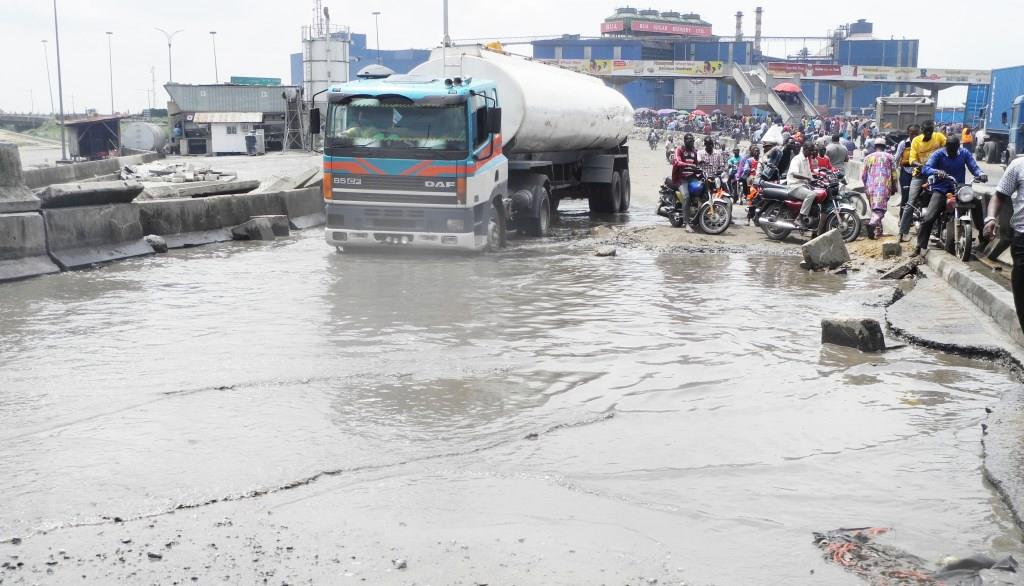
Group President/Chief Executive of Dangote Industries, Mr Aliko Dangote has lamented that his companies lost about N25 billion in revenue to the ‘notorious’ gridlock on the Apapa/Oshodi highway.
He said the amount was lost between 2017 and 2019, noting that he agreed to fix the road so as to bring succour to those doing business in the area, including himself.
About two years ago, Mr Dangote had an agreement with the federal government to fix the 35-kilometer road in Lagos for a 10-year rebate of N72.9 billion.
Some days ago, he took the Minister of Works and Housing, Mr Babatunde Fashola, on a tour to see ongoing work on the road. The Minister was impressed, commending the company for bailing government out.
The business mogul, while speaking during the inspection, said he expects the project to be completed before the end of year and should last up to four decades.
“We expect that by the end of 2020, the entire road network will be finished, you will have a road that will last for 40 years.
“This road will actually open up the economy. It will bring a lot of jobs and a lot of factories that have moved out will be able to move back,” he said.
In his remarks, Mr Fashola said, “Federal Government is dedicated to the speedy completion of the highway to provide a lasting solution to the problems of bad roads, and gridlocks.”
Speaking about the economic revival in the Apapa area, the Minister said, “Businesses have started coming back on Liverpool Road because the road closed earlier is now back. You will see more of that.
“All of the businesses that are shut on Creek Road will come back. We expect to see property redevelopment and property renewal once the road is completed.”
He also explained that the project will be creating wealth around the surrounding areas as trucks will be needed to convey different materials to the site of the construction, and also labour to help with the process, noting that the project has also seen over 600 people directly employed.
“Once the economy of Apapa returns, all the clearing and forwarding, shipping, newspaper companies and all others doing business will resume fully and the economy will bounce back,” he stated.
He lauded the private/public partnership scheme as shown between the federal government and Dangote and pointed out that section two of the project, which was not part of the original contract was already showing signs of failure, due to heavy traffic.
While inspecting the road around the Oshodi area, the Minister commented that, “We are at the Oshodi area now and one side has been concluded and opened to traffic and this is how we intend to continue to complete and open until we finish the entire road.”



By Adedapo Adesanya
The Nigerian Independent System Operator (NISO) has attributed the poor power supply facing a considerable number of Nigerians to inadequate gas supply to thermal power plants.
Business Post reports that epileptic power supply has plagued consumers in Lagos, Oyo, Abuja, and Osun, among others, this month, leading to worries. Also, some businesses have recorded losses due to the epileptic power supply in their areas.
In a statement posted on its X handle, NISO disclosed that average available generation on the national grid currently stands at about 4,300 megawatts (MW), with the low output primarily attributed to gas supply constraints.
The system operator noted that thermal power plants, which account for the dominant share of Nigeria’s electricity generation mix, require an estimated 1,629.75 million standard cubic feet (MMSCF) of gas per day to operate at optimal capacity. However, as of February 23, 2026, actual gas supply to the plants was approximately 692.00 MMSCF per day.
The available supply represents less than 43 per cent of the daily gas requirement, resulting in constrained generation output and reduced electricity allocation to Distribution Companies (DisCos).
NISO, which independently manages the nation’s electricity grid, explained that any disruption or limitation in gas supply directly affects available generation capacity and overall grid output, given the heavy reliance on thermal plants.
It added that when total system generation drops significantly, the operator is compelled to implement load shedding across the network while dispatching available energy in line with allocation percentages approved under the Multi-Year Tariff Order (MYTO) framework of the Nigerian Electricity Regulatory Commission (NERC), to maintain grid stability and prevent system disturbances.
While expressing regret over the inconvenience to electricity consumers and market participants, NISO said it is working closely with relevant stakeholders to restore full energy allocation once gas supply improves and generation capacity returns to normal levels.
By Adedapo Adesanya
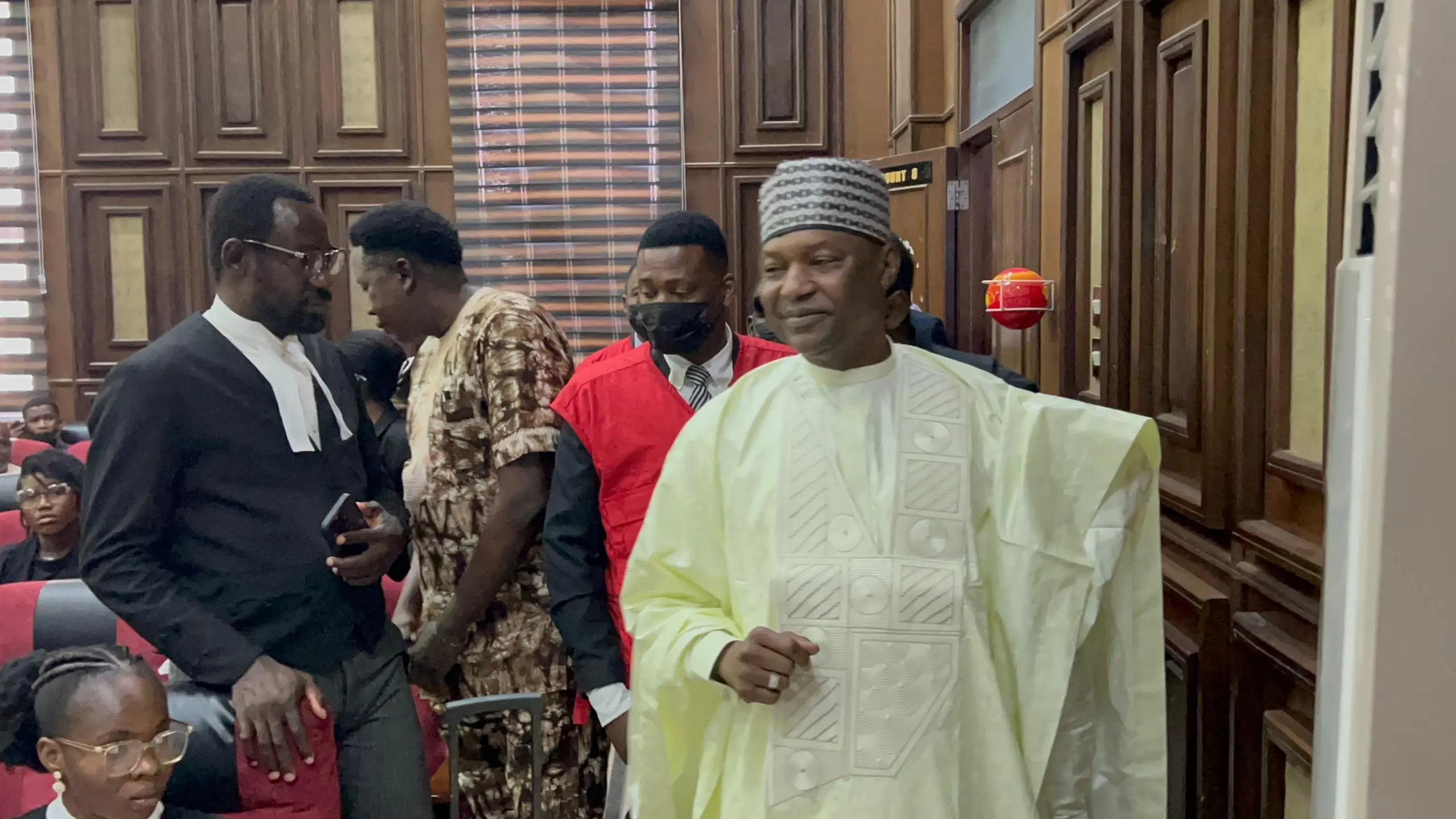
The Economic and Financial Crimes Commission (EFCC) has re-arraigned former Attorney-General of the Federation (AGF), Mr Abubakar Malami (SAN), his wife, Mrs Asabe Bashir, and son, Mr Abdulaziz Malami, on money laundering charges.
They were brought before Justice Joyce Abdulmalik of the Federal High Court in Abuja, following the re-assignment of the case to the new trial judge.
Upon resumed hearing, EFCC’s lawyer, Mr Jibrin Okutepa (SAN), informed the court that the matter was scheduled for defendants’ re-arraignment.
“The matter is coming before your lordship this morning for the very first time. I will be applying for the plea of the defendants to be taken,” he said.
Mr Okutepa equally applied that the sums listed in Counts 11 and 12 be corrected to read N325 million instead of N325 billion for Count 11, and N120 million instead of N120 billion for Count 12.
When it was not opposed by the defence lawyer, Mr Joseph Daudu (SAN), Justice Abdulmalik granted the oral application by Mr Okutepa.
The defendants, however, pleaded not guilty to the 16 counts preferred against them by the anti-graft agency bordering on money laundering.
Justice Obiora Egwuatu had, on February 12, withdrawn from the case shortly after the civil case filed by the EFCC was brought to him.
The case was formerly before Justice Emeka Nwite, who sat as a vacation judge during the Christmas/New Year break.
After the vacation period, the CJ reassigned the cases to Justice Egwuatu, who had now recused himself, before it was reassigned to Justice Abdulmalik.
The former AGF, his wife, and son were earlier arraigned before Justice Nwite on December 30, 2025.
While Malami and his son were remanded at Kuje Correctional Centre, Asabe was remanded at Suleja Correctional Centre before they were admitted to N500 million bail each, on January 7, with two sureties each in the like sum.
By Adedapo Adesanya
Nigeria will hold next year’s presidential and National Assembly elections a month earlier than planned, after the Independent National Electoral Commission (INEC) revised the polling schedule.
The elections will be held on January 16, instead of the previously announced date of February 20, INEC said in an X post, signed by Mr Mohammed Kudu Haruna, National Commissioner and Chairman, Information and Voter Education Committee.
There were also changes to the Governorship and State Houses of Assembly elections initially fixed for Saturday, March 6 2027, in line with the Electoral Act, 2022, have now been moved to Saturday, February 6, 2027.
The electoral commission said the changes were caused by the enactment of the Electoral Act, 2026 and the repeal of the Electoral Act, 2022, which introduced adjustments to statutory timelines governing pre-election and electoral activities.
“The Commission reviewed and realigned the schedule to ensure compliance with the new legal framework,” it said.
INEC said party primaries (including resolution of disputes) will commence on April 23, 2026 and end on May 30, 2026, after which Presidential and National Assembly campaigns will begin on August 19, 2026, while Governorship and State Houses of Assembly campaigns will begin on September 9, 2026.
It noted that campaigns will end 24 hours before Election Day, and political parties have been advised to strictly adhere to the timelines.
INEC also stated it will enforce compliance with the law.
The electoral body also rescheduled the Osun Governorship election which was earlier scheduled for Saturday, August 8 2026, by a week to Saturday, August 15, 2026.
INEC noted that some activities regarding the Ekiti and Osun governorship elections have already been conducted, and the remaining activities will be implemented in accordance with the Electoral Act, 2026.
Speaking at a news briefing in Abuja two weeks ago, the chairman of INEC, Mr Joash Amupitan, expressed the readiness of the commission to conduct the polls next year.
The timetable issued by the organisation for the polls at the time came when the federal parliament had yet to transmit the amended electoral bill to President Bola Tinubu for assent.
Later that week, the Senate passed the electoral bill, reducing the notice of elections from 360 days to 180 days, while the transmission of results was mandated with a proviso.





-
 Feature/OPED6 years ago
Davos was Different this year
-
Travel/Tourism10 years ago
Lagos Seals Western Lodge Hotel In Ikorodu
-

 Showbiz3 years ago
Estranged Lover Releases Videos of Empress Njamah Bathing
-
 Banking8 years ago
Sort Codes of GTBank Branches in Nigeria
-

 Economy3 years ago
Subsidy Removal: CNG at N130 Per Litre Cheaper Than Petrol—IPMAN
-

 Banking3 years ago
Sort Codes of UBA Branches in Nigeria
-

 Banking3 years ago
First Bank Announces Planned Downtime
-

 Sports3 years ago
Highest Paid Nigerian Footballer – How Much Do Nigerian Footballers Earn