
General
EFCC Report Indicts Saraki, Ex-Bank MD in N19b Paris Club Scam

By Dipo Olowookere
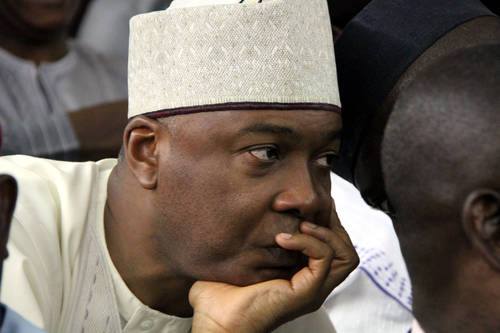
The Economic and Financial Crimes Commission (EFCC) has submitted a report to President Muhammadu Buhari linking Senate President, Mr Bukola Saraki, and some of his aides to the diversion of about N19 billion from the N522bn Paris Club refund.
The report also fingered Mr Robert Mbonu of Melrose General Services Limited, who is a former Managing Director of Societe Generale Bank of Nigeria, the commercial bank owned by the Saraki family which was later liquidated.
The Federal Government had, in December 2016, approved the sum of N522.74 billion to be paid to the 36 states of the federation as part of the reimbursement of the over-deduction on the Paris Club loan from 1995 to 2002.
The EFCC had sometimes in January discovered that the loan refunds were illegally routed through the account of the Nigeria Governors Forum by the Central Bank of Nigeria.
Upon receiving the funds, the NGF, in an alleged connivance with Mr Saraki, began remitting huge sums to private consultants who then laundered about N19 billion.
According to the report, apart from the NGF, others under investigation include the Relationship Manager to the Senate President in Access Bank, Kathleen Erhimu.
Some others under probe and identified as Mr Saraki’s aides include Obiora Amobi, Gbenga Makanjuola, Kolawole Shittu and Oladapo Idowu.
The report alleges that sometimes in December, Mr Saraki introduced the ex-bank MD, Mbonu, to Erhimu.
Others at the meeting were Mr Saraki’s aforementioned aides.
It added that sequel to the meeting, the sum of N3.5 billion was lodged into Melrose General Services Company account number 0005892453, domiciled in Access Bank from the Nigeria Governors Forum on December 14.
The report stated that two of Saraki’s aides, Obiora Amobi and Gbenga Makanjuola, were introduced to Access Bank as representatives of Melrose General Services Limited by Mbonu to enable them to make cash withdrawals from the account.
It added that Amobi and Makanjuola made cash withdrawals in various tranches of N5m and N10m.
The report reads in part, “Based on the foregoing findings, it is clear that Robert Mbonu, the Managing Director of Melrose General Services Company and his company were used to help divert proceeds of unlawful activities under the guise of payment for contractual obligations with the Nigeria Governors Forum.
“Suffice to apprise that all payments received by Melrose General Services Company from the NGF have hitherto been diverted directly via cash withdrawals and indirectly through transfers by Gbenga Peter Makanjuola, Kolawole Shittu and Oladapo Joseph Idowu, who are principal aides to the Senate President.
“Furthermore, other payments from Melrose General Services Company have also been linked to companies that Dr. Bukola Saraki has interest in and carries out transactions with.
“This includes the sum of $183,000, which was transferred to Bhaska Devji Jewellers, Dubai, a company Dr. Bukola Saraki had repeatedly made payments to.
“Also, the sum of N200 million was transferred to Wasp Networks Limited that subsequently transferred the sum of N170m to Xtract Energy Services Limited, a company that routinely made deposits into Dr. Saraki’s Access Bank US Dollar Domiciliary account.”
The report concludes that a prima facie case of conspiracy to retain the proceeds of unlawful activities and money laundering, contrary to sections 15(3) and 18(9) of the Money Laundering Prohibition Act 2004, could be established against the aforementioned suspects.
“Additionally, investigation into their personal accounts is ongoing,” it adds.
When contacted, the Special Adviser to the Senate President on Media and Publicity, Mr Yusuph Olaniyonu, who spoke on behalf of Mr Saraki, said he would not react except he sighted the report.
“Send the report to me and I will be able to read it and contact the necessary people. If I don’t see the report, I cannot react to it in abstract. Send me the report if you want our reaction,” he said.
Spokesman for the EFCC, Mr Wilson Uwujaren, confirmed that investigations were ongoing into the Paris Club scam.
He, however, said he did not know the specifics of the investigations.
“I can only confirm that there are investigations but I don’t have details,” Mr Uwujaren said.
http://punchng.com/n19bn-paris-club-scam-efcc-report-indicts-saraki-aides-ex-bank-md




By Aduragbemi Omiyale
The sum of N3.3 trillion has been approved by President Bola Tinubu to finally clear the outstanding debts in the power sector.
A statement issued on Sunday by the Special Adviser to the President on Information and Strategy, Mr Bayo Onanuga, said the “long-standing debts accumulated between February 2015 and March 2025.”
It was stated that the payment plan for the debts under the Presidential Power Sector Financial Reforms Programme should restore reliable electricity to the country.
“Following verification, N3.3 trillion has been agreed as a full and final settlement, ensuring a fair and transparent resolution,” a part of the statement noted.
“Implementation has begun, with 15 power plants signing settlement agreements totalling N2.3 trillion. The federal government has already raised N501 billion to fund these payments. Out of the amount, N223 billion has been disbursed, with further payments underway,” it added.
The statement said, “With payments reaching the power value chain, generation will be more stable. With power plants supported, electricity reliability will improve.”
“This programme is not just about settling legacy debts. It is about restoring confidence across the power sector — ensuring gas suppliers are paid, power plants can keep running, and the system begins to work more reliably,” the Special Adviser to the President on Energy, Ms Olu Arowolo-Verheijen, was quoted as saying in the statement.
“It is part of a broader set of reforms already underway — including better metering and service-based tariffs that link what you pay to the quality of electricity you receive.
“The government is also prioritising power supply to businesses, industries, and small enterprises — because reliable electricity is critical to creating jobs, supporting livelihoods, and growing the economy.
“The goal is simple: more reliable power for homes, stronger support for businesses, and a system that works better for all Nigerians,” she added.
President Tinubu has commended all stakeholders who supported efforts to resolve the legacy issues in the power sector. He has also confirmed that the next phase (Series II) will begin this quarter.

By Adedapo Adesanya
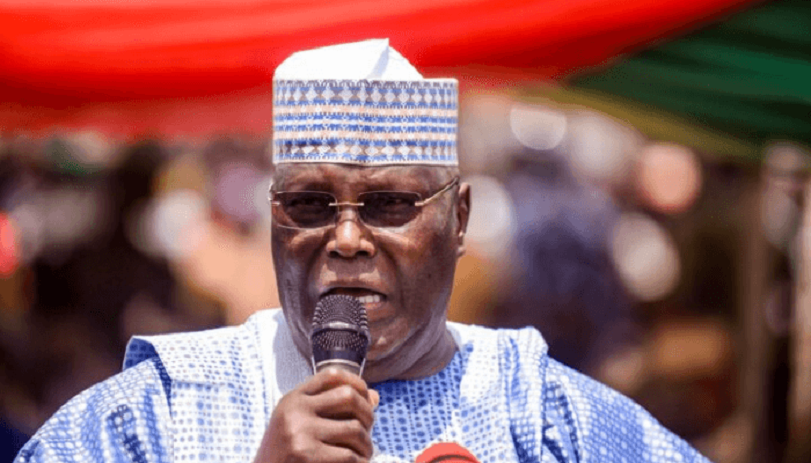
Former Vice-President Atiku Abubakar has hired Von Batten-Montague-York, L.C., a Washington-based lobbying firm, to protect and strengthen his “reputational standing” in the United States for $1.2 million.
According to The Cable, the contract agreement was signed by Mr Karl Von Batten, the managing partner at the firm, and Mr Fabiyi Oladimeji, a Nigerian politician, on March 9 and 10, 2026, respectively.
Based on a document filed with the US Department of Justice, one of the contract’s objectives entails that the firm will “counterbalance” the Nigerian government’s “lobbying narratives” in the US. It comes after the federal government reportedly spent $9 million to strengthen lobbying with the US government earlier this year.
Mr Abubakar, who is eyeing the Nigerian presidency, is currently with the African Democratic Congress (ADC). He will use the firm to “advance understanding” within US policymaking institutions of his “leadership posture and policy vision”.
Based on the contract details, the firm will facilitate and arrange meetings for the former vice-president to engage with US government officials and members of Congress.
Von Batten-Montague-York will also provide the politician with “guidance on policy positioning, reputational considerations, and engagement strategy”.
“These activities include lobbying and government affairs engagement with Members of Congress, congressional staff, and executive branch officials concerning issues related to democratic governance, regional stability, economic development, and U.S. engagement with Nigeria and the broader West African region,” part of the contract details reads.
“The Registrant (lobbying firm) may advocate for policies and perspectives aligned with the foreign principal’s stated positions, including matters relating to governance, economic policy, and bilateral relations with the United States.
“The Registrant also engages in promotion, perception management, and public relations activities designed to enhance understanding among U.S. policymakers and relevant stakeholders of the foreign principal’s policy positions, leadership posture, and strategic priorities.
“This includes the development of messaging strategies, narrative positioning, and reputational advisory services.
“In furtherance of these activities, the Registrant prepares, distributes, and may assist in the dissemination of informational materials, including briefing memoranda, policy papers, talking points, and related communications, intended to inform U.S. government officials and stakeholders.”
The former vice-president is expected to pay the $1.2 million for the 12-month contract in six instalments.
By Dipo Olowookere
The need for Africa to protect itself from many external shocks not of its making has again been emphasised by the African Development Bank (AfDB), the African Union Commission (AUC), the United Nations Development Programme (UNDP), and the UN Economic Commission for Africa (UNECA).
On the margins of the 58th session of the Economic Commission for Africa in Tangier, Morocco, the continent was tasked to strengthen regional integration, accelerate African-led financial solutions, and invest decisively in energy, food, and trade resilience so as to move from vulnerability to preparedness.
The meeting focused on the spikes in energy, food and fertiliser prices caused by the ongoing conflict in the Middle East.
The United States and Israel launched airstrikes on Iran in February 2026, and since then, global oil prices have surged by more than 50 per cent as of late March. Twenty-nine currencies in Africa have weakened, raising the cost of servicing external debt and importing food, fuel, and fertiliser.
Disruptions linked to Gulf energy supplies limit access to ammonia and urea during the critical March–May planting season. This will affect agricultural production, compounding risks of crisis and emergency levels of food insecurity, especially for low‑income households and import‑dependent economies.
To address these issues, the quartet has asked African leaders to, in the short-term, stabilise fuel, food, and fertiliser supply, and execute medium‑term reforms to strengthen energy security, targeted social protection, and regional trade under the African Continental Free Trade Area (AfCFTA).
They also tasked leaders to come up with long‑term structural reforms towards stronger domestic resource mobilisation and African financial safety nets, including accelerated implementation of the African Financing Stability Mechanism.
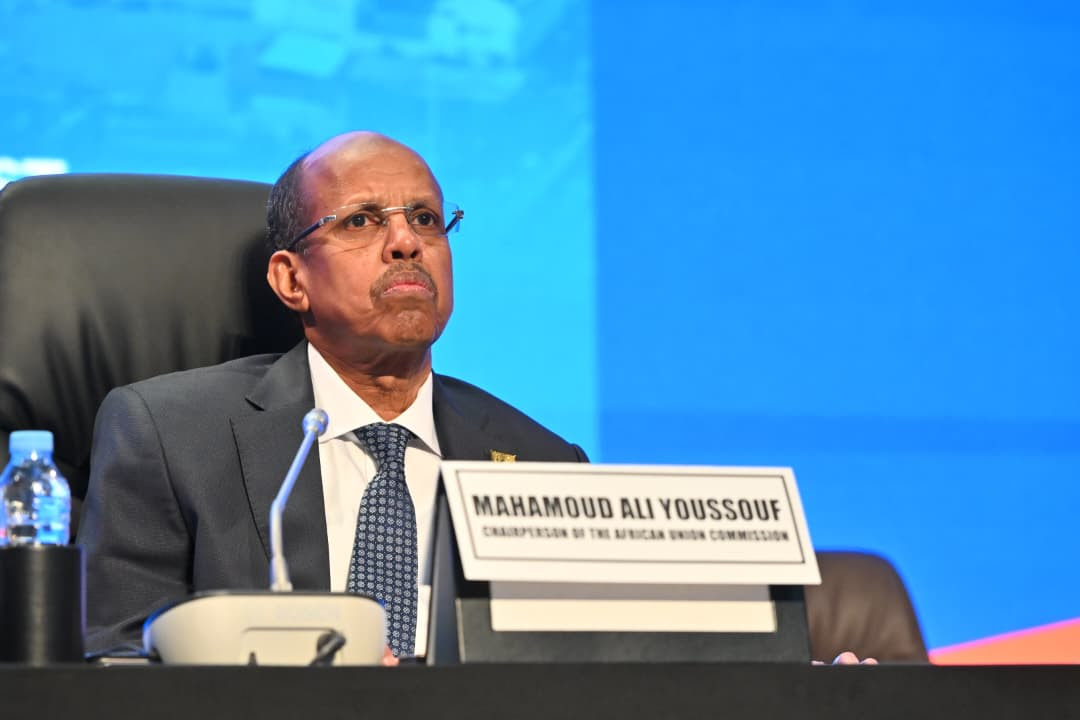
“Continued escalation of the conflict worsens global instability, with serious implications for energy markets, food security, and economic resilience, particularly in Africa, where economic pressures remain acute,” the chairperson of AUC, Mr Mahmoud Ali Youssouf, said.
Also commenting, the UN Under-Secretary-General and Executive Secretary of UNECA, Mr Claver Gatete, said, “Africa has been hit by too many external shocks not of its making. Crises like this reinforce why Africa must finance more of its own future and strengthen regional solutions that build resilience before the next shock hits.”
On her part, the UN Assistant Secretary‑General and Director of UNDP’s Regional Bureau for Africa, Ms Ahunna Eziakonwa, submitted that, “With the right mix of policy choices, financing tools, and political resolve, Africa can weather this shock and emerge more resilient, more self-reliant, and better positioned to shape its own economic future.”
“As global crises multiply, Africa’s response must evolve from managing shocks to fostering resilience. African institutions and development partners need to act swiftly and in concert, leveraging their comparative advantages to cushion short-term shocks while laying the foundations for long-term resilience,” the president of AfDB, Mr Sidi Ould Tah, stated.
-
 Feature/OPED6 years ago
Davos was Different this year
-
Travel/Tourism10 years ago
Lagos Seals Western Lodge Hotel In Ikorodu
-

 Showbiz3 years ago
Estranged Lover Releases Videos of Empress Njamah Bathing
-
 Banking8 years ago
Sort Codes of GTBank Branches in Nigeria
-

 Economy3 years ago
Subsidy Removal: CNG at N130 Per Litre Cheaper Than Petrol—IPMAN
-

 Banking3 years ago
Sort Codes of UBA Branches in Nigeria
-

 Banking3 years ago
First Bank Announces Planned Downtime
-

 Sports3 years ago
Highest Paid Nigerian Footballer – How Much Do Nigerian Footballers Earn