Connect with us

General

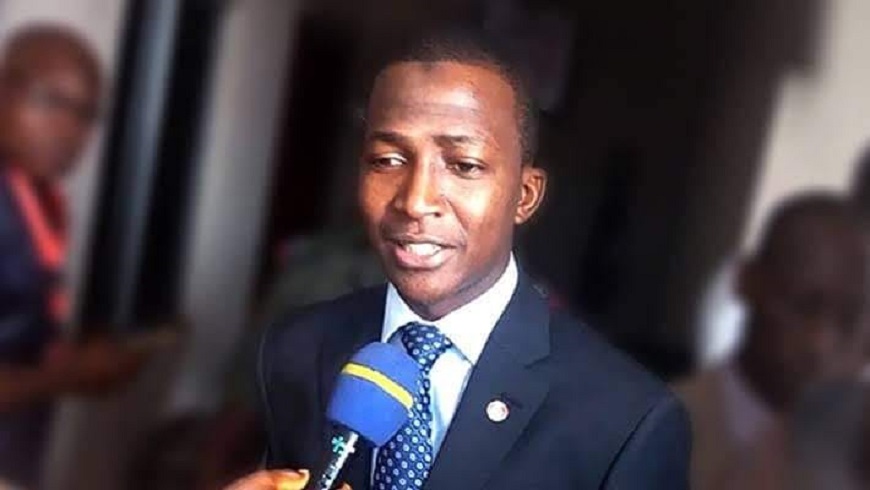
Ex-EFCC Boss Abdulrasheed Bawa Exposes Fuel Subsidy Corruption in New Book

Published

on

Abdulrasheed Bawa

By Adedapo Adesanya

The former chairman of the Economic and Financial Crimes Commission (EFCC), Mr Abdulrasheed Bawa, has documented corrupt practices used to siphon public funds under the guise of fuel subsidy payments in his new book.

Mr Bawa revealed this in his soon-to-be published book titled The Shadow of Loot & Losses: Uncovering Nigeria’s Petroleum Subsidy Fraud, according to a statement.

The book exposes Nigeria’s multi-trillion Naira fuel subsidy scandal, unraveling the inner workings of one of the country’s most pervasive financial crimes.

Mr Bawa, drawing from his firsthand experience as a key investigator on the EFCC’s special team that probed the 2012 subsidy fraud, revealed the complexity, and audacity of the corrupt schemes used.

The former head of the anti-graft agency chronicled how billions of Naira were embezzled through ghost importing and over-invoicing as companies submitted claims for fuel that was never imported or inflated shipment volumes to receive excessive subsidy payouts.

Another form adopted by the perpetrators of the scandals, as revealed in the book, is the manipulation of bills of lading, where fraudsters exploited international price fluctuations to claim higher subsidies, by altering shipping documents.

Other sharp practices exposed by Mr Bawa, who served as the EFCC chairman from 2021 to 2023, are round-tripping, double claims, diversion, and smuggling.

“Single shipments were often used to obtain multiple subsidy payments. Subsidised fuel was frequently diverted to black markets or smuggled out of Nigeria for profit.

These practices, Mr Bawa explained, were boosted by forged documents, weak regulatory oversight, and systemic collusion between corrupt government officials and private sector actors.

“The Shadow of Loot And Losses is not just a chronicle of fraud; it is a call to action — a demand for transparency, accountability, and reform in Nigeria’s public finance management, especially in the oil sector,” said Mr Bawa.

Mr Bawa was appointed EFCC Chairman by former President Muhammadu Buhari in February 2021. At the time, he was the youngest person to head the agency and was seen as part of Mr Buhari’s continued anti-corruption agenda.

However, his tenure quickly became controversial due to allegations of corruption, abuse of office, and the continued detention of suspects without trial.

On June 14, 2023, Mr Bawa was suspended by President Bola Ahmed Tinubu. The official reason cited was the need to allow for a proper investigation into allegations of abuse of office during his tenure.

Following the suspension, Mr Bawa was invited and detained by the Department of State Services (DSS) and was held for 134 days.

Reports alleged that he was being investigated for alleged misconduct involving high-profile corruption cases, selective prosecution, and issues with transparency.

Mr Bawa’s later resigned, raising questions about the credibility and impartiality of Nigeria’s anti-corruption institutions, especially given that similar controversies surrounded his predecessors, like Mr Ibrahim Magu.


Adedapo Adesanya is a journalist, polymath, and connoisseur of everything art. When he is not writing, he has his nose buried in one of the many books or articles he has bookmarked or simply listening to good music with a bottle of beer or wine. He supports the greatest club in the world, Manchester United F.C.

Click to comment

Leave a Reply

Your email address will not be published. Required fields are marked *

General

AFC Mobilises $2bn From Global Lenders for African Infrastructure Projects

Published

on

African Infrastructure Projects

By Adedapo Adesanya

The Africa Finance Corporation (AFC) has raised $2 billion via a syndicated loan, with considerable participation from Asian and European banks seeking to capitalise on growing demand for infrastructure projects across the continent.

Barclays Bank, Commerzbank, First Abu Dhabi Bank PJSC, and FirstRand Bank led the debt facility. Other participating lenders include Export-Import Bank of India, Bank of Communications, Industrial and Commercial Bank of China, and Industrial Bank of Korea, among others.

Each region accounted for about 35 per cent of the creditors, according to a statement by AFC.

AFC chief executive, Mr Samaila Zubairu, said the money would enable more master planning around infrastructure and industrial planning for economies, regions and economic corridors across the continent.

According to Mr Zubairu, the lender is also in discussions to invest in a proposed oil refinery to be built by billionaire Aliko Dangote in East Africa.

The financer initially sought $1.6 billion via the facility but scaled it up to $2 billion amid strong demand from Asian financial institutions.

“In this round, we saw a lot more of Asian banks. We have banks from China, Hong Kong, and Korea. They are a lot more engaged,” he said.

Mr Zubairu said the loan underscored AFC’s strong track record, pointing to its financing for projects including Nigeria’s 650,000 barrels per day Dangote oil refinery and Africa’s largest copper smelter in the Democratic Republic of Congo.

“There’s a lot more confidence, a lot more partners,” Mr Zubairu said of those participating in the loan. “We are constantly demonstrating that Africa is executing. Africa is building.”

“The capital that we raise goes into African infrastructure build out, African industrialisation build up – essentially creating jobs for Africans,” Mr Zubairu said.

The AFC chief said the lender is also working to reform capital rules and create structures that will allow more African money to stay on the continent and be invested in crucial infrastructure projects.

AFC, founded in 2007, has assets surpassing $19 billion and counts 48 African countries as members.

In January, the infrastructure-focused multilateral lender secured an A rating from S&P. It has an A3 rating from Moody’s, an AAAspc rating from S&P Ratings (China) and an A+ rating from the Japan Credit Rating Agency.

Continue Reading

General

NERC Orders DisCos to Pay 20% Compensation to Affected Band A Customers

Published

on

Prepaid Meters DisCos

By Adedapo Adesanya

The Nigerian Electricity Regulatory Commission (NERC) has ordered electricity distribution companies (DisCos) to pay 20 per cent compensation to eligible Band A customers who were affected by power shortfalls between February and March 2026.

In Directive No. NERC/2026/002, the commission said, generation constraints, which were largely caused by inadequate gas supply and vandalism of gas and transmission infrastructure, prevented DisCos from meeting committed service levels for some Band A feeders.

NERC Mandated that for feeders that supplied less than 18 hours per day, affected Band A feeders will not be downgraded during the covered period, and eligible customers will receive special compensation equal to 20 per cent of approved energy figures for February 2026.

However, for Band A feeders that recorded an average daily supply of between 18 and 20 hours, the existing compensation framework under Addendum No. NERC/2024/003 applies to both Maximum Demand (MD) and Non-Maximum Demand (Non-MD) customers.

MD customers are high-consumption users who typically have their own dedicated transformer and operate with a load of 45 kVA and above; they include large residential estates, banks, hotels, supermarkets, industrial facilities and oil and gas complexes.

Non-MD customers do not have a dedicated transformer and instead share public transformers, and they generally consume less, often below 45–50 kVA.

For Non-MD customers, compensation is set at 20 per cent of the approved February 2026 energy cap applicable to the affected feeder.

For MD customers, compensation is 20 per cent of the average energy billed per MD customer in February 2026.

According to NERC, prepaid customers will receive their compensation as token credits, while postpaid customers will receive bill adjustments.

The commission said that compensation for February must be completed by 31 May 2026, while compensation for March must be completed by 30 June 2026.

The commission prohibited Distribution companies from using compensation credits to offset any existing customer debt, adding that customers must be clearly informed of the value and period of the compensation they receive.

NERC said it will monitor implementation and verify compliance to ensure all eligible customers receive what they are due.

The commission reaffirmed its commitment to protecting electricity consumers while ensuring the stability and sustainability of the electricity market.

Continue Reading

General

TCN Confirms Destruction of Six Transmission Towers in Nasarawa

Published

on

Transmission Towers

By Adedapo Adesanya

The Transmission Company of Nigeria (TCN) has confirmed the destruction of six transmission towers along the Apir–Lafia 330kV line in Nasarawa State, causing significant disruption to electricity supply in parts of the country.

In a statement issued on Wednesday, TCN spokesperson, Mrs Ndidi Mbah, said the incident occurred on May 30 at about 1:15 a.m. during a heavy downpour.

She explained that the transmission line initially tripped, prompting operators to attempt a trial reclosure of Line II at about 2:08 a.m., but the effort failed.

A subsequent inspection of the transmission corridor, however, revealed extensive damage to key components of towers T125 to T130, confirming that the infrastructure had been vandalised.

“The tripping of the lines prompted a physical line trace to determine the fault, which revealed damage to critical components of towers T125 to T130, confirming vandalism on the affected sections of the transmission corridor,” Mbah said.

The incident has forced both Apir–Lafia 330kV Transmission Lines I and II out of service pending the reconstruction of the damaged towers.

TCN said its engineers have been deployed to the site to assess the extent of the damage and determine the materials required to restore normal transmission along the corridor.

As an interim measure, the Lafia 330kV Transmission Station is being supplied through an alternative line to minimise the impact on electricity consumers within the franchise areas of Abuja Electricity Distribution Company (AEDC) and Jos Electricity Distribution Company (JEDC).

The company condemned the persistent vandalism of power infrastructure, warning that such acts undermine investments in the electricity sector and threaten the stability of the national grid.

It also urged residents and host communities to remain vigilant and report suspicious activities around transmission installations to security agencies or the nearest TCN office.

TCN stressed that safeguarding critical national infrastructure requires collective responsibility to ensure a reliable and uninterrupted electricity supply nationwide.

Continue Reading

Trending