

General
FG Confirms Sponsoring 422 Delegates to COP28

By Adedapo Adesanya
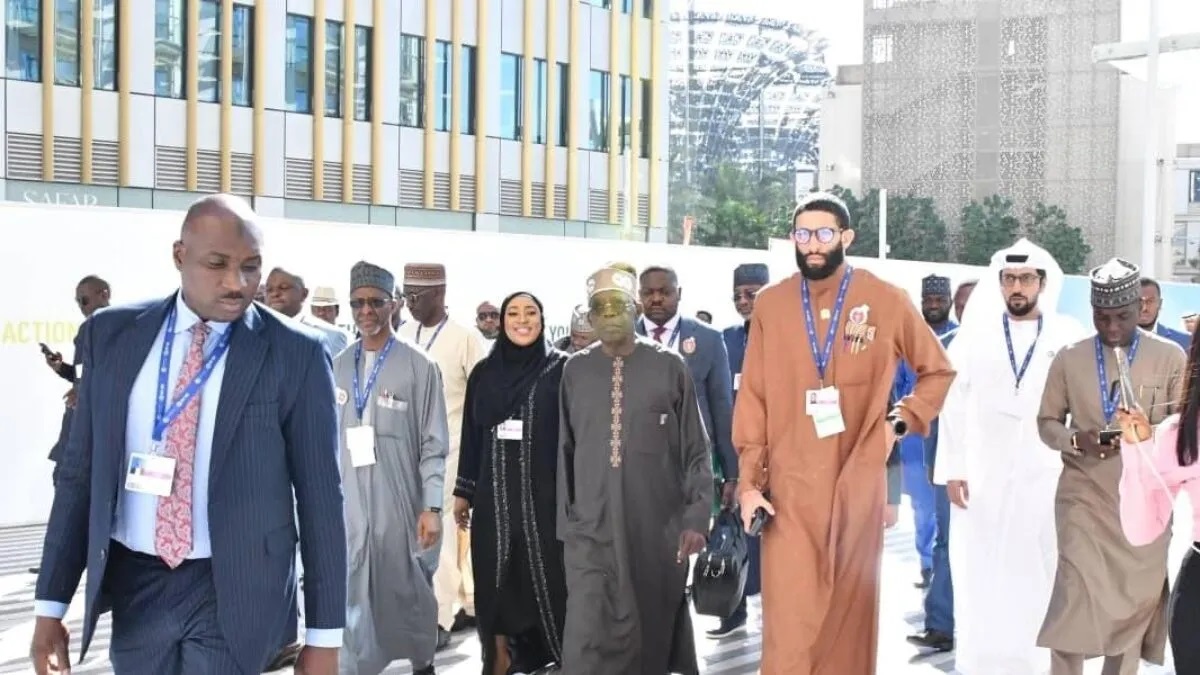
The federal government has announced that only 422 of the total 1,411 Nigerian delegates at the ongoing COP28 were funded with taxpayers’ money.
This clarification followed the outrage over the size of Nigeria at the conference in Dubai, the United Arab Emirates (UAE).
The Minister of Information, Mr Mohammed Idris, disclosed this in a statement on Monday evening amidst concerns by Nigerians about the large number of the country’s delegates at the climate change conference in Dubai.
Business Post had reported that Nigeria was joint third with China behind the UAE and Brazil among all the countries present at COP28, and this had sparked reactions from citizens.
Out of the total 1,411 Nigerian delegates, 821 have the “Overflow” badges, while 590 were approved to carry the “Party” badge.
However, Mr Idris claims that not all the Party delegates were government-funded.
He said the 422 government-funded delegates were from seven broad institutions, including the Presidency which has 67 delegates.
Giving a breakdown he said, the Presidency took 67 delegates, while the office of the Vice President had nine representatives, and the National Assembly accounted for 40.
Others include the National Council on Climate Change with 32 berths, the Federal Ministry of Environment with 34, all ministries with 167 and Federal Parastatals/Agencies with 73 candidates.
Read the full statement by Mr Idris below.
Press Statement
RE: NIGERIA AT COP-28
The Federal Government has noted with interest the public conversation on the number of delegates from Nigeria attending the ongoing Climate Summit in Dubai, otherwise called COP-28, and the need to provide clarity in line with a standing pledge to conduct itself with transparency and accessibility regarding public information.
The Convention of Parties (COP) to the United Nations Framework Convention on Climate Change (UNFCCC) is the world’s pre-eminent Climate Change Conference, attended this year (COP-28) by more than 70,000 participants and delegates from over 100 countries. Nigeria’s representation is very much in line with our status as Africa’s leading Sovereign voice and player in climate action.
Parties to this Convention from Nigeria include government officials, representatives from the private sector, civil society, the voluntary sector, state governments, media, multilateral institutions, representatives of marginalised communities, and many others.
It is imperative to point out that the overall Nigerian delegation to COP-28 comprises Government-sponsored (Federal and State Governments) and non-government-sponsored participants (from Private Companies, NGOs, CSOs, Media, academia, etc).
The Federal Government-funded delegation is made up of a total of 422 persons, as follows:
1. National Council on Climate Change = 32
2. Federal Ministry of Environment = 34
3. All Ministries = 167
4. Presidency = 67
5. Office of the Vice President = 9
6. National Assembly = 40
7. Federal Parastatals/Agencies = 73
As the biggest economy and most populous country in Africa, with a substantial extractive economy and extensive vulnerability to climate change, Nigeria has a significant stake in climate action, and our active and robust participation at COP is therefore not unwarranted.
COP-28 presents an array of investment and partnership opportunities for the various sectors affected by climate change, and Nigeria is already benefiting from its ongoing participation, as demonstrated by the following:
1. Nigeria and Germany signed an accelerated performance agreement to expedite the implementation of the Presidential Power Initiative (PPI) to improve Nigeria’s electricity supply. The agreement was signed by Mr. Kenny Anuwe, the Managing Director and CEO of FGN Power Company, and Ms. Nadja Haakansson, Siemens Energy’s Senior Vice President and Managing Director for Africa, at a ceremony witnessed by President Tinubu and Chancellor Scholz.
2. President Tinubu hosted a high-level meeting with stakeholders and investors on the Nigeria Carbon Market and the Electric Buses Rollout Programme on the margins of the COP28 climate summit.
a. The President unveiled the Nigeria Carbon Market Activation Plan, co-chaired by the Executive Chairman of the Federal Inland Revenue Service (FIRS), Mr. Zacch Adedeji, and the Director-General of the National Council on Climate Change (NCCC), Dr. Dahiru Salisu.
b. The Electric Buses program is only the first step in a series of innovative, clean, modern, and sustainable initiatives across diverse sectors, all aimed at simultaneously addressing climate change-related challenges, reducing carbon footprint, modernizing infrastructure systems, and positioning Nigeria as an attractive destination for global investments.
3. Nigeria stands to benefit from the Loss and Damage Fund established during COP-27 in Egypt and formally operationalized at the opening plenary of COP-28 in Dubai. The Fund will provide substantial non-debt financing to support countries most affected by the impact of climate change. Hundreds of millions of dollars have already been pledged as contributions to the Fund.
4. The President also met the President of UAE to concretize engagements between the two countries. This is aside from the bilateral talks held with several countries and multilateral partners.
It should be highlighted that, over the years, Nigeria has firmly demonstrated its climate action credentials by being the first African country to launch its Energy Transition Plan, the first African country to issue a Sovereign Green Bond, and one of the first to pass national climate change legislation.
President Tinubu has been unequivocal in his position that Africa, which is battling problems of poverty and security and struggling to provide education and healthcare to her people, cannot be told to abandon its primary source of income, which is mostly from extractive industries, without the West providing the funding and investment in alternative and clean energy sources.
Since assuming office, President Tinubu has been a vocal champion for the African continent on the global stage, whether at the United Nations General Assembly (UNGA), the G20, or the ongoing COP-28. The President has been supported by an equally active and engaged Nigerian delegation at these various fora.
It is, therefore, essential to keep setting the records straight while assuring Nigerians that President Tinubu and other officials on the Federal government delegation are in Dubai for serious business, not a jamboree.
Mohammed Idris
Honourable Minister of Information and National Orientation
4th December 2023



By Aduragbemi Omiyale
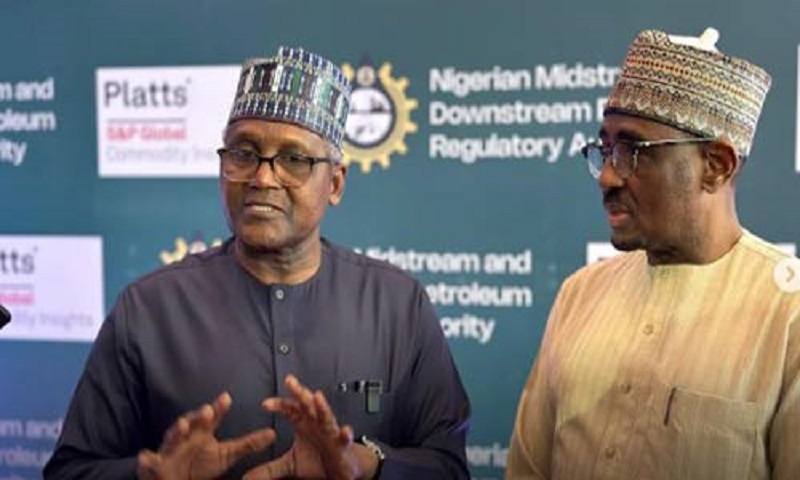
A petition has been filed against the chief executive of the Nigerian Midstream and Downstream Petroleum Regulatory Authority (NMDPRA), Mr Ahmed Farouk.
The petition was written by the president of the Dangote Group, Mr Aliko Dangote, to the Independent Corrupt Practices and Other Related Offences Commission (ICPC).
Mr Dangote asked the agency to look into the finances of the head of the petroleum industry regulator, alleging the man is living far above his legitimate means as a public officer.
In the protest letter filed by his legal counsel, Mr Ogwu Onoja (SAN), the businessman claimed the NMDPRA chief spent over $7 million to educate his children, four in number, in Switzerland.
The petition, dated and submitted on Tuesday, December 16, 2025, and received by the office of the ICPC Chairman, also claimed that Mr Ahmed paid upfront for a six-month period, without any lawful source of income to justify such expenditure.
It also alleged that NMDPRA boss used his office to siphon and divert public funds for personal gain and private interests, actions which he claimed had fuelled public outrage and recent protests by various groups.
“That Engr Farouk Ahmed has grossly abused his office contrary to the extant provisions of the Code of Conduct for Public Officers and, in doing enmeshed himself in monumental corruption and unlawful spending of Public funds running into millions of dollars.
“That Engr Farouk Ahmed spent without evidence of lawful means of income humongous amount of money of over 7million dollars of Public funds, for the education of his four children in different schools in Switzerland for a period of six years upfront,” a part of the petition read.
“It is without doubt that the above facts in relation to abuse of office, breach of the Code of Conduct for public officers, corrupt enrichment and embezzlement are gross acts of corrupt practices for which your Commission is statutorily empowered under Section 19 of the ICPC Act to investigate and prosecute,” another part added.
“Any public officer who uses his office or position to gratify or confer any corrupt or unfair advantage upon himself or any relation or associate of the public officer or any other public officer shall be guilty of an offence and shall on conviction be liable to imprisonment for five (5) years without option of fine,” it reminded the ICPC, urging it to act decisively by investigating the allegations against Mr Ahmed and prosecuting him if found culpable, stressing that the matter is already in the public domain, as this would help uphold justice and protect the image of the administration of President Bola Tinubu.
Mr Dangote promised to provide evidence to substantiate his allegations of corrupt enrichment, abuse of office and impunity against the NMDPRA chief when required.
By Adedapo Adesanya
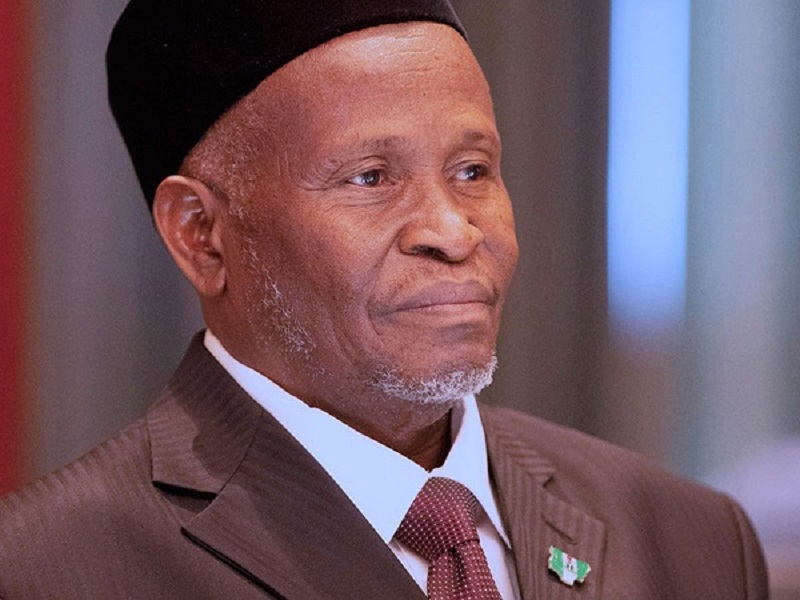
A former Chief Justice of Nigeria (CJN), Justice Ibrahim Tanko Muhammad, has died at the age of 71.
Justice Muhammad reportedly passed away at a hospital in Saudi Arabia, about two weeks before his 72nd birthday, which would have fallen on December 31.
His death was confirmed on Tuesday in Abuja by the Bauchi State Governor, Mr Bala Mohammed, in a condolence message issued on Tuesday by his Special Adviser on Media and Publicity, Mr Mukhtar Gidado.
Governor Mohammed noted that Justice Muhammad was a distinguished son of Bauchi State whose life and career were marked by dedication, integrity, and an unwavering commitment to the rule of law.
“The late jurist was a venerable and accomplished legal icon who rose through the ranks of the judiciary with diligence and distinction, serving as a Judge of the High Court, Justice of the Court of Appeal, Justice of the Supreme Court, and ultimately as Chief Justice of Nigeria from 2019 to 2022,” he said.
According to the governor, Justice Muhammad was widely respected for his legal acumen, discipline, and immense contributions to the growth and development of Nigeria’s judicial system.
He added that the conferment of the national honour of Grand Commander of the Order of the Niger (GCON) on the late jurist was a testament to his outstanding service to the nation.
Mr Mohammed extended heartfelt condolences to the family of the deceased, his friends, colleagues in the legal profession, and the people of Bauchi State and Nigeria as a whole.
Also, the Nigerian Association of Muslim Law Students (NAMLAS) lauded the former jurist in its condolence message.
In the statement titled NAMLAS Condolence Message on the Passing of Hon. Justice Ibrahim Tanko Muhammad, GCON, Former Chief Justice of Nigeria, the association described his death as a monumental loss to the Nigerian judiciary and the nation.
“The Nigerian Association of Muslim Law Students receives with profound sorrow the news of the passing of Justice Ibrahim Tanko Muhammad, GCON, former Chief Justice of Nigeria. His demise is a monumental loss to the Nigerian judiciary, the legal profession, the Muslim Ummah, and the nation at large.”
NAMLAS described the late jurist as a towering figure of integrity, humility and unwavering commitment to justice, noting that throughout his judicial career, he exemplified fairness, courage and fidelity to the rule of law.
The association said that as Chief Justice of Nigeria, Muhammad discharged his responsibilities with wisdom and restraint, leaving behind a legacy that would continue to guide generations of legal practitioners.
Beyond his judicial service, NAMLAS highlighted his role as a mentor to young Muslim law students across the country, describing him as a fatherly figure and a source of encouragement.
“To NAMLAS, the late Chief Justice was more than a jurist; he was a fatherly pillar and a source of encouragement to Muslim law students nationwide,” the statement said.
The association extended its condolences to the family of the deceased, the Nigerian judiciary, the Federal Government and the Muslim Ummah, while praying for the repose of his soul.
Justice Ibrahim Tanko Muhammad served as Chief Justice of Nigeria from 2019 until his retirement in 2022.
By Adedapo Adesanya
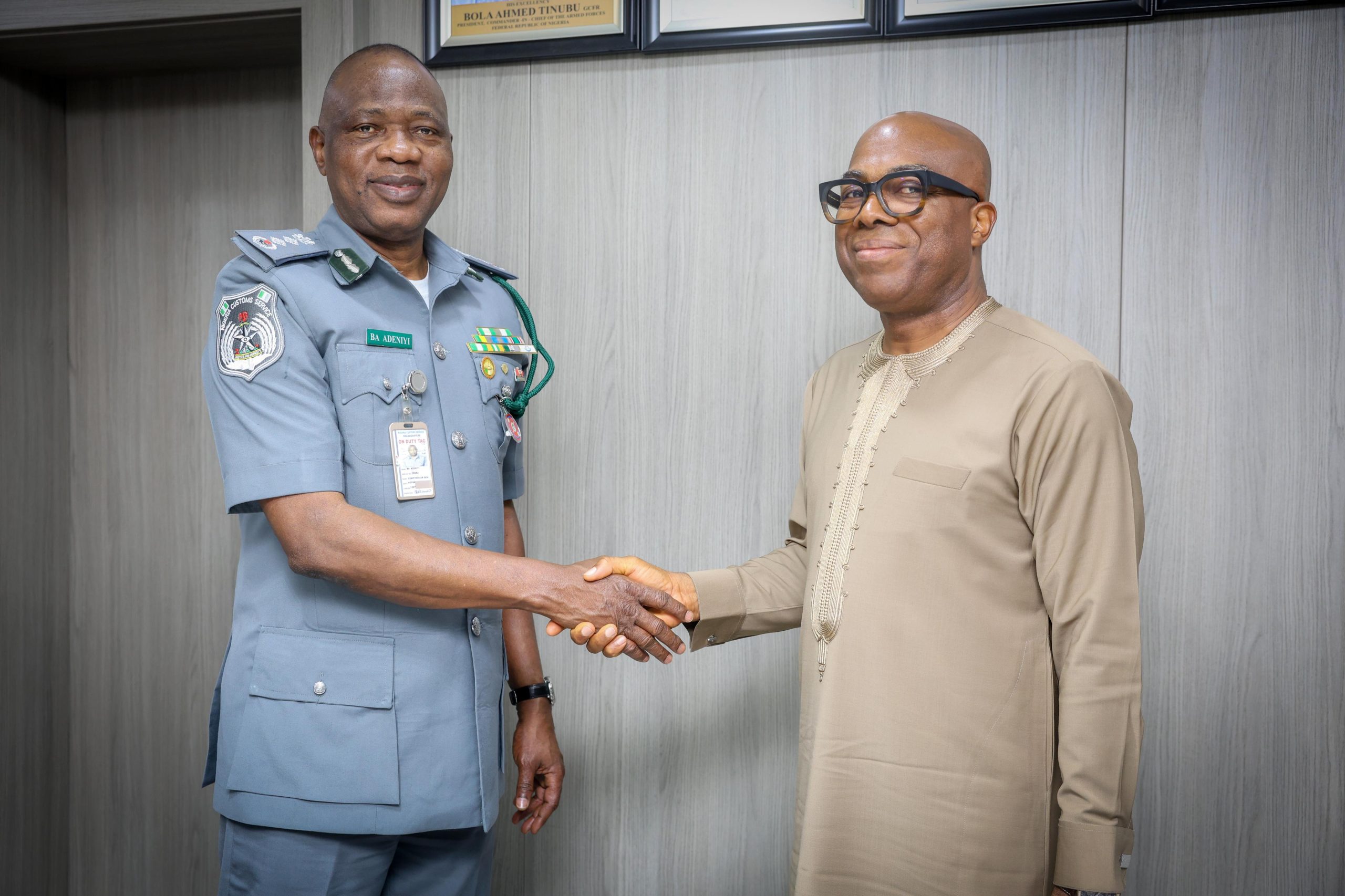
The Nigeria Customs Service (NCS) and the Nigerian Midstream and Downstream Petroleum Regulatory Authority (NMDPRA) are strengthening their collaboration to combat the diversion of petroleum products intended for domestic use and to safeguard Nigeria’s energy security.
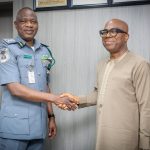
This renewed partnership was highlighted during a meeting between Comptroller General of Customs, Mr Adewale Adeniyi and the NMDPRA Executive Director of Distribution Systems, Storage and Retailing Infrastructure, Mr Ogbugo Ukoha, at Customs House, Maitama, Abuja.
During the engagement, Mr Adeniyi reaffirmed the service’s commitment to strengthening inter-agency cooperation, particularly in safeguarding Nigeria’s domestic energy security and ensuring that petroleum products meant for local consumption are not diverted to neighbouring countries.
He noted that collaboration between both agencies had already produced measurable results, especially through Operation Whirlwind, which he described as a model for intelligence sharing, joint enforcement and coordinated field operations.
He said the Nigeria Customs Service remains fully aligned with ongoing reforms in the petroleum regulatory space and will continue to provide technical input, operational feedback and border management expertise to support the implementation of new guidelines being developed by the NMDPRA.
He commended the Authority for its efforts to harmonise legacy processes with the Petroleum Industry Act, stressing that clear and efficient export point procedures are essential as Nigeria moves from being a net importer to an emerging exporter of petroleum products.
“We welcome every initiative that strengthens energy security and ensures that the gains made in reducing cross border diversion are not reversed. Our shared responsibility is to protect national interest, support legitimate trade and maintain a transparent system that stakeholders can rely on. We will continue to work closely with sister agencies to achieve these outcomes,” he stated.
In his remarks, the Executive Director, Mr Ukoha, said the NMDPRA enjoys a longstanding and productive working relationship with the Nigeria Customs Service, noting that Operation Whirlwind remained the high point of that collaboration.
He explained that both agencies deployed personnel, exchanged intelligence and jointly monitored petroleum products in border corridors, leading to a marked reduction in cross border diversion.
Ukoha said the purpose of the visit was to brief the CGC on newly developed guidelines for designating export points for petroleum products as Nigeria’s refining capacity expands.
He said the NMDPRA is engaging key institutions, including Customs, the Central Bank of Nigeria (CBN), the Federal Ministry of Industry, Trade and Investment, and the Nigerian Navy, to ensure the guidelines reflect operational realities before implementation.
The NMDPRA executive recalled several field operations and strategic engagements with the Customs leadership, including the joint launch of Operation Whirlwind in Yola, where both agencies reinforced their commitment to curbing diversion and securing the domestic supply chain.
He added that while enforcement had played a major role in reducing irregular movements of petroleum products, the removal of fuel subsidy had significantly reduced the economic incentive for cross border smuggling.
According to him, the authority will continue to work closely with the Customs Service to sustain progress and ensure that petroleum exports are properly regulated without exposing the country to energy security risks.






-
 Feature/OPED6 years ago
Davos was Different this year
-
Travel/Tourism9 years ago
Lagos Seals Western Lodge Hotel In Ikorodu
-

 Showbiz3 years ago
Estranged Lover Releases Videos of Empress Njamah Bathing
-
 Banking7 years ago
Sort Codes of GTBank Branches in Nigeria
-

 Economy3 years ago
Subsidy Removal: CNG at N130 Per Litre Cheaper Than Petrol—IPMAN
-

 Banking3 years ago
First Bank Announces Planned Downtime
-

 Banking3 years ago
Sort Codes of UBA Branches in Nigeria
-

 Sports3 years ago
Highest Paid Nigerian Footballer – How Much Do Nigerian Footballers Earn