Connect with us

General

FG Insists Prepaid Meter is Free, Warns Nigerians Against Payment

Published

on

Ikeja Electric Prepaid meter

By Adedapo Adesanya

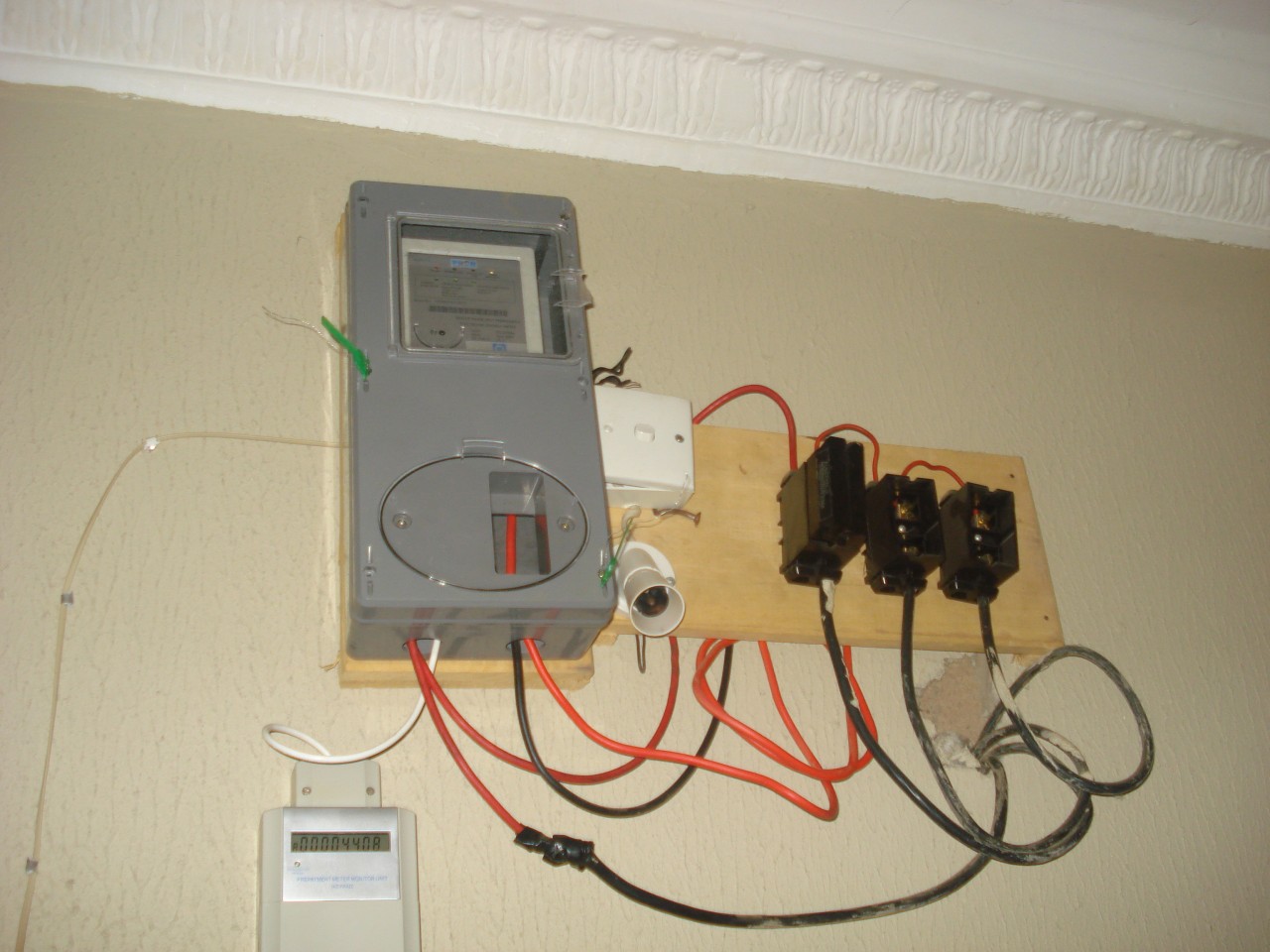
The federal government has reaffirmed that electricity meters being deployed under the Distribution Sector Recovery Programme (DISREP) are free for customers, warning Nigerians not to pay any money for meter supply or installation.

The Director General of the Bureau of Public Enterprises (BPE), Mr Ayodeji Ariyo Gbeleyi, stated this in Abuja at a joint media briefing on DISREP with the managing directors of Nigeria’s 11 Electricity Distribution Companies (DisCos). DISREP is financed through a $500 million World Bank facility.

The DG said the concessional nature of the funding, which comes at single-digit interest rates, makes it more sustainable than commercial borrowing and supports long-term stability in the power sector.

Under the DISREP IPF, 3.2 million smart meters are being procured and installed nationwide over four years through competitive international and local bidding. According to him, close to 700,000 meters have already been delivered, while about 200,000 have been installed across different DisCos.

The DG said, “With DISREP and other Federal Government interventions, the journey to power sector reliability is underway. DISREP is not just a short-term intervention, but part of a broader and coordinated plan of the Renewed Hope Agenda of President Bola Ahmed Tinubu, GCFR, towards building a financially viable and service-oriented electricity market

“Nigerians deserve a power sector that works, one that delivers reliable electricity, protects consumers, ensures value for money, and supports economic growth.

“Together, we shall achieve that! The supply and installation of these meters for customers is free.

It was also disclosed that the government had already paid the contractors to supply and install the meters. DISREP is integrated with other metering initiatives, including the Presidential Metering Initiative and the Meter Acquisition Fund, to accelerate the closing of Nigeria’s metering gap.

On his part, the Managing Director of Abuja Electricity Distribution Company, Mr Chijioke Okwuokenye, warned customers not to pay for meters.

“These meters are to be deployed and installed freely. Anybody asking you to bring money should be reported,” he said.

MD of Eko Electricity Distribution Company (Eko Disco), Mrs Wola Joseph-Condotti, said the company is working closely with the authorities to weed out bad eggs who extort money from customers for meter procurement and installation.

The programme offers significant benefits to consumers, including the removal of upfront meter purchase and installation costs, accurate billing, the elimination of arbitrary estimated billing, improved service accountability by DisCos, better transparency and dispute resolution, and long-term improvements in supply reliability as the sector becomes more financially viable.

For DisCos, Mr Gbeleyi said DISREP provides access to concessional World Bank financing for metering and network upgrades, reduces Aggregate Technical, Commercial and Collection (ATC&C) losses, improves liquidity and revenue assurance, and strengthens operational performance for long-term investment.

He disclosed that $250 million of the facility is dedicated to Investment Project Financing, which supports bulk procurement of the 3.2 million smart meters, deployment of Meter Data Management Systems, and provision of technical assistance and capacity-building programmes to strengthen DisCos’ operations and processes.

Describing DISREP as a landmark transaction, Mr Gbeleyi said it is the first initiative of its kind in which the government, beyond investing in distribution network infrastructure, is deploying meters at scale to bridge the country’s metering gap. He cited official figures showing that Nigeria currently has about 5.66 million unmetered electricity customers.

“The plan is to quickly close that gap. These meters are for everybody. They are for Nigerians. Priority is on unmetered customers,” he said.

He clarified that while the policy targets unmetered customers, DisCos have been allowed to deploy up to 20 per cent of the meters to replace faulty or technologically obsolete units, following feedback from the field.


Adedapo Adesanya is a journalist, polymath, and connoisseur of everything art. When he is not writing, he has his nose buried in one of the many books or articles he has bookmarked or simply listening to good music with a bottle of beer or wine. He supports the greatest club in the world, Manchester United F.C.

Advertisement
Click to comment

Leave a Reply

Your email address will not be published. Required fields are marked *

General

Electricity Workers Issue 21-Day Strike Notice Over Pay, Working Conditions

Published

on

Electricity Workers Nigeria

By Adedapo Adesanya

Electricity workers, under the aegis of the National Union of Electricity Employees (NUEE), have issued a 21-day nationwide strike notice to the federal government, citing unresolved labour grievances and what they described as worsening conditions across the power sector.

They formally notified the Minister of Power, Mr Adebayo Adelabu, of their intention to embark on industrial action if urgent steps are not taken to address the persistent violations of workers’ rights within the Nigerian Electricity Supply Industry (NESI).

In the letter, the union accused power sector operators of refusing to honour collective agreements, implement the 2025 National Minimum Wage Act and effect its consequential adjustments. It also alleged widespread anti-labour practices across power generation and distribution companies.

“We have written several letters to the ministry on these issues, but there has been little or no response,” the union stated, expressing frustration over what it described as official indifference.

Among the grievances listed are non-remittance of pension deductions and Pay-As-You-Earn (PAYE) taxes, denial of workers’ right to unionise, intimidation of staff, and failure to improve welfare despite repeated tariff increases.

The union said in some distribution companies, pension contributions deducted from workers’ salaries have allegedly remained unpaid for years, leaving employees uncertain about their retirement security.

The electricity workers also criticised what they termed the “militarisation” of workplaces, alleging harassment and threats in certain power firms.

According to the union, labour is increasingly being treated as an adversary rather than a critical stakeholder in a sector already struggling with public confidence.

The notice further questioned the performance of investors who acquired power assets during the 2013 privatisation exercise.

The union argued that promises of improved infrastructure, capital injection, metering expansion and better service delivery have not translated into meaningful gains for workers or consumers.

While electricity tariffs have risen multiple times in recent years, the union said workers have seen no corresponding improvement in salaries, promotions, bonuses or working conditions.

Business Post reports that the ultimatum likely places the federal government under pressure to act as a nationwide strike would significantly disrupt power generation and distribution, affecting homes, hospitals, small businesses and critical infrastructure already grappling with unreliable supply.

Continue Reading

General

Oyetola Warns Budget Shortfall Threatens Operations of NPA, NIMASA, Others

Published

on

Adegboyega Oyetola

By Adedapo Adesanya

The Minister of Marine and Blue Economy, Mr Adegboyega Oyetola, has warned that operations of agencies under his ministry were being severely constrained by excessive deductions at source by the Office of the Accountant-General of the Federation.

He disclosed on Tuesday while presenting a N10.5 billion budget proposal for the Federal Ministry of Marine and Blue Economy for the 2026 fiscal year.

He lamented that the allocation was grossly insufficient to effectively execute the ministry’s wide-ranging mandate, critical to Nigeria’s trade, transport efficiency and food security.

Mr Oyetola while defending the ministry’s budget before a joint sitting of the Senate Committee on Marine Transport and the House of Representatives committees on Ports and Harbours; Maritime Safety, Education and Administration; Shipping Services; Inland Waterways; and Ocean and Fisheries, said the proposed budget, which comprises N8.24 billion for capital expenditure, N453.86 million for overheads and N1.81 billion for personnel costs, would only sustain minimal operational continuity rather than deliver meaningful reforms or sectoral growth.

The minister explained that the ministry oversees interconnected subsectors, including ports, shipping, inland waterways, fisheries and aquaculture, which collectively handle over 90 per cent of Nigeria’s international trade by volume, national food and nutrition security, and economic competitiveness.

He noted that while agencies such as the Nigerian Ports Authority (NPA), Nigerian Maritime Administration and Safety Agency (NIMASA) and Nigerian Shippers’ Council (NSC) were self-funding and made significant remittances to the Consolidated Revenue Fund, their operations were being severely constrained by excessive deductions at source by the Office of the Accountant-General of the Federation.

According to him, these deductions had weakened liquidity and reduced the operational flexibility of key agencies responsible for maritime safety, port efficiency and regulatory oversight, with far-reaching consequences including port congestion, higher logistics costs, delayed cargo movement, revenue losses and inflationary pressures.

He stressed that what appeared to be an accounting issue had become a national economic concern.

Mr Oyetola also said that the 2026 budget of the Council for the Regulation of Freight Forwarding in Nigeria (CRFFN) was wrongly placed by the Budget Office under the Federal Ministry of Transportation, even though it is an agency under the Federal Ministry of Marine and Blue Economy, saying the misalignment undermined clarity in oversight and policy coherence within the maritime logistics value chain.

On inland waterways, the Minister appealed for increased funding to curb accidents and loss of lives. He said water transport is globally recognised as significantly cheaper than road transport.

He noted that Nigeria’s heavy reliance on road haulage for over 80 per cent of freight movement had worsened road deterioration and increased the cost of goods, arguing that safer and more efficient inland waterways would ease pressure on roads and lower logistics costs.

On fisheries and aquaculture, Oyetola said Nigeria’s annual fish demand of over 3.6 million metric tonnes far exceeded domestic production of about 1.4 million metric tonnes, sustaining imports valued at more than one billion dollars annually.

He added that post-harvest losses of up to 30 per cent further reduced supply, despite fish being one of the most affordable sourNiger.

“As long as we hinder official trade, individuals will resort to informal channels. Currently, we estimate that up to 50 per cent of our domestic areas have resorted to illegal trade, while only about 30 per cent is conducted legally, which is detrimental to our security.”

He pointed out that “this situation is beneficial for the economies of both countries. It will positively impact our maritime sector, as we expect an increase in transit cargo passing through our ports to Niger, resulting in economic activities for our investors in the maritime industry.

“Additionally, this development will benefit Nigerians in border communities, many of whom are engaged in farming and other economic activities, providing them with opportunities to export goods to Niger.”

Continue Reading

General

Gaya Rallies APC Support for Governor Abba Yusuf

Published

on

Abdullahi Mahmud Gaya

By Abba Dukawa

The independent non-executive director of the Nigeria Sovereign Investment Authority (NSIA), Mr Abdullahi Mahmud Gaya, has called on members of the All Progressives Congress (APC) and key stakeholders in Ajingi, Gaya, and Albasu Local Government Areas of Kano State to close ranks and give their full support to the state governor, Mr Abba Kabir Yusuf.

Mr Gaya described the governor’s defection to the ruling party as a bold and strategic move that reflects his deep commitment to the development and progress of Kano State, noting that APC members and stakeholders in the areas warmly welcomed the governor into the party, alongside elected and appointed officials, party leaders, and other critical stakeholders.

He made this statement during a meeting with APC leaders and stakeholders from the three local government areas, held at his office in the state capital.

According to him, the governor’s courageous decision will strengthen Kano State’s influence at the national level and open new opportunities for economic growth, improved welfare, and greater prosperity for the people.

He also urged party members to take ownership of the democratic process by ensuring they collect their APC membership cards and Permanent Voter Cards (PVCs).

In a show of solidarity and goodwill, Mr Gaya donated N6 million to party members and stakeholders during the meeting as Ramadan support.

Speaking at the gathering, a former Secretary to the State Government and Wazirin Gaya, Usman Alhaji, called on party members to intensify efforts toward strengthening the APC in the area. He said the party’s growing numerical strength in Ajingi, Gaya, and Albasu Local Government Areas already positions it as the party to beat.

Also addressing the meeting, elder statesman and senior stakeholder, Mr Uba Muhammad Danbayye, noted that the party members now recognizes the difference between a mere candidate and a true politician, saying based on Mr Gaya’s leadership style and strong relationship with the people, stakeholders have unanimously resolved to support him and will not field another candidate for the House of Representatives in the upcoming election.

Continue Reading

Trending