General
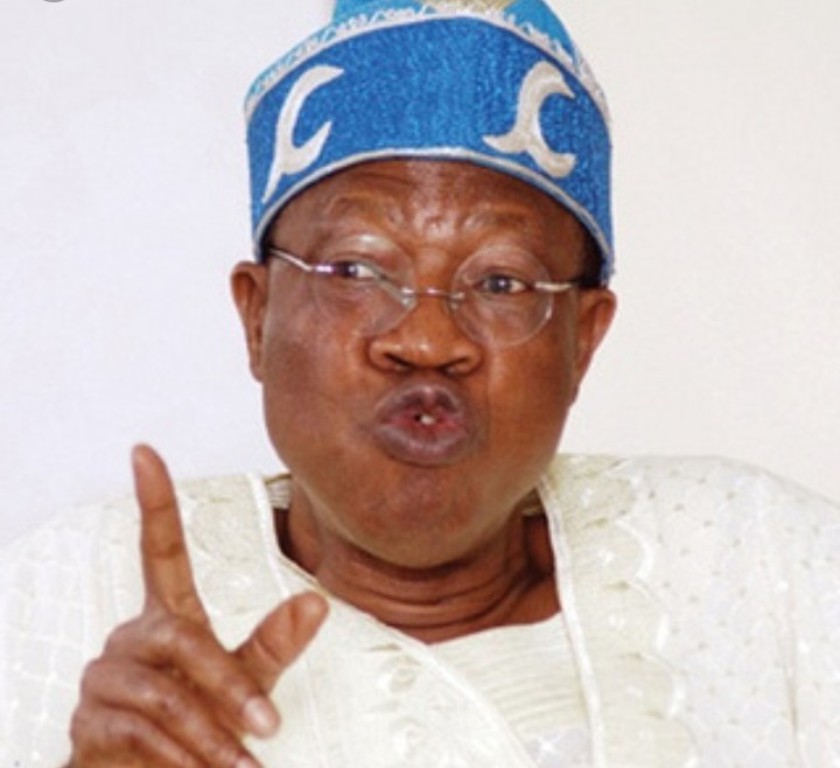
FG not Planning to Frame Anyone up–Minister
By Dipo Olowookere
Federal Government has reacted to claims that it was planning to frame up some highly placed individuals in the country.
On Friday, former President Olusegun Obasanjo alleged that the President Muhammadu Buhari administration was planning to frame him up to allow his arrest and imprisonment.
But reacting to this yesterday, Minister of Information and Culture, Mr Lai Mohammed, said in a statement issued in Lagos that, ”This administration will never engage in a frame-up of innocent citizens. That is neither in the character of President Muhammadu Buhari nor in that of his administration.”
Mr Mohammed said further in the statement issued by his media aide, Mr Segun Adeyemi, that, “Only the guilty should be worried. To paraphrase an African proverb, a man who has no wife cannot lose an inlaw to the cold hands of death.”
According to him, the Buhari Administration will not be distracted by frivolous allegations from any quarter, especially those cleverly choreographed to divert attention from a widely-acclaimed presidential proclamation and to shore up support for a waning and egotistical cause.
The Minister said the administration was too busy trying to clear the mess of 16 years and build on its unprecedented achievements over the past three years to waste its energy and time on framing up anyone or dwelling on issues that are not grounded in fact.
Mr Mohammed said the unprecedented achievements of the Buhari administration were also enough to cause sleepless nights, with the attendant symptoms that include phantasm, for those who had better opportunities to make the country great but floundered on the altar of narcissism.
”The administration is also strongly committed to the tenets of democracy, including freedom of speech and the right to dissent. But we understand that those who, in their time, were untethered to those principles would find it hard to believe,” Mr Mohammed said.
The Minister said it was curious that the frame-up and witch-hunt allegations came a day after a major presidential proclamation reversing some past acts of injustice was made, to the relief and acclamation of a long-expectant nation.
”Apparently, the impact of this proclamation was too much to bear by those who, through acts of omission or commission, helped to deepen the wounds inflicted by the blow of injustice that followed an election that was widely acclaimed to be free, fair and credible, hence they felt the need for a red herring that will distract the nation.
”Added to that is the frustration brought about by the fact that the contraption they have so much hyped as a freeway to power has failed to gain traction. Faced with this double tragedy, even the strongest of men may begin to succumb to a figment of their imagination. They may start crying wolf where there is none,” he said.
General
NNPC, Afreximbank Partner on African Energy Development
By Adedapo Adesanya
The Nigerian National Petroleum Company (NNPC) Limited on Monday said it is partnering with the African Export-Import Bank (Afreximbank) to chart a path for African energy development.
A statement by the company noted that the partnership was discussed last week, when the Group Chief Executive Officer of NNPC Ltd., Mr Bashir Ojulari, received in audience the President and Chairman of the Board of Directors of the Afreximbank, Mr George Elombi, at the NNPC Towers, Abuja.
NNPC said it set out its direction under the Enterprise First framework, positioning the company as a high-performance Partner of Choice built on execution and profitable growth.
Afterwards, both leaders agreed on a shared agenda for continental energy development and industrialisation, and to hold regular strategic sessions, the first session scheduled later in the year.
On financing, the state oil company said it led the discussion on the planned African Energy Bank (AEB), to be headquartered in Abuja, and confirmed its readiness to deepen its investment.
The Cairo-based lender was instrumental in the founding and funding of the energy bank that is soon to be operational.
Afreximbank affirmed its commitment to the company’s growth through risk-sharing, structured financing, and further refinancing to develop Nigeria’s oil and gas resources, the statement added.
General
Funding Gap: MTN, SMEDAN Eye 5 million MSMEs Via mySMEville Academy
By Modupe Gbadeyanka
To close Nigeria’s $158 billion funding gap for 40 million small businesses, the Small and Medium Enterprises Development Agency of Nigeria (SMEDAN) has joined forces with MTN Nigeria to operate a platform known as mySMEville Academy.
The aim is to reach a target of 5 million MSMEs through the mySMEville Academy, e-commerce integrations, and national policy advocacy.
The platform was created as a one-stop shop for resources, with four core areas: information, funding, infrastructure, and markets, to support a sector that contributes 48 per cent of Nigeria’s gross domestic product (GDP) but remains largely underserved.
On Tuesday, May 12, 2026, SMEDAN visited MTN’s head office alongside Angola’s INAPEM, the National Institute of Support for Micro, Small and Medium Enterprises.
Angola’s agency is studying the collaboration between MTN and SMEDAN, which led to the launch of the mySMEville partnership in November 2025.
After a pilot in Lagos onboarded 200 businesses in December, the platform rapidly grew to include over 2,600 businesses nationwide by May 2026. This rapid expansion is essential given that 80 per cent of Nigerian SMEs are currently informal and only 3.9 per cent access formal credit, leaving a staggering $158 billion annual financing gap.
Emphasising the strategic necessity of this collaboration, the Chief Enterprise Business Officer at MTN Nigeria, Ms Lynda Saint-Nwafor, said, “Our goal is simple, we want to be the best technology partner out there, helping African businesses grow fast, compete globally, and make a real, lasting impact.”
Supporting this view, the Director-General of SMEDAN, Mr Charles Odii, said the initiative represents the future of business on the continent, asserting that
“What we are witnessing here is a formidable force for economic progress. Through this deliberate Public-Private Partnership, Nigeria is aligning its public and private sectors to lead the way for Africa,” he stated.
On his part, the Senior Specialist for ICT Segment Management at MTN Business, Mr Olatunbosun Agosu, demonstrated with a live demo how the mySMEville platform, a joint effort by MTN and SMEDAN, is the “one-stop orchestrator” for Nigeria’s 40 million small businesses.
INAPEM’s Chairman, Mr Bráulio Augusto, confirmed that Angola intends to adapt the framework to its own economic reality, noting, “The key thing I learned here is the strength of the public and private sector partnership. mySMEville clearly shows what’s possible, and we will absolutely use these insights as we adapt this model back home in Angola.”
General
Marketers Raise Alarm Over Cooking Gas Scarcity
By Adedapo Adesanya
Gas marketers have expressed worries about the scarcity of Liquefied Petroleum Gas (LPG), otherwise known as cooking gas, and rising prices, with consumers paying as high as N2,000 per kg in some areas.
A press statement by the Nigerian Association of Liquefied Petroleum Gas Marketers (NALPGAM) raised concern about the erratic supply and the hike in the price of cooking gas across the country.
According to them, while prices have gone as high, they are forced to pay as much as N26 million for 20MT of cooking gas, depending on location.
“It is sad and rather very pathetic to inform the general public that the citizens of Nigeria have woken up to buy cooking gas, which should be a social item at a prohibitive cost of over N1,500per kg, while the Marketers are made to pay as much as N25,200,000, or, depending on location, N26,200,000 for 20MT of cooking gas.
“We feel that if the situation is not immediately checked, the citizens may rise against the owners of gas filling stations.
“This sad situation has brought untold hardship to millions of Nigerian households, small businesses, food vendors, and low-income families who rely on LPG for daily cooking and livelihood.
“It is rather worrisome to state that this situation is seriously eroding the substantial progress made by the Government on the usage of Clean Energy in the country,” a part of the statement said.
NALPGAM noted that its members face challenges in sourcing LPG due to persistent supply shortages, high depot prices, logistics bottlenecks, and uncontrollable rising operational costs.
“While millions of Nigerians have embraced cooking gas as a result of the national clean energy transition agenda, it is sad to state that those gains are at risk as households are struggling to refill cylinders, small businesses are folding under rising energy costs, while many families are reverting to firewood and charcoal despite the serious implications for public health, environmental degradation, and deforestation,” it said.
The association warned that if urgent and coordinated actions are not taken immediately, the current crisis could trigger broader consequences, including accelerated food inflation, the collapse of small-scale LPG retail businesses, job losses, reduced investor confidence, and a significant setback to Nigeria’s clean energy and climate commitments.
It called on the federal government, the Ministry of Petroleum Resources, the Nigerian Midstream and Downstream Petroleum Regulatory Authority (NMDPRA), the Nigerian National Petroleum Company (NNPC) Limited, domestic producers, terminal operators, international suppliers, and all critical stakeholders in the LPG value chain to take urgent, coordinated steps to stabilise the market before it degenerates further.
It called for immediate measures to improve the availability and accessibility of LPG nationwide, increased domestic LPG allocation to the Nigerian market, ensuring transparent and equitable distribution of available supply across regions, reduction of bottlenecks in product importation, storage, and distribution, implementation of strategic interventions to stabilise retail prices, and protection of consumers.
The marketers also called for other measures, such as investment in critical infrastructure, including storage and distribution facilities, and adoption of policies that support affordability, sustainability, and long-term growth of the sector.
NALPGAM reaffirmed its commitment to constructive engagement and collaboration with government agencies, regulators, producers, and other stakeholders to develop sustainable solutions that will guarantee an affordable, stable supply and continued growth of the LPG sector.
“In conclusion, it is apposite to state that “We cannot stand by and watch millions of Nigerian families suffer in silence while access to clean cooking energy becomes increasingly difficult and unaffordable. For years, Government and industry operators have worked to move Nigerians away from unsafe fuels. Those gains are now under serious threat”, the statement added.
-
Feature/OPED6 years agoDavos was Different this year
-
Travel/Tourism10 years ago
Lagos Seals Western Lodge Hotel In Ikorodu
-
Showbiz3 years agoEstranged Lover Releases Videos of Empress Njamah Bathing
-
Banking8 years agoSort Codes of GTBank Branches in Nigeria
-
Economy3 years agoSubsidy Removal: CNG at N130 Per Litre Cheaper Than Petrol—IPMAN
-
Banking3 years agoSort Codes of UBA Branches in Nigeria
-
Banking3 years agoFirst Bank Announces Planned Downtime
-
Sports3 years agoHighest Paid Nigerian Footballer – How Much Do Nigerian Footballers Earn