General
FG Plans Return of Toll Gates Across Nigeria
By Dipo Olowookere
Minister of Works and Housing, Mr Babatunde Fashola, has said plans were ongoing to return toll gates across federal roads in the country. The former Governor of Lagos State made this disclosure on Wednesday while briefing newsmen on outcome of the weekly Federal Executive Council (FEC) meeting held on Wednesday.
Mr Fashola said federal government was currently working on how the toll plazas would be modelled, pointing out that this move was to ensure that the roads were properly maintained and kept in good shape for the benefits of motorists and other users.
According to him, plans to put the toll gates on the federal highways were already at an advanced stage, stressing that there was no law that stopped government from returning toll gates on the roads, adding that this time, instead of cash payment, there might be need for electronic mode of payment.
“There is no reason why we can’t toll, there was a policy of government to abolish tolls or as it where, dismantle toll plaza but there is no law that prohibit tolling in Nigeria today.
“We expect to return toll plazas, We have concluded their designs of what they will look like, what materials they will be rebuilt with, what new considerations must go into them.
“What we are looking at now and trying to conclude is how the bank end runs,” the Minister said.
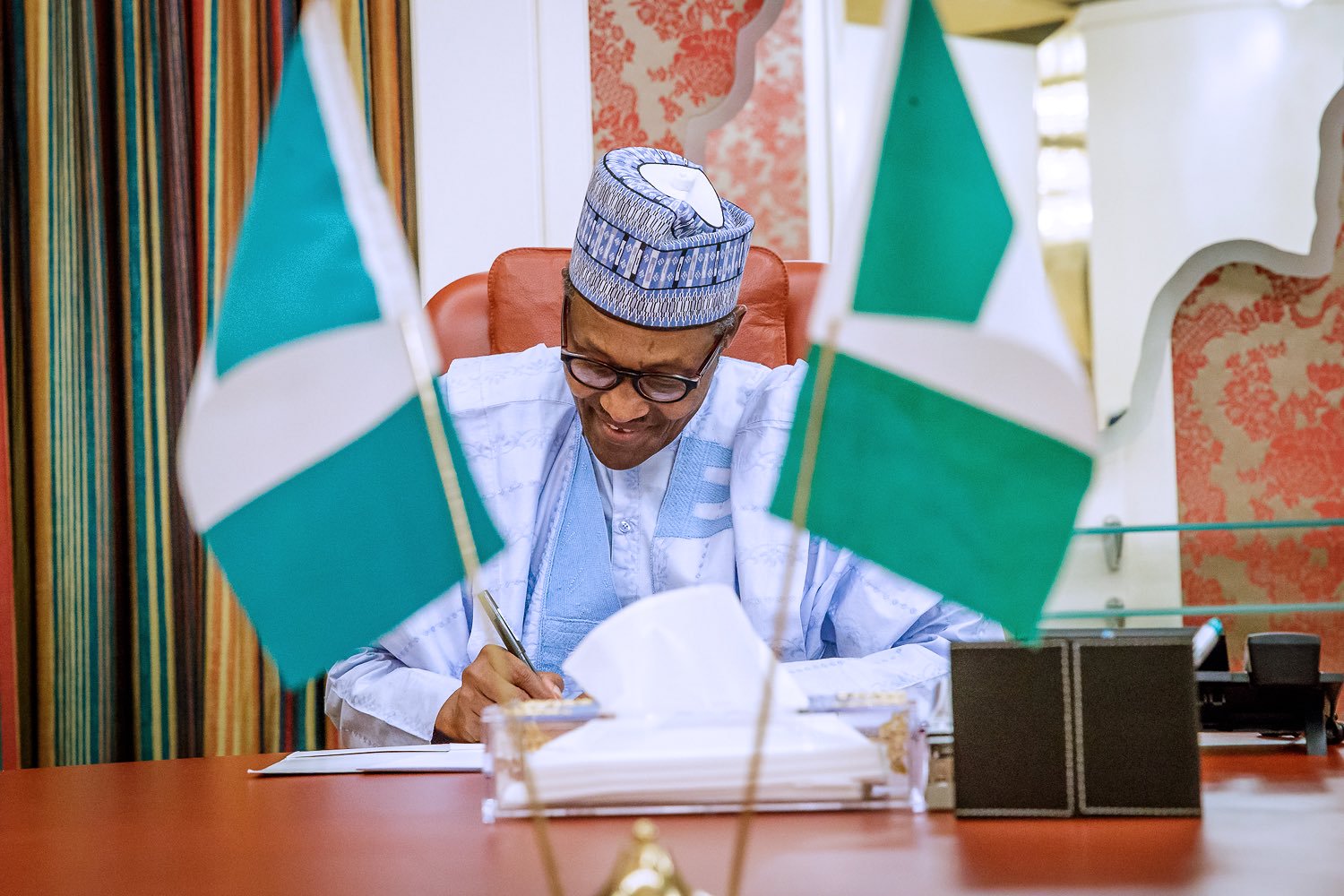
The FEC meeting held today at the at the Council Chamber, Presidential Villa Abuja, was presided over by President Muhammadu Buhari before his departure to South Africa for a crucial meeting with his counterpart, Mr Cyril Ramaphosa.
General
NSC Resolves 19 Complaints, Saves Port Users N348.8m in Q1 2026
By Adedapo Adesanya
The Nigerian Shippers’ Council (NSC) saved over N348.8 million for port users and resolved 19 complaints in the first quarter of 2026.
According to its sectoral data report from the council’s quarterly newsletter, which covered January to March 2026, the agency’s continued intervention in disputes within the maritime sector is aimed at reducing trade frictions and protecting shippers from unfair practices.
A breakdown of the complaint status shows that, out of 32 cases handled during the period, 19 were successfully resolved, 12 are still ongoing, and one has been closed.
In terms of financial impact, the NSC’s dispute resolution efforts led to a total savings of N348,813,072.06 for stakeholders, particularly importers, exporters, freight forwarders, and shipping agents.
Further analysis of the report indicates that shipping companies and their agents accounted for the highest number of complaints, with 22 cases filed against them.
“Other entities complained against include seaport terminal operators (1), government agencies (3), exporters (1), importers (1), de-consolidators (1), and freight forwarders/clearing agents (3).
“The complaints lodged during the period cut across a wide range of operational and financial issues. Prominent among them were container deposit refund disputes, which recorded the highest frequency with five cases, followed by arbitrary charges (4).
Other issues included unsettled demurrage (2), missing cargo (2), service failure (2), damaged cargo (2), wrong port of discharge (2), and non-release of auction cargo (2).
“Additional complaints involved delays in cargo transfer, breach of trust, invoice cancellation, lack of telex release, delay in releasing export documents, export fraud, waiver-related disputes, demurrage and detention of vessels, breach of contract, and unjustified demurrage charges,” the data report stated.
The data also reveals that the majority of complainants were shippers, including importers and exporters, alongside freight forwarders and shipping agents, reflecting the operational challenges faced by key players in Nigeria’s port value chain.
The NSC, as the port economic regulator, noted that it has consistently leveraged its complaints and dispute resolution mechanism to address grievances and ensure fairness in commercial transactions within the maritime industry.
General
FEC Approves Establishment of Research, Innovative Fund
By Adedapo Adesanya
The Federal Executive Council (FEC) has approved the establishment of the National Research and Innovation Development Fund (NRIDF) as part of efforts to strengthen Nigeria’s research, science, technology and innovation sector.
The approval was granted during the council’s meeting presided over by President Bola Tinubu on Monday.
According to a statement issued by the Federal Ministry of Innovation, Science and Technology, Head of Press and Public Relations, Mrs Pauline Sule, the fund will be supervised by the ministry and managed through a 17-member National Council on Research and Innovation.
The council will be chaired by Vice President Kashim Shettima, while the Minister of Innovation, Science and Technology, Mr Kingsley Tochukwu Udeh, will serve as vice chairman.
Reacting to the development, Mr Udeh described the approval as a major step towards building an innovation-driven economy and strengthening Nigeria’s research ecosystem.
He said the initiative aligns with the federal government’s economic agenda aimed at achieving a $1 trillion economy under the Renewed Hope programme.
The Minister, however, noted that the fund would still undergo legislative, administrative and operational procedures before full implementation and disbursement begin.
According to him, the National Research and Innovation Development Fund is expected to provide strategic financial support for researchers, innovators, startups and technology developers across the country when fully operational.
He added that the initiative would help strengthen local research capacity, encourage the commercialisation of innovations and deepen collaboration between academic institutions and industry players.
The ministry also stated that the fund is expected to improve Nigeria’s competitiveness within the global technology and knowledge economy.
General
Court Sentences Man for Fraudulent Crypto Transactions in Lagos
By Aduragbemi Omiyale
One Mr Taofeek Daniel Oriola has been convicted and sentenced to nine years’ imprisonment for money laundering.
He was sentenced by Justice Daniel Osiagor of the Federal High Court sitting in Ikoyi, Lagos, on Monday, May 11, 2026.
His journey to the correctional centre started when he used part of the proceeds of his unlawful activity derived from fraudulent cryptocurrency transactions to acquire some properties, which have now been forfeited to the federal government.
The said properties include a 2014 Range Rover (Supercharged) with VIN Number SALGS3TF7EA180971, a five-bedroom apartment with boys’ quarters in the Ibeju-Lekki area of Lagos State, a parcel of land measuring 653.479 square metres situated at Ibeju-Agbe in Ibeju-Lekki, and one iPhone 16.
The convict, in April 2026, committed the offence contrary to Section 18(2) of the Money Laundering (Prevention and Prohibition) Act, 2022 and punishable under Section 18(3) of the same Act.
Mr Oriola was brought before the court by the Economic and Financial Crimes Commission (EFCC) on a three-count charge bordering on money laundering and concealment of proceeds of unlawful activities.
“That you, TAOFEEK DANIEL ORIOLA (Male), adult, sometime in April 2026 in Lagos State, within the jurisdiction of this court, engaged in the disguise of the true source of a 2014 Range Rover (Supercharged) with VIN No. SALGS3TF7EA180971, which you knew formed part of the proceeds of your unlawful activity derived from fraudulent cryptocurrency transactions, and you thereby committed an offence contrary to Section 18(2) of the Money Laundering (Prevention and Prohibition) Act, 2022 and punishable under Section 18(3) of the same Act.
“That you, TAOFEEK DANIEL ORIOLA (Male), adult, sometime in April 2026 in Lagos State, within the jurisdiction of this court, engaged in the disguise of the true source of a five-bedroom apartment with boys’ quarters situated at Ibeju-Agbe, in the Ibeju-Lekki area of Lagos State, which you knew formed part of the proceeds of your unlawful activity derived from fraudulent cryptocurrency transactions, and you thereby committed an offence contrary to Section 18(2) of the Money Laundering (Prevention and Prohibition) Act, 2022 and punishable under Section 18(3) of the same Act,” two of the three charges read.
After pleading “guilty” to the charges when read to him, Justice Osiagor sentenced him to three years’ imprisonment on each count, to run concurrently, with an option of a N200,000 fine on each count. The judge also ordered him to undertake seven days of community service.
-
Feature/OPED6 years agoDavos was Different this year
-
Travel/Tourism10 years ago
Lagos Seals Western Lodge Hotel In Ikorodu
-
Showbiz3 years agoEstranged Lover Releases Videos of Empress Njamah Bathing
-
Banking8 years agoSort Codes of GTBank Branches in Nigeria
-
Economy3 years agoSubsidy Removal: CNG at N130 Per Litre Cheaper Than Petrol—IPMAN
-
Banking3 years agoSort Codes of UBA Branches in Nigeria
-
Banking3 years agoFirst Bank Announces Planned Downtime
-
Sports3 years agoHighest Paid Nigerian Footballer – How Much Do Nigerian Footballers Earn