General
FG Targets 25 million Women in New National Programme Scale-up
By Adedapo Adesanya
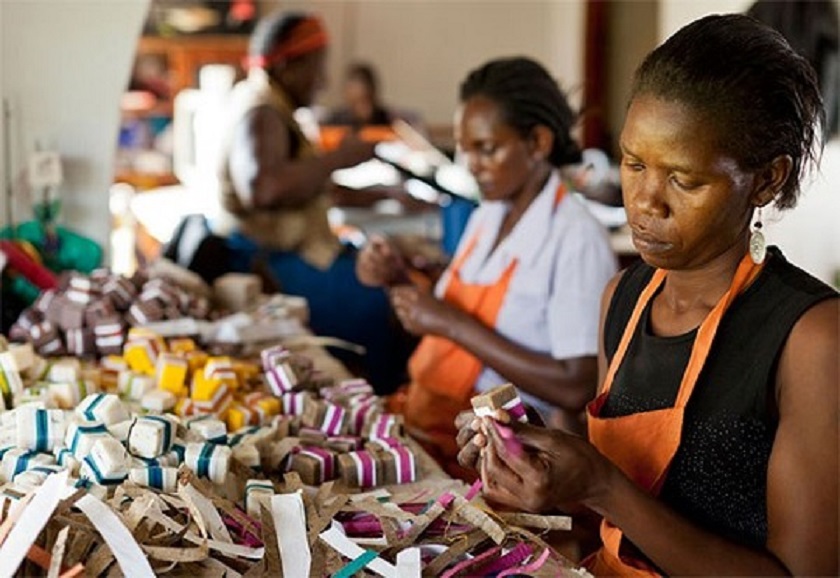
The federal government has launched the Nigeria for Women Programme Scale-Up (NFWP-SU), a strategic investment initiative which is expected to target over 25 million Nigerian women nationwide.
In a Friday statement, it was disclosed that President Bola Tinubu this week inaugurated the NFWP-SU programme, declaring the initiative a strategic national investment and unveiling the government’s ambition to expand its reach to over 25 million Nigerian women across the country.
According to the statement, the President, represented by Vice President Kashim Shettima, said the scale-up marks a decisive shift in Nigeria’s development strategy, with women’s economic empowerment, family stability, and social development placed firmly at the centre of national growth.
He stressed that Nigeria cannot achieve sustainable prosperity while half of its population remains structurally constrained.
“Women are not peripheral to national development. They are central drivers of productivity, custodians of family stability, and indispensable partners in our ambition to build a resilient, competitive and prosperous nation,” the President said, noting that empowering women is essential to job creation, food security, financial inclusion and economic diversification under the Renewed Hope Agenda.
President Tinubu described the programme as more than a social intervention, calling it “a strategic investment in Nigeria’s economic infrastructure.”
He said the success of Phase I of the programme, which reached over one million beneficiaries across six states, provided strong evidence that structured, data-driven empowerment models deliver measurable, lasting impact.
Building on that evidence, the President announced a bold national ambition to scale the programme beyond its current targets to reach 25 million women nationwide, creating a sustainable platform for women’s economic inclusion embedded in federal, state and local systems.
He called on development partners, particularly the World Bank, to support the expansion through financing, technical assistance and innovation.
According to the President, the integration of digital platforms such as the Happy Woman App, identity verification and transparent targeting reflects the administration’s insistence on measurable and verifiable public policy.
“The work of the Ministry has shown what focused execution can achieve. This is how public trust is rebuilt and how government resources reach real people with real impact,” he said.
On his part, World Bank Country Director for Nigeria, Mathew Verghis, said the Bank was honoured to co-finance the NFWP-SU with the Federal and State Governments, describing it as fully aligned with the Bank’s new Country Partnership Framework for Nigeria, which prioritises unlocking economic opportunities, strengthening private sector linkages and creating more and better jobs.
Mr Verghis noted that Nigerian women remain disproportionately affected by poverty, with 64.3 per cent living below the lower-middle-income poverty line, despite their critical contributions to agriculture, trade and enterprise.
He said the Women Affinity Group (WAG) model promoted under the programme has proven to be a powerful tool for lifting women out of poverty by enabling collective savings, access to credit, financial discipline and enterprise growth.
Citing examples from the field, he explained that over 28,000 WAGs currently empower about 600,000 women across Nigeria, allowing them to save together, lend responsibly, invest in businesses and transition into formal financial services.
He added that scaling such models could unlock enormous economic gains, noting estimates that reducing gender inequality could increase Nigeria’s annual GDP growth by more than 1.25 percentage points, while closing productivity gaps across key sectors could add nearly $23 billion to the economy.
“This is smart economics. When women thrive, communities grow stronger, and economies become more resilient,” Mr Verghis said.
Also speaking at the event, Mr Robert S. Chase, World Bank Practice Manager for Social Protection and Jobs, described the Nigeria for Women Programme Scale-Up as one of the most ambitious gender-focused social and economic interventions currently being implemented in Africa.
He said the programme reflects a strong partnership between Nigeria and the World Bank, anchored on evidence, innovation and a shared commitment to lifting millions of women out of poverty.
Mr Chase noted that the programme’s strength lies in its ability to build sustainable systems rather than short-term relief, particularly through the Women Affinity Groups model, which combines social capital, financial inclusion and access to productive opportunities.
According to him, the scale-up phase demonstrates Nigeria’s readiness to institutionalise women’s empowerment as a core development strategy and not merely a welfare initiative.
The NFWP-SU Phase II is a $540 million programme, co-financed by the World Bank and the Federal and State Governments, expanding implementation to all 36 states and the Federal Capital Territory. It aims to directly reach five million women, generate about 4.5 million jobs, and benefit nearly 19.5 million Nigerians indirectly, while laying the groundwork for the broader expansion to 25 million women.
Under the leadership of Minister Imaan Sulaiman Ibrahim, the Ministry of Women Affairs and Social Development has positioned the programme as the centrepiece of wider social and economic reforms.
In Phase I alone, over 26,500 Women Affinity Groups were formed with more than 560,000 members, who collectively saved over N4.9 billion, expanded businesses, paid school fees and met household health needs.
The model has since attracted international interest, with other countries seeking to understudy Nigeria’s experience.
Beyond economic empowerment, the ministry has linked the programme to digital inclusion, civic identity, child protection and family welfare, while rolling out complementary initiatives in agribusiness, energy access, skills development and protection services.
General
Terra Industries Unveils Defence Drones, Robots to Support Nigerian Military
By Adedapo Adesanya
Nigeria-backed startup Terra Industries has launched drones and mine-clearing robots for the country’s military use to fight Islamic militants and reduce reliance on imported defence equipment.
The startup on Monday unveiled interceptor drones, mine-clearing unmanned vehicles and battlefield intelligence software that officials said could help troops confronting insurgents who have increasingly used roadside bombs and drones in recent attacks.
The launch shows a growing effort by Nigeria to reduce dependence on imported military hardware and build domestic defence manufacturing capacity, after years of buying aircraft, armoured vehicles and surveillance systems from countries including China, Turkey, Pakistan and the United States.
However, procurement delays, maintenance bottlenecks and rising foreign exchange costs have strengthened the case for local production, with Terra Industries among the first of such beneficiaries.
Terra Industries had previously focused on civilian drones and security technology before expanding into defence systems. In February, it signed a pact with Defence Industries Corporation of Nigeria (DICON) as part of efforts to boost the country’s defence industrial capacity and advance indigenous high-technology development.
“We are unveiling new defence systems such as our interceptor UAVs, our minesweepers, ground vehicles that can detect IEDs on the ground, and our battlefield intelligence software,” according to Mr Nathan Nwachukwu, the chief executive officer of the firm.
The need for security has risen in recent years, as groups such as Islamic State and al-Qaeda are gaining ground in Africa, converging along a swathe of territory that stretches from Mali to Nigeria, which is also battling with Boko Haram and other cells which remain active despite repeated military offensives.
Militants have stepped up attacks against army positions using improvised explosive devices (IEDs) and drones, forcing armies to invest in counter-drone systems, electronic warfare and autonomous ground equipment.
Major General Babatunde Alaya, head of the state-owned DICON, said collaboration with Terra Industries was necessary, given troop casualties caused by hidden explosives and roadside bombs.
DICON has long been central to Nigeria’s ambition to produce more of its own defence equipment, but progress has historically been slow. Partnerships with private firms are increasingly seen as a faster route to innovation and scale.
Terra Industries, which is valued at $100 million, has also announced plans to expand beyond Nigeria, including a manufacturing facility in Ghana, signalling ambitions to serve a wider African market and position itself in the region’s growing security technology industry.
General
Tinubu Tasks Ambassadors to Attract Foreign Investment
By Adedapo Adesanya
President Bola Tinubu has charged Nigeria’s newly appointed ambassadors and high commissioners to help pursue foreign investments from their designated countries, charging them to strengthen strategic partnerships and reposition the country’s global image in line with evolving diplomatic realities.
This is contained in a statement by Mr Yomi Odunuga, Special Adviser on Media and Publicity to the Secretary to the Government of the Federation (SGF), Mr George Akume.
According to Mr Odunuga, the President, represented by the SGF, gave the charge at the opening of an induction course for the envoys in Abuja.
The President said that the appointments of the envoys reflected the administration’s confidence in their capacity to advance Nigeria’s interests on the international stage.
He noted that the global system was undergoing rapid transformation driven by shifting geopolitical dynamics, economic uncertainties, technological disruptions, climate challenges and emerging security threats.
He added that the developments had made the role of diplomats more critical than ever.
”The international system is evolving rapidly. We must be prepared to meet these challenges by focusing on how best to protect and promote Nigeria’s national interest,” he said.
President Tinubu urged the envoys to adopt a modern, results-oriented approach to diplomacy by combining traditional methods with digital engagement, public diplomacy and strategic communication.
He underscored the importance of telling Nigeria’s story in a compelling and credible manner while projecting the achievements of his administration, also calling on them to be proactive and innovative in fostering partnerships, promoting trade and attracting foreign direct investment and technology to Nigeria.
According to him, safeguarding the welfare of Nigerians in the diaspora must remain a top priority.
He also announced a reordering of Nigeria’s foreign policy framework, known as the 4D Doctrine.
He said that the doctrine, originally anchored on Democracy, Development, Demography and Diaspora, had now been rearranged to Demography, Development, Diaspora and Democracy.
According to him, the adjustment places Nigerians at the centre of foreign policy and is aimed at ensuring that international engagements deliver tangible benefits to citizens.
The president further stressed the need for professionalism, integrity and patriotism in the conduct of diplomatic duties, reminding the envoys that they serve not only as government representatives, but also as custodians of the country’s image abroad.
He also emphasised accountability, urging missions to be result-driven, prudent in resource management and guided by clear, measurable goals that would contribute to economic growth and national development.
He encouraged the participants to fully engage in the induction programme, noting that it was designed to equip them with the knowledge and skills required for effective diplomatic service in a rapidly changing world.
He commended the National Assembly for the swift confirmation of the nominees and urged the envoys to justify the confidence reposed in them.” You have a special responsibility in helping to reposition Nigeria in global affairs. The world is watching,” he said.
General
Aisha Achimugu Denies $13m Discovery Claim, Calls Report Misleading
By Adedapo Adesanya
Lagos-based socialite and chief executive of Oceangate Engineering Oil & Gas Ltd, Ms Aisha Achimugu, has denied reports that $13 million was discovered in her residence, describing the claim as inaccurate and misleading.
Ms Achimugu denied the claims during an appearance on Channels Television’s Politics Today late on Monday, where she addressed allegations surrounding a raid on her home by the Economic and Financial Crimes Commission (EFCC).
Addressing the widely circulated claim, Ms Achimugu insisted that no such sum was recovered from her residence.
“Let me also correct an impression that 13 million dollars was not found in my house when my house was raided. And let me also correct that what is published on the website of EFCC is a certain state. I want to believe that it is not Lagos state because the state was not clear.
“So, it’s what is out there. So I won’t also entertain that it’s a Lagos state because that hasn’t been thrown at me. My house was raided, yes, but only $50,000 and 13 million naira belonging to my mom were found in my house and then again, my personal belongings. I don’t know where Nigerians got the impression that I had 13 million dollars in my house. I’m not a bank, so I won’t keep 13 million dollars in my house,” she stated.
She, however, declined to comment extensively on the matter, citing ongoing legal proceedings, but explained that the foreign currency in her possession was kept for practical reasons, noting that her children study abroad.
“It is important to have some foreign currency available for emergencies,” she said.
Speaking on the source of her wealth, Ms Achimugu maintained that her financial success is rooted in legitimate business ventures.
She disclosed that her company participated in oil block bidding rounds between 2022 and 2024 and emerged successful through what she described as a transparent process. Achimugu also dismissed suggestions that her success is tied to political connections.
Recall that Justice Emeka Nwite of the Federal High Court in Abuja affirmed the final forfeiture of $13 million linked to the Lagos socialite in March.
Justice Nwite had, on August 22, 2025, granted the anti-graft agency’s motion ex parte for an interim order forfeiting the sum of $13 million linked to Oceangate Ltd to the Federal Government over allegations that the fund was proceeds of unlawful activity.
The judge had then directed the commission to publish the order in a national daily for interested people to show cause within 14 days why the fund should not be permanently forfeited to the federal government.
In 2024, the businesswoman gained significant media attention for a seven-day birthday celebration in Grenada, which was attended by high-profile guests, reportedly including Lagos State Governor Babajide Sanwo-Olu.
The socialite also defended her widely publicised birthday celebration, noting that it had been “planned for 10 years” and was not funded with any money under investigation.
-
Feature/OPED6 years agoDavos was Different this year
-
Travel/Tourism10 years ago
Lagos Seals Western Lodge Hotel In Ikorodu
-
Showbiz3 years agoEstranged Lover Releases Videos of Empress Njamah Bathing
-
Banking8 years agoSort Codes of GTBank Branches in Nigeria
-
Economy3 years agoSubsidy Removal: CNG at N130 Per Litre Cheaper Than Petrol—IPMAN
-
Banking3 years agoSort Codes of UBA Branches in Nigeria
-
Banking3 years agoFirst Bank Announces Planned Downtime
-
Sports3 years agoHighest Paid Nigerian Footballer – How Much Do Nigerian Footballers Earn