Connect with us

General

FG to Pay N180.8bn Subsidy for Band B to E Customers

Published

on

electricity customers in Nigeria

By Adedapo Adesanya

The Nigerian Electricity Regulatory Commission (NERC) says the federal government is set to pay approximately N180.8 billion in electricity subsidies for power consumers in Bands B to E whose tariffs have remained frozen since December 2022.

Band B to E customers get between 4 to 16 hours of electricity on average and pay around N68 per kilowatts.

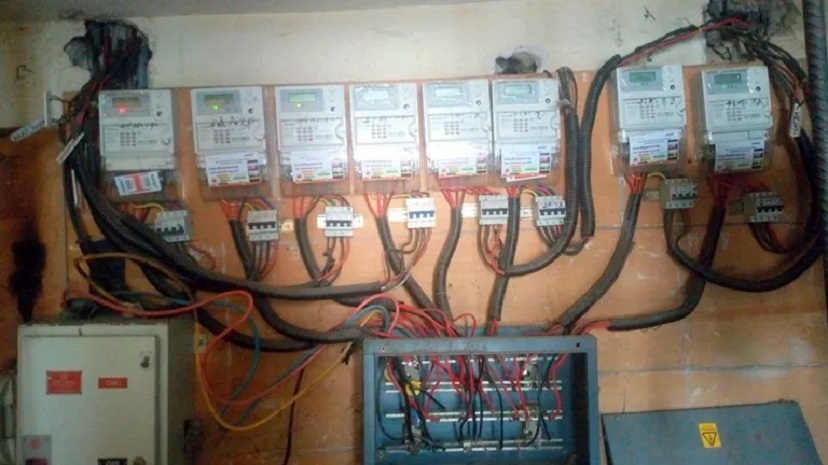
Also, according to NERC’s 2023 Annual report released in Abuja on Monday, about 7.3 million electricity customers remain unmetered in the country.

These developments were outlined in the September 2024 Supplementary Order of the Multi-Year Tariff Order (MYTO) of 2024, which was also issued yesterday in Abuja by the power sector regulator, led by Mr Sanusi Garba.

The latest figures released by the regulator showed that out of over 13.16 million registered customers, the electricity distribution companies also known as the DisCos, have been able to meter only 672,539 customers.

This shows the slow-paced metering efforts by the DisCos, leaving a larger amount of customers heavily relying on the controversial estimated billing system.

As of 31st December 2023, only 5,842,726 (44.4 per cent) of the registered 13,162,572 customers in the Nigerian Electricity Supply Industry were metered.

DisCos installed 672,539 end-use customer meters in 2023. A total of 25,847 meters were installed under the National Mass Metering Program (NMMP) framework while 585,265 meters were installed under the Meter Asset Provider (MAP) framework.

The report showed that 6,912 meters were installed through the Vendor Finance Metering framework, while 53 end-use customer meters were installed through the DisCo Financed framework.

This is as industry experts have raised concerns that the slow pace of metering could worsen billing disputes and customer dissatisfaction.

Meanwhile, electricity subsidy dropped to N151.30 billion during the year, indicating a 17.7 per cent decline from 2022.

The report read: “A Minimum Remittance Obligation (MRO) adjusted invoice of N858.03 billion was issued by Nigerian Bulk Electricity Trading plc (NBET) and Market Operator (MO) for energy costs and administrative services to DisCos in 2023.

“The DisCos remitted a total of N706.73 billion, resulting in a deficit of N151.30 billion during the year. Based on the above, the gross DisCo remittance rate to the upstream segment for 2023 was 82.37 per cent.”

According to the report, NERC has approved N26.4 billion for Abuja consumers, N23.76 billion for Ikeja Disco, N22.21 billion for Ibadan Disco, N19.92 billion for Eko Disco, and N14.87 billion for Benin Disco this month.

In the September subsidy cycle, Enugu Distribution Company (Disco) is set to receive N14.61 billion, while Port Harcourt Disco will be allocated N13.45 billion. Kaduna Disco will benefit from N13.14 billion, Kano Disco will receive N12.96 billion, and Jos Disco will be entitled to a subsidy of N11.68 billion. Yola Disco is slated to get N8.06 billion in this round of disbursements.

“In line with the policy direction of the federal government on electricity subsidy, the allowed tariffs for Bands B-E customer categories shall remain frozen at the rates payable since December 2022 subject to further policy direction by the government,” NERC said.

In addition, NERC has imposed fines totalling N8.3 billion on the country’s 11 DisCos for overcharging customers. NERC has also directed the Discos to compensate affected consumers for the improper billing.


Adedapo Adesanya is a journalist, polymath, and connoisseur of everything art. When he is not writing, he has his nose buried in one of the many books or articles he has bookmarked or simply listening to good music with a bottle of beer or wine. He supports the greatest club in the world, Manchester United F.C.

Click to comment

Leave a Reply

Your email address will not be published. Required fields are marked *

General

NBA Elects Oyinkansola Badejo-Okusanya as Second Ever Female President

Published

on

Oyinkansola Badejo-Okusanya

By Adedapo Adesanya

The Nigerian Bar Association (NBA) has elected Mrs Oyinkansola Badejo-Okusanya, a Senior Advocate of Nigeria (SAN), as its next president after she polled the most votes when voting officially ended on Sunday morning.

‎Mrs Badejo-Okusanya, the only female among the three presidential candidates, polled 12,317 votes to emerge the winner of the election, which was held through electronic voting for 24 hours, from 7:35 am on Saturday to 7:34 am on Sunday.

‎She defeated her two challengers, polling 47.18 per cent of the 26,106 ballots cast in the presidential election, based on the final tally. Her closest challenger, Mr Lateef Akangbe (SAN), garnered 7,934 votes, representing 30.39 per cent of the total votes cast, while the third candidate, Mr Olumuyiwa Akinboro (SAN), polled 5,855 votes, representing 22.43 per cent, to emerge third in the contest.

The Electoral Committee of the NBA (ECNBA) Chairman disclosed that a total of 26,106 votes were recorded for the highly disputed presidential election.

With her victory, Mrs Badejo-Okusanya will become the 33rd President of the legal association, successfully re-enacting a 34-year-old history as the second female to lead the NBA since its formation in 1933.

Meanwhile, Mr Afam Okeke was elected General Secretary of the legal body, having polled a total of 8,478 votes to defeat his opponents.

All the elected officials will be in office for two years, spanning 2026 to 2028.

The NBA president-elect was absent when the results of the election were announced at the NBA headquarters in Abuja. A member of her campaign team, Mr Aminu Gadanya (SAN), revealed that she had a flight delay and declared her resolve to extend a “handshake of friendship” to all the aggrieved candidates.

In his remarks after the results were announced, the outgoing President of the NBA, Mr Afam Osigwe (SAN), noted that the election faced several challenges, including a cyberattack that almost derailed the electoral process.

“Many went to great lengths to truncate the electoral process. They maligned the process with their utterances, but we held firm. Every effort to derail the process failed,” Mr Osigwe stated.

He urged the winners to be magnanimous in victory, warning that they should celebrate moderately.

“This is a trying time for the Bar. Many people may still go to great lengths to rubbish the association. However, this is a time for healing. At the end of the day, let the Bar be the winner,” he added.

He said the ECNBA would carry out an in-depth analysis, especially of the challenges encountered, so as to come up with recommendations that will engender greater confidence in the association’s electoral process.

“The cyberattack shows that we must do more, not only for data protection, but to protect our electoral integrity. We must insulate our electoral process from such activities.

“Someday the story will be told of how the ICT system had to be rebuilt and moved to a safer server to ensure that the election was held.

“The Bar must always protect its independence and eternally determine the course of its electoral process,” the outgoing NBA President added.

Continue Reading

General

Digital Switchover: NBS, NigComsat Train Installers in Ibadan

Published

on

Charles Ebuebu DG NBC Train Installers Digital Switchover

By Modupe Gbadeyanka

Over 50 skilled technicians drawn from various states across the South-West region of Nigeria converged on Ibadan, Oyo State, on Friday for a comprehensive technical and sensitisation training programme for set-top box installers and associated reception equipment technicians.

This training was organised by the National Broadcasting Commission (NBC) in partnership with the Nigerian Communications Satellite Limited (NIGCOMSAT) to guarantee a smooth, efficient, and error-free rollout of Nigeria’s digital broadcasting migration.

Nigeria’s journey toward digital terrestrial television has spanned nearly two decades. The country formally adopted the digital switchover policy in 2008 in line with the International Telecommunication Union’s (ITU) 2006 global mandate, which set a June 2015 deadline for member states.

Successive missed targets in 2017 and beyond stemmed from funding constraints, policy inconsistencies, infrastructure gaps, and logistical challenges. While pilot projects were implemented in Plateau, Lagos, Kano, Enugu, Kwara, Osun, Kaduna, and the Federal Capital Territory, nationwide coverage remained a distant goal.

After substantial public investment exceeding N60 billion with limited results, the federal government unveiled a bold, renewed strategy in 2025 titled The Big Picture on June 17, 2026, with a firm analogue switch-off date set for December 31, 2028.

The new framework introduces a hybrid broadcasting model that intelligently combines Digital Terrestrial Television (DTT), Direct-to-Home (DTH) satellite delivery via NIGCOMSAT-1R, and Internet Protocol (IP)-based distribution.

By prioritising satellite technology, Nigeria leverages its sovereign satellite assets to significantly reduce dependence on expensive terrestrial transmission infrastructure. This approach is projected to accelerate digital television rollout by over 65 per cent while delivering near-instantaneous national coverage.

The Head of the Digital Switchover (DSO) unit and Deputy Director of Public Affairs at the NBC, Mrs Clementine Usman-Wamba, noted that the Ibadan session is the first of many planned across Nigeria’s geopolitical zones.

The Ibadan training directly addresses the technical demands of this hybrid ecosystem. Installers will be equipped with skills in satellite dish alignment for DTH, terrestrial antenna optimisation for DTT signals, and the configuration of hybrid reception devices.

Given the significant departure from analogue systems and earlier pilots, this sensitisation is essential to minimise installation errors, reduce service disruptions, and ensure that even households in rural and underserved communities can enjoy seamless access to superior digital broadcasts.

The FreeTV platform, built on open-standard DVB-S2 technology, will offer up to 100 free-to-air high-definition channels to an estimated 40 million television households across the country.

For terrestrial reception, Nigeria has adopted the advanced DVB-T2 standard with MPEG-4 AVC compression, which supports up to 20 channels per frequency—far more efficient than previous systems.

Consumers can access the service using affordable DVB-S2-compatible set-top boxes (priced between N15,000 and N25,000) or smart TVs with built-in DVB-T2 digital tuners.

Beyond technical excellence, the DSO represents a major national economic transformation project. The reallocation of broadcast spectrum (the “digital dividend”) will unlock new opportunities in telecommunications and broadband services. The advertising market is projected to expand by up to N605.2 billion, while local manufacturing and assembly of reception equipment is expected to generate over 20,000 jobs.

Continue Reading

General

NIMASA Launches Blue Economy Accelerator for Maritime Startups

Published

on

Nigeria Blue Economy

By Adedapo Adesanya

The Nigerian Maritime Administration and Safety Agency (NIMASA) has introduced the Blue Economy Accelerator Programme, a strategic initiative to identify, nurture, and accelerate innovative startups that will contribute to the sustainable growth of Nigeria’s marine and blue economy.

The Blue Economy Accelerator Programme is aimed at attracting young, vibrant minds with innovative ideas capable of transforming Nigeria’s maritime ecosystem.

The Director-General of NIMASA, Mr Dayo Mobereola, said that through the initiative, participants will receive structured business development support, industry mentorship, and technical guidance to convert promising concepts into viable ventures that address critical challenges and opportunities within the blue economy.

“The programme reflects NIMASA’s commitment to supporting the implementation of the vision of the Federal Ministry of Marine and Blue Economy in unlocking the immense potential of the blue economy by empowering young innovators, entrepreneurs, and technology-driven enterprises. We at NIMASA want to provide a platform for investors to identify young talents and invest in them,” he said.

The NIMASA DG commended the Minister of Marine and Blue Economy, Mr Adegboyega Oyetola, for codifying the Marine and Blue Economy Policy as a clear roadmap for the sector’s development and also urged young Nigerians to embrace the programme, which has the potential to transform raw talents into big investments in the maritime sector.

Applications are open to startups and innovators developing solutions across several strategic sectors, including marine waste management and the blue circular economy; aquaculture And sustainable fisheries; maritime technology and logistics innovation; ocean energy including wave, tidal, and offshore renewable energy; marine tourism and coastal recreation; marine biotechnology such as, ocean data and analytics; green Shipping, including vessel decarbonization; smart port solutions; autonomous marine vehicles; biofouling prevention technologies; and coastal resilience through nature-based coastal defence solutions.

The first phase of the programme is expected to attract a minimum of 150 high-quality applications from within and outside the country, provided they are Nigerian citizens.

Continue Reading