
General
Full Text of President Tinubu’s June 12 Speech at National Assembly

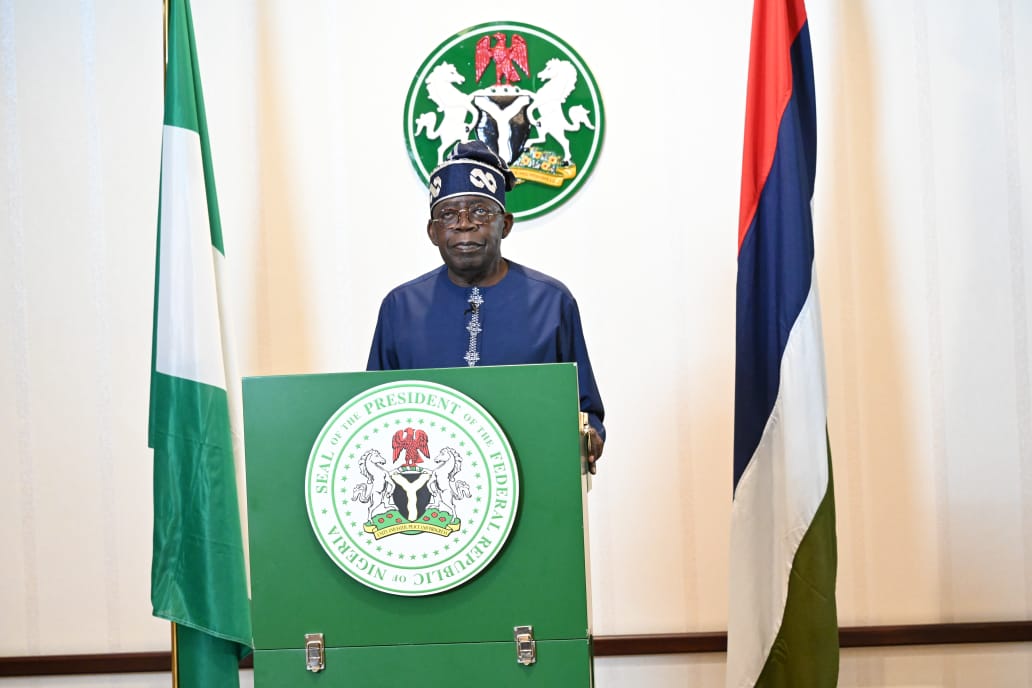
Protocol:
With profound honour, I stand before this joint session of our National Assembly; a parliament that embodies the will of the Nigerian people.
- Today, as I entered this grand edifice built from the sweat and toil of our democratic yearning, my heart stirred. It was a blend of accomplishment and resolve.
- I felt a sense of collective accomplishment when I realised how far we had come as a nation. Since 1999, democracy has risen from the ashes and destitution of military rule to take its rightful place as the only mode of governance of our resilient and beloved people.
- With every footstep I took through these hallowed halls up to the moment I now stand before you, I remembered that we still have much further to go.
- To achieve this progress, we sought an elective office to lead this nation forward. Thus, I hereby affirm before our Merciful and Almighty God and all men my resolve to do all that I can to safeguard and build our democracy as the Divine hand intends for us to do.
- Since 2018, we have celebrated Democracy Day on this day; to commemorate the sacrifices of the men and women who fought to restore democratic governance to Nigeria.
- Let me pay tribute to former President Muhammadu Buhari for reaching back into history to rectify a national misdeed by making June 12 Democracy Day and by officially acknowledging Chief Moshood Kashimawo Olawale Abiola and his running mate, Babagana Kingibe, as the victors and thus duly elected President and Vice President respectively of Nigeria after the June 12, 1993 elections.
- Year by year, election after election, every time we debate instead of battle, discuss instead of fight, and argue instead of destroy, we preserve the institutions of democracy. More importantly, we weave the culture of democracy into the very fabric of our nation.
- Whilst Chief MKO Abiola is June 12’s central figure, we must not forget the long list of those who equally deserve to be called heroes of Nigerian democracy.
- We must celebrate the courage of Alhaja Kudirat Abiola and Pa Alfred Rewane, both of whom were murdered by agents of military repression. We also remember the many civil rights activists, journalists, and politicians imprisoned, exiled, tossed aside, tortured and beaten by the military regime.
- We remember Chief Anthony Enahoro, Commodore Dan Suleiman, Chief Abraham Adesanya, Ayo Adebanjo, Chief Gani Fawehinmi, Balarabe Musa, Ganiyu Dawodu, the journalist Bagauda Kaltho, and Commodore Ndubuisi Kanu. I mention these names not to exclude or degrade the profound contributions of anyone else, but to illustrate, through these few heroes, the universality of our pursuit of democracy.
- The struggle was never the province of any one group or section of the country, it was pan-Nigerian in its conception and will be even more pan-Nigerian as we strive to perfect it.
- It is fitting that I come to this chamber. You are the authors of the people’s law, and I must be their faithful implementer. While we may not always agree, we must forge a way to work together because this is what democracy demands of us. I pledge myself to this cooperation and ask that you do the same for the good of our people.
- Mr. Chairman, the National Assembly has acted to uphold democratic ideals at every critical moment in our national history. In 2006, the 5th National Assembly protected our democracy against an unseemly third-term bid that would have ripped our constitution apart. In 2010, the National Assembly, through the doctrine of necessity, opened the door for then-Vice President Goodluck Jonathan to become the acting President following the illness of his predecessor.
- Even under the military, the National Assembly tried to protect our democracy. After General Abacha took over power on November 17, 1993, and dissolved the National Assembly, some of us, led by Senator Ameh Ebute, the Senate President in the 3rd Republic, defied the General and his goons to reconvene in the Old Parliament Building in Lagos. We were jailed for our defiance.
- On behalf of a grateful nation, I commend your invaluable role in lawmaking, oversight, and constituency representation.
- At this point, I plead for your indulgence so that I may put a terrible rumour to bed.
- To those who ring the alarm that the APC is intent on a one-party state, I offer you a most personal promise. While your alarm may be as a result of your panic, it rings in error. At no time in the past, nor any instance in the present, and at no future juncture shall I view the notion of a one-party state as good for Nigeria. I have never attempted to alter any political party registration with INEC. Equally, my friends, we cannot blame anybody seeking to bail out of a sinking ship even without a life jacket.
- Look at my political history. I would be the last person to advocate such a scheme. In 2003, when the then-governing party tried to sweep the nation clean of political opposition through plot and manipulation, I was the last of the progressive governors standing in my region.
- In all their numbers and false grandeur, they boasted of ruling, not governing, Nigeria for the next half century or more. Where are they now?
- Yet, I stood alone. My allies had been induced into defeat. My adversaries held all the cards that mortal man could carry. Even with all of that, they could not control our national destiny because fate is written from above. A greater power did not want Nigeria to become a one-party state back then. Nigeria will not become such a state now.
- The failed effort to create a one-party state placed progressive political forces on a trajectory to form the APC. It put me on the trajectory which has brought me before you today. I dare not do such a favour to any political adversary by repeating the same mistake of political overreach.
- A one-party state is not in the offing. Nor should it ever be. That said, we would be guilty of political malpractice if we closed the door on those from other parties who now seek to join the APC and I sincerely welcome our party’s newest members from Delta and Akwa Ibom States led by Governor Sheriff Oborevwori and Pastor Umo Eno and other members of this National Assembly.
- Political parties fearful of members leaving may be better served by examining their internal processes and affairs rather than fearfully conjuring up demons that do not exist. For me, I would say try your best to put your house in order. I will not help you do so. It is, indeed, a pleasure to witness you in such disarray.
- We must welcome and accept the diversity and number of political parties just as we welcome and embrace the diversity of our population. Our efforts must never be to eliminate political competition but to make that competition salutary to the national well-being by working across the political aisle whenever possible.
- One area in which democracy calls us to work together, whether in the legislative or executive branch, whether in this or other political parties, is that of economic and social development.
- Upon assuming office, my team and I moved to reform our ailing economy. We introduced fundamental reforms to correct structural imbalances that prevented maximum growth.
- We are already seeing results. GDP grew by 3.4 per cent in 2024, with Q4 hitting 4.6 per cent, the highest quarter of growth in over a decade. Inflation is easing gradually, steadying the price of food staples like rice and beans. Our net foreign reserves have increased fivefold, and the Naira exchange rate has stabilised. Our balance of payments position is positive; our sovereign credit rating is improving as we continue to promote oil and non-oil exports. States now do not need to go about borrowing to pay salaries.
- In less than one year, over one hundred thousand Nigerians, including thirty-five thousand civil servants, have benefited from affordable consumer credit through the Nigerian Consumer Credit Corporation (CREDICORP), enabling them to purchase vehicles, light up and improve their homes and purchase life essentials. This July, we will launch a bold new initiative to empower four hundred thousand young Nigerians, including youth corpers, with consumer credit.
- We are committed to giving more opportunities to young people through job creation and skills development. Through such programs as NELFUND, we are investing in education, vocational training, apprenticeships, and internships to ensure our youth are job-ready and future-ready.
- In addition, we have embarked on an ambitious project to lay fibre optic cables across the nation, a transformative step toward bridging the digital divide and fostering greater connectivity. This initiative promises not only to enhance the speed and reliability of internet access but also to revolutionize how businesses operate, how students learn, and how communities stay connected. By extending this critical infrastructure, we are empowering entrepreneurs, enabling digital education, and providing the tools for our youth to compete in a globalized world.
- Our “Nigeria First” policy will further enhance progress as we consolidate market-driven growth. The improved economic performance is encouraging and validates the soundness of our policy measures. Our medium-term growth target remains an economy growing at a 7 per cent clip with a stronger manufacturing base. We must learn to produce and grow most of our food and we are on the path to achieving food sovereignty.
- These and other reforms have placed the economy on a more rational footing where critical decisions regarding large-scale investment can now be made.
- I ask you, the legislature, to join me as we enter the second half of our term to put forth innovative legislation that further encourages industrial development and job creation in our urban centres while also drafting laws that improve food security and production.
- To further underpin our economic vision, we introduced a comprehensive Tax Reform Package, a vital component of our economic re- engineering. I am deeply grateful to both chambers for your thorough consideration and deliberation of these bills, and I look forward to signing them into law soon.
- Again, your collaboration across party lines on these bills has been a model of democratic partnership.
- As elected leaders, we must continue to do more to make real the dream of Nigeria’s political and economic democracy.
- We must be vigilant in expanding the political space. We must always value dialogue over dictatorship, persuasion over suppression and rights over might. Be tolerant and broad-minded in your legislative action regarding speech and civil liberties.
- Do not be afraid to hear an unkind word spoken against you. Some of the best advice a politician gets sometimes comes from his most ferocious opponents. We dare not seek silence because the imposed silence of repressed voices breeds chaos and ill will, not the harmonics of democracy in the long term.
- While malicious slander and libel should not go unattended, no one should bear the brunt of injustice for merely writing a bad report about me or calling me names. Democracy requires a fair degree of tolerance for harsh words and stinging insults. Call me names, call me whatever you will, and I will still call upon democracy to defend your right to do so; Mr Senate President, Mr Speaker, Distinguished Senators and Honourable Members.
- Our nation is not perfect, but it is strong. Our democracy is not invincible, but it is alive. And this means our dream of a prosperous, happy nation is still within reach and worth fighting for.
- Mr Chairman, Nigeria is at an inflexion point, undergoing structural and fundamental change toward a secure future.
- Our administration is fully committed to boosting the economy’s productive base. Through investment in critical infrastructure, roads, expansion of port operations, rail, and power we are creating a new environment in which industry and manufacturing can thrive. Our tax and fiscal policy reforms will streamline tax administration and eliminate burdensome and multiple taxes enabling our industrialists and entrepreneurs to operate in a more conducive environment.
- Governance must work and deliver value to the people. As part of our tax reforms, we have provided small businesses with an exemption and established the Office of the Tax Ombudsman to ensure transparency and protect taxpayer rights. Digital tools now help us track performance and reduce waste. The Diaspora Bond and Non-Resident BVN are bringing Nigerians abroad into the national development fold.
- In line with my promise during my New Year address to the nation, I recently appointed the board of directors of the newly established National Credit Guarantee Company. The company backed with N100 billion in initial capital; with BOI, which, by the way, is performing very well in supporting SMEs, NSIA, CreditCorp, and MOFI as stakeholders, will play a significant role in transforming the nation’s industrial landscape and reducing corruption.
- National Security is the foundation of peace and progress. We have intensified security operations to reclaim communities from criminals and terrorists. We are better at coordinating intelligence, and inter-agency cooperation has improved. Our highways are safer, and we invest in technology and training to secure every inch of this country.
- Let us take this opportunity to thank the men and women of our Armed Forces for their bravery in service of the nation. Their selfless dedication to protecting our sovereignty and ensuring the safety of citizens should serve as an inspiration to us all. As we celebrate the progress of our democracy, we must not forget the pivotal role they play in safeguarding our freedoms. For their courage and commitment, they deserve not only our gratitude but also our continued support, prayers and recognition.
- Fellow compatriots, our achievements are not the work of one man. They are the result of a collective effort to make possible the Nigerian Dream. Yet, the journey is not over. We must work even harder to translate broad macroeconomic gains into tangible improvements in the lives of ordinary Nigerians. We must stay the course, reject cynicism, and believe Nigeria can and will rise again.
- As we mark a twenty-sixth year of unbroken democracy, it is right to honour those who have made sacrifices in the past, braving all the odds and the guns to ensure we have a regime of democracy in our country.
- In this light, I announce the conferment of the posthumous national honour of CFR on Kudirat Abiola, the heroine of the June 12 struggle.
- I also confer posthumous national honours on Shehu Musa Yar’Adua (GCFR), Prof. Humphrey Nwosu (CON), Rear Admiral Ndubuisi Kanu (CON), Alhaji Balarabe Musa (CFR), Pa. Alfred Rewani (CFR), Bagauda Kaltho (OON), Chima Ubani (OON), Dr. Beko Ransome-Kuti (CON), Alao Aka Bashorun (CON), Chief Frank Kokori (CON), Emma Ezeazu (OON), Bamidele Aturu (OON), Fredrick Fasehun (CON), Professor Festus Iyayi (CON), Dr John Yima Sen (OON), Alhaja Sawaba Gambo (CON), Dr. Alex Ibru (CON), Chief Bola Ige (CFR), Pa. Reuben Fasoranti (CFR), Sen. Ayo Fasanmi (CON), Sen. Polycarp Nwite (CON) and Dr. Nurudeen Olowopopo (CON).
- I also confer national honours on Prof. Wole Soyinka (GCON), Prof. Olatunji Dare (CON), the journalist and journalism teacher; Kunle Ajibade (OON); Nosa Igiebor (OON), Dapo Olorunyomi (OON), Bayo Onanuga (CON), Ayo Obe (OON), Dare Babarinsa (CON), Bishop Matthew Hassan Kukah (CON), Senator Shehu Sani (CON), Governor Uba Sani (CON), Barrister Femi Falana, SAN (CON), Prof. Shafideen Amuwo (CON), Barrister Luke Aghanenu (OON), Senator Tokunbo Afikuyomi (CON), Hon. Labaran Maku (OON), Dr. Tunji Alausa (CON), Mr Nick Dazang (OON), Hon Abdul Oroh (OON), Odia Ofeimun (CON), Seye Kehinde (OON), Barrister Felix Morka (CON) Barrister Ledum Mitee (CON), Hon. Olawale Osun (CON), Dr. Amos Akingba (CON), Prof. Segun Gbadegesin (CON), Mobolaji Akinyemi (CFR), Dr. Kayode Shonoiki (CON), Prof. Julius Ihonvbere (CON), Prof. Bayo Williams (CON), Sen. Abu Ibrahim (CFR), and Sen. Ameh Ebute (CFR), General Alani Akinrinade, GCON; Dr. Edwin Madunagu (CON).
- Additionally, I confer the national honour of CON on Uncle Sam Amuka Pemu, a legendary journalist and publisher who remains true to his lifetime calling as he marks his 90th birthday tomorrow, June 13.
- Furthermore, I also confer posthumous national honours on Ken Saro Wiwa (CON), the leader of the Ogoni Nine and his fellow travellers, Saturday Dobee (OON), Nordu Eawo (OON), Daniel Gbooko (OON), Paul Levera (OON), Felix Nuate (OON), Baribor Bera (OON), Barinem Kiobel (OON), and John Kpuine (OON). I shall also be exercising my powers under the prerogative of mercy to grant these national heroes a full pardon, together with others whose names shall be announced later in conjunction with the National Council of State.
- Finally, it is my great privilege to now decorate the presiding officers of the National Assembly with the National Honours earlier conferred upon them last year:
Presiding National Assembly Officers
Senator Godswill Obot Akpabio, GCON – SENATE PRESIDENT
Rt. Hon. Abbas Tajudeen, PhD, GCON – Speaker
Senator Jibrin Ibrahim Barau, CFR – DEPUTY SENATE PRESIDENT
Rt. Hon. Benjamin Okezie Kalu, CFR – Deputy Speaker
- In conclusion, let us rededicate ourselves to the ideals of June 12; freedom, transparent and accountable government, social justice, active citizen participation, and a just society where no one is oppressed.
- Happy Democracy Day, and may God continue to bless the Federal Republic of Nigeria and protect our troops.
Bola Ahmed Tinubu, GCFR
President, Commander-in-Chief of The Armed Forces,
Federal Republic of Nigeria





By Adedapo Adesanya
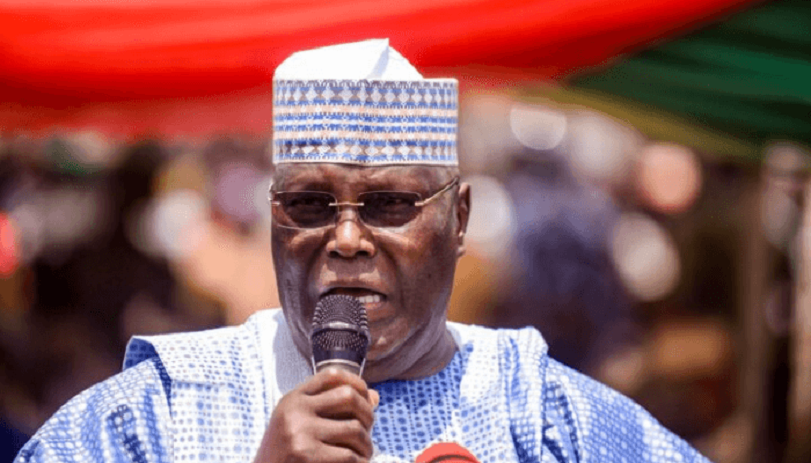
Former Vice-President Atiku Abubakar has hired Von Batten-Montague-York, L.C., a Washington-based lobbying firm, to protect and strengthen his “reputational standing” in the United States for $1.2 million.
According to The Cable, the contract agreement was signed by Mr Karl Von Batten, the managing partner at the firm, and Mr Fabiyi Oladimeji, a Nigerian politician, on March 9 and 10, 2026, respectively.
Based on a document filed with the US Department of Justice, one of the contract’s objectives entails that the firm will “counterbalance” the Nigerian government’s “lobbying narratives” in the US. It comes after the federal government reportedly spent $9 million to strengthen lobbying with the US government earlier this year.
Mr Abubakar, who is eyeing the Nigerian presidency, is currently with the African Democratic Congress (ADC). He will use the firm to “advance understanding” within US policymaking institutions of his “leadership posture and policy vision”.
Based on the contract details, the firm will facilitate and arrange meetings for the former vice-president to engage with US government officials and members of Congress.
Von Batten-Montague-York will also provide the politician with “guidance on policy positioning, reputational considerations, and engagement strategy”.
“These activities include lobbying and government affairs engagement with Members of Congress, congressional staff, and executive branch officials concerning issues related to democratic governance, regional stability, economic development, and U.S. engagement with Nigeria and the broader West African region,” part of the contract details reads.
“The Registrant (lobbying firm) may advocate for policies and perspectives aligned with the foreign principal’s stated positions, including matters relating to governance, economic policy, and bilateral relations with the United States.
“The Registrant also engages in promotion, perception management, and public relations activities designed to enhance understanding among U.S. policymakers and relevant stakeholders of the foreign principal’s policy positions, leadership posture, and strategic priorities.
“This includes the development of messaging strategies, narrative positioning, and reputational advisory services.
“In furtherance of these activities, the Registrant prepares, distributes, and may assist in the dissemination of informational materials, including briefing memoranda, policy papers, talking points, and related communications, intended to inform U.S. government officials and stakeholders.”
The former vice-president is expected to pay the $1.2 million for the 12-month contract in six instalments.

By Dipo Olowookere
The need for Africa to protect itself from many external shocks not of its making has again been emphasised by the African Development Bank (AfDB), the African Union Commission (AUC), the United Nations Development Programme (UNDP), and the UN Economic Commission for Africa (UNECA).
On the margins of the 58th session of the Economic Commission for Africa in Tangier, Morocco, the continent was tasked to strengthen regional integration, accelerate African-led financial solutions, and invest decisively in energy, food, and trade resilience so as to move from vulnerability to preparedness.
The meeting focused on the spikes in energy, food and fertiliser prices caused by the ongoing conflict in the Middle East.
The United States and Israel launched airstrikes on Iran in February 2026, and since then, global oil prices have surged by more than 50 per cent as of late March. Twenty-nine currencies in Africa have weakened, raising the cost of servicing external debt and importing food, fuel, and fertiliser.
Disruptions linked to Gulf energy supplies limit access to ammonia and urea during the critical March–May planting season. This will affect agricultural production, compounding risks of crisis and emergency levels of food insecurity, especially for low‑income households and import‑dependent economies.
To address these issues, the quartet has asked African leaders to, in the short-term, stabilise fuel, food, and fertiliser supply, and execute medium‑term reforms to strengthen energy security, targeted social protection, and regional trade under the African Continental Free Trade Area (AfCFTA).
They also tasked leaders to come up with long‑term structural reforms towards stronger domestic resource mobilisation and African financial safety nets, including accelerated implementation of the African Financing Stability Mechanism.
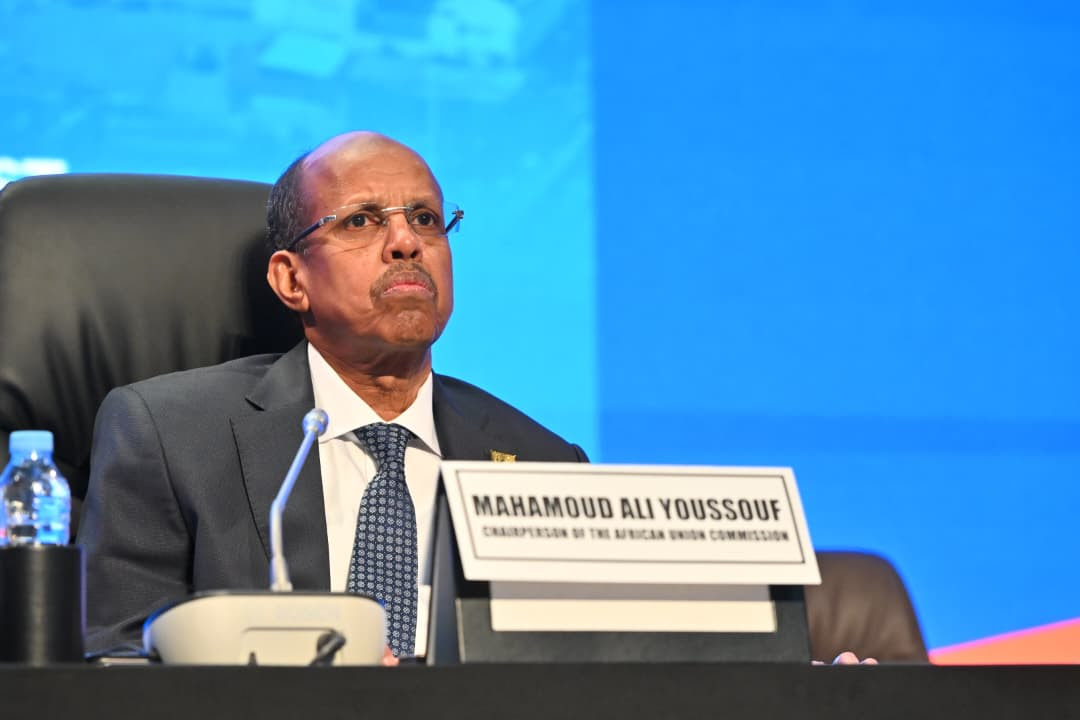
“Continued escalation of the conflict worsens global instability, with serious implications for energy markets, food security, and economic resilience, particularly in Africa, where economic pressures remain acute,” the chairperson of AUC, Mr Mahmoud Ali Youssouf, said.
Also commenting, the UN Under-Secretary-General and Executive Secretary of UNECA, Mr Claver Gatete, said, “Africa has been hit by too many external shocks not of its making. Crises like this reinforce why Africa must finance more of its own future and strengthen regional solutions that build resilience before the next shock hits.”
On her part, the UN Assistant Secretary‑General and Director of UNDP’s Regional Bureau for Africa, Ms Ahunna Eziakonwa, submitted that, “With the right mix of policy choices, financing tools, and political resolve, Africa can weather this shock and emerge more resilient, more self-reliant, and better positioned to shape its own economic future.”
“As global crises multiply, Africa’s response must evolve from managing shocks to fostering resilience. African institutions and development partners need to act swiftly and in concert, leveraging their comparative advantages to cushion short-term shocks while laying the foundations for long-term resilience,” the president of AfDB, Mr Sidi Ould Tah, stated.
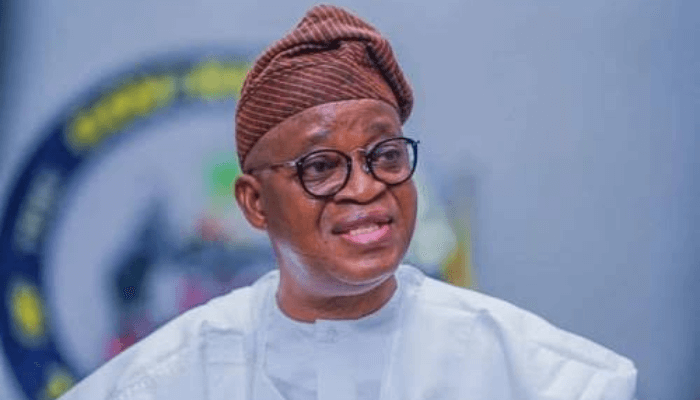
By Adedapo Adesanya
The Minister of Marine and Blue Economy, Mr Adegboyega Oyetola, has issued a strong warning to heads of agencies under the ministry, demanding strict accountability and measurable results.
Mr Oyetola issued the warning during the signing of performance bonds with heads of maritime agencies at the Ministerial Management Retreat, held alongside the 2026 first-quarter stakeholders’ engagement in Lagos on Thursday, where he emphasised the need for performance-driven governance.
“Let me emphasise that all Departments and Agencies under the Ministry must remain firmly focused on delivering tangible results,” he said.
In a statement by Mr Bolaji Akinola, Special Adviser to the Minister, Mr Oyetola noted that performance bonds to be signed during the retreat are binding commitments that will be closely monitored and rigorously evaluated.
“These are not ceremonial documents. They are binding commitments. Accountability will not be optional,” the Minister declared.
Mr Oyetola reiterated the need for data-driven decision-making, robust monitoring and evaluation frameworks, and alignment with the Ministry’s strategic objectives.
“At the institutional level, we must remain disciplined and accountable. Every department and agency must deliver measurable outcomes,” he added.
He explained that the retreat was designed to foster alignment between policy formulation, implementation, and stakeholder expectations.
“The integration of this engagement enables us to listen, reflect, and recalibrate,” he said.
The agencies include the Nigerian Ports Authority (NPA), Nigerian Maritime Administration and Safety Agency (NIMASA), Nigerian Shippers’ Council (NSC), National Inland Waterways Authority (NIWA), Maritime Academy of Nigeria, and the Council for the Regulation of Freight Forwarding in Nigeria.
He also announced a 160 per cent increase in revenue generated by agencies under the ministry, attributing the growth to sweeping reforms and a renewed focus on accountability.
“In 2023, our agencies generated N700.79 billion. By the end of 2025, this figure had risen to approximately N1.83 trillion. This remarkable achievement is the result of deliberate and sustained reforms,” he stated.
The Minister explained that the gains were driven by strengthened regulatory oversight, improved revenue assurance mechanisms, digitalisation of key processes, and a firm commitment to blocking leakages.
“This gathering reflects our commitment to a governance approach that is inclusive, transparent, and results-driven,” he added, noting that the convergence of stakeholders, policymakers, and institutional leaders was designed to align policy with implementation and public expectations.
Mr Oyetola linked the ministry’s improved performance to broader sectoral reforms, including port modernisation, approval for disbursement of the Cabotage Vessel Financing Fund (CVFF), and ongoing efforts to enhance indigenous participation in maritime activities.
-
 Feature/OPED6 years ago
Davos was Different this year
-
Travel/Tourism10 years ago
Lagos Seals Western Lodge Hotel In Ikorodu
-

 Showbiz3 years ago
Estranged Lover Releases Videos of Empress Njamah Bathing
-
 Banking8 years ago
Sort Codes of GTBank Branches in Nigeria
-

 Economy3 years ago
Subsidy Removal: CNG at N130 Per Litre Cheaper Than Petrol—IPMAN
-

 Banking3 years ago
Sort Codes of UBA Branches in Nigeria
-

 Banking3 years ago
First Bank Announces Planned Downtime
-

 Sports3 years ago
Highest Paid Nigerian Footballer – How Much Do Nigerian Footballers Earn