General
Tinubu Confers National Honours on Bola Ige, Kudirat Abiola, Others
By Modupe Gbadeyanka
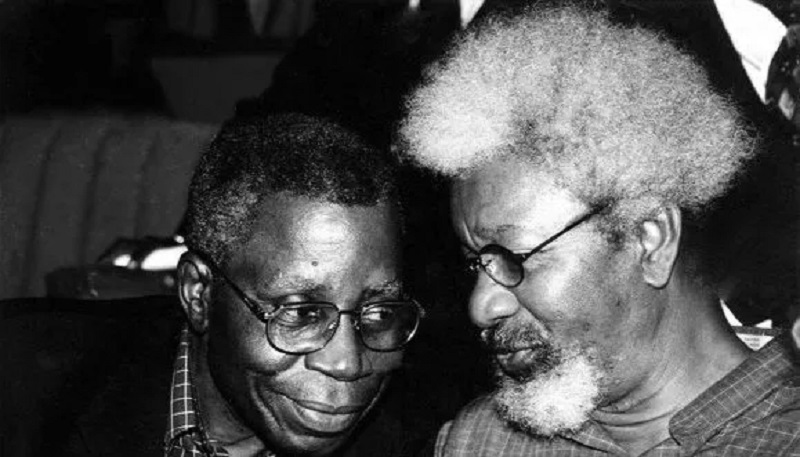
President Bola Tinubu on Thursday, June 12, 2025, conferred national honours on some late pro-democracy activists in Nigeria.
While delivering his speech at a joint session of the National Assembly today, Mr Tinubu also conferred the honours on other citizens still alive, appreciating them for speaking out when the military governed the nation many years ago.
The federal government declared today a public holiday to celebrate Democracy Day. This day was chosen for such because on June 12, 1993, Nigerians voted to elect a president, but the military, under Mr Ibrahim Babangida, annulled the exercise despite it being described as the freest and fairest in the history of the country.
The election was believed to have been won by late MKO Abiola, but he died on July 7, 1998, while in detention because he declared himself as president.
During his message to the lawmakers on Thursday, President Tinubu honoured the late wife of Mr Abiola, Kudirat, as well as the late Attorney General of the Federation (AGF), Mr Bola Ige.
Below is the full list of the recipient of the national honours;
Shehu Musa Yar’Adua (GCFR), Prof. Humphrey Nwosu (CON), Rear Admiral Ndubuisi Kanu (CON), Alhaji Balarabe Musa (CFR), Pa Alfred Rewani (CFR), Bagauda Kaltho (OON), Chima Ubani (OON), Dr. Beko Ransome-Kuti (CON), Alao Aka Bashorun (CON), Chief Frank Kokori (CON), Emma Ezeazu (OON), Bamidele Aturu (OON), and Fredrick Fasehun (CON).
Others are Professor Festus Iyayi (CON), Dr John Yima Sen (OON), Alhaja Sawaba Gambo (CON), Dr. Edwin Madunagu (CON), Dr. Alex Ibru (CON), Chief Bola Ige (CFR), Pa Reuben Fasoranti (CFR), Sen. Ayo Fasanmi (CON), Sen. Polycarp Nwite (CON) and Dr. Nurudeen Olowopopo (CON).Prof. Wole Soyinka (GCON), Prof. Olatunji Dare (CON), the journalist and journalism teacher; Kunle Ajibade (OON); Nosa Igiebor (OON), Dapo Olorunyomi (OON), Bayo Onanuga (CON), Ayo Obe (OON), Dare Babarinsa (CON), and Bishop Matthew Hassan Kukah (CON).
The rest are Senator Shehu Sani (CON), Governor Uba Sani (CON), Barrister Femi Falana, SAN (CON), Prof. Shafideen Amuwo (CON), Barrister Luke Aghanenu (OON), Senator Tokunbo Afikuyomi (CON), Labaran Maku (OON), Dr. Tunji Alausa (CON), Mr Nick Dazang (OON), Abdul Oroh (OON), Odia Ofeimun (CON), Seye Kehinde (OON), Barrister Felix Morka (CON) Barrister Ledum Mitee (CON), Olawale Osun (CON), Dr Amos Akingba (CON), Prof. Segun Gbadegesin (CON), Mobolaji Akinyemi (CFR), Dr Kayode Shonoiki (CON), Prof. Julius Ihonvbere (CON), Prof. Bayo Williams (CON), Senator Abu Ibrahim (CFR), and Senator Ame Ebute (CFR).
General
TGI Group, Wilmar to Form $12bn West Africa Food Giant in Major Merger
By Adedapo Adesanya
Tropical General Investments (TGI) Group and Singapore-based Wilmar International have agreed to combine their Nigeria and Republic of Benin operations into a 50:50 joint venture aimed at building a dominant integrated food and agribusiness platform across West Africa, targeting a market estimated at $12 billion.
The proposed merger will consolidate operations across several value chains, including agriculture, oil palm plantations, edible oils, edible nuts, rice, food manufacturing, and distribution, creating one of the region’s largest end-to-end food production and supply chains.
Under the arrangement, both firms will integrate their complementary strengths, with Wilmar contributing global expertise in palm oil, speciality fats, and large-scale agribusiness operations, while TGI brings established local manufacturing capacity, consumer brands, and an extensive distribution network across Nigeria and neighbouring markets.
Chairman and Chief Executive Officer of Wilmar International, Mr Kuok Hong, said the partnership would enhance both firms’ ability to serve Africa’s expanding consumer base, describing Nigeria and Benin as strategic growth markets.
“For more than four decades, TGI Group has built a leading position in Nigerian food manufacturing and distribution. This partnership will leverage Wilmar’s global scale and expertise as well as TGI’s local knowledge to deliver innovative food solutions across Africa,” added TGI Group founder and chairman, Mr Cornelis Vink.
On his part, Vice Chairman of TGI Group, Mr Farouk Gumel, said the deal reflects confidence in Nigeria’s long-term economic prospects, adding that it would deepen domestic value addition, strengthen food security, support smallholder farmers, and create jobs.
Adding his input, Wilmar’s Africa Head, Mr Santosh Pillai, described the transaction as a strategic fit, noting that the combined entity would have the scale, local insight, and operational depth needed to better serve consumers in the region.
The companies said the transaction is expected to be completed in the 2026 financial year, subject to regulatory approvals and other customary conditions.
General
Nigeria Edges Toward State Policing Amid Rising Security Challenges
By Adedapo Adesanya
The Presidency has said Nigeria is moving closer to establishing state police, with progress made towards the constitutional framework required to decentralise policing.
The development follows months of consultations involving the Presidency, the National Assembly, and security authorities aimed at strengthening the country’s security architecture and comes amid increased security challenges across the country.
The Chief of Staff to the President, Mr Femi Gbajabiamila, disclosed this on Thursday while briefing State House correspondents after a consultative meeting on state police convened by the Presidency at the State House in Abuja.
According to a statement issued by the Special Adviser to the President on Information and Strategy, Mr Bayo Onanuga, deliberations on the proposed state police framework began several months ago following a directive from President Bola Tinubu.
“We started deliberations in the last three or four months on how to go about the establishment of state police as directed by Mr President.
“Establishing state police is not something that you do with the snap of the fingers. There is a lot involved in terms of constitution and legalities, and thank God, we have now gained a lot of traction.
“Hopefully, the amendment will come shortly, and the details of the amendment will come after that,” he was quoted as saying.
The president’s chief of staff explained that the immediate priority is securing constitutional amendments, while enabling legislation would follow.
“Right now, what we are looking at is the constitutional amendment itself, and then the enabling law would follow thereafter. That is what we have been deliberating on in the last couple of hours,” he added.
Mr Gbajabiamila noted that there is now broad national support for the initiative, saying the debate has shifted from whether state police should be established to determining the most effective legal and institutional framework for its operation.
He added that Tinubu, a long-time advocate of state police, would receive a comprehensive report on the outcome of the consultations.
Thursday’s meeting was attended by Deputy Senate President Mr Jibrin Barau, Deputy Speaker of the House of Representatives, Mr Benjamin Kalu, Inspector-General of Police, Mr Tunji Disu and other senior government officials.
The latest meeting forms part of ongoing efforts by the federal government to develop a workable framework for state police, which proponents argue would improve internal security, strengthen intelligence gathering at the grassroots level, and enhance the ability of state governments to respond to emerging security threats.
Nigeria’s policing system is currently controlled by the federal government through the Nigeria Police Force. However, growing security challenges have intensified calls for a decentralised policing structure.
The renewed push for state police also comes amid growing concerns over insecurity and mass kidnappings across parts of the country.
Among recent incidents was the May 15 attack on three schools in Oriire Local Government Area of Oyo State, where 39 pupils and seven teachers were abducted. The incident triggered widespread outrage, protests, and an indefinite strike by teachers in the state.
General
AFC Mobilises $2bn From Global Lenders for African Infrastructure Projects
By Adedapo Adesanya
The Africa Finance Corporation (AFC) has raised $2 billion via a syndicated loan, with considerable participation from Asian and European banks seeking to capitalise on growing demand for infrastructure projects across the continent.
Barclays Bank, Commerzbank, First Abu Dhabi Bank PJSC, and FirstRand Bank led the debt facility. Other participating lenders include Export-Import Bank of India, Bank of Communications, Industrial and Commercial Bank of China, and Industrial Bank of Korea, among others.
Each region accounted for about 35 per cent of the creditors, according to a statement by AFC.
AFC chief executive, Mr Samaila Zubairu, said the money would enable more master planning around infrastructure and industrial planning for economies, regions and economic corridors across the continent.
According to Mr Zubairu, the lender is also in discussions to invest in a proposed oil refinery to be built by billionaire Aliko Dangote in East Africa.
The financer initially sought $1.6 billion via the facility but scaled it up to $2 billion amid strong demand from Asian financial institutions.
“In this round, we saw a lot more of Asian banks. We have banks from China, Hong Kong, and Korea. They are a lot more engaged,” he said.
Mr Zubairu said the loan underscored AFC’s strong track record, pointing to its financing for projects including Nigeria’s 650,000 barrels per day Dangote oil refinery and Africa’s largest copper smelter in the Democratic Republic of Congo.
“There’s a lot more confidence, a lot more partners,” Mr Zubairu said of those participating in the loan. “We are constantly demonstrating that Africa is executing. Africa is building.”
“The capital that we raise goes into African infrastructure build out, African industrialisation build up – essentially creating jobs for Africans,” Mr Zubairu said.
The AFC chief said the lender is also working to reform capital rules and create structures that will allow more African money to stay on the continent and be invested in crucial infrastructure projects.
AFC, founded in 2007, has assets surpassing $19 billion and counts 48 African countries as members.
In January, the infrastructure-focused multilateral lender secured an A rating from S&P. It has an A3 rating from Moody’s, an AAAspc rating from S&P Ratings (China) and an A+ rating from the Japan Credit Rating Agency.
-
Feature/OPED6 years agoDavos was Different this year
-
Travel/Tourism10 years ago
Lagos Seals Western Lodge Hotel In Ikorodu
-
Showbiz3 years agoEstranged Lover Releases Videos of Empress Njamah Bathing
-
Banking8 years agoSort Codes of GTBank Branches in Nigeria
-
Economy3 years agoSubsidy Removal: CNG at N130 Per Litre Cheaper Than Petrol—IPMAN
-
Banking3 years agoSort Codes of UBA Branches in Nigeria
-
Banking3 years agoFirst Bank Announces Planned Downtime
-
Sports3 years agoHighest Paid Nigerian Footballer – How Much Do Nigerian Footballers Earn