Connect with us

General

Government to Open Ogun River Bridge Soon

Published

on

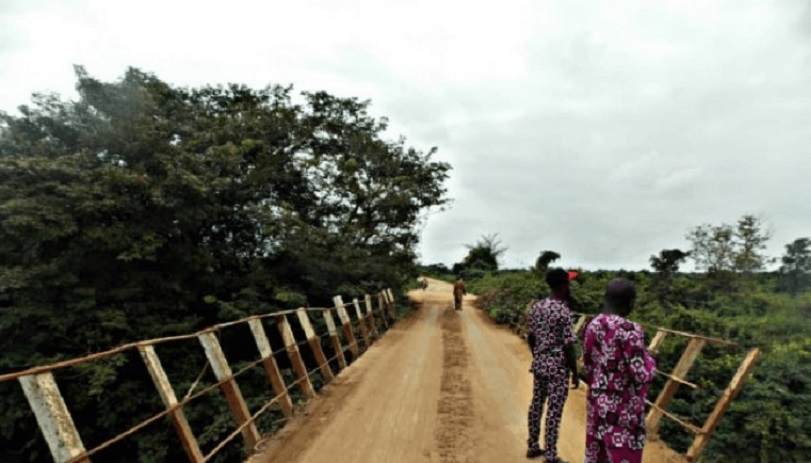
Ogun River Bridge

By Modupe Gbadeyanka

The Ogun River Bridge will soon be opened to traffic very soon as the work on the road is close to completion, the Commissioner for Public Works and Transports in Oyo State, Professor Dahud Kehinde Sangodoyin, assured during an inspection of the 34.8 Km Oyo-Fasola-Iseyin Road constructions which started in 2021.

While commending Governor Seyi Makinde of Oyo State for his relentless effort to improve the state’s agriculture and economy through the construction of good roads, Professor Sangodoyin implored the citizens to protect whatever facility the government has provided so that there will not be any need for unnecessary repair.

Meanwhile, the Accelerating Nutrition Results in Nigeria (ANRiN) has disclosed that the state has achieved 58.7 per cent in the practice of Exclusive Breastfeeding by Women of Child Bearing Age.

The Project Coordinator of ANRiN Oyo Project Implementation Unit, Dr Khadijah Alarape, confirmed this on Thursday at a stakeholders’ meeting of the State Committee on Food and Nutrition organised by ANRiN Project at the Owu Crown Hotel, Ibadan.

The ANRIN PC, who was elated with the recent data from MICS 2022 Survey, said the increase shows Pregnant and Lactating women are now aware of the benefits of exclusive breastfeeding for the general well-being of their children.

She lauded Mr Makinde for his support in increasing the maternity leave for pregnant women from 3 months to six months and also ANRiN for implementing 7 Basic Package of Nutritional Services across the 33 LGAs in the state.

This, according to her, has really helped the status of exclusive breastfeeding in the state in the last two years.

“The state governor should be thanked for his help in granting 6-months maternity leave for our mothers. This has really helped.

“This can be confirmed from available statistics on Nutrition indices that the state is doing well as far as exclusive breastfeeding is concerned. Although we need to work more on the rate of stunting in the state,” she stated.

While calling for more collaboration of the SCFN members, Dr Alarape said every Line Ministries on Nutrition must have a budgetary allocation for nutrition activities in their various MDAs.

She reiterated ANRiN’s effort at providing cost-effective Nutritional Services to Pregnant and Lactating Women, adolescent-girls as well as children under five across the state.

She also said two non-state actors, Solina Health Ltd and Save the Children, are currently working in communities across the state, giving Pregnant and Lactating Mothers as well as Children Under Five Basic Package of Nutritional Services.

In his welcome address, the Director of Development Partners at the Ministry of Budget and Planning, Mr Moruf Oyetunji, said the meeting is a statutory meeting which is held quarterly to review nutritional intervention and address malnutrition in the state.


Modupe Gbadeyanka is a fast-rising journalist with Business Post Nigeria. Her passion for journalism is amazing. She is willing to learn more with a view to becoming one of the best pen-pushers in Nigeria. Her role models are the duo of CNN's Richard Quest and Christiane Amanpour.

Click to comment

Leave a Reply

Your email address will not be published. Required fields are marked *

General

Afreximbank Now Africa’s Largest Oil, Gas Financier—Wale Tinubu

Published

on

wale tinubu

By Adedapo Adesanya

The chief executive of Oando Plc, Mr Wale Tinubu, says the African Export-Import Bank (Afreximbank) is now the largest financier of oil and gas projects on the African continent.

Mr Tinubu said the bank has committed over $25 billion in Africa’s oil and gas sector while speaking at the Royal African Society’s conference in London on the next 125 years of mining, oil and gas in Africa, according to a social media post on Wednesday.

“Afreximbank is now the largest financier of oil and gas on this continent, with more than twenty-five billion dollars committed,” he wrote on X.

Mr Tinubu said 20 years ago, when Oando wanted to list on the Johannesburg Stock Exchange, “we were told what would be required of us”.

He said the company was directed to adopt International Financial Reporting Standards (IFRS), while the board was also asked to appoint independent directors who could tell the founder “no”.

“Get on a plane and explain ourselves, quarter after quarter, to people who had never set foot in Lagos. It was uncomfortable. It was also the most valuable thing we ever did to ourselves,” he said.

“I returned to that experience in London at the Royal African Society’s (@royafrisoc) discussion on the next 125 years of mining, oil and gas in Africa, where I was asked what African companies need in order to scale.

“The answer begins at home. Much of African enterprise started out fractured; family-held, informally governed, structurally invisible to anyone underwriting a twenty-year risk. Global capital hesitates over what it cannot examine.”

The Oando CEO said governance is more than a compliance exercise, describing it as an instrument that makes a company legible to the world.

“The second half of the answer sits with the world. When European lenders withdrew from African hydrocarbons in pursuit of their own net zero commitments, they did not end demand for African energy,” he said.

“They ended their participation in it. African institutions stepped into that space.”

Mr Tinubu said African firms have done the harder work “of making ourselves investable”, noting that what does not get financed does not get built, and “there is still much to build in Africa for those willing to build it with African companies”.

In Nigeria, the bank has been a major financier of the 650,000 barrels-per-day Dangote Petroleum Refinery, including a $1.35 billion facility in 2025 to refinance construction costs and a further $2.5 billion underwriting commitment in 2026.

The bank has also supported the development of the 200,000 barrels-per-day Lobito Refinery in Angola, the 60,000 barrels-per-day Cabinda Refinery, and the refurbishment of Nigeria’s 210,000 barrels-per-day Port Harcourt Refinery. It has additionally approved financing for the BUA and Azikel refineries in Nigeria and supported Société Ivoirienne de Raffinage in Côte d’Ivoire.

Beyond refining, Afreximbank committed up to $400 million in guarantees and direct lending to Mozambique’s Area 1 LNG project, one of Africa’s largest LNG developments, to support the extraction, processing and liquefaction of offshore gas.

In Angola, the bank helped arrange a $1.75 billion syndicated facility for Sonangol to support the national oil company’s operating and capital expenditure requirements. It has also been mandated to advise on raising capital for Equatorial Guinea’s $4.5 billion EG-27 LNG project, which is expected to produce about 2.4 million tonnes of LNG annually. In the Democratic Republic of Congo, the lender is supporting preparations for a 200MW reservoir-based hydropower project along the Lufira River, designed to provide electricity to mining operations.

Continue Reading

General

Oil Exploration Resumption: MOSOP Assures Ogoni People Good Deal

Published

on

MOSOP

By Modupe Gbadeyanka

The Ogoni people have been assured of a good deal emanating from the ongoing dialogue with the federal government on the planned resumption of oil exploration in the area.

This assurance was given by the Movement for the Survival of the Ogoni People (MOSOP) through its leader, Mr Fegalo Nsuke, at the group’s steering committee meeting on Wednesday.

In a statement signed by the Secretary General of MOSOP, Mr Alex Akori, it was stressed that for over 30 years, the Ogoni people have sought a mutual dialogue with the central government, and that is now ongoing, with substantial progress being made on the part of community mobilisation and the dialogue process.

“For over 30 years, we have advocated for a peaceful resolution of the Ogoni conflicts. I am glad that the dialogue is ongoing and it is going well. I am also very optimistic that we will strike a good deal from the process,” Mr Nsuke stated.

He described the dialogue process as a reward for non-violence, urging other regions of the country to emulate the peaceful resistance of the Ogoni people rather than taking to armed struggle.

“The Ogoni dialogue process is significant for several reasons. First, it has gained overwhelming acceptance as a pathway to resolve the Ogoni problem, and that is very important. Secondly, it is an encouragement for non-violent struggles. Thirdly, it is people-centred and designed to accelerate development in Ogoni,” Mr Nsuke added.

He thanked the Ogoni people for giving peace a chance and for accepting to go into a dialogue describing the initiative as one of the best decisions ever taken in the direction of a three-decade search for peace, development and a new beginning for the Ogoni people.

In a related development, the MOSOP Steering Committee, the highest decision-making organ of the organisation, elected Mr Nwale Emereonwi, Mr Kpoobari Gbidum, and Lekue Zini as Deputy President, Assistant Secretary-General, and President of the National Youth Council of Ogoni People (NYCOP), respectively.

Continue Reading

General

Nigerian Shippers’ Council Transitions into Nigeria Ports Economic Regulatory Agency

Published

on

Nigeria Ports Economic Regulatory Agency

By Adedapo Adesanya

The Nigerian Shippers’ Council (NSC) has formally transitioned into the Nigeria Ports Economic Regulatory Agency (NPERA) following President Bola Tinubu’s assent to the Nigerian Ports Economic Regulatory Agency Act, 2026.

The Act establishes NPERA as the statutory authority responsible for the economic regulation of ports in the country.

Speaking at a press briefing in Lagos, Mr Ibrahim Shema, chairman of the NPERA governing board, described the development as a major institutional reform aimed at creating a more transparent, predictable, and competitive port environment.

Mr Shema said NPERA would be responsible for the economic regulation of port services and related activities, including tariffs and charges, licensing, service standards, fair competition, commercial dispute resolution, trade facilitation, and protection of port users.

He said the new framework is expected to provide greater regulatory certainty for shipping lines and terminal operators, while offering importers, exporters, freight forwarders, and clearing agents more predictable procedures, fairer charges, and improved mechanisms for resolving disputes.

The chairman clarified that the establishment of NPERA does not create a competing authority with the Nigerian Ports Authority (NPA).

“While the Nigerian Ports Authority will retain responsibility for port infrastructure and its landlord functions, NPERA will provide independent economic oversight within its statutory mandate,” Mr Shema said.

He said NPERA’s regulatory approach will be anchored on five principles: transparency, fairness, predictability, efficiency, and accountability.

The board’s chairman said the new agency would deploy technology and data to strengthen licensing, tariff administration, monitoring, compliance, reporting, and stakeholder engagement.

“The agency also plans to work with key maritime institutions, including the Nigerian Ports Authority, NIMASA and the Nigeria Customs Service, as well as terminal operators, shipping lines, freight forwarders, manufacturers, investors and other industry stakeholders,” he said.

Mr Shema said the immediate priority is to ensure an orderly transition from the NSC to NPERA, while maintaining continuity in essential regulatory functions and preserving institutional knowledge.

The chairman stressed that the success of the new agency would ultimately be measured by its impact on port users and the wider economy.

“Effective implementation of the Act should translate into better services, greater efficiency, lower uncertainty, fair competition, and stronger trade facilitation,” Shema added.

On his part, Mr Pius Akutah, executive secretary and chief executive of NPERA, expressed optimism that the new law would significantly clarify the regulatory environment governing Nigeria’s ports within the next one to two years.

Mr Akutah said the NPERA Act would give the agency stronger powers to improve commercial dispute resolution and protect the interests and welfare of port users and other stakeholders, adding that the new regulatory framework would enable the agency to deliver a more efficient, transparent, and competitive Nigerian port system.

Continue Reading