Connect with us

General

Gulf of Guinea Records Lowest Piracy Incidents in 28 Years

Published

on

Nigerian waters Gulf of Guinea

By Adedapo Adesanya

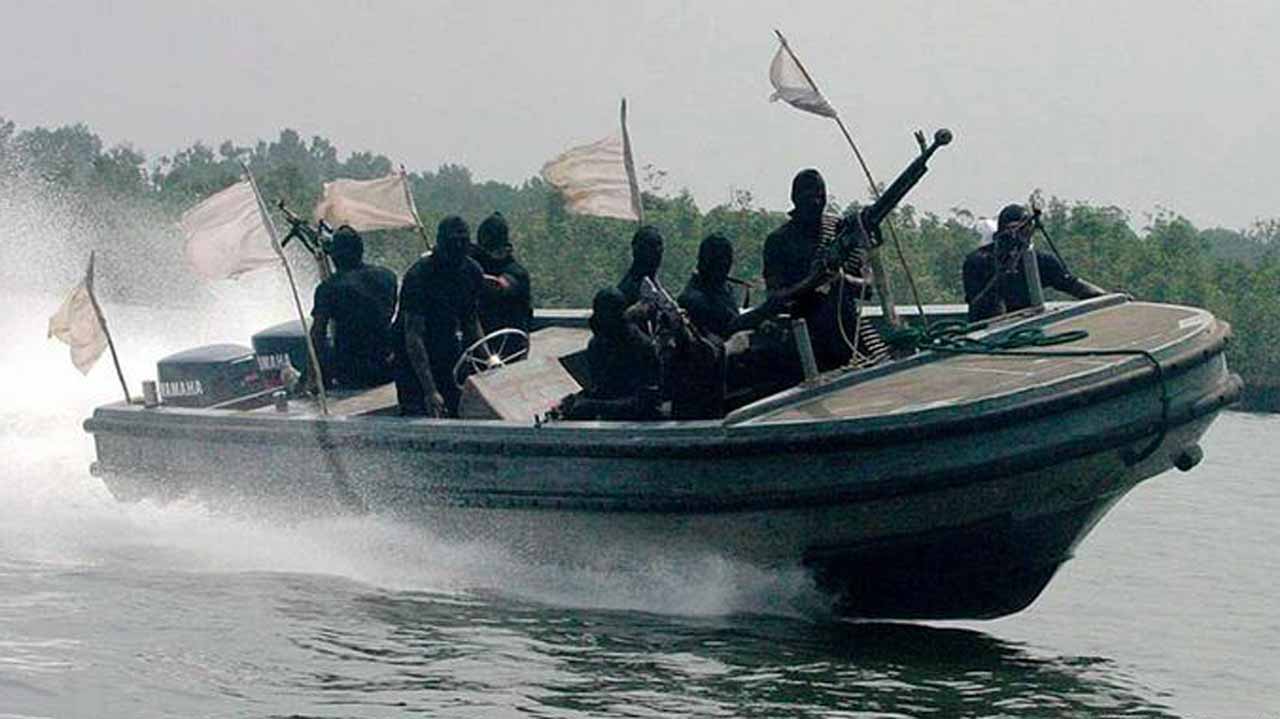
The International Maritime Bureau (IMB) has disclosed that the Gulf of Guinea, once a notorious hub for sea piracy, has recorded the lowest number of reported incidents for the first half of the year since 1994.

The bureau disclosed this in its half-year report of 2022 which coincided with the reduction in piracy around the globe, which it notes is evidence of its efforts in raising awareness to make the waters safe globally.

In a statement signed by Mr Edward Osagie, Assistant Director, Public Relations, Nigerian Maritime Administration and Safety Agency (NIMASA), the IMB also expressed optimism that it was a new dawn for the shipping community globally.

The Gulf of Guinea Declaration (GoG) on Suppression of Piracy has confirmed that there has not been any case of Seafarers kidnap one year after the May 2021 declaration.

This is considered commendable progress in comparison to the 2020 statistics when 130 seafarers were kidnapped.

In the report, IMB Director, Mr Michael Howlett, also confirmed that no case of vessel hijack took place on Nigerian waters in the first half of 2022.

“The ICC and International Maritime Bureau (IMB) have confirmed that the first half of 2022 witnessed the least cases of piracy globally in 28 years with only 58 reported cases as compared to 68 within the same period in 2021.

“Of the 58 incidents, two were classified as piracy attacks in the Gulf of Guinea, with none of them occurring in Nigerian waters. While the reduction in reported incidents is indeed encouraging, the IMB PRC continues to caution against complacency,” he said.

Mr Howlett said that not only was this good news for the seafarers and the shipping industry, it was positive news for trade which promotes economic growth but the areas of risk shift and the shipping community must remain vigilant.

“We encourage governments and responding authorities to continue their patrols which create a deterrent effect,” he said.

The status report from the GoG declaration also confirmed that there had not been any case of kidnap for ransom in 2022, as against 20 cases in 2020 and 12 in 2021.

Responding to the report, the Director-General of NIMASA, Mr Bashir Jamoh, said that Nigeria was committed to sustaining the momentum of the success recorded in recent times in the fight against piracy in the region.

“It is heart-warming that the international maritime community is acknowledging the progress made so far. It is a direct result of collaboration amongst national, regional and non-regional stakeholders.

“It is our hope that this trend will be sustained and very soon, we will start reaping the benefits such as a change of status concerning the Insurance premium paid on Nigerian bound cargoes; the War Riskpremium being paid at the moment.

“We hope this status will change very soon,” he said.

Mr Jamoh said that the Baltic and International Maritime Council, (BIMCO), the world’s largest direct-membership organisation for ship-owners, charterers, shipbrokers, and agents called for the effective and full deployment of Deep Blue Assets on Anti-piracy tasking.

“Key to the successes in the war against piracy are efforts of the Nigerian Navy in clamping down on pirates camps, the Deep Blue project C4i coastal surveillance and collaboration with international Navies for law enforcement off Nigerian waters.

“Others are the series of meetings under the umbrella of the Gulf of Guinea maritime coordination Forum, Shared Awareness and DEconfliction, GoG/SHADE,” Mr Jamoh quoted BIMCO as saying.


Adedapo Adesanya is a journalist, polymath, and connoisseur of everything art. When he is not writing, he has his nose buried in one of the many books or articles he has bookmarked or simply listening to good music with a bottle of beer or wine. He supports the greatest club in the world, Manchester United F.C.

General

Military Must Apologise for Disrupting Nigeria’s Democratic Path—Banwo

Published

on

ope banwo

By Modupe Gbadeyanka

For disrupting Nigeria’s democratic path and weakening its institutions, the military must tender an apology to the nation, foremost public commentator, Mr Ope Banwo, has submitted.

The legal practitioner, who called for a national reckoning, insisted that an apology would acknowledge the harm caused by repeated military interventions and reaffirm the supremacy of the constitution.

Speaking on the recently commemorated Armed Forces Remembrance Day, Mr Banwo argued that decades of political intervention by the military disrupted the country’s democratic growth.

According to him, repeated military takeovers did not rescue the country from early post-independence challenges but instead deepened instability and entrenched authoritarian governance.

‎‎While acknowledging that Nigeria’s early civilian leaders contributed to political chaos through electoral malpractice and ethnic tensions, he maintained that military coups worsened the situation, noting that the first coup in 1966 triggered a cycle of interventions that culminated in civil war, institutional breakdown, and long-term political trauma.

‎He emphasised that successive military regimes promised to fight corruption, restore discipline, and sanitise governance, but failed to deliver lasting reforms.

‎‎“Rather than ending corruption, they professionalised it,” he posited, adding that military rule created a powerful elite class that continues to wield influence in politics and business long after the return to civilian rule.

Mr ‎Banwo further argued that the military never fully relinquished power, but merely exchanged uniforms for civilian attire, leaving behind a culture where constitutional authority is often treated as optional, stressing that in democratic societies, the armed forces must remain subordinate to civilian leadership, warning against any renewed appetite for military intervention in governance.

‎‎“The military is not Nigeria’s emergency solution to political failure,” he disclosed, urging the armed forces to focus on their constitutional responsibility of securing the country amid rising insecurity.

Continue Reading

General

Housing Deficit: FG to Prioritize Use of Local Materials

Published

on

affordable housing

By Adedapo Adesanya

The federal government has said it would prioritize the use of local materials to drive its new reform agenda that will close the housing deficit in the country.

This was disclosed by the Minister of Housing and Urban Development, Mr Ahmed Musa Dangiwa, at the 14th National Council on Lands, Housing and Urban Development meeting on Monday in Ilorin, the Kwara State capital.

He said Nigeria’s housing deficit, estimated in tens of millions, remains one of the most pressing social and economic challenges, driven by rapid urbanisation, population growth and rising construction costs, noting that the new policy framework is expected to shape housing delivery, land administration and urban development planning across the federation in the coming years.

Speaking at the event, the Minister, represented by the Director of Planning, Research and Statistics of the ministry, Mr Mukhtar Ilyasu, said the government has placed effective land management at the centre of its housing delivery strategy, describing land administration as the foundation for expanding access to affordable housing nationwide.

According to him, urban renewal and regeneration have now been adopted as national policy tools for modernising Nigerian cities, addressing uncontrolled urban growth and responding to population pressure and climate challenges.

He said the government is also prioritising the large-scale adoption of locally sourced building materials and technologies as a cost reduction strategy aimed at making housing more affordable while strengthening domestic construction industries.

“Effective land management remains the foundation of housing delivery in Nigeria. Without fixing land administration, it will be difficult to close the country’s housing deficit.

“Urban renewal and regeneration have been adopted as national policy tools for rebuilding Nigerian cities, addressing uncontrolled urban growth and improving the quality of life of our citizens.

“The promotion of locally sourced building materials and technologies is now a policy priority to reduce construction costs, deepen local industry and improve housing affordability.”

“Federal and state governments are being aligned under a unified housing and urban development agenda to ensure coordinated implementation and results driven execution”, he said.

Mr Dangiwa added that public private partnerships will serve as the main engine for mass housing and urban infrastructure delivery across the federation.

The government, he noted, will provide policy support, land governance reforms and investment frameworks to attract private capital into the sector.

To support the new direction, he said the FG is strengthening national land governance frameworks to promote inclusive urban growth and remove long standing bottlenecks in land administration that have slowed housing development.

The minister said the new policy thrust further includes innovative housing finance and investment strategies designed to unlock long term funding for real estate development and bridge Nigeria’s widening housing gap.

He stressed that federal and state governments are being aligned under a unified housing and urban development agenda to ensure coordinated implementation and results driven execution.

Continue Reading

General

DSS Arrests ex-AGF Malami After Release from Kuje Prison in EFCC Case

Published

on

remand abubakar malami

By Adedapo Adesanya

The Department of State Service (DSS) has arrested former Attorney-General of the Federation (AGF) and Minister of Justice, Mr Abubakar Malami, shortly after his release from Kuje prison in Abuja on Monday.

He was reportedly arrested to face a fresh probe over arms allegedly discovered in his house in Birnin-Kebbi, the Kebbi State capital, last December.

Recall that two weeks ago, Justice Emeka Nwite of the Federal High Court in Abuja granted the former AGF and two others bail in the sum of N500 million.

The Economic and Financial Crimes Commission (EFCC) had filed a 16-count alleged money laundering charge against Mr Malami, his son, Abdulaziz Malami, and his wife, Mrs Asabe Bashir.

The DSS operatives reportedly arrested him as he was exiting the Kuje Correctional Centre in Abuja, where he had been held since December 30, 2025, over the pending N8.7 billion money laundering charges filed by the anti-graft agency.

Monday’s arrest followed weeks of reports of surveillance by the secret police in front of the prison facility since the time Mr Malami, his wife and son were remanded there over the money laundering charges.

As per reports, Mr Malami had gathered that he would be picked up upon regaining his temporary freedom decided to wait. However, after his eventual emergence, the DSS operatives took the ex-AGF into detention again.

In a press statement by Mr Malami’s aide, Mr Mohammed Doka, shared on the former AGF’s Facebook page on January 7, the planned arrest of the legal practitioner was confirmed.

The post, the latest on the Facebook page as of Tuesday morning, said the former minister’s camp had been “reliably informed of plans by government security agencies to rearrest him immediately upon his release, despite being granted bail by a court of competent jurisdiction.”

“This development is deeply troubling and raises grave concerns about due process, the rule of law, and personal safety,” the statement added, describing the allegations informing the planned arrest as “trumped-up charges”.

Mr Malami’s arrest on Monday began the third phase of his ongoing detention by various agencies since December 8, 2025.

The EFCC detained him from 8 December 2025 to 30 December 2025, when the Federal High Court in Abuja where he and his family members face money laundering charges transferred him to the Correctional Centre in Kuje, Abuja, following his arraignment.

The trial court granted him bail on 7 January but only for him to be rearrested by the SSS upon his release after meeting the bail conditions on Monday.

Continue Reading

Trending