General
INTERPOL Launches New Project to Tackle Wildlife Crime

By Dipo Olowookere
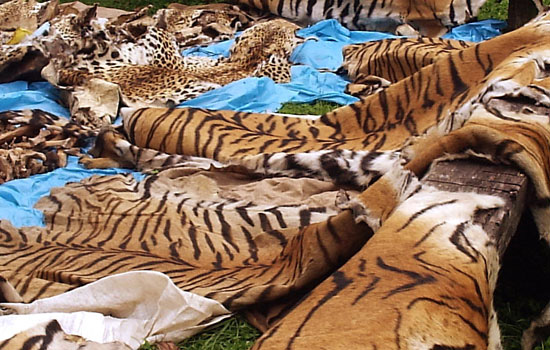
A new project to identify and dismantle the organized crime networks making billions in illicit profits behind wildlife trafficking between Africa and Asia has been launched by INTERPOL.
Targeting high profile traffickers in Asia sourcing wildlife from Africa, the project will provide a strengthened law enforcement response in source, transit and destination countries, particularly those linked to the illicit trade in ivory, rhinoceros horn and Asian big cat products.
With environmental crime estimated to be worth up to USD 258 billion and linked to other criminal activities including corruption, money laundering and firearms trafficking, the project led by INTERPOL’s Environmental Security programme will draw on the expertise of other specialized units.
These include the Anti-Corruption and Financial crime unit, the Digital Forensics Lab for the extraction of data from seized equipment, the Firearms programme for weapons tracing and ballistics analysis and the Fugitive Investigations unit to assist countries locate and arrest wanted environmental criminals.
INTERPOL Secretary General Jürgen Stock said the project embodied the added value of INTERPOL to help countries more effectively target specific crime threats.
“Protecting the world’s wildlife heritage is our collective responsibility, as global citizens and as international law enforcement,” said Secretary General Stock.
“It is essential that decisive action is taken to combat environmental crime and this project targeting the organized crime links between Africa and Asia will enable all involved actors to unite in their efforts, and provide a blueprint for future actions elsewhere in the world,” added the INTERPOL Chief.
A recent INTERPOL-UN Environment report showed 80 per cent of countries consider environmental crime a national priority, with the majority saying new and more sophisticated criminal activities increasingly threaten peace and security.
Supported by the United States Agency for International Development (USAID) and in collaboration with the International Consortium on Combatting Wildlife Crime (ICCWC), the INTERPOL initiative will draw on the intelligence gathered from existing projects including Wisdom, Predator and Scale.
In addition to expanding the level of investigative cooperation between the involved countries, the project will also provide increased analytical support for activities both in the field and for online investigations.
Fisheries crime will also be targeted as part of the project. Due to the increasing value of fish as a commodity, the last decade has seen an escalation of transnational and organized criminal networks engaged in this type of crime.
In addition to undermining the sustainability of marine resources, illegal fishing is also often linked to human trafficking with crews subjected to labour and human rights abuses, fraud in regulatory systems and corruption, damaging legitimate businesses and economies.
General
Senate Voids SPAC Arrest Warrant Against Ex-NNPC Boss Mele Kyari
By Adedapo Adesanya
The Senate has nullified a warrant of arrest purportedly issued by the Senate Public Accounts Committee (SPAC) against the former chief executive of the Nigerian National Petroleum Company (NNPC) Limited, Mr Mele Kyari.
The motion, sponsored by the Senate Leader, Mr Opeyemi Bamidele, also formally dissociated the Senate from comments attributed to Senator Adams Oshiomhole, who reportedly described the state oil company as “a bunch of criminals and thieves” during a Public Accounts Committee hearing earlier on Wednesday.
The Senate emphasised that legislative oversight must be conducted within the framework of the Constitution, due process, and the principles of fair hearing.
Presenting the motion, Mr Bamidele argued that while Sections 88 and 89 of the Constitution grant investigative and oversight powers to the National Assembly, the authority to issue warrants compelling the attendance of witnesses is clearly vested in the presiding officer of the legislative chamber.
According to him, Sections 4, 5 and 6 of the Legislative Houses (Powers and Privileges) Act confer the power to issue warrants exclusively on the President of the Senate in matters relating to Senate proceedings and committees.
Mr Bamidele warned that any attempt by a Senate committee to independently issue or execute a warrant of arrest without authorisation from the Senate President could amount to an unlawful exercise of power.
“The power to issue a warrant affecting the liberty of a citizen is an extraordinary statutory power which must be exercised strictly in accordance with the procedure prescribed by law,” the lawmaker noted.
He further maintained that legislative investigations are not substitutes for criminal prosecution and that neither individuals nor institutions should be presumed guilty before the conclusion of investigations or judicial determination.
“The constitutional doctrine of fair hearing and the presumption of innocence require that no person or institution be adjudged guilty except by a court of competent jurisdiction after due process of law.”
A major aspect of the motion focused on personal remarks attributed to Mr Oshiomhole during deliberations of the Public Accounts Committee.
Mr Bamidele argued that describing NNPC as “a bunch of criminals and thieves” was capable of conveying a conclusion of criminal culpability before the completion of any lawful investigation, warning that such statements could be interpreted by the public as the official position of the Senate and undermine confidence in the impartiality of ongoing oversight proceedings.
“Such statements, if left unclarified, may be misconstrued by the public as representing the official position of the Senate and may undermine confidence in the impartiality and objectivity of ongoing legislative oversight proceedings.”
The Senate subsequently adopted a resolution formally dissociating itself from the comments and clarifying that they do not represent the findings, opinion, resolution or official position of the upper chamber.
Deputy Senate President, Mr Barau Jibrin, strongly backed the motion, describing it as part of the constitutional responsibilities of the Senate Leader.
Reading from Senate rules and constitutional provisions, Mr Barau stressed that committees are subordinate organs of the Senate and may only make recommendations rather than independently exercise powers reserved for the chamber.
“The committee overstepped its bounds, and he has done the right thing by drawing attention to it.”
He maintained that the Senate must always operate in accordance with both its rules and the Constitution.
“We need to do things in line with our rules and with the law of the land.”
For his part, Senator Mohammed Tahir Monguno described the motion as a necessary intervention to preserve the credibility of the legislature.
According to him, it would be contradictory for lawmakers to make laws for national governance while simultaneously violating those same laws.
“The Senate, being the highest law-making body of the country, should not only be above board but should be seen manifestly to be above board.”
He characterised the motion as both a wake-up call and a reminder for committees to strictly comply with constitutional provisions and Senate rules.
Senator Abba Moro emphasised the importance of maintaining decorum and avoiding statements capable of damaging reputations.
“We should not make statements that seek to impugn the character of public officers or individuals in society.”
Mr Moro cautioned that Nigerians closely monitor Senate proceedings and warned that inappropriate conduct could undermine public trust in the institution.
On his part, Senator Adamu Aliero was among the strongest critics of Oshiomhole’s comments, describing the statement as “reckless” and arguing that it could damage Nigeria’s investment image internationally.
“The NNPC is the cash cow of this country. Such reckless statements send wrong signals to outsiders and can jeopardise foreign direct investment.”
General
Customs to Curb Vegetable Oil Smuggling to Protect Local Investments
By Adedapo Adesanya
The Nigeria Customs Service (NCS) has signalled intensified efforts to combat the smuggling of vegetable oil into the country, with the launch of special operations aimed at protecting local investments, preserving jobs, and supporting the growth of the agricultural value chain.
The Comptroller-General of Customs (CGC), Mr Adewale Adeniyi, disclosed this during a meeting with stakeholders in the vegetable oil industry at the Service Headquarters in Maitama, Abuja, according to a statement issued by the service on Wednesday.
Mr Adeniyi said his organisation remains committed to tackling smuggling through strategic enforcement, intelligence gathering, and stakeholder collaboration, noting that customs and operators in the vegetable oil sector share a common objective of protecting legitimate businesses, encouraging investment, and strengthening the national economy.
He explained that addressing smuggling requires sustained cooperation between government agencies and the private sector, particularly in sectors that contribute significantly to employment generation and economic development.
Mr Adeniyi also called on stakeholders to support enforcement efforts by providing credible intelligence on smuggling routes and illicit trade activities.
Also speaking, the Deputy Comptroller-General in charge of Enforcement, Inspection and Investigation, Mr Timi Bomodi, highlighted the Service’s achievements in curbing the illegal importation of vegetable oil products.
Mr Bomodi disclosed that Customs recorded several seizures across key border corridors and assured stakeholders that surveillance would be intensified in vulnerable locations.
“We recorded about 65 seizures of vegetable oil products in 2025 and another 23 seizures in 2026, with a combined Duty Paid Value of approximately N1.314 billion,” he said, noting that many of the seizures were made along major smuggling corridors, including Seme and Idiroko, adding that surveillance would also be strengthened in other identified vulnerable locations.
General
Airtel Africa Foundation Interventions Gulp $6.2m in One Year
By Aduragbemi Omiyale
About $6.2 million was spent by Airtel Africa Foundation to execute some of its interventions in its first full year, with education receiving the largest share of investment.
In a report made available to Business Post on Thursday, the organisation said the funds were used across its four strategic pillars of Financial Inclusion, Education, Environmental Sustainability and Digital Inclusion (FEED).
The foundation said it aims to scale proven interventions in the year ahead, including expanding its School Adoption Programme to over 80 schools, increasing scholarships to more than 600 youth, providing free internet connectivity to an additional 2000 schools, and extending digital skills and financial inclusion initiatives to underserved communities.
In the period under review, a total of 1,028 schools were connected to the internet through its partnership with UNICEF, bringing the total to 3,296 schools connected across 13 countries, reaching over 2 million learners and nearly 39,000 teachers. In addition, 64 zero-rated digital platforms enabled over 11 million learners to access free educational content.
Further, it improved the condition of public schools, with seven fully renovated and 43 undergoing upgrades under the School Adoption Programme that integrates infrastructure improvements with digital access and holistic student development.
Through the Airtel Africa Tech Fellowship, 257 full university scholarships were awarded in Malawi, Nigeria, Tanzania, the Democratic Republic of Congo, and Uganda, expanding access to STEM (Science, Technology, Engineering and Mathematics) education and building a pipeline of high-potential African technology leaders. In addition to this, 30,530 youth and women were trained through digital skills initiatives delivered with national, multilateral, and private-sector partners.
“The Airtel Africa Foundation was established to help dismantle barriers caused by unequal access to opportunity. While talent and ambition are abundant, access to education, digital tools and economic participation remains uneven. Through partnerships and our continental reach, we are committed to investing in communities furthest from opportunity,” the chairman of Airtel Africa Foundation, Mr Segun Ogunsanya, stated.
“As a Foundation, we are positioned to deliver skills development and lasting change at the individual and household level, while partnering with governments to unlock Africa’s economic transformation,” he added.
-
Feature/OPED6 years agoDavos was Different this year
-
Travel/Tourism10 years ago
Lagos Seals Western Lodge Hotel In Ikorodu
-
Showbiz3 years agoEstranged Lover Releases Videos of Empress Njamah Bathing
-
Banking8 years agoSort Codes of GTBank Branches in Nigeria
-
Economy3 years agoSubsidy Removal: CNG at N130 Per Litre Cheaper Than Petrol—IPMAN
-
Banking3 years agoSort Codes of UBA Branches in Nigeria
-
Banking3 years agoFirst Bank Announces Planned Downtime
-
Sports3 years agoHighest Paid Nigerian Footballer – How Much Do Nigerian Footballers Earn