
General
Kano to Feed Vulnerable Households with N493.5m, Produce N40m Calendars

By Adedapo Adesanya
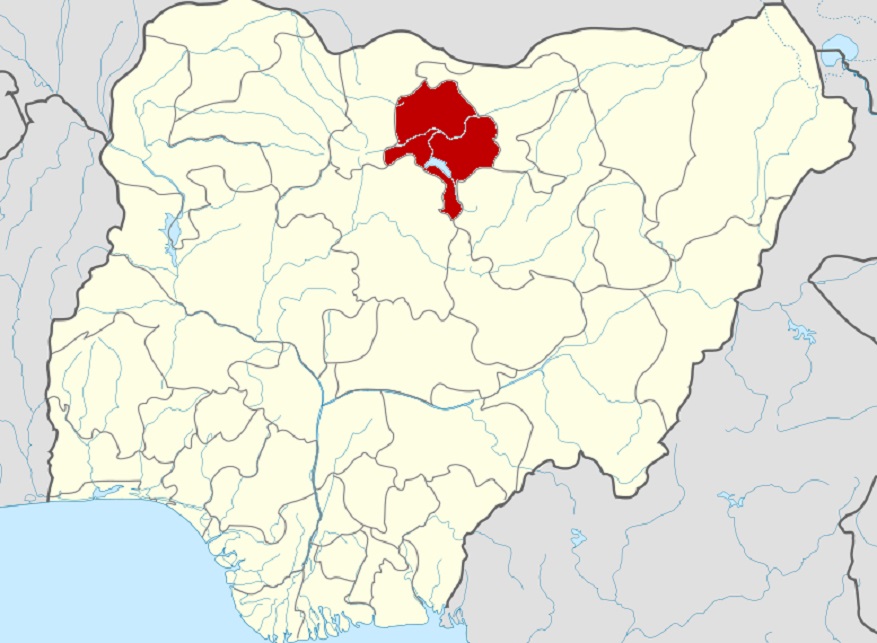
The Kano State Government has said it plans to expend the sum of N493.5 million to feed vulnerable households and indigent people across the five Emirate Councils of the state
According to the State Commissioner for Information, Mr Muhammad Garba, this is part of the humanitarian policies of the administration of Governor Abdullahi Umar Ganduje.
He said the State Executive Council has already approved the release of the fund to enable the beneficiaries to survive the economic downturn that was worsened by the COVID-19 pandemic.
Mr Garba said the “approval has been given by the Council for the release of N493,518,000.00 being the cost of foodstuff and other materials to be distributed as support to the most vulnerable indigent households/families across the five Emirates Councils in the state.”
He added that “the state Executive Council has also approved an upward review of the contract sum for the completion of five-kilometre dual carriageway roads in Warawa and Ungogo local government areas to the sum of N1,280,557,088.41.
“Contracts for the completion of the five-kilometre dual carriageway roads in Warawa and Ungogo local government area were awarded in January 2019 at the cost of N598,570,324.45 and N880,900,623.74 respectively.”
According to him, “the increase was as a result of an unprecedented rise in the general process of construction materials over the last four years.”
He further stated that “the new contract sum for the completion of Warawa and Ungogo dual carriageway roads stands at N997,240,689.54 and N398,670,365.08 respectively.”
The state has also got approval for the payment of differences of N238,851,229.62 to incorporate all adjustments and additional works for the construction of 100 new houses and upgrading of 50 others at the Model Village in Ganduje town of Dawakin Tofa local government.
The project, he said, which was awarded in January 2019 at the cost of N241,765,412.45, has now been reviewed to N480,616,641.55.
He said approval has also been given by the council for the payment of N95,363,450.00 for the payment of compensation for properties affected in the construction of Muhammadu Buhari Interchange at NNPC Mega Station Rotary Intersection, Hotoro along Maiduguri Road.
The Commissioner announced that the council has also approved the sum of N40,000,000.00 for the production of the 1443 AH Islamic Calendar by the state Shari’a Commission.
He said the project includes the production and printing of the calendar, where the services of some Islamic scholars that have vast knowledge on astronomy and other vital issues pertaining to the assessment of Islamic compensation would be involved.
He further disclosed that approval of N136,5482,009.93 has been given for the provision of potable water supply Gaya town and environs to eradicate cases of reported gastroenteritis that involves the rehabilitation of Wudil Regional Water Scheme to Gaya town and its environs, as well as the sum of N96,991,239.33 for the construction six solar mechanized boreholes and 30 hand pump borehole, as well as sensitization programme on triggering hygiene promotion.
He added that the sum of N82,452,000.00 has been approved by the council for the provision of high capacity electricity generators to two premier health facilities-Murtala Muhammad Specialist Hospital and Muhammad Abdullahi Wase Teaching Hospital in the state.
The Commissioner revealed that the sum of N23,899,905.80 has been approved for the general renovation of physical structures at the Science and Technical Schools Board secretariat/headquarters.
In addition, the council has okayed the release of N24,850,000.00 and N18,770,000.00 for the conduct of 2021 IJMB at RMK College of Arts and Remedial Studies, T/Wada and Kano state College of Education and Remedial Studies respectively.
On the education front, the council for the release of N17,600,000.00 for the training by Industrial Training Fund (ITF) of 220 youth to be selected from the 44 local governments across the state.
Other approvals by the council include ratifications for projects that included contract determination for the rehabilitation/asphalt overlay of Kwanar Zira-Dungurawa Road awarded in January 2016 at the cost of N671,647,455.14 now reviewed to N1,195,990,619.88; construction of diversion road connecting Eastern Bypass Road to Maiduguri Road for the construction of Muhammadu Buhari Interchange at NNPC Mega Station Rotary Intersection, Hotoro along Maiduguri Road.
He said other approvals ratified by the council are repair of eroded/washed out section at Kiru town along Yako-Kiru-Karaye Road in Kiru local government area at the cost of N202,643,311.03; phase II renovation works at History and Culture Bureau, Gidan Dan Hausa, which is necessitated by the creation of a new ministry of tourism and culture.
The contract was initially awarded at the cost of N104,624,621.58 but has now been reviewed to N124,585,228.93
The Commissioner also stated that the council has ratified approval for the contract awarded for general renovation works at the Kano Emir’s Palace at the cost of N33,880,213.81.
He said the council has also been given by the council for the constituted committee on the Distribution of Palliative to indigent Households to cushion the current economic hardship.
The Committee’s composition includes some members of the State Executive Council; Special adviser; inter-party representation; security agents; representatives from the Emirate Council; SEMA; Hisbah Board; Chairman, Forum of Chief Imams of Jumu’ah Mosques; Christian Association of Nigeria (CAN), Red Cross Society; Nigerian Union of Journalists (NUJ); Nigeria Labour Congress (NLC); Civil Society Organisations (CSOs); Non-Governmental Organisations (NGOs); the Business Community, among others.


By Adedapo Adesanya
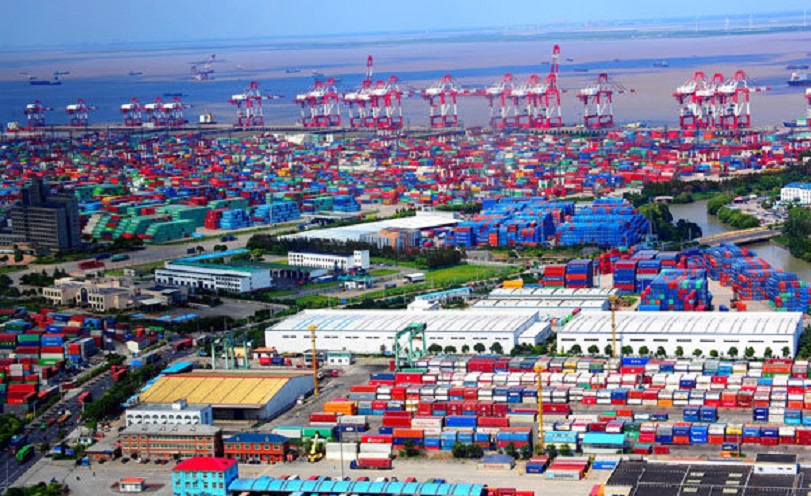
The Nigeria Customs Service (NCS), in partnership with the Presidential Enabling Business Environment Council (PEBEC), has launched a strategic reform agenda aimed at enhancing port efficiency and strengthening Nigeria’s trade competitiveness.
The initiative was unveiled on Tuesday, April 7, 2026, at the opening of a three-day operational workshop in Apapa, Lagos, themed Customs Leadership in Port Efficiency, Inspection Reform and Clearance Timeline.
Speaking at the event, the Comptroller-General of Customs, Mr Adewale Adeniyi, outlined a five-pillar strategy designed to transform port operations. The framework focuses on joint inspections, risk-based cargo clearance, optimisation of scanning infrastructure, enforcement of service timelines, and improved inter-agency collaboration.
Mr Adeniyi emphasised that the Service is shifting from policy formulation to effective implementation, stressing the need for consistent execution of established best practices.
He noted that the “workshop was aimed at bridging the gap between knowledge and action within the system.”
He further highlighted the transition to intelligence-led cargo processing, stating that ongoing investments in digital platforms and scanning systems must result in faster, more transparent clearance procedures for traders.
To ensure accountability, the Customs boss disclosed that the workshop would produce a reform execution matrix subject to close monitoring, adding that he would personally track progress reports.
He also urged officers to uphold professionalism, integrity, and commitment in the discharge of their duties.
In her remarks, the Director-General of PEBEC, Mrs Zahrah Mustapha-Audu, underscored the importance of adopting risk-based, data-driven inspection systems.
According to her, efficient and transparent border processes are essential to reducing the cost of doing business and improving Nigeria’s global trade standing.
Also speaking, the Deputy Comptroller-General in charge of Tariff and Trade, Mrs Caroline Niagwan, said the evolving mandate of the Service places it at the heart of trade facilitation and economic growth, adding that efficiency must be reflected across all commands.
As part of the engagement, the Customs and PEBEC delegation visited the National Single Window facility, where they held discussions with the Chairman of the Nigeria Revenue Service, Mr Zacch Adedeji, and other stakeholders to review progress and address operational challenges.
By Adedapo Adesanya
Madica, a structured investment programme for pre-seed African startups, has announced new investments totalling $600,000 in three tech-enabled startups, including Nigerian data startup, Biovana.
According to the initiative, these investments further reinforce Madica’s commitment to supporting founders and startups often excluded from traditional venture funding. The other startups include Tanzania’s Kilimo Fresh and Kenya’s Hakimu.
Each company has secured up to $200,000 in funding and will take part in Madica’s 18-month programme. This includes a tailored curriculum, hands-on mentorship, executive coaching, and two fully funded immersion trips to key technology ecosystems, both locally and internationally. The startups will also gain access to Madica’s global investor network, helping position them for growth and long-term success.
Madica’s programme seeks to counter the concentration of Africa’s tech funding in a few markets, verticals, and well-networked entrepreneurs and instead drive more equitable growth across the continent. This is done by backing a mix of underrepresented founders, startups from underserved regions, and innovators in overlooked sectors.
Launched in 2022, Madica is a sector-agnostic investment program designed to address structural gaps in Africa’s startup ecosystem. The program tackles key challenges startups face, such as limited access to capital, a scarcity of investors, and insufficient mentorship. It also provides the structured support necessary for startups to resolve critical issues and foster innovation, entrepreneurship, and wealth creation across the continent.
Kilimo Fresh (Tanzania), co-founded by Ms Baraka Chijenga and Mr Justice Mangu, connects smallholder farmers in Tanzania to reliable urban markets by aggregating, processing, and distributing fresh produce through a technology-enabled supply chain, aiming to reduce food waste.
Hakimu (Kenya), Hakimu, co-founded by Ms Rawan Dareer, Mr Ahmed Ahmed and Mr Ahmed Elbashir, is building a pan-African legal infrastructure leveraging the power of AI.
Biovana (Nigeria), co-founded by two female founders, Ms Estelle Dogbo and Dr Jumi Popoola, is a data harmonisation and certification platform focused on unlocking African health datasets for global pharmaceutical, AI, and clinical research applications.
Commenting on the new portfolio companies, Mr Emmanuel Adegboye, Head of Madica, said, “Each new investment brings us closer to the portfolio we set out to build, one that reflects the full breadth and diversity of African entrepreneurship. These three startups join a growing community of founders we’re backing with the resources, relationships, and runway they need to succeed at this early stage. The opportunity across the continent is enormous, and we’re committed to being a crucial and consistent partner in realising it.”
“Joining the Madica portfolio is a significant moment for Hakimu. We’re revolutionising access to justice across Africa, and having a partner that understands the specific challenges and opportunities of scaling in Africa makes a real difference,” said Ms Dareer, co-founder and CEO of Hakimu. “We’re grateful for the trust, looking forward to the hands-on support, and clear-eyed about the work ahead.”

By Adedapo Adesanya
President Bola Tinubu is expected to be among the leading public figures attending the next edition of the Africa CEO Forum, which will take place on May 14-15, 2026, in Kigali, Rwanda
A strong Nigerian private-sector delegation will also take part, including Mr Aliko Dangote, Mr Wale Tinubu, Mr Ofovwe Aig-Imoukhuede, Mrs Adesuwa Ladoja, Mrs Rachel More-Oshodi, Mrs Zouera Youssoufou, Mr Karim Noujaim, Mr Dany Abboud, Mr Ayo Otuyalo and Mr Chukwuerika Achum. Nigeria’s Coordinating Minister of Health and Social Welfare, Professor Muhammad Ali Pate, will also be present.
According to a statement on Tuesday, the 2026 edition will convene in Kigali to address a defining question for Africa’s future: how to achieve the scale necessary to compete, integrate and thrive in a fragmenting world.
It comes as global power dynamics continue to evolve, while the ability of Africa to rely on competitive, agile and internationally integrated corporate champions has become a defining corporate imperative. In this shifting global landscape, one lesson is clear: scale is no longer optional. It is the first line of defence.
Organised by Jeune Afrique Media Group and co-hosted by the International Finance Corporation (IFC), the Africa CEO Forum 2026 will convene Africa’s leading public and private decision-makers around a clear conviction: scale can only be achieved through shared African ownership.
The Forum will explore three strategic levers to build continental scale. First is shared equity, which will look to unlock cross-border equity investment to create multinational African champions. Mobilise African institutional capital across markets to strengthen resilience and enhance long-term returns.
Also, is shared infrastructure, which will take on designing complementary infrastructure to integrate African value chains. Champion transformative projects that serve regional, not merely national, needs and create truly connected markets.
Thirdly is shared frameworks, which is set to harmonise standards, rules and regulations to boost investor confidence and enable the free flow of capital, goods and services. Build future-proof digital rails for health, education, agriculture and cross-border payments.
Speaking on this, Mr Amir Ben Yahmed, President of the Africa CEO Forum, stated: “If Africa wants to compete in a world defined by scale, it must move beyond economic patriotism and embrace a new model: African capital investing together. Shared ownership, cross-border partnerships and continental ambition will define the economic future of Africa and the next generation of African champions.”
On his part, Mr Makhtar Diop, Managing Director at IFC, stated: “Africa has the capital and the opportunity to grow and create quality jobs. What matters now is putting that capital to work at scale. That means building trust, sharing risk, and investing across borders. The Africa CEO Forum brings leaders together to connect policy and private investment, and to help shape Africa’s next phase of growth.”
-
 Feature/OPED6 years ago
Davos was Different this year
-
Travel/Tourism10 years ago
Lagos Seals Western Lodge Hotel In Ikorodu
-

 Showbiz3 years ago
Estranged Lover Releases Videos of Empress Njamah Bathing
-
 Banking8 years ago
Sort Codes of GTBank Branches in Nigeria
-

 Economy3 years ago
Subsidy Removal: CNG at N130 Per Litre Cheaper Than Petrol—IPMAN
-

 Banking3 years ago
Sort Codes of UBA Branches in Nigeria
-

 Banking3 years ago
First Bank Announces Planned Downtime
-

 Sports3 years ago
Highest Paid Nigerian Footballer – How Much Do Nigerian Footballers Earn