General
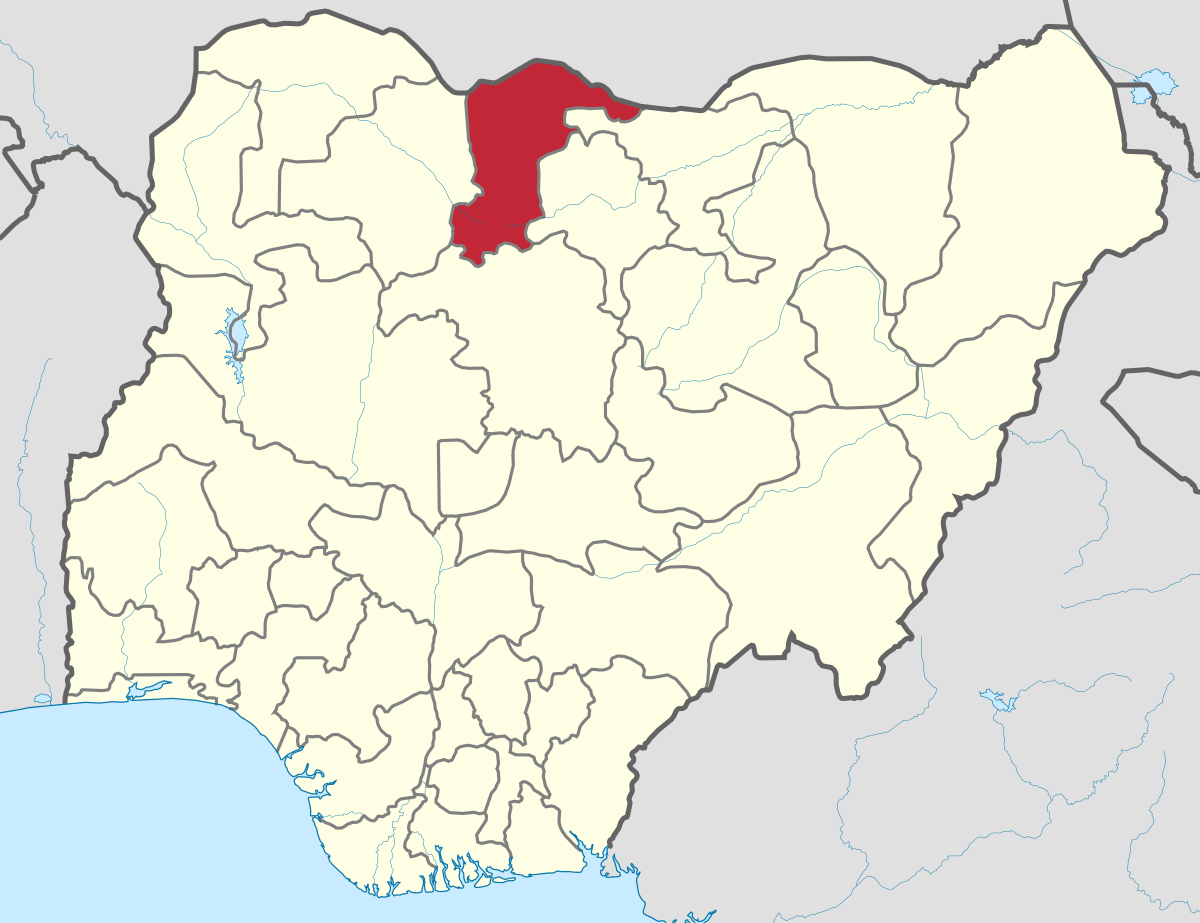
Katsina to Totally Lift Ban on Telco Services in January 2022
By Adedapo Adesanya
The Katsina State Government says it will lift the ban on telecommunication services in the remaining seven affected local government areas (LGAs) before the end of January 2022.
The governor of the state, Mr Aminu Masari, disclosed this in Katsina, urging residents to do their best to protect their areas from bandit attacks.
Business Post had reported that recently, the state government lifted the ban on telecommunication services in 10 out of the 17 LGAs in the state which hitherto suffered from banditry.
He commended the efforts of all security agencies, especially vigilance groups for fighting bandits.
Mr Masari noted that the vigilantes travel from one community to another with the aim of protecting the communities.
The governor also advised people to defend their communities and to also give the securities all the necessary support, especially by providing them with correct information on criminals.
He also urged the people in the various communities to support the local vigilante groups with the necessary weapons so that they could defend them in the event of an attack.
Recall that recently, the governor said that banditry must be defeated collectively across the affected northern states before 2023 when the tenure of the various administrations will come to an end.
The governor, who gave the assurance while signing the state’s 2022 approved appropriation bill, said no going back in the fight against bandits.
According to him, the bandits are well known in their communities and should be fished out.
“We must prepare to fight back as individuals, to fight the bandits because they are evil and they represent evil. We should not retreat in this fight.
“We took over under serious threat of security in 2015, and by God’s grace, we will not hand over this country to the next generation of leaders under this condition. We must restore normalcy.
“We inherited the government with the security challenges and we must end it and hand over the state to our successors without the same problem.
“We must control and dominate our environment.
“There are two advantages that we have, numbers and technology. When you put the two together, we will restore normalcy. It is not beyond us to do that,” Mr Masari said.
General
AFC Mobilises $2bn From Global Lenders for African Infrastructure Projects
By Adedapo Adesanya
The Africa Finance Corporation (AFC) has raised $2 billion via a syndicated loan, with considerable participation from Asian and European banks seeking to capitalise on growing demand for infrastructure projects across the continent.
Barclays Bank, Commerzbank, First Abu Dhabi Bank PJSC, and FirstRand Bank led the debt facility. Other participating lenders include Export-Import Bank of India, Bank of Communications, Industrial and Commercial Bank of China, and Industrial Bank of Korea, among others.
Each region accounted for about 35 per cent of the creditors, according to a statement by AFC.
AFC chief executive, Mr Samaila Zubairu, said the money would enable more master planning around infrastructure and industrial planning for economies, regions and economic corridors across the continent.
According to Mr Zubairu, the lender is also in discussions to invest in a proposed oil refinery to be built by billionaire Aliko Dangote in East Africa.
The financer initially sought $1.6 billion via the facility but scaled it up to $2 billion amid strong demand from Asian financial institutions.
“In this round, we saw a lot more of Asian banks. We have banks from China, Hong Kong, and Korea. They are a lot more engaged,” he said.
Mr Zubairu said the loan underscored AFC’s strong track record, pointing to its financing for projects including Nigeria’s 650,000 barrels per day Dangote oil refinery and Africa’s largest copper smelter in the Democratic Republic of Congo.
“There’s a lot more confidence, a lot more partners,” Mr Zubairu said of those participating in the loan. “We are constantly demonstrating that Africa is executing. Africa is building.”
“The capital that we raise goes into African infrastructure build out, African industrialisation build up – essentially creating jobs for Africans,” Mr Zubairu said.
The AFC chief said the lender is also working to reform capital rules and create structures that will allow more African money to stay on the continent and be invested in crucial infrastructure projects.
AFC, founded in 2007, has assets surpassing $19 billion and counts 48 African countries as members.
In January, the infrastructure-focused multilateral lender secured an A rating from S&P. It has an A3 rating from Moody’s, an AAAspc rating from S&P Ratings (China) and an A+ rating from the Japan Credit Rating Agency.
General
NERC Orders DisCos to Pay 20% Compensation to Affected Band A Customers
By Adedapo Adesanya
The Nigerian Electricity Regulatory Commission (NERC) has ordered electricity distribution companies (DisCos) to pay 20 per cent compensation to eligible Band A customers who were affected by power shortfalls between February and March 2026.
In Directive No. NERC/2026/002, the commission said, generation constraints, which were largely caused by inadequate gas supply and vandalism of gas and transmission infrastructure, prevented DisCos from meeting committed service levels for some Band A feeders.
NERC Mandated that for feeders that supplied less than 18 hours per day, affected Band A feeders will not be downgraded during the covered period, and eligible customers will receive special compensation equal to 20 per cent of approved energy figures for February 2026.
However, for Band A feeders that recorded an average daily supply of between 18 and 20 hours, the existing compensation framework under Addendum No. NERC/2024/003 applies to both Maximum Demand (MD) and Non-Maximum Demand (Non-MD) customers.
MD customers are high-consumption users who typically have their own dedicated transformer and operate with a load of 45 kVA and above; they include large residential estates, banks, hotels, supermarkets, industrial facilities and oil and gas complexes.
Non-MD customers do not have a dedicated transformer and instead share public transformers, and they generally consume less, often below 45–50 kVA.
For Non-MD customers, compensation is set at 20 per cent of the approved February 2026 energy cap applicable to the affected feeder.
For MD customers, compensation is 20 per cent of the average energy billed per MD customer in February 2026.
According to NERC, prepaid customers will receive their compensation as token credits, while postpaid customers will receive bill adjustments.
The commission said that compensation for February must be completed by 31 May 2026, while compensation for March must be completed by 30 June 2026.
The commission prohibited Distribution companies from using compensation credits to offset any existing customer debt, adding that customers must be clearly informed of the value and period of the compensation they receive.
NERC said it will monitor implementation and verify compliance to ensure all eligible customers receive what they are due.
The commission reaffirmed its commitment to protecting electricity consumers while ensuring the stability and sustainability of the electricity market.
General
TCN Confirms Destruction of Six Transmission Towers in Nasarawa
By Adedapo Adesanya
The Transmission Company of Nigeria (TCN) has confirmed the destruction of six transmission towers along the Apir–Lafia 330kV line in Nasarawa State, causing significant disruption to electricity supply in parts of the country.
In a statement issued on Wednesday, TCN spokesperson, Mrs Ndidi Mbah, said the incident occurred on May 30 at about 1:15 a.m. during a heavy downpour.
She explained that the transmission line initially tripped, prompting operators to attempt a trial reclosure of Line II at about 2:08 a.m., but the effort failed.
A subsequent inspection of the transmission corridor, however, revealed extensive damage to key components of towers T125 to T130, confirming that the infrastructure had been vandalised.
“The tripping of the lines prompted a physical line trace to determine the fault, which revealed damage to critical components of towers T125 to T130, confirming vandalism on the affected sections of the transmission corridor,” Mbah said.
The incident has forced both Apir–Lafia 330kV Transmission Lines I and II out of service pending the reconstruction of the damaged towers.
TCN said its engineers have been deployed to the site to assess the extent of the damage and determine the materials required to restore normal transmission along the corridor.
As an interim measure, the Lafia 330kV Transmission Station is being supplied through an alternative line to minimise the impact on electricity consumers within the franchise areas of Abuja Electricity Distribution Company (AEDC) and Jos Electricity Distribution Company (JEDC).
The company condemned the persistent vandalism of power infrastructure, warning that such acts undermine investments in the electricity sector and threaten the stability of the national grid.
It also urged residents and host communities to remain vigilant and report suspicious activities around transmission installations to security agencies or the nearest TCN office.
TCN stressed that safeguarding critical national infrastructure requires collective responsibility to ensure a reliable and uninterrupted electricity supply nationwide.
-
Feature/OPED6 years agoDavos was Different this year
-
Travel/Tourism10 years ago
Lagos Seals Western Lodge Hotel In Ikorodu
-
Showbiz3 years agoEstranged Lover Releases Videos of Empress Njamah Bathing
-
Banking8 years agoSort Codes of GTBank Branches in Nigeria
-
Economy3 years agoSubsidy Removal: CNG at N130 Per Litre Cheaper Than Petrol—IPMAN
-
Banking3 years agoSort Codes of UBA Branches in Nigeria
-
Banking3 years agoFirst Bank Announces Planned Downtime
-
Sports3 years agoHighest Paid Nigerian Footballer – How Much Do Nigerian Footballers Earn