General
Lagos, Afreximbank Train 253 Export Ready Entrepreneurs
By Modupe Gbadeyanka
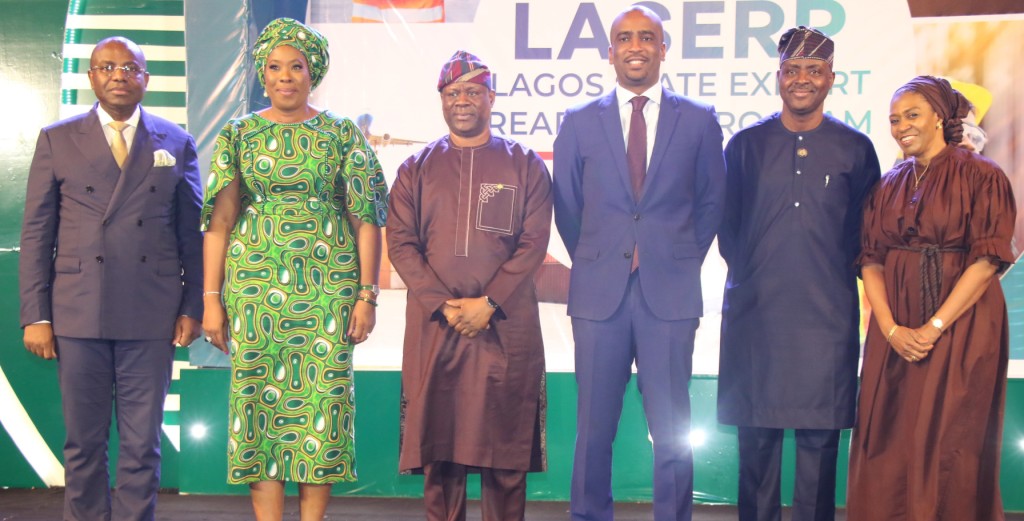
No fewer than 253 Small and Medium Enterprises (SMEs) have undergone a training on exports in collaboration with the African Export-Import Bank (Afreximbank).
The beneficiaries underwent the training under the Lagos State Export Readiness Programne (LASERP), designed to prepare Lagos entrepreneurs to compete beyond the country’s shores, diversify the economy away from the dominance of oil, and to entrench Lagos as the undisputed gateway of trade for Nigeria and the African continent.
At a graduation ceremony held for them last Friday in Lagos, 20 outstanding trade champions were chosen to represent the state and showcase the best of Made in Lagos products in the Lagos Pavilion at the Intra African Trade Fair (IATF) in Algiers, the Algerian capital, in September.
The Governor of Lagos State, Mr Babajide Sanwo-Olu, represented by his Special Adviser on Works, Mr Adekunle Olayinka, said, “Our ambassadors are no longer just local champions – they are export-ready entrepreneurs, positioned to scale, to innovate, and to stand tall in regional and global markets.
“Already, Lagos contributes more than 60 per cent of Nigeria’s non-oil exports, which stood at $5.3 billion in 2024, and with this graduating cohort of over 250 SMEs, we project an additional $1 billion in foreign exchange inflows annually within the next five years.”
Also speaking, the Minister of Finance and Coordinating Minister of the Economy, Mr Wale Edun, represented by his Special Adviser on Communications, Media, and Publicity, Dr Ogho Okiti, thanked the stakeholders involved in the exercise, including Afreximbank and ImpactHer, for “making this programme a success.”
According to him, the partnership “demonstrates the power of strategic partnerships in unlocking Nigeria’s economic potential.”
“Export diversification is critical to Nigeria’s long-term economic growth. Programmes like LASERP directly support our broader agenda to grow non-oil exports, expand Nigeria’s global competitiveness, and strengthen women-led enterprises and SMEs. It will serve as a model for similar initiatives across Nigeria,” he stated.
On her part, the Lagos State Commissioner for Commerce, Cooperatives, Trade and Investment, Mrs Folashade Ambrose, re-echoed Mr Sanwo-Olu’s view that the state would no longer be “local champions, [but] global competitors.”
On his part, the Regional Chief Operating Officer for Afreximbank, Mr Allain Thierry Mbongue, said, “By investing your time and energy, you have positioned yourself not only as business leaders in Lagos but as future exporters whose goods and services would soon carry the proud label; Made in Africa.
“At Afrexim Bank, we believe SMEs are not just the backbone of African economies, they are the engine that will power Africa’s economic future under AfCFTA. That is why the bank has laid strategic emphasis on SMEs development.”
The chief executive of ImpactHER, Ms Efe Ukala, revealed that the training focused on digital and brand transformation, as entrepreneurs were equipped with what they need to stand out in the digital export world.
“During the training, we helped build websites, provided customised digital export marketing strategy, facilitated 5 per cent single digit interest loan for participants – two out of which are being processed, as our participants shipped out over a dozen 20-foot containers of goods over the past 6 weeks while 10 businesses secured international trade certification – thus securing long term access to new markets,” she said.
The beneficiaries were reminded by the Managing Director of Secure ID, Mrs Kofo Akinkugbe, that “quality and global standards” are crucial for entering new markets and gaining international recognition.
“Prepare deeply because readiness is the foundation of market access; don’t go alone – clusters and cooperatives are your allies in scaling; see finance as within reach – with the right structures, capital will come; invest in networks – because trade is built on trust, not just transactions; and formalise your trade activities – so you can scale under AfCFTA and beyond,” were the words of the Managing Partner at Zenforte Partner, Ms Weyinmi Eribo, to the graduating students.
General
UK Strengthens Ties With Kano, Jigawa on Sustainable Development
By Adedapo Adesanya
The United Kingdom has reaffirmed its development partnership with Kano and Jigawa States, as part of its long-term commitment to development and reform in northern Nigeria.
The Head of Development Cooperation at the British High Commission Abuja, Ms Cynthia Rowe, recently completed high-level engagements with governors of both states as well as senior government officials and civil society leaders.
The discussions underscored the UK’s modern approach to development as a genuine partnership with Nigeria, which prioritises state-led ownership and sustainable development that delivers lasting impact through strengthening systems and partnerships grounded in investment, trade, climate financing, technical expertise and joint accountability.
According to a statement, the Foreign Commonwealth and Development Office, via the British High Commission, said Nigeria remains one of the UK’s most significant development partners, adding that the engagements underlined the strength and ambition of the bilateral relationship reaffirmed during the recent UK-Nigeria State Visit.
In Kano, Ms Rowe met with Deputy Governor Alhaji Murtala Sule Garo and senior officials, including the newly confirmed Head of Civil Service and Secretary to the State Government. The visit recognised Kano’s progress on climate finance, health system reform and private sector investment supported through UK technical assistance.
In Jigawa, she met with Governor Umar Namadi and heads of key ministries, departments and agencies. The meeting celebrated more than 25 years of UK-Jigawa partnership, one of the most longstanding bilateral development relationships at the subnational level in Nigeria. Discussions covered the state’s continued progress on health systems reform, agriculture, and governance and the path forward under UK technical assistance.
Since 2022, PLANE has supported Kano, Kaduna and Jigawa to strengthen state-led education delivery systems, working through Ministries of Education, SUBEB and key agencies. Its RANA+ foundational learning packages have reached 1.4 million pupils across the three states, alongside wider system strengthening.
Speaking on this, Ms Rowe said, “For more than 25 years, we have worked side by side with state governments, including Jigawa and Kano states, their communities, and civil society to build stronger health systems, improve learning outcomes for millions of children, support farmers to grow their businesses, and help states attract the investment they need to thrive.
These visits have reinforced our confidence in what this partnership can achieve. We are working together to deliver lasting change, and deepening a relationship built on genuine mutual respect and shared ambition for Nigeria’s growth and development.”
General
CBN Partners NiMet to Integrate Climate Data Into Economic Planning
By Adedapo Adesanya
The Nigerian Meteorological Agency (NiMet) has signed a Memorandum of Understanding (MoU) with the Central Bank of Nigeria (CBN) on data sharing to enhance economic productivity.
This was done at a meeting at CBN Head Office in Abuja, where the weather body led by its Director General, Mr Charles Anosike, on Wednesday, highlighted the importance of integrating weather and climate data into economic research, especially in sectors such as agriculture, energy, and transportation.
He noted that extreme weather events can reduce agricultural productivity and threaten food security.
He added that the collaboration aligns with the Renewed Hope Agenda of President Bola Tinubu, which prioritises food security through major agricultural investment, including the cultivation of 10 million hectares of land and the distribution of mechanised equipment.
Mr Anosike cited a 2026 World Bank report that showed that extreme weather driven by climate change is significantly affecting global food security, with more than 87 million people facing hunger in East and Southern Africa and 52 million in West and Central Africa.
He also referenced the latest Berkeley Earth Report, which projects that 2026 is likely to be the fourth warmest year on record, a trend that continues to shape agricultural and energy market projections.
In his remarks, Mr Muhammad Sani Abdullahi, Deputy Governor, Economic Policy Directorate of the CBN, said the signing of the MoU marked an important step in strengthening the partnership between two key national institutions whose mandates intersect in data, research, and policy support.
He emphasised that, in an increasingly complex and dynamic economic environment, timely and reliable data remain essential for effective policy decisions.
According to him, the Economic Policy Directorate relies heavily on timely and credible statistical information from NiMet, saying that such data are critical for inflation monitoring, agricultural sector assessment, and broader economic policy advisory functions.
He described the initiative as both timely and important, adding that strong institutional partnerships are essential for strengthening evidence-based policymaking and improving the robustness of national data systems.
At the close of the event, Mr Anosike and Mr Sani Abdullahi signed the MoU on behalf of their respective institutions.
General
POS Operators Barred Within 200 Metres of Police Stations
By Adedapo Adesanya
The Inspector-General of Police (IGP), Mr Tunji Disu, has ordered an immediate nationwide ban prohibiting Point-of-Sale (POS) operators from running their businesses within a 200-metre radius of any police station, divisional headquarters, or police formation across Nigeria.
This directive, released via an internal police wireless message, addresses critical systemic challenges regarding extortion and corrupt financial practices within law enforcement facilities.
The order is to be strictly enforced nationwide, with senior officers overseeing various formations to be held accountable for any breach of the directive.
The Nigeria Police Force stated that the measure is intended to strengthen transparency, accountability, and public confidence in the policing system.
The decision comes after an alarming proliferation of POS businesses near police facilities, with investigations and public complaints revealing that some operators were actively complicit in facilitating extortion, bribery, and illegal cash transfers forced upon civilians or suspects during police encounters.
Under the directive, Assistant Inspectors-General of Police (AIGs), State Commissioners of Police (CPs), and heads of formations will be held vicariously liable for any breach within their jurisdictions.
The IGP’s order states: “Any officer or POS merchant found flouting the 200-metre operational boundary or colluding in illicit transactions will face immediate disciplinary and criminal actions under extant laws.
“If you are a POS agent or looking into regulatory compliance for financial services in Nigeria, let me know. I can provide details on current Central Bank of Nigeria (CBN) radius registration guidelines or share methods to report officer misconduct directly to the Force Headquarters.”
-
Feature/OPED6 years agoDavos was Different this year
-
Travel/Tourism10 years ago
Lagos Seals Western Lodge Hotel In Ikorodu
-
Showbiz3 years agoEstranged Lover Releases Videos of Empress Njamah Bathing
-
Banking8 years agoSort Codes of GTBank Branches in Nigeria
-
Economy3 years agoSubsidy Removal: CNG at N130 Per Litre Cheaper Than Petrol—IPMAN
-
Banking3 years agoSort Codes of UBA Branches in Nigeria
-
Banking3 years agoFirst Bank Announces Planned Downtime
-
Sports3 years agoHighest Paid Nigerian Footballer – How Much Do Nigerian Footballers Earn

Pingback: Lagos, Afreximbank Train 253 Export Ready Entrepreneurs – PRIMA NEWS