

Connect with us

General

Lagos Seeks $10bn Private Funds for Electricity Supply

Published

on

electricity supply Lagos

By Adedapo Adesanya

Governor Babajide Sanwo-Olu of Lagos State has disclosed that his administration intends to raise as much as $10 billion in private investment to boost electricity supply to nearly five million households by 2032.

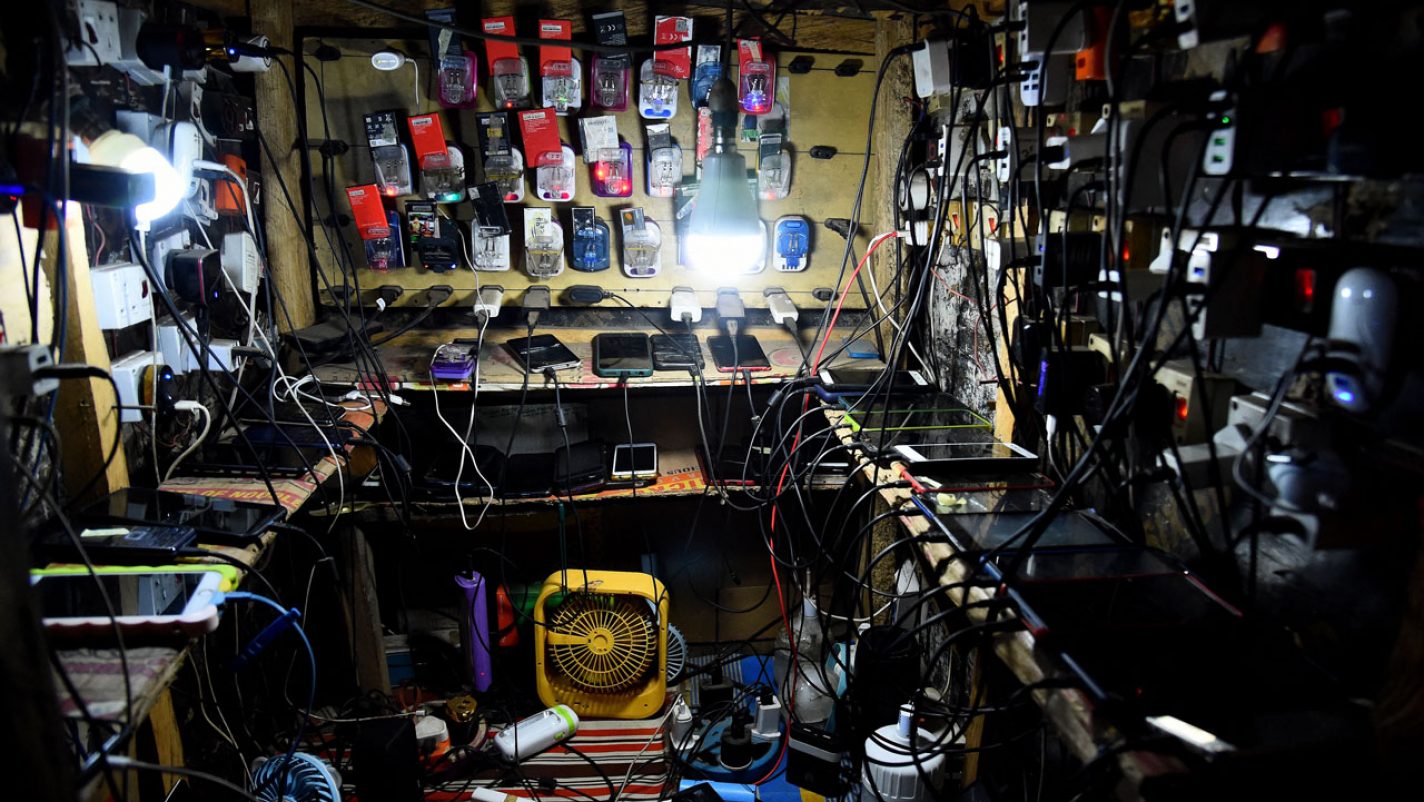
Speaking in an interview, he said this was part of plans to improve electricity in the state, which receives about 25 per cent of 5,000 megawatts of the national grid.

This will also wean the state that largely depends on fragmented off-grid power sources.

“We’ve done an extensive power roadmap in energy for Lagos, and we have an idea of what our requirements will be for the next 10 years,” Mr Sanwo-Olu said.

“We’re trying to grow our power requirement, and based on the energy needs, it will be about 10,000 to 12,000 megawatts of power. So, it could be an investment opportunity of up to like $10 billion. So, we’re going to put that in front of investors,” he said.

Mr Sanwo-Olu said his government is also partnering with the World Bank and USAID to provide off-grid solutions to drive renewable energy use in the state.

He said the state plans to generate more than 1GW of solar photovoltaic in seven years, which will help it electrify 1.6 million households by 2030.

President Bola Tinubu, in June, signed the Electricity Act, marking a significant update to the 2005 Electricity and Power Sector Reform Act in Nigeria.

Originally enacted in July 2022 during former President Muhammadu Buhari’s administration, the new legislation aims to stimulate private sector investments in the country’s power sector and break the monopoly in electricity generation, transmission, and distribution on a national level.

Nigeria, according to the World Bank, has the largest energy access deficit, with available data as of 2021 showing that 85 million Nigerians of the country’s estimated 206 million population are without access to grid-connected electricity.

As of 31 December 2022, the generating segment of the country’s electricity market comprised 29 operational generating plants with a combined installed capacity of 13,014MW and an average operational capacity of 4,523MW – down 29 per cent from 6,371.9MW in 2019.

Adedapo Adesanya is a journalist, polymath, and connoisseur of everything art. When he is not writing, he has his nose buried in one of the many books or articles he has bookmarked or simply listening to good music with a bottle of beer or wine. He supports the greatest club in the world, Manchester United F.C.

1 Comment

1 Comment

  1. Pingback: Lagos Seeks $10bn Private Funds for Electricity Supply – African Budget Bureau
Leave a Reply

Your email address will not be published. Required fields are marked *

General

Xenophobia: FG Evacuates More Nigerians as South Africa Protests Loom

Published

on

nigerians in south africa

By Adedapo Adesanya

The federal government has announced that another batch of Nigerians will be evacuated from South Africa on Tuesday as part of ongoing efforts to safeguard citizens ahead of planned anti-immigrant protests in the country.

Anti-immigrant groups in South Africa have set a June 30 deadline for immigrants to leave the country, planning widespread demonstrations on that date and threatening a national shutdown if the country’s government does not take significant action on immigration.

According to the spokesperson for the Ministry of Foreign Affairs, Mr Kimiebi Ebienfa, an Air Peace aircraft departed Nigeria on Monday and is expected to return to Lagos on Tuesday morning with another group of Nigerians who opted for voluntary evacuation.

The latest operation comes as anti-immigration groups prepare to stage demonstrations from June 30. The government has continued its evacuation programme for Nigerians who have indicated a willingness to return home.

Providing details of the latest flight, Mr Ebienfa said, “Nigeria will resume the evacuation of our nationals from South Africa today.

“Air Peace aircraft will depart Nigeria today, Monday, June 29, 2026, at 3:00 pm and is expected to arrive in South Africa at approximately 9:00 pm local time.

“The return flight is scheduled to depart South Africa at 12:00 midnight and is expected to arrive at Murtala Mohammed International Airport, Lagos, on Tuesday morning.”

He added that 271 Nigerians are expected to arrive on the evacuation flight.

President Tinubu approved the voluntary evacuation programme earlier this month to enable Nigerians willing to leave South Africa to return home safely.

Earlier in June, the federal government disclosed that five Air Peace evacuation flights had been approved after more than 500 Nigerians were screened for repatriation. The Ministry of Foreign Affairs said the flights were intended to ensure that all registered Nigerians who wished to return would be evacuated safely.

Before the latest operation, 328 Nigerians had already been repatriated in two batches. The first flight, which landed on June 11, brought back 262 returnees, while a second batch of 66 arrived in Lagos on June 25.

The evacuation exercise is being coordinated by the Federal Government in partnership with Air Peace and other relevant agencies.

Continue Reading

General

Why Ad Platform Policy Changes Are a Hidden Risk in Every Outsourced Paid Media Relationship

Published

on

white label ppc management

The rules governing digital advertising landscapes are never set in stone. Major platforms like Google, Meta, and TikTok frequently update their privacy frameworks, compliance requirements, and algorithmic bidding logic without giving agencies much time to prepare. When a marketing team decides to delegate its active campaigns to an external production partner, these sudden policy shifts can introduce a major element of vulnerability into the relationship. Integrating a professional white label ppc management structure allows your business to scale production and tap into high-level optimization talent without building a massive internal department. However, if your fulfillment partner is not built to monitor, interpret, and rapidly deploy adjustments in response to changing platform guidelines, your clients risk facing sudden account suspensions or massive spikes in customer acquisition costs.

Decoupling Technical Adaptability from Account Ownership

When an advertising platform changes its rules, the changes need to be made away in the live ad accounts. This is so the ads do not stop working. Sometimes there is a problem when one team thinks another team is taking care of making sure the ads follow the rules. The team that is supposed to make sure everything is working thinks the other team is doing this job. This can cause problems like missing information and ads that do not work. To keep your clients happy, you need a plan that says who is in charge of checking for rule changes, who updates the ad information, and who updates the ad text rules when the advertising platform changes its rules. You need to know who does what so everything runs smoothly. Advertising platforms and ad accounts are important for your clients.

Managing the Financial Fallouts of Compliance Delays

The real-world financial cost of failing to adapt to sudden policy changes can ruin an agency’s reputation and cause high client turnover. If an automated ad platform updates its rules for a specific industry—such as healthcare, real estate, or finance—and your campaign structure fails to adjust within the grace period, entire accounts can be paused overnight. While your backend team works to fix the errors, your client loses valuable inbound leads while their fixed overhead costs remain. Agencies must make sure their fulfillment partners don’t just focus on basic optimization but also maintain a proactive stance toward platform compliance to prevent budget waste and operational downtime.

Maintaining Strategic Alignment Through Platform Shifts

Relying on a partner to manage the daily execution of your paid media means you must remain highly aligned on how macro-level platform changes alter your broader strategy. When networks restrict traditional targeting methods, your backend white label ppc management team must quickly pivot to alternative solutions, such as first-party data loops or contextual targeting systems. If your vendor operates on autopilot without adjusting to these shifts, your campaigns will slowly lose efficiency as the old targeting methods become obsolete. Regular strategy sessions are essential to confirm that your optimization partners are actively adjusting their setups to remain effective beneath the latest network rules.

Building a Resilient Operations Partnership

To do well with ad networks, you need to work together with your partners and be able to change quickly. You also need to be open with each other. Ad agencies can not just set up their paid media. Forget about it. They need to keep an eye on it and make changes when needed. If you work closely with the company that provides your white-label service, you can protect your business from losing money. You should expect this company to tell you about changes to the network rules and to take action. The best partnerships are the ones where people work together all the time and make changes fast. This helps your clients make money consistently from their investments even when the rules of the ad networks change. Modern ad networks are always changing, so you need to be able to change with them to do well. Modern ad networks require a lot of work to navigate successfully.

Continue Reading

General

Atiku Accuses Tinubu of Plot to Turn Nigeria into One-Party State

Published

on

atiku press conference

By Adedapo Adesanya

Former Vice President and the presidential candidate of the African Democratic Congress (ADC), Mr Atiku Abubakar, has alleged that President Bola Tinubu is determined to turn Nigeria into a de facto one-party state, condemning attempts to frustrate the registration of the Nigeria Democratic Congress (NDC).

Mr Atiku’s reaction followed a ruling by the Federal High Court in Lokoja, Kogi State, which set aside its December 10, 2025, judgment directing the Independent National Electoral Commission (INEC) to register the NDC as a political party.

The presiding judge, Isah Dashen, ruled that the Peace Movement Party (PMP) should have been joined in the suit because its interests were affected by the case.

Responding to the judgment in a statement issued by the Atiku Media Office, the former Vice President said he was not surprised by what he described as a disturbing development, warning that it could have grave consequences if what he called a plot to weaken opposition parties in favour of Tinubu’s 2027 re-election bid succeeds.

According to Mr Atiku, the participation of citizens in free, fair and credible elections is the foundation of democracy, and any attempt to deny Nigerians that freedom of choice could trigger “chaos and anarchy.”

“Nigerians are now seeing the true colours of President Tinubu, who pretends to be a democrat, but his body language and the sinister activities of his agents contradict his mouthed commitment to free and fair elections,” he said.

He urged President Tinubu to emulate the late President Muhammadu Buhari, noting that despite being a retired military officer turned politician, he never deregistered any opposition party. He also cited former President Goodluck Jonathan, whom he said upheld the principle that political ambition should never be worth the blood of any citizen.

“If you’re truly popular and your policies have positively bettered the lives of the citizens, you shouldn’t be afraid of a free and fair competition,” he explained.

“Tinubu cannot be a champion of democracy under military dictatorship and now become the worst enemy of everything that democracy stands for.”

“You can’t attempt to rule the people against their will and still pretend that you’re committed to free and fair elections in 2027,” Mr Atiku stated.

The former Vice President also urged members of the judiciary to resist political interference, warning judges against allowing themselves to be used by politicians seeking to undermine Nigeria’s democracy.

“Governments will come and go. Hence, the judiciary must guard its integrity as the last hope of the masses. Don’t allow unscrupulous politicians to stain your reputation for their own short-term gain at the expense of justice. The judiciary is the last hope of the people. Let’s avoid anything that is capable of ruining the credibility and reputation of our courts, not for a messy pot of pottage or love of lucre.

“There are great judges in Nigeria, but the unchecked excesses of some who allow themselves to become judicial swords in the hands of politicians are capable of damaging the larger image of the judiciary,” he added.

Continue Reading

Trending

