Connect with us

General

Lagos Shares Sorghum, Maize to Avert Food Scarcity

Published

on

sorghum

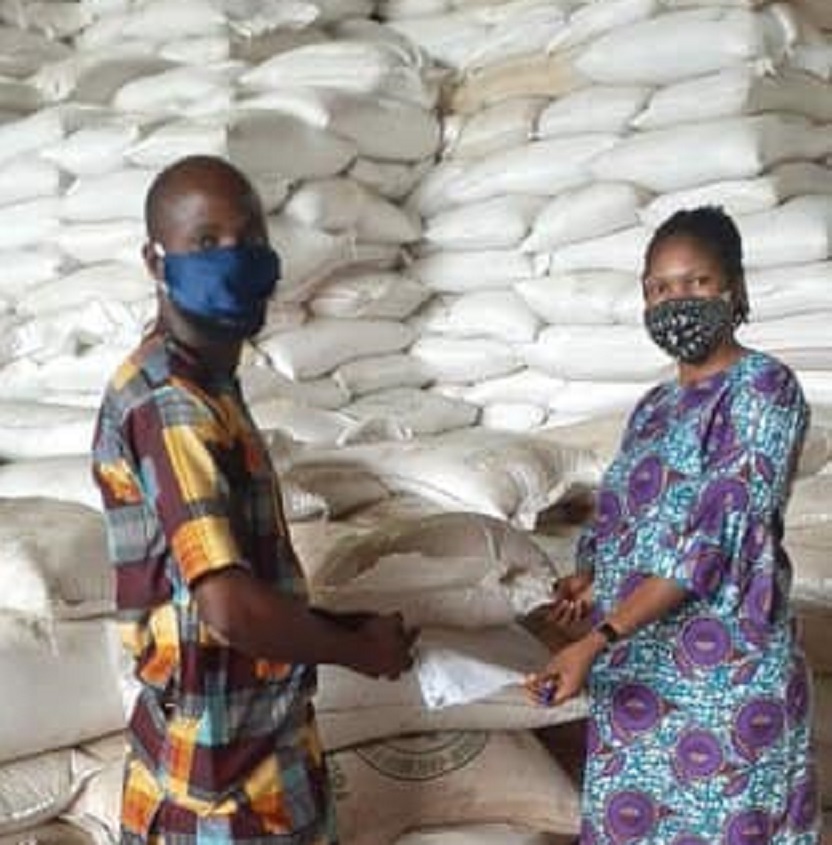
In order to avert food scarcity, the Lagos State government has commenced the distribution of maize and sorghum to feed millers, farm settlements and other stakeholders in the livestock industry.

The items were shared as mitigation measures to the COVID-19 pandemic to boost agricultural production in the state.

It was gathered that 3,300 tonnes of maize and 900 tonnes of sorghum were distributed to the feed millers, farm estates and settlements and other stakeholders in the animal feed industry across the state.

Acting Commissioner for Agriculture, Ms Abisola Olusanya, explained that the injection of these ingredients into the feed mill industry would have a multiplier effect on the input and output of the feed millers and consequently on food production.

She said maize being the major source of energy in the feed mill industry, as well as accounting for between 60 and 70 percent of the total ingredients used in feed formation and production, usually determines the final cost of the finished feed such that any fluctuation in the market price of maize also has direct effects on the finished feed.

According to her, the country’s animal feed mill sector is undeveloped due to high production costs, stressing that the distribution of these ingredients to feed millers and farm settlements in the state would lead to a significant reduction in the production costs, increase of quality feeds and consequent availability of quality food to Lagosians.

“Nigeria’s animal feed sector remains underdeveloped, largely due to high production costs. 70 percent of the operational costs of most poultry, aquaculture and other livestock operations go to feeds.

“The animal feed sector, at over $2 billion, continues to attract significant local and foreign investment in large scale feed mill operations,” she said.

“Recently, during the COVID-19 lockdown, the federal government of Nigeria presented the Lagos State government with consignments of maize and sorghum; thus, the state government approved the distribution of 3,300 tonnes of maize and 900 tonnes of sorghum to feed millers, farm estates and settlements and other stakeholders in the animal feed industry across the state,” the Commissioner averred.

She said these feed millers include commercial feed millers, toll millers, ingredient sellers, distributors of finished feed and other stakeholders, as well as investors in the industry including the smallholder private livestock farmers such as the sheep and goat farmers, and the Lagos Chapter of the Poultry Association of Nigeria (PAN), among others.

She gave the list of farm settlements and estates that have benefited from the scheme to include the Ikorodu Farm Settlement, Odogunyan; Ajara Farm Settlement, Badagry; Araga Farm Settlement, Epe; Imota Farm Settlement, Ikorodu; Agbowa GFS/NDE Estate, Epe; Igboye Farm Settlement, Epe; Poultry Estates at Erikorodo, Ikorodu and Ayedoto in Ojo; Piggery Estates at Gberigbe, Ikorodu and Oke-Aro; Arable Crop Estate, Agbowa, Epe; Vegetable Estate, Yafm, Badagry; Fish Farm Estates at Odogunyan, Ikorodu and Ketu Ereyun in Epe.

Ms Olusanya noted that the distribution would help the feed millers save time and money spent on searching for quality maize, shorten production time as well as reduce wastage of ingredients during production.

“Apart from ensuring that quality and affordable feed is produced, this distribution will also help our feed millers and other key actors in the animal feed industry to produce feed according to the recommended standard.

“It is important to note that the overall aim here is to produce good quality feeds for our animals which will in effect help livestock and animal farmers to generate low mortalities, stimulate high productivity, produce a high rate of return on investments, produce quality food to Lagosians, sustain the industry’s integrity while encouraging more investors to support the animal feed industry,” Ms Olusanya asserted.

The Acting Commissioner opined that the distribution is coming on the heels of the empowerment of 650 farmers in the State with maize seeds for the new planting season, adding that all these measures by the state government were to cushion the effects of the COVID-19 pandemic and its threat to food security and availability in the state.

She, therefore, urged beneficiaries to make judicious use of these inputs to improve the animal feed industry, as it would go a long way in rearing healthy animals and in return produce quality food for Lagosians.


Dipo Olowookere is a journalist based in Nigeria that has passion for reporting business news stories. At his leisure time, he watches football and supports 3SC of Ibadan. Mr Olowookere can be reached via [email protected]

Advertisement
Click to comment

Leave a Reply

Your email address will not be published. Required fields are marked *

General

Ekpo Laments Slow Progress in Decade of Gas Initiative

Published

on

Decade of Gas Initiative

By Adedapo Adesanya

The Minister of State for Petroleum Resources, Mr Ekperikpe Ekpo, has expressed his frustration towards the partial progress in Nigeria’s flagship Decade of Gas Initiative, advocating that it must now be aggressively accelerated.

Launched by the late former President Muhammadu Buhari in 2021, the scheme is a national policy drive declaring 2021–2030 as the country’s “Decade of Gas.” with the goal of transforming Nigeria from an oil-dependent economy into a gas-powered industrial nation, using its vast natural gas reserves (one of the largest in Africa) for economic growth.

However,  speaking recently at the 14th Practical Nigerian Content (PNC) Forum in Yenagoa, Mr Ekpo said the policy has delivered some gains in LPG penetration, CNG rollout, and gas commercialisation, but “not at the scale Nigeria urgently requires.”

“We have made progress, but not enough,” the minister admitted. “The pace has been slower than expected, and we must move with far greater urgency.”

He cited persistent infrastructure gaps, gas supply volatility, funding constraints, and delayed policy execution as major setbacks.

“Critical pipelines are behind schedule. Feedstock shortages still hamper power and industries,” he said. “These challenges have limited the full realisation of the Decade of Gas vision.”

The minister, however, outlined a renewed push to accelerate delivery through tighter regulatory coordination and investment incentives.

“We are strengthening inter-agency alignment to remove approval bottlenecks,” Ekpo said. “The PIA gives us the fiscal tools to unlock more capital into midstream and domestic gas programmes.”

He noted measurable progress in domestic LPG consumption, clean cooking expansion, and flare gas commercialisation, calling them “strong foundations that must now be scaled up.”

“Our goal remains clear: affordable gas for power, households, industries and transport,” he said. “We are not abandoning the Decade of Gas; we are intensifying it.”

Mr Ekpo said the government will prioritise early delivery of key projects such as OB3, AKK, NLNG Train 7, Brass Fertiliser, and several gas-based industrial hubs.

“These projects will determine whether the Decade of Gas becomes a transformative legacy or a missed opportunity,” he warned.

The minister urged industry players, financiers and host communities to recommit to the national gas agenda.

“We need every stakeholder on board,” he said. “Nigeria cannot afford to slow down at a time when global markets are shifting and opportunities are emerging.”

Continue Reading

General

Power Supply Returns as Ikeja Electric Fixes Powerline Jumper Cut Issue

Published

on

Ikeja Electric Disconnect Electricity Supply1

By Adedapo Adesanya

Electricity supply was restored to residents of some parts of Lagos on Wednesday morning following a blackout spurred by a jumper cut that occurred in the Powerline area of Mosan-Okunola Local Council Development Area (LCDA) late on Monday.

The Ikeja Electricity Distribution Company (IKEDC) had announced a power outage in parts of its franchise, affecting the Ogba, Ikeja, and Alausa axis of Lagos on Tuesday.

In a message to customers, the DisCo said the power outage was due to a jumper cut at the Transmission Company of Nigeria’s (TCN) injection substation (ISS).

A jumper cut is an electrical fault that occurs when a jumper cable is damaged, disconnected, or intentionally severed.

The DisCo said the TCN’s technical team was already working to resolve the issue.

“Dear Customer, the current power outage is due to a 132kV jumper cut at the TCN Injection Substation (ISS),” the message read.

“The TCN technical team is already working to clear the fault to ensure supply is restored as soon as possible.”

Mr Kingsley Okotie, spokesperson of Ikeja DisCo, had also clarified that the power outage did not affect the entire franchise area of the company.

“It doesn’t totally affect the whole of our franchise. The message was sent to only customers in areas affected,” he said.

“We are still working to resolve the issues; that’s where we are at the moment.”

Our correspondent, who witnessed the development, reported that the jumper cut occurred around 11 pm on Monday, December 8, when a large spark occurred at the structure, leading to an immediate seizure of power supply. There was yet another minimal spark, but power was restored afterwards, likely from a back up source.

Continue Reading

General

Rivers Governor Sim Fubara Defects to APC from PDP

Published

on

sim fubara caretaker chairmen

By Dipo Olowookere

The Governor of Rivers State, Mr Siminalayi Fubara, has left the Peoples’ Democratic Party (PDP) for the ruling All Progressives Congress (APC).

Mr Fubara, who was restored as Governor of the oil-rich state in September 2025, announced his defection to the APC at a stakeholders meeting at the government house in Port Harcourt, the state capital.

In March 2025, President Bola Tinubu declared a state of emergency on Rivers State, suspending Mr Fubara and lawmakers of the Rivers State House of Assembly for six months due to political unrest in the South-South state.

It was gathered that on Monday night, the governor visited Mr Tinubu at the Presidential Villa in Abuja for a meeting.

His defection from the PDP comes a few days after 16 members of the Rivers Assembly formally joined the APC due to crisis in the PDP.

Continue Reading

Trending