Connect with us

General

Lagos Unveils Plans to Tackle Flooding, Fix Potholes

Published

on

By Dipo Olowookere

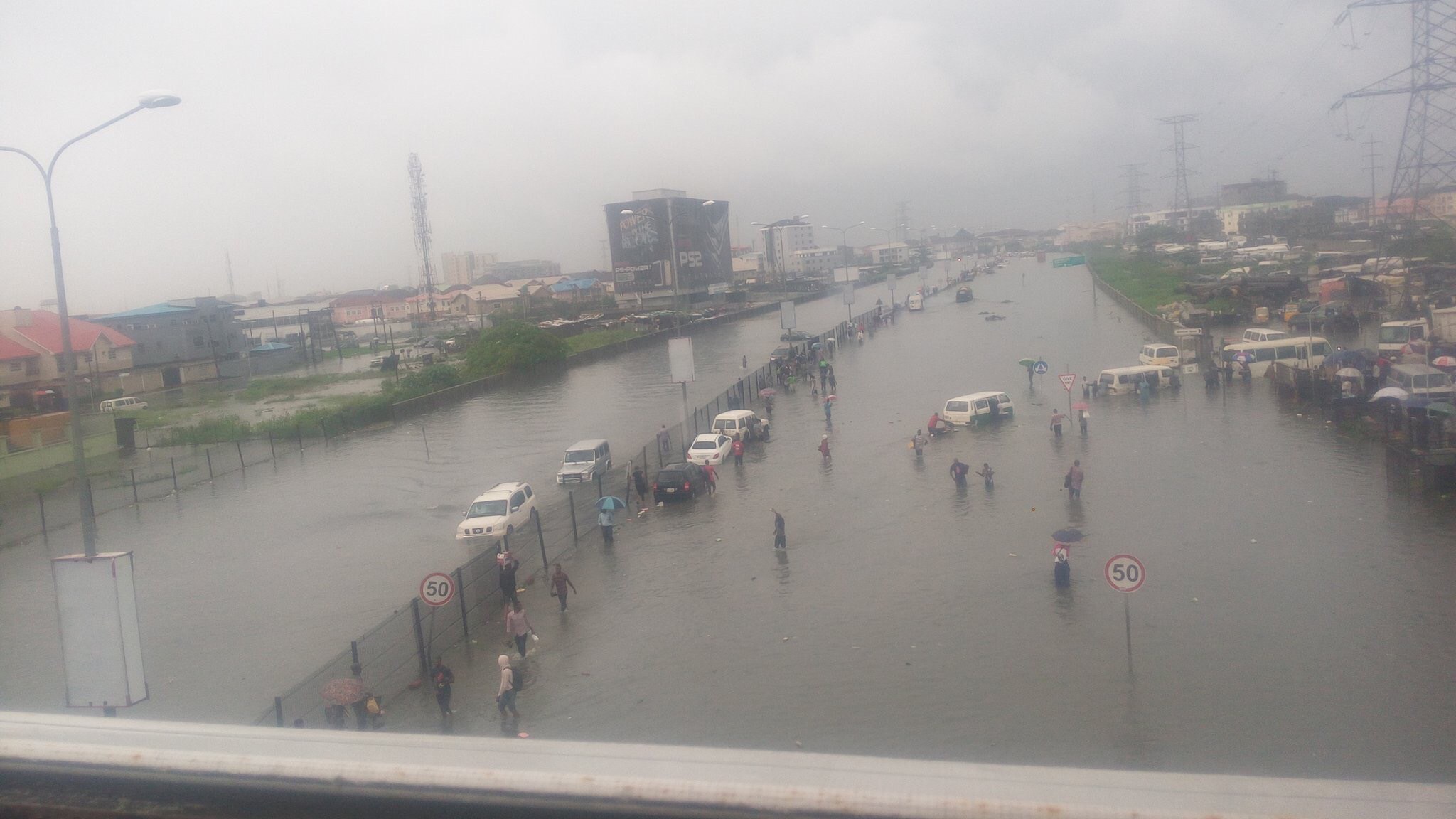
Lagos State Government on Sunday unveiled its roadmap targeted at maintaining and rehabilitating roads across the state as well as comprehensive drainage maintenance and flood control programme between August and December 2017.

Recently appointed Special Adviser to Governor Akinwunmi Ambode on Public Works and Drainages, Engr Temidayo Erinle, who reeled out the roadmap at a press briefing held at the Bagauda Kaltho Press Centre in Alausa, said in the coming days, the state government, through the Public Works Corporation, would carry out rehabilitation works on 43 major link roads across the state, while other major highways and arterial roads found to be in bad state would be fixed.

Mr Erinle said the state government was well aware of the challenges being experienced by commuters on Lagos roads, and that Governor Ambode had already repositioned the corporation to comprehensively address the issues relating to potholes and drainages in the State.

He said, “As you are all aware, we are presently in the rainy season, as such much cannot be done during this period. However, we are currently carrying out palliative works on our major roads through the application of boulders, crushed stones and other construction materials to address the potholes problems in order not to paralyze the economic activities of the state.

“Similarly, we also take advantage of some dry days to carry out repair works in an effort to reduce traffic gridlock on Lekki-Epe Expressway between Adetokunbo Ademola to Samuel, section of Ikorodu Road between the new and old pedestrian bridges inward Maryland, Ikorodu Road, Ketu Bus Stop and Ikuomola Street, Idimu Alimosho Local Government Area.

“Asides that, I want to assure the people that immediately the rain subsides, the Lagos State Public Works Corporation will embark on massive road maintenance and repairs of all major highways and arterial roads found to be in bad state.”

Mr Erinle said aside the 43 major link roads to be repaired in coming days, engineers of the Corporation have also been sent out to identify other failed spots across the state, assuring that the state government was determined to fix all potholes to bring about seamless driving experience to motorists.

He listed some of the 43 roads to include Alfred Rewane Road, Ikoyi which work has already commenced; Ojota Interchange transiting the ramps on both directions, Sina Ogunbanwo Street, Agric Road Oko-Oba, Ifako Ijaiye; Club Road off Osborne Road, Ikoyi; Oroke Drive, Ikoyi, Eti-Osa LGA; Central Avenue, Apapa; North Avenue, Apapa; Maybin road, Apapa; Lateef Jakande road, Ikeja; Gberibe road, Ikorodu; TOS Benson road, Ikorodu; Oke Sabo along Imota; Itamaga, Itoikin; Oba Sekumaderd, Ogolonto, Ikorodu; Adeniran Ogunsanya road Ikorodu; Admiralty way, Lekki Eti-Osa; Topo inward Ajido, Badagry; Hospital road, Badagry and Ijesha road network, Surulere.

Other roads include Liverpool Apapa; 1st Avenue Festac Amuwo- Odofin; Kirikiri road, Ajeromi Ifelodun; Ojo road, Ojo; College road, Agric, Ojo; Baale road, Ojo LGA; Okun-Owa street, Ajegunle, Ajeromi Ifelodun; Crowther Crescent, Apapa LG; Oba Akran Avenue, Ikeja; Shasha road Akowonjo; Bonny Camp Victoria Island; Musa Yar Adua street, off Ozumba Mbadiwe; Obafemi Awolowo way, Ikeja; Old Abeokuta motor road; Pen Cinema to Abule Egba; Iju road, Ifako Ijaiye LGA; Akowonjo road, Alimosho; Itire road, Babalola bus stop axis, Mushin LGA; Diya street, Gbagada Kosofe; Chivita road, Ajao Estate; Asa Afariogun street, Ajao Estate; Herbert Macaulay road, Yaba; Ahmadu Bello way, Victoria Island; Lekki Epe Expressway to Ibeju Lekki Axis.

While reeling out the plans of the State Government to control flooding, Erinle said works have already commenced in earnest to deflood the State, adding that in a bid to forestall flooding as witnessed few weeks back due to torrential rainfall which led to high intensity of about 465mm of water within five days, the state has been divided into five zones namely Alimosho, Ikeja, Mushin, Kosofe, Agege, Ifako-Ijaiye, Oshodi-Isolo and Somolu (Zone 1); Ajeromi-Ifelodun, Amuwo Odofin, Ojo and Badagry (Zone 2); Ikorodu (Zone 3); Apapa, Surulere, Lagos Island, Mainland and Eti-Osa (Zone 4); and Ibeju Lekki and Epe (Zone 5).

Already, Mr Erinle said in all the five zones, dredging of primary channels and outfalls as well as clearing/cleaning of collector and tertiary (street) drains have been carried out and still ongoing, while a drainage master plan which covered the whole of the State has been developed to improve on the earlier four master plans.

Under the new comprehensive master plan, Mr Erinle said 169 primary channels/outfalls have been identified, while all the recommendations in the plan were being implemented in phases.

“I wish to reassure Lagosians that the Corporation will not rest on its oars to ensure that the people continue to enjoy pot-hole free roads and drastic reduction in the incidences of flooding in Lagos State,” Mr Erinle said.


Dipo Olowookere is a journalist based in Nigeria that has passion for reporting business news stories. At his leisure time, he watches football and supports 3SC of Ibadan. Mr Olowookere can be reached via [email protected]

Click to comment

Leave a Reply

Your email address will not be published. Required fields are marked *

General

NMDPRA Records 30% Drop in Gas Imbalance on Western Network

Published

on

NMDPRA fee regulations

By Adedapo Adesanya

The Nigerian Midstream and Downstream Petroleum Regulatory Authority (NMDPRA) says it recorded a 30 per cent reduction in gas imbalance on the country’s Western Network following the conclusion of its first-half 2026 Nigerian Gas Network Reconciliation (NGNR) Workshop.

The workshop brought together gas transporters, suppliers, shippers and off-takers to reconcile gas volumes traded between January and June 2026, while introducing a Network Entry/Exit Point Measurement Infrastructure Audit Template aimed at improving metering accuracy and accountability across the gas transmission network.

In a communiqué issued after the workshop, the authority said participants also reviewed the performance of the Nigerian Gas Transmission Network, assessed progress on major pipeline infrastructure projects, and received updates on the ELPS Gas Shrinkage Factor and Hydraulic Modelling Project.

Discussions focused on addressing metering gaps, improving network visibility through Supervisory Control and Data Acquisition (SCADA) integration, and enhancing system reliability ahead of the commissioning of the Ajaokuta-Kaduna-Kano (AKK) Pipeline System.

The workshop adopted key resolutions, including the execution of outstanding Network Exit Agreements, mandatory submission of measurement audit templates and closer collaboration among industry stakeholders to improve network pressure management.

Speaking at the closing session on behalf of the authority’s chief executive, Mr Rabiu A. Umar, the Director of Transportation Systems and Networks, Mr Joseph G. Musa, said the biannual reconciliation exercise had become critical to promoting equitable gas transactions, transparency, investor confidence and efficient network operations.

Mr Musa noted that since the NGNR process was introduced in 2023, it had significantly improved gas measurement, strengthened regulatory compliance through consequence management, reduced operational imbalances and contributed to a more reliable domestic gas supply.

The workshop concluded with participants adopting the reconciled H1 2026 gas volumes, reaffirming the authority’s commitment to a transparent, efficient and reliable domestic gas market.

Continue Reading

General

Swedfund Supports Climate Resilience in African Food Systems With $12m

Published

on

Agriculture in nigeria

By Modupe Gbadeyanka

An investment that supports growing food and agriculture companies across Africa that strengthen agricultural value chains has been made by Swedfund.

The organisation is putting down about $12 million to strengthen climate resilience in African food systems through the Acumen Resilient Agriculture Fund II (ARAF II).

By improving access to markets, finance and essential services, these companies help smallholder farmers become more resilient to climate and economic shocks.

Over 30 million smallholder farmers operate across Sub-Saharan Africa, accounting for 80 per cent of all farms and producing 70 per cent of the region’s food (IFAD). Yet many face limited access to finance, quality inputs, reliable buyers and market information. At the same time, they are among those most exposed to climate change and weather-related shocks, which threaten harvests, incomes and food security.

The investment has an ambition to reach around four million smallholder farmers through ARAF II’s portfolio companies. It also aims to meet the criteria of the 2X Challenge, which promotes investments that support women’s economic empowerment.

ARAF II invests in businesses that address key gaps in agricultural value chains, from improving market access and reducing post-harvest losses to expanding financial and digital services for farmers. By helping these businesses grow, the investment aims to improve productivity, strengthen local value chains and increase the resilience of food systems.

Swedfund invests alongside other development finance institutions and investors to help mobilise long-term capital for businesses that often struggle to access financing despite their potential to strengthen food security, climate resilience and economic development across Africa.

“Climate change is already affecting the livelihoods of millions of smallholder farmers across Africa. Investing in businesses that improve access to markets, finance and agricultural services helps farmers strengthen their resilience, increase productivity and build more stable incomes. That is essential for more resilient food systems,” the Investment Director of Food Systems and Strategic Investments at Swedfund, Ms Helen Hagos, said.

Continue Reading

General

SERAP Urges Tinubu to Probe Alleged N6.79bn Diversion in Police, Ministry

Published

on

SERAP

By Adedapo Adesanya

The Socio-Economic Rights and Accountability Project (SERAP) has urged President Bola Tinubu to order a probe into the alleged diversion, disappearance and misapplication of more than N6.79 billion in public funds within the Nigeria Police Force (NPF) and the Federal Ministry of Police Affairs.

The grave allegations are documented in the latest Annual Report of the Auditor-General of the Federation published on September 9, 2025.

SERAP said, “Anyone suspected to be responsible—including contractors, companies and public officials implicated in the report—should be promptly prosecuted, while all missing public funds, firearms and ammunition should be fully recovered, secured and properly accounted for.”

In the letter dated August 1, 2026, and signed by SERAP deputy director, Mr Kolawole Oluwadare, the organisation said: “The Auditor-General’s findings suggest a grave betrayal of the public trust and raise serious concerns about corruption and the management of public funds, police exhibits, firearms and ammunition.”

SERAP said: “The report also raises serious concerns over missing firearms and ammunition, the unauthorised use and release of police exhibits, failures to properly account for exhibits, and the insecure storage of firearms, creating significant risks to public safety and national security.”

According to the group, “The diversion of funds meant for policing, abandoned security projects, missing firearms and ammunition, and the misuse of police exhibits undermine the operational effectiveness of the Nigeria Police Force, weaken public confidence and may contribute to Nigeria’s worsening insecurity.”

The letter, read in part: “The report documented numerous alleged financial irregularities within the Nigeria Police Force and the Federal Ministry of Police Affairs, including payments for projects that were never executed, abandoned contracts, inflated contract costs, and irregular procurement.”

“The report also documented unretired cash advances, unsettled insurance claims, payments for services allegedly not rendered, and other suspected diversion and misapplication of public funds amounting to over ₦6.79 billion.”

“The allegations also include missing firearms and ammunition, the unauthorised use and release of police exhibits, failures to properly account for recovered firearms and other exhibits, and the insecure storage of firearms, posing serious risks to public safety and national security.”

“We would be grateful if the recommended measures are taken within seven days of the receipt and/or publication of this letter. If we have not heard from you by then, SERAP shall consider appropriate legal action to compel your government to comply with our request in the public interest.”

Some of the others include: N499,875,500.00 for the construction of Police College Phase II, Bashar, Plateau State; N12,931,000.00 for the rehabilitation of Block B, Department of Logistics and Supply (Works) building, Garki; N111,635,864.64 for the construction of 12 one-bedroom transit camp units and rehabilitation of the administration block at the NPF Pre-retirement Skills Acquisition Centre, Kudana, Kaduna State; N4,011,627.89 inserted as taxes to inflate a contract; N1,938,299,452.00 for 14 ongoing projects that were abandoned; N5,050,000.00 in monetary exhibits released without proper authorisation; N112,026,424.00 for outstanding allowances paid to officers to cover 2020 liabilities; and N6,000,000.00 as annual payment to the Inspector General of Police’s Senior Special Assistant on Revenue and Tax Matters.

Others include N10,080,000.00 as cash advances for the provision of office equipment and accessories for the NPF Database Management Centre; N438,066,845.73 for the supply of bulletproof vests, ballistic helmets and procurement of a Styr Punch Vistar troop carrier; N18,000,000.00 for the training of women in cosmetology and provision of empowerment kits in Ondo Central Senatorial District, Ondo State; N258,989,999.75 for the procurement of 10 JAC patrol vehicles for NPF outpost stations in Kano State; N30,853,250.00 as security allowances for personnel attached to the Ministry of Police Affairs; N681,406,593.18 for the settlement of insurance claims through insurance brokers; N1,628,108,434.18 for outstanding insurance policy liabilities for 2020/2021; N57,484,515.30 for the procurement of video cameras, customised umbrellas, gift bags and customised towels for the Nigeria Police Force Public Relations Office; N7,760,409.56 in withholding tax and value added tax that was not deducted from contracts awarded.

Continue Reading