General
MAN Energy Solutions to Supply MDT Gas Turbine in Nigeria
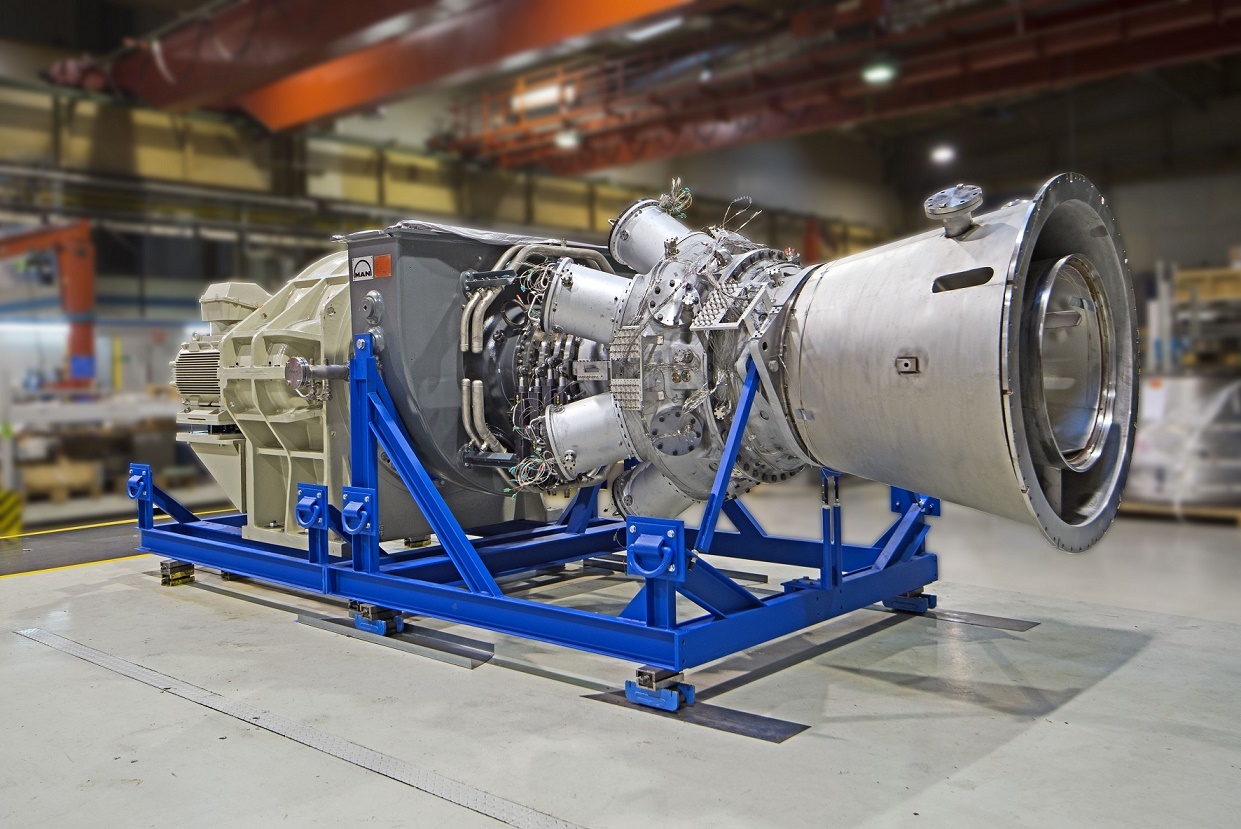
A company known as MAN Energy Solutions is considering delivering three power generation packages in Nigeria with the proven single-shaft MGT6000 gas turbine technology for about 20 MW to a power plant, which supplies heat and power to BPL oil & gas facilities 30 miles southwest of Port Harcourt in Nigeria.
It was gathered that the order for MAN was placed by American EPC and equipment exporter Combustion Associates Inc. (CAI). Together with Exterran Corporation, the company is responsible for the engineering, manufacturing and installation of the overall project.
The MAN turbine technology will deliver around 20 MW of power, using Dry Low Emission technology and natural gas as a low-emission fuel. The system also features a specifically modified intake air-cooling in order to guarantee a flawless operation despite the high temperatures on site. The set-up comprising three gas turbines trains enables a flexible load profile for the operator.
All trains are equipped with an ATU Box (Analytics Telemetrie Unit), which is connected to the new digital platform MAN CEON. The system collects and evaluates operating and sensor data and enables the customer to monitor the machine’s operation around the clock and easily request advice for remote support.
MAN Energy Solutions was able to meet the customer need for fast deployment – the delivery of the machines are planned for November 2019. All gas turbines are manufactured in Oberhausen (Germany) and the packaging is done at MAN’s Chinese workshop in Changzhou.
CAI’s order continues the successful story of MAN’s gas turbine business beyond the Chinese market, where recently four gas turbine generator packages have been put into operation in cogeneration plants. The Combined Heat and Power processes (CHP) replace the former coal-based plants, resulting in a significant emission reduction.
“We have seen the exceptional quality and performance of MAN MGT6000 gas turbines and are confident in placing our first order for them. This is the beginning of a long-term partnership between CAI and MAN and we plan to work together on other power projects in Africa, which is CAI’s key market,” said Mukund Kavia, CAI Chairman.
“We are honoured to collaborate with CAI on this important power generation project in Nigeria. This latest contract award and the recently commissioned MGT gas turbines trains in China prove that the benefits of MAN’s technology solution are being recognized by the market,” says Sebastian Könning, Project Manager Sales for Gas Turbines at MAN Energy Solutions.
Dr. Sven-Hendrik Wiers, Vice President Gas Turbines at MAN Energy Solutions, stated that, “Both low emissions and high efficiency are becoming increasingly important for gas turbines in the market. With the state-of-the-art MGT technology, our company is able to fulfill these demands and provide a gas turbine family optimized for decentral, flexible and at the same time highly-efficient power generation solution with minimum emissions.”
General
REA is an Institution for Expanding Opportunity—Tegbe
**Tasks Board to Prioritise Improving Livelihoods of Nigerians
By Modupe Gbadeyanka
The newly inaugurated board of the Rural Electrification Agency (REA) has been advised to prioritise the well-being and economic progress of ordinary Nigerians in every decision it makes.
This charge was given by the Minister of Power, Mr Joseph Tegbe, when he inaugurated the board, which has the former Governor of Ekiti State, Mr Ayodele Fayose, as chairman, and Mr Abba Aliyu as its chief executive.
Mr Tegbe described the board’s constitution as consistent with President Bola Tinubu’s drive to strengthen governance and accountability across public institutions.
He further described the agency as an institution for expanding opportunity, noting that every mini-grid, solar home system and electrified market, school, health centre or farm represents an investment in human capital and economic inclusion.
He pointed to REA’s existing programmes, the Energising Education, Economies and Agriculture Programmes and the Africa Mini-Grids Programme, as evidence of that strategy at work, and noted that the Board, constituted under Section 130 of the Electricity Act, takes office at a defining moment for the organisation.
On governance, the Minister drew a clear line between the board’s non-executive role of strategic direction and oversight and management’s responsibility for day-to-day execution.
He noted that the board meets quarterly to review performance while management retains operational latitude between meetings, subject to full accountability.
Mr Tegbe commended Mr Fayose’s record as a former Governor of Ekiti State, assuring of the Ministry’s continued partnership and a description of electricity as an instrument of inclusion, opportunity and prosperity.
In his remarks, the board chairman described President Tinubu’s decision to appoint Mr Tegbe as a statement of seriousness rather than a routine appointment, a signal that the administration would settle for nothing less than a lasting solution to Nigeria’s power problem.
He called the Minister a technocrat whose technical depth and managerial competence have already produced a positive turning point for the sector, affirming that REA’s leadership was proud to work with him on that effort.
General
How Airports Can Reduce Ground Emissions Before Full Infrastructure Upgrades
Airport sustainability is no longer a separate environmental project. It is becoming part of daily operational planning, procurement, infrastructure development, and airline partnership discussions. For many airports, the main pressure is to reduce emissions on the ground, improve airside efficiency, and prepare for stricter environmental expectations, while continuing to support aircraft reliably every day.
The challenge is that infrastructure does not change overnight.
Full electrification remains an important direction for aviation ground operations. Fixed 400 Hz power, electric ground support equipment, charging infrastructure, energy management systems, and cleaner stand concepts are all part of the future airport. But in practical terms, many airports are still working through phased investment plans. Grid capacity may be limited. Charging points may not yet cover all operational areas. Remote stands, maintenance zones, cargo aprons, and temporary operating areas may still depend on mobile equipment.
This is where the sustainability conversation needs to become more realistic.
Airports do not have to wait for a complete infrastructure transformation before reducing emissions. There are practical steps that can be taken now, especially in aircraft ground power. The key is to look at emissions reduction as a staged process, not a single final destination.
One of the first areas to assess is the age and efficiency of existing diesel ground power units. In many operations, older GPUs continue to provide essential support because they are mobile, familiar, and independent from fixed power systems. But older diesel platforms may no longer fit the expectations of modern airport sustainability strategies. They can become harder to justify in procurement discussions, environmental reporting, and long-term fleet planning.
Replacing outdated diesel equipment with lower-emission alternatives can be a meaningful step. A modern diesel GPU with Stage V / Tier 4 Final engine technology, for example, can help operators reduce the environmental impact of ground power while keeping the operational independence that many stands and service areas still require. This does not replace the need for electrification. It helps bridge the gap while infrastructure continues to develop.
That bridge matters because airside operations are rarely uniform.
A major hub may have fixed power at many contact stands, but still rely on mobile GPUs for remote aircraft positions, maintenance activities, irregular operations, or construction phases. A regional airport may not yet have the capital or grid capacity for large-scale electrification. An MRO facility may need mobile power that can move between aircraft, hangars, and outdoor working areas. A ground handler may need equipment that supports mixed aircraft types under high turnaround pressure.
For these environments, sustainability must work in real conditions. A solution that looks good in a strategy document but does not support the daily operating model will not last.
Decision-makers should therefore evaluate aircraft ground power through several practical questions. Where is fixed power available today? Where is it planned next? Which stands still require mobile equipment? How many hours do diesel GPUs operate per day? Which aircraft types are supported? Are units oversized, outdated, or difficult to position? Is the equipment aligned with current emissions standards? Can it support cleaner operation where grid power is available?
These questions often reveal that the best path is not a single equipment choice, but a balanced fleet strategy.
Fixed power should be used where infrastructure is mature and operationally reliable. Battery-powered equipment can be introduced where duty cycles, charging plans, and climate conditions are suitable. Lower-emission diesel and plug-in hybrid ground power units can support areas where independence, runtime, and flexibility remain critical. Together, these solutions allow airports to reduce emissions without weakening operational resilience.
Plug-in hybrid utility power functionality is especially relevant in this transition phase. When external utility power is available, the unit can operate with reduced fuel use. When it is not available, the same equipment can continue supporting aircraft independently. This gives airports and operators more flexibility as infrastructure develops stand by stand, rather than forcing a complete change before the airside environment is ready.
Compact design also plays a role in sustainable operations. Airports often focus on emissions, but space efficiency is part of the same discussion. Crowded aprons create movement challenges, increase operational friction, and affect safety. A compact mobile GPU that provides the required output without adding unnecessary equipment bulk can support cleaner, more organized, and more efficient aircraft servicing.
This is why modern ground power procurement should not be based only on output figures. Power rating matters, but so do emissions performance, footprint, maneuverability, serviceability, spare parts strategy, operating environment, and fit with future infrastructure plans. Airports need equipment that can serve today’s operation while remaining relevant as sustainability expectations continue to rise.
For a deeper look at how this transition applies to aircraft ground power, ElectroAir has outlined its view on lower-emission ground power and the practical role of modern mobile GPUs in supporting airport sustainability before full electrification is possible. The company’s ElectroAir APA-100 is one example of this approach, combining compact mobile design, Stage V / Tier 4 Final engine technology, and optional plug-in hybrid utility power for operators that need both reliability and a more future-conscious path.
The next stage of airport sustainability will be built through practical progress. Some changes will come from major infrastructure investment. Others will come from better equipment decisions, smarter fleet planning, and the replacement of outdated assets with more efficient alternatives.
For airports, the priority is not to choose between today’s operation and tomorrow’s goals. The priority is to connect them. Ground power is one of the places where that connection can already begin.
General
PFIPC Probe: ICPC Recommends Adeyemi’s Prosecution
By Adedapo Adesanya
The Independent Corrupt Practices and Other Related Offences Commission (ICPC) has submitted an interim report to President Bola Tinubu on its investigation into the alleged fictitious Presidential Foreign Investment Promotion Council (PFIPC), recommending the prosecution of its alleged Director-General, Mr Adeniyi Adeyemi.
ICPC’s Chairman, Mr Musa Aliyu, disclosed this after meeting President Tinubu at the Presidential Villa, Abuja, exactly 30 days after his agency was directed to conduct a thorough investigation into the PFIPC.
According to Mr Aliyu, preliminary findings revealed that the federal government never appointed Adeyemi and that the purported appointment letter, gazette and other documents used to establish the agency were forged.
The case centres on an alleged corruption and forgery scandal involving the disputed government entity, PFIPC, which was not approved.
Speaking at the State House, Mr Aliyu said the commission’s investigation established that Mr Adeyemi was never appointed by the Federal Government and that the documents used to legitimise the agency were forged.
The ICPC boss said the investigation also revealed significant weaknesses in government verification and oversight processes, which were exploited to create the impression that the PFIPC was a legitimate government agency.
“Our interim report found that there are weaknesses in verification, inter-agency oversight and government processes. We discovered that those weaknesses were exploited by Adeniyi, with some level of negligence.
“Our investigation found that no Federal Government funds were approved or disbursed to the fake PFIPC/PEAC,” the ICPC chairman stated.
According to him, investigators also uncovered two additional agencies allegedly created by Adeyemi, the FCT Investment Promotion Agency (FIFA) and the Foreign Investment Promotion Agency and Public Private Partnership (PIPA-PPP).
Mr Aliyu said the disputed DG “used forged legislative instruments styled as enabling acts, and used them to support opening of bank accounts.”
The ICPC chairman said the commission recommended Adeyemi’s prosecution, administrative sanctions against public officers whose negligence enabled the operation of the fake agency, and institutional reforms to strengthen internal controls across Ministries, Departments and Agencies (MDAs).
“Our recommendation is that Mr Adeniyi Adeyemi should be prosecuted. Administrative sanctions should also be imposed on public officers whose acts of omission and negligence facilitated the illegal operation of PFIPC/PEAC.
“There is also a need for institutional reforms so that the internal controls of MDAs can be strengthened to prevent this kind of illegal activity,” he stated.
The chief investigator noted that the report submitted to the President is only an interim one, adding that investigations are continuing to identify other collaborators and build a stronger criminal case.
“We have continued with the investigation of the activities of Mr Adeniyi Adeyemi and his collaborators so that we can unravel more facts and file criminal charges that can stand the test of time before a court of competent jurisdiction,” he said.
The PFIPC scandal came to light after the Presidency disowned the council, describing it as a non-existent government agency despite its appearance in the 2026 Appropriation Act with a N1.3 billion budget allocation.
The federal government has since filed criminal charges against Mr Adeyemi over allegations including forgery, impersonation and fraudulent misrepresentation, while separate investigations by the House of Representatives and the ICPC continue into how the fake agency operated within government institutions.