Connect with us

General

Minister Assures Nigerians Better Electricity Supply in 2024

Published

on

Disconnect Electricity Supply

By Bliss Okperan

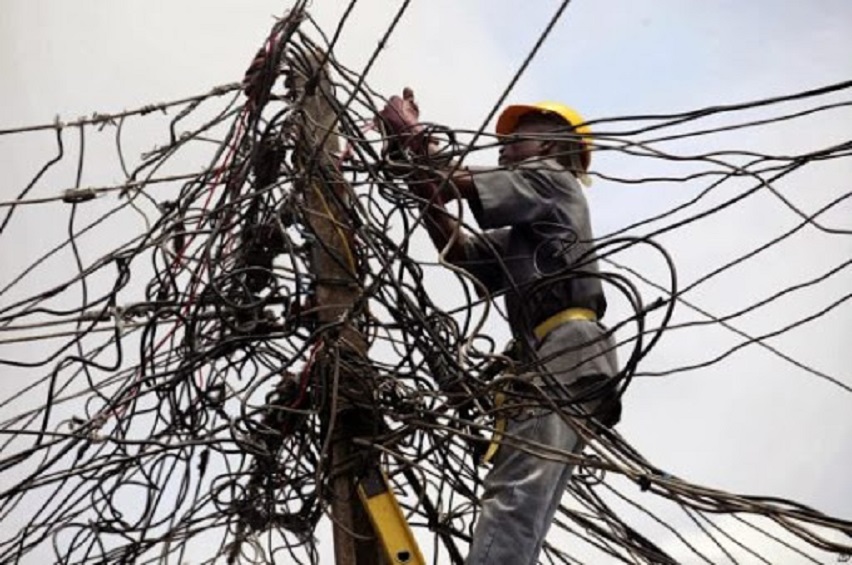
The Minister of Foreign Affairs, Mr Maitama Tuggar, has said that there will be a significant improvement in electricity supply by the first half of 2024 after the completion of the Ajaokuta Abuja Kaduna Kano project (AKK).

Mr Tuggar disclosed this on Tuesday during an interview with Channels Television’s prime-time programme, Politics Today.

“In the coming year, by the first half of next year (2024), there will be a remarkable improvement in the electricity supply in Nigeria,” he said on the show.

Recall that former President Muhammadu Buhari in 2018 promised to expand Nigeria’s electricity capacity, which is currently at 4,000 megawatts, to 25,000 megawatts by 2025 when he had a deal with Siemens Energy in Germany, under the Presidential Power Initiative, but the project has not been actualized.

Mr Tuggar, a presidential team member at the G20 Compact with Africa Economic Conference in Germany, said that the Siemens deal is back.

He added that the Siemens gas deal between Nigeria and Germany will be continued by President Tinubu’s administration.

“The fact that we are exporting gas to Germany or we intend to do that does not mean that we are depriving Nigeria’s domestic gas needs; “… that will be fulfilled as well, but you also need the revenue that would accrue from such exports to invest further in taking electricity and gas to other parts of Nigeria. So, it’s all interconnected, and one does not stop the other from happening.”

According to the Minister, the setbacks experienced in the past would be managed by the Tinubu administration.


Click to comment

Leave a Reply

Your email address will not be published. Required fields are marked *

General

Ojude Oba 2026 Sets New Benchmark for Media Visibility, Reputation and AI Discoverability

Published

on

Ojude Oba Festival 2026

The Ojude Oba Festival is no longer merely one of Nigeria’s most celebrated cultural gatherings; it is rapidly emerging as one of Africa’s most influential cultural brands.

A newly released Media Intelligence Report by P+ Measurement Services reveals that Ojude Oba 2026 recorded its strongest media performance to date, achieving significant growth across audience reach, media visibility, social engagement, international attention and digital discoverability.

The report analysed media conversations and coverage generated between May 20 and June 5, 2026, across print, online, social media and broadcast platforms, while benchmarking performance against the 2025 edition of the festival.

The findings paint a compelling picture of a cultural institution that is not only preserving heritage but also increasingly shaping conversations across modern media ecosystems.

According to the report, total media mentions grew by 56 per cent year-on-year, increasing from 18,420 mentions in 2025 to 28,735 mentions in 2026. Audience reach expanded even more dramatically, growing by 75 per cent from 124.8 million to 218.6 million people globally.

Social media emerged as the primary engine of visibility, generating over 81,000 public conversations during the monitoring period, representing an 88 per cent increase compared to the previous year. Engagements more than doubled, rising by 115 per cent from 3.9 million interactions in 2025 to 8.4 million interactions in 2026.

Perhaps most notable was the improvement in public sentiment.

Positive sentiment increased from 60 per cent in 2025 to 79 per cent in 2026, while negative sentiment declined by half, dropping from 10 per cent to just 5 per cent. Conversations around cultural pride, heritage preservation, fashion, equestrian displays, community identity and the enduring legacy of the late Awujale of Ijebuland, Oba Sikiru Adetona, drove the overwhelmingly positive perception.

The report identified the legacy narrative of Oba Sikiru Adetona as the single most influential thematic driver of media coverage throughout the reporting period.

Unlike previous years, where conversations focused primarily on spectacle and pageantry, the 2026 edition witnessed a deeper engagement with themes of history, leadership, continuity and cultural preservation, elevating the festival beyond entertainment and positioning it as a significant cultural institution.

International visibility also recorded substantial growth.

While Nigeria remained the dominant source of conversations and media coverage, the festival generated measurable attention across the United Kingdom, United States, Canada, France, Germany, South Africa, Ghana, the United Arab Emirates, Kenya and the Netherlands. This expansion contributed to a near doubling of the festival’s global footprint and reflects the growing interest in African cultural experiences among international audiences and diaspora communities.

The report further found that social media accounted for the largest share of total conversations, followed by online news platforms, print publications and broadcast media. Coverage was amplified through extensive reporting by Channels Television, TVC News, OGTV, City People TV, Araba TV and GoldMyneTV, alongside significant digital coverage from leading Nigerian news and entertainment platforms.

Among personalities driving online conversations, Farooq Oreagba once again emerged as the most discussed cultural figure associated with the festival. Other highly visible personalities included Eniola Badmus, Lateef Adedimeji, Rotimi Salami, Jide Awobona and Samuel Banks, whose appearances and social media mentions helped sustain public interest throughout the event period.

Corporate sponsorship continued to play a critical role in the festival’s visibility ecosystem.

Globacom retained its position as the most visible sponsor, followed by Orijin, FCMB, Goldberg, Rite Foods, Maltina, Honeywell Foods, Adron Homes, Maggi, SIFAX Group and Seaman Schnapps. The report notes that brands increasingly view Ojude Oba as a strategic platform for cultural storytelling, community engagement and reputation building.

One of the most significant additions to this year’s report is the application of the AMEC GEO Framework, the newly introduced global measurement model designed to help organisations understand how reputation, content and visibility influence outcomes in AI-driven information environments.

Using the framework’s three core dimensions—Upstream Reputation Signals, Search and Content Readiness, and Downstream AI Outputs—the analysis assessed Ojude Oba’s performance not only in traditional media but also within emerging AI-powered discovery systems.

The assessment found strong performance across earned media authority, cultural relevance, content visibility and reputation consistency. The festival demonstrated growing discoverability within AI-assisted search environments and generated strong indicators for future cultural visibility across generative search platforms.

According to P+ Measurement Services, this represents a fundamental shift in how cultural events should be evaluated.

“Media success is no longer defined solely by coverage volume or impressions,” the report notes. “In an AI-driven information ecosystem, discoverability, authority, narrative consistency and reputation signals increasingly determine whether institutions remain visible, trusted and relevant. Ojude Oba’s performance demonstrates the importance of measuring cultural influence through both traditional media metrics and emerging AI visibility frameworks.”

The report concludes that Ojude Oba has evolved beyond its traditional role as a cultural celebration and now functions as a powerful platform for tourism promotion, economic storytelling, cultural diplomacy, national branding and global heritage engagement.

As governments, tourism agencies, brands and cultural institutions seek new ways to compete for attention in an increasingly fragmented media environment, Ojude Oba offers a compelling case study in how heritage can be transformed into measurable influence, sustained visibility and long-term reputation value.

With record audience reach, stronger public sentiment, expanded international visibility and growing AI discoverability, the 2026 edition marks a defining moment in the festival’s evolution from cultural event to global cultural brand.

Continue Reading

General

Insecurity: Reps Summon Finance Minister, Service Chiefs, Others

Published

on

reps summon CBN

By Adedapo Adesanya

The House of Representatives has passed a resolution to summon the Minister of Finance, Mr Taiwo Oyedele, alongside the Minister of Defence, Mr Christopher Musa; the Inspector General of Police (IGP), Mr Tunji Disu, and the Director-General of the State Security Service (DSS), Mr Adeola Ajayi, to appear before it to outline details of funds released to the security agencies in the last six months.

Others invited include the service chiefs and the Director-General of the National Intelligence Agency (NIA), Mr Mohammed Mohammed.

The green chamber of the National Assembly also urged President Bola Tinubu to direct the recruitment of forest guards in all the states experiencing any form of insecurity, as he did in Oyo State.

Tuesday’s resolutions followed motions of insecurity received in the House amid rising criminal activities in several parts of the country.

Last month, terrorists abducted over 40 students and teachers from some schools in Oyo State.

In Borno, kidnappers also took away scores of students and teachers, with both incidents sparking national outrage.

Amid the wave of mass abductions, the Nigeria Union of Teachers (NUT) protested across the country, calling for the release of the abductees.

Several groups also protested and demanded freedom for the kidnapped victims.

In response to the attack in Oyo, President Tinubu sent a high-powered delegation, including his Chief of Staff, Mr Femi Gbajabiamila, and the National Security Adviser (NSA), Mr Nuhu Ribadu, to the community, among others.

During a meeting with the community, Mr Gbajabiamila said Mr Tinubu is disturbed about the incident. He

Mr Gbajabiamila said Tinubu’s decision to dispatch the nation’s top security leadership to the affected communities reflected his determination to deploy every available resource towards securing the victims’ release.

The President also approved the recruitment of 1,000 forest guards and vowed to defeat insecurity and secure the release of all persons held captive across the country.

He also directed a specialised security unit with advanced rescue capabilities to intensify efforts to secure the release of the abducted pupils and teachers.

Continue Reading

General

Jim Ovia Bets on Luxury Housing With New Multi-Billion Naira Lagos Towers

Published

on

Quantum Luxury Towers

By Adedapo Adesanya

Nigerian business leader and Zenith Bank founder, Mr Jim Ovia, is expanding his footprint in real estate with the construction of a 26-floor Metropolitan Towers residential development in Lagos, where units start at $1.85 million (N2.5 billion), as well as the completion of a 44-unit Quantum Luxury Towers high-rise, where apartments start from $2.8 million (N3.8 billion).

Mr Ovia, who until recently retired as the chairman of Zenith Bank, Nigeria’s biggest lender by market value, through his Quantum Luxury Properties Limited business, is seeking to deepen his property investments.

Among his most notable property investments is the transformation of previously underutilised waterfront land on Ozumba Mbadiwe in Lagos into premium commercial and hospitality assets. These developments include the Civic Centre, Civic Towers and hospitality properties that have become prominent landmarks within Lagos’ commercial landscape.

At a recent gathering, the businessman described real estate as a more profitable venture than banking, pointing to the significant value created through strategic property investments over the years.

Mr Ovia noted that some of his most rewarding investments have come from real estate developments rather than traditional banking operations.

His latest play comes as rapid urban population growth and increasing demand for commercial space have strengthened the real estate sector’s long-term fundamentals, while the country faces rising housing deficits.

After his retirement from Zenith Bank, following the completion of the regulatory maximum tenure of 12 years as a non-executive director and chairman under corporate governance guidelines of the Central Bank of Nigeria (CBN), Mr Mustafa Bello was announced as the new chairman, effective April 27, 2026.

Beyond banking and real estate, the tycoon has also developed a significant interest in telecommunications and technology, particularly Visafone in 2007, which he built to become Nigeria’s largest Code Division Multiple Access (CDMA) telco serving over 2 million subscribers and owned 800MHz spectrum licenses, setting the foundation for future 4G services.

In January 2016, South African telco group MTN bought Visafone for over N47 billion to improve its broadband services in its biggest market.

Continue Reading

Trending