
General
Mixed Reactions Trail Apology of ‘Sëx Töy’ Senator

By Dipo Olowookere
The social media space was on fire yesterday following the video of a Nigerian Senator, Mr Ishaku Abbo, allegedly beating up a lady in a brutal manner at an adult shop located in Abuja.
Protests were staged at the police headquarters in Abuja, calling for his prosecution, while the lawmaker reportedly skipped plenary at the red chamber, ostensibly because of the backlash that followed his action, which happened in May 2019, few months after he was elected to represent the people of Adamawa North Senatorial District at the National Assembly.
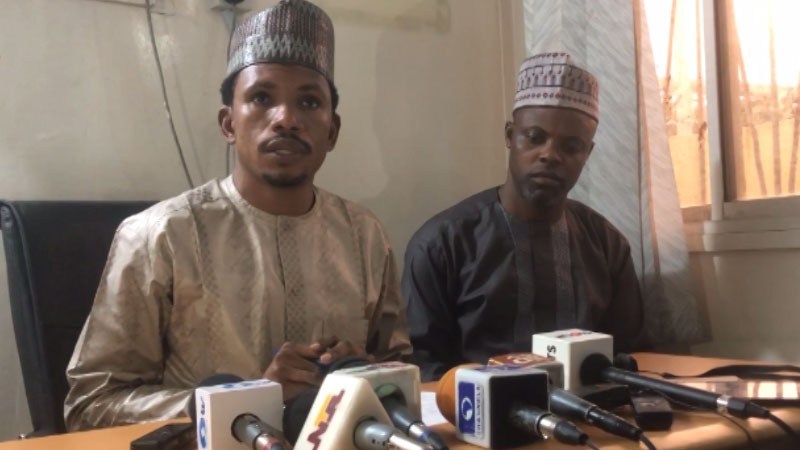
Though he initially promised to give a “robust response” to the issue, which he claimed was being used by his opposition to tarnish his image, the Senator later yesterday addressed the media at the office of his political party, the Peoples Democratic Party (PDP).
During the briefing, Mr Abbo urged the victim, her family and Nigerians to forgive him because this was the first time he was in such situation.
“It is with a deep sense of remorse and responsibility that I, Senator Ishaku Abbo (SIA) profoundly apologize to all Nigerians, the Senate, the Peoples Democratic Party (PDP), my family, friends as well as our mothers – the Nigerian women.
“I personally apologize to Bibra and her family for my action towards her, which has brought immense discomfort in our body polity.
“I have never been known or associated with such actions in the past. Regardless of what transpired prior to my expression of anger, I am sincerely sorry and plead that all men and women of good conscience should have the heart to forgive me. To err is human, to forgive is divine.
“To the church of God everywhere in the world, I am sorry. As an Ambassador of Christ, much is expected of me.
“My family and religious upbringing do not give approval to such conduct and for this, as a leader, I seek forgiveness before God and all those who feel offended by my action.
“Indeed, this episode has taught me a very great lesson both as a private citizen and a public officer, particularly as a senator of the Federal Republic of Nigeria upon whom public confidence is bestowed.
“Finally, I assure Nigerians, especially the people of Adamawa North of my good conduct at all times.
“Thank you and God bless,” Senator Abbo said in his apology.
But his apology has generated mixed reactions, with some insisting he must be prosecuted to pass a strong message to power-drunk citizens, while others want the issue to be laid to rest since he has admitted being wrong.
Some Nigerians, who spoke on the matter on social media, said apologising to the victim, her family and concerned persons showed that the lawmaker has realized his mistakes, promising to be a better person. They said the Senator should be given a second chance and pardoned.
However, other commentators, who viewed the apology from a psychological angle, said the man was not remorseful enough to be let off the hook.
They want the law to take its course and should not be spared because if a similar thing had happened to a “common Nigerian”, the person would have been prosecuted and not shown any mercy.



By Adedapo Adesanya
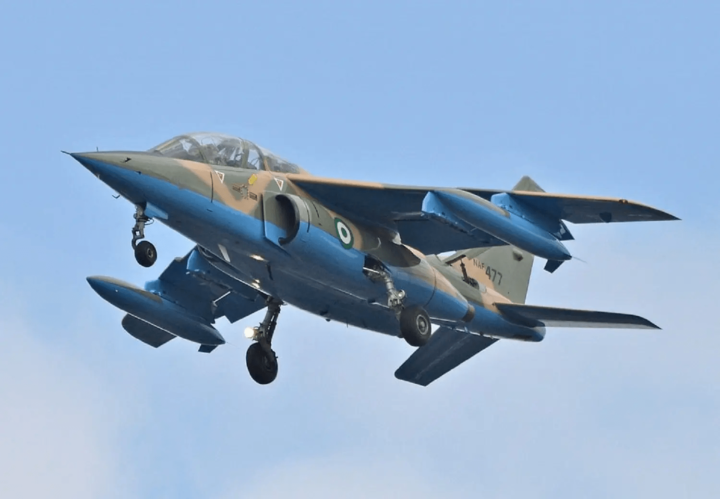
The Nigerian Air Force (NAF) is investigating the reported fatal civilian casualties during airstrikes while pursuing Islamist militants around Jilli Market, around the Borno-Yobe border near Fuchimiram village in the Geidam Local Government Area of Yobe State.
In a statement on Sunday, the Director of Public Relations and Information for the Nigerian Air Force, Air Commodore Ehimen Ejodame, said it “treats all reports of possible civilian harm with the utmost seriousness and empathy.”
According to eye witnesses and local government official accounts, at least 200 people are feared dead after Nigerian military jets struck the village market.
“In line with this commitment, the CAS has directed an immediate activation of the Civilian Harm Accident and Investigation Cell (CHAI-Cell) to immediately proceed to the location on a fact-finding mission on the allegation,” the statement read.
NAF maintained that it remained “firmly committed to professionalism, accountability, and transparency in the conduct of its missions.”
In an earlier statement, the Nigerian Air Force confirmed mop-up air strikes in the Jilli axis, but did not state whether any civilian casualties were recorded.
“Coming amid intensified efforts to track and neutralise terrorist elements responsible for recent attacks on security forces within the wider theatre, the follow-on strikes were aimed at fleeing remnants and regrouping cells seeking to exploit the difficult terrain,” NAF said.
However, Brigadier General Dahiru Abdulsalam, a military adviser to the Yobe state government, said, “Some people from Geidam LGA (local government area) bordering Gubio LGA in Borno state who went to the Jilli weekly market were affected.”
Several persons were feared killed and others wounded after the suspected accidental airstrikes at Jilli Market in the Geidam Local Government Area of Yobe State.
Jilli, a border community with Damasak in Borno State, is located over 200 kilometres from Damaturu, the Yobe State capital.
Lawan Zanna Nur Geidam, the councillor and traditional head of Fuchimeram ward in Yobe’s Geidam district, told Reuters that those injured were being taken to hospitals in Yobe and Borno.
“It’s a very devastating incident at Jilli Market. As I’m speaking to you, over 200 people have lost their lives from the air strike at the market,” he told Reuters.
Waka TV delivers the best premium streaming experience, access to 20,000+ live channels in Full HD & 4K, 140,000+ movies and series, and follow live sports from around the world.
It is compatible with all your devices. Enjoy smooth, buffer-free streaming with zero interruptions and 24/7 support.
Waka TV installs in just a few clicks on all your devices, Smart TV, smartphone, tablet or PC. Your access is activated within 10 minutes, and streaming starts immediately with zero hassle.
Waka TV offers a service focused on quality, reliability and the best value for money. Rugby, Basketball, Cricket, Tennis, Football, and all live sports are included in your premium IPTV subscription.
By Adedapo Adesanya
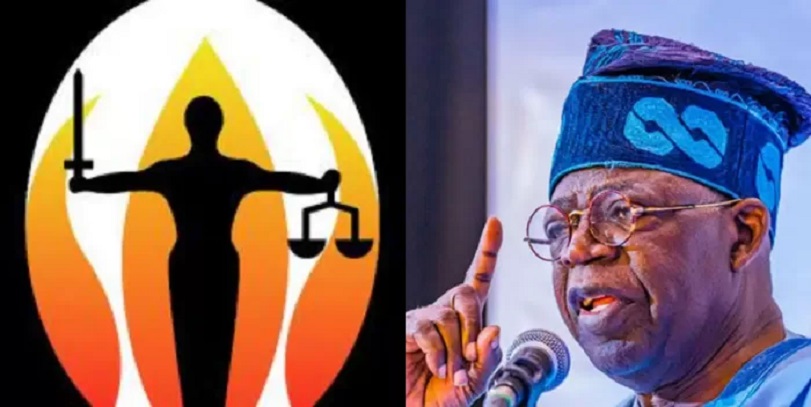
President Bola Tinubu has been tasked to ensure that an alleged missing N2.9 billion of public funds from the Nigerian Communications Satellite Limited (NIGCOMSAT) and the Nigerian Nuclear Regulatory Authority (NNRA) is accounted for.
In a statement on Sunday, the Socio-Economic Rights and Accountability Project (SERAP) said the President must ask the Minister of Communications, Innovation and Digital Economy, Mr Bosun Tijani, to explain what happened to the money, as the two agencies are under his supervision.
The group said the Attorney General of the Federation and Minister of Justice, Mr Lateef Fagbemi (SAN), should investigate the missing funds or any other diverted funds from the agencies documented in the previous annual reports by the Auditor-General.
According to the statement, the allegations were documented in the latest annual report published by the Auditor-General on September 9, 2025.
SERAP argued that these allegations, involving critical public institutions, represent a grave violation of the public trust and a fundamental breach of Nigeria’s anti-corruption laws and international obligations.
“We’ve urged President Bola Tinubu to direct @bosuntijani, Minister of Communications, Innovation and Digital Economy, and the Management of both the Nigerian Communications Satellite Ltd (NIGCOMSAT) and the Nigerian Nuclear Regulatory Authority (NNRA) to account for and explain the whereabouts of the alleged missing or diverted N2.9 billion of public funds from NIGCOMSAT and NNRA.
“We also urged him to direct Mr Lateef Fagbemi, SAN, the Attorney General of the Federation and Minister of Justice and anti-corruption agencies to investigate the alleged missing or diverted funds, and any other diverted public funds from the two agencies documented in previous annual reports by the Auditor-General,” the organisation said.
The rights group stressed that anyone found responsible should be prosecuted where sufficient admissible evidence exists, adding that any missing or diverted public funds must be fully recovered and returned to the treasury.
“Anyone suspected to be responsible should face prosecution as appropriate, if there is sufficient admissible evidence, and any missing or diverted public funds should be fully recovered and remitted to the treasury,” the statement added.
“Accountability in NIGCOMSAT and NNRA is critical given their strategic roles in Nigeria’s digital economy and national safety systems. Mismanagement in these agencies not only wastes scarce public resources but also threatens national development, technological progress, and public safety,” it concluded.
-
 Feature/OPED6 years ago
Davos was Different this year
-
Travel/Tourism10 years ago
Lagos Seals Western Lodge Hotel In Ikorodu
-

 Showbiz3 years ago
Estranged Lover Releases Videos of Empress Njamah Bathing
-
 Banking8 years ago
Sort Codes of GTBank Branches in Nigeria
-

 Economy3 years ago
Subsidy Removal: CNG at N130 Per Litre Cheaper Than Petrol—IPMAN
-

 Banking3 years ago
Sort Codes of UBA Branches in Nigeria
-

 Banking3 years ago
First Bank Announces Planned Downtime
-

 Sports3 years ago
Highest Paid Nigerian Footballer – How Much Do Nigerian Footballers Earn