Connect with us

General

Mixed Reactions Trail Apology of ‘Sëx Töy’ Senator

Published

on

By Dipo Olowookere

The social media space was on fire yesterday following the video of a Nigerian Senator, Mr Ishaku Abbo, allegedly beating up a lady in a brutal manner at an adult shop located in Abuja.

Protests were staged at the police headquarters in Abuja, calling for his prosecution, while the lawmaker reportedly skipped plenary at the red chamber, ostensibly because of the backlash that followed his action, which happened in May 2019, few months after he was elected to represent the people of Adamawa North Senatorial District at the National Assembly.

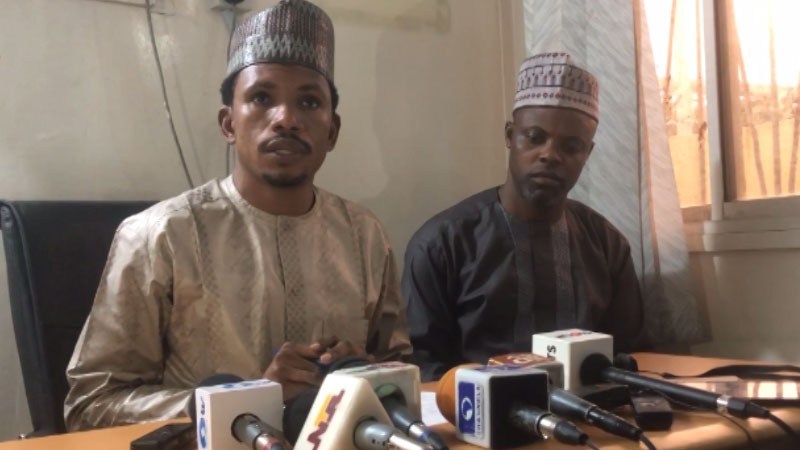
Though he initially promised to give a “robust response” to the issue, which he claimed was being used by his opposition to tarnish his image, the Senator later yesterday addressed the media at the office of his political party, the Peoples Democratic Party (PDP).

During the briefing, Mr Abbo urged the victim, her family and Nigerians to forgive him because this was the first time he was in such situation.

“It is with a deep sense of remorse and responsibility that I, Senator Ishaku Abbo (SIA) profoundly apologize to all Nigerians, the Senate, the Peoples Democratic Party (PDP), my family, friends as well as our mothers – the Nigerian women.

“I personally apologize to Bibra and her family for my action towards her, which has brought immense discomfort in our body polity.

“I have never been known or associated with such actions in the past. Regardless of what transpired prior to my expression of anger, I am sincerely sorry and plead that all men and women of good conscience should have the heart to forgive me. To err is human, to forgive is divine.

“To the church of God everywhere in the world, I am sorry. As an Ambassador of Christ, much is expected of me.

“My family and religious upbringing do not give approval to such conduct and for this, as a leader, I seek forgiveness before God and all those who feel offended by my action.

“Indeed, this episode has taught me a very great lesson both as a private citizen and a public officer, particularly as a senator of the Federal Republic of Nigeria upon whom public confidence is bestowed.

“Finally, I assure Nigerians, especially the people of Adamawa North of my good conduct at all times.

“Thank you and God bless,” Senator Abbo said in his apology.

But his apology has generated mixed reactions, with some insisting he must be prosecuted to pass a strong message to power-drunk citizens, while others want the issue to be laid to rest since he has admitted being wrong.

Some Nigerians, who spoke on the matter on social media, said apologising to the victim, her family and concerned persons showed that the lawmaker has realized his mistakes, promising to be a better person. They said the Senator should be given a second chance and pardoned.

However, other commentators, who viewed the apology from a psychological angle, said the man was not remorseful enough to be let off the hook.

They want the law to take its course and should not be spared because if a similar thing had happened to a “common Nigerian”, the person would have been prosecuted and not shown any mercy.


Dipo Olowookere is a journalist based in Nigeria that has passion for reporting business news stories. At his leisure time, he watches football and supports 3SC of Ibadan. Mr Olowookere can be reached via [email protected]

Click to comment

Leave a Reply

Your email address will not be published. Required fields are marked *

General

ADC Sets Presidential Form for N100m, Govs N50m as Primaries Begin May 21

Published

on

african democratic congress ADC

By Adedapo Adesanya

The African Democratic Congress (ADC) has fixed its presidential nomination form at N100 million, governorship at N50 million, Senate at N20 million, House of Representatives at N10 million, and State House of Assembly at N3 million.

To promote inclusivity, ADC introduced concessions, offering a 50 per cent discount for youths and a 25 per cent discount for women and persons with disabilities.

This comes as the party released its timetable for the conduct of the 2026 primary elections, outlining key dates for the sale of nomination forms, screening of aspirants, primaries, and its special national convention.

In a statement on Sunday, the party’s National Publicity Secretary, Mr Bolaji Abdullahi, said the timetable reflects ADC’s commitment to internal democracy, orderliness, and strict compliance with electoral guidelines.

According to the schedule, the sale of nomination forms will run from May 5 to 10, 2026, while submission of completed forms is fixed for May 11 to 13, 2026.

Screening of aspirants is scheduled for May 14 to 15, 2026, with screening results to be published on May 17, 2026. Appeals will be heard between May 18 and May 19, 2026, while the final list of cleared aspirants will be released on May 20, 2026.

“Primary elections will commence on May 21, 2026, with elections for State Houses of Assembly, House of Representatives, and Senate seats holding simultaneously at the ward level. The Governorship primaries will take place on May 22, 2026, while the presidential primary is scheduled for May 25, 2026,” the statement said.

It added that this will be followed by a meeting of the National Executive Committee on May 26, 2026, and a Special National Convention on May 27, 2026, where final ratifications will be made.

The party also announced a structured fee regime for nomination forms across elective positions.

The party called on all members, stakeholders, and aspirants to adhere strictly to the timetable and guidelines.

The move by the ADC signals an early start to political realignments ahead of the 2027 general elections, as parties begin to outline the financial requirements for aspirants seeking elective offices. It will be seeking to wrestle power from the dominant All Progressives Congress (APC), which holds the presidency as well as 30 governorship positions, and the majority of legislative members.

Continue Reading

General

Three in Police Custody Over Tony Elumelu Divorce Rumour

Published

on

tony elumelu and wife divorce

By Modupe Gbadeyanka

Three persons in connection with claims that the chairman of United Bank for Africa (UBA) Plc, Mr Tony Elumelu, has divorced his wife, Mrs Awele Elumelu, have been arrested by the police.

A statement on Sunday by the Group Head of Brand, Marketing and Corporate Communication, Ms Alero Ladipo, described the reports as “false, defamatory, and malicious,” stressing that they were deliberately “designed to mislead the public and cause reputational harm.”

The three individuals apprehended over the rumour were named as Mr Kingsley Akunemeihe (@Directorkem), Mr Chigozie Success Ihebom, and Mr John Surpruchi Nwanorue (@problemchimky).

The suspects were said to have falsely and recklessly alleged that Mr Elumelu had parted ways with his wife without basis.

In the statement, the bank said the relevant law enforcement authorities are already looking into the matter, with a view to further arresting and prosecuting “all persons involved in originating, amplifying, or sustaining this defamatory campaign.”

“This serves as a formal notice to all individuals, platforms, and entities involved in the publication, reposting, or continued dissemination of this content to immediately cease and desist,” the lender declared.

Platforms that have published the purported divorce have been directed to remove the story with immediate effect and refrain from any further publication or amplification of similar false content.

They are also required to preserve all records, including digital footprints, communications, and metadata relating to the creation and dissemination of the publication, pending further legal action.

The financial institution warned that, “Failure to comply will result in the initiation of legal proceedings, including claims for defamation, injunctive relief, damages, and any other remedies available under applicable law.”

“The UBA Group is resolute in protecting the reputation, privacy, and integrity of our brand, that of Mr Elumelu and will pursue all necessary legal avenues — civil and criminal — to ensure that all responsible parties are identified and held accountable,” it emphasised.

Continue Reading

General

SERAP, Editors Urge FG, Governors to Protect Journalists in Northern Nigeria

Published

on

journalists northern nigeria

By Adedapo Adesanya

The Socio-Economic Rights and Accountability Project (SERAP) and the Nigerian Guild of Editors (NGE) have called on the federal government, state governors, and the Minister of the Federal Capital Territory (FCT) to protect journalists and urgently address worsening insecurity and human rights violations across several parts of northern Nigeria, including Benue, Borno, Kwara, Plateau, and Sokoto States.

The call followed a conference and interactive session on The Role of the Media in Promoting People’s Rights, Accountability, and Access to Justice in the Context of Growing Insecurity in Nigeria, held at the Radisson Blu Hotel, Ikeja, jointly organised by SERAP and NGE to mark World Press Freedom Day.

In a joint statement, the groups said “protecting journalists and safeguarding information integrity are central drivers of peace, security, and democratic stability.”

They added that “any credible peace, recovery, or security strategy in Nigeria must integrate support for free, independent, and pluralistic media alongside humanitarian, institutional, and economic responses.”

They expressed “serious concerns about the scale and persistence of killings, abductions, sexual violence, forced displacement, and destruction of property across several parts of northern Nigeria,” noting that “thousands have reportedly been killed and millions displaced, with rural communities repeatedly targeted and women and children bearing the brunt of the violence and insecurity.”

SERAP and NGE warned that “the humanitarian consequences remain severe: communities destroyed, livelihoods lost, and victims left without effective remedies,” stressing that “the persistence of impunity continues to erode public trust and weaken democratic governance.”

The two organisations stated that Nigerian authorities at all levels have binding constitutional and international obligations to protect journalists and end insecurity and impunity, adding that the Tinubu administration, state governors, and the FCT minister must exercise due diligence to prevent, investigate, and remedy human rights violations, while ensuring justice for victims and accountability for perpetrators and their sponsors.

They noted that UNESCO’s theme for the 2026 World Press Freedom Day Conference, “Shaping a Future of Peace,” underscores “the centrality of a free, independent, and viable media ecosystem to peace, security, and sustainable development.”

The groups warned that “the erosion of independent journalism and civic information ecosystems directly contributes to governance breakdown,” adding that when journalists are targeted, “corruption thrives, accountability declines, and misinformation spreads,” while “information violence often precedes physical violence, deepening insecurity and undermining public trust in state institutions.”

They stressed that “protecting journalists in Nigeria is therefore not a peripheral issue but a core requirement for addressing insecurity and advancing democratic governance,” calling on the federal government, state authorities, and the FCT minister to guarantee press freedom and expression, protect civic space and journalists, promote victim-centred ethical reporting, and publicly recognise killings, abductions, and destruction of property as grave human rights violations that cannot be justified.

The groups also called for the creation of public reporting systems to track incidents and responses, and for all institutions to respect, protect, promote, and fulfil human rights, while urging Nigeria to invite relevant UN Special Rapporteurs and African Commission Special Rapporteurs to conduct independent fact-finding missions on insecurity and human rights violations in northern Nigeria, whose findings should guide accountability and reforms.

They further urged the National Assembly to exercise its oversight powers under Sections 88 and 89 of the Constitution by convening an urgent public hearing on insecurity and attacks on journalists, including scrutiny of security agencies and the strengthening of legal safeguards for accountability and media freedom.

They also called on the international community to intensify pressure on Nigerian authorities to end insecurity and impunity, protect people, safeguard civic space, and ensure that media organisations operate freely without fear of reprisals.

Continue Reading

Trending